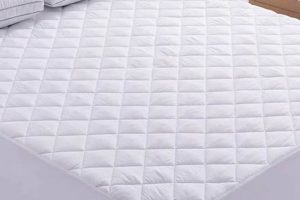
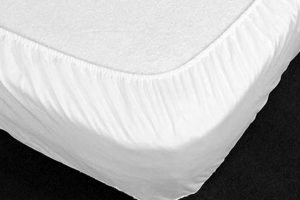
The question of whether encasements for mattresses offer defense against bed bug infestations is a common concern. These products are designed to completely enclose a mattress, creating a barrier that aims to prevent pests from entering or escaping.
The utilization of mattress encasements can provide a significant advantage in bed bug management. They can trap existing infestations within a mattress, eventually leading to the pests’ demise due to lack of access to a blood meal. Furthermore, they simplify mattress inspection and cleaning, making it easier to detect and address potential issues early. Historically, addressing bed bug problems was far more difficult and costly; these encasements provide a relatively inexpensive and effective preventative measure.
This article will explore the features to look for in an effective encasement, discuss proper installation techniques, address common misconceptions, and provide a comprehensive evaluation of their role in a holistic bed bug prevention strategy. The following sections will delve into the specific ways these barriers function and their limitations in various scenarios.
Tips for Selecting and Using Mattress Encasements
The appropriate selection and utilization of encasements can contribute significantly to bed bug prevention and control. The following guidelines should be considered:
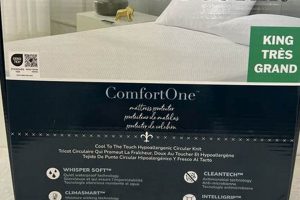
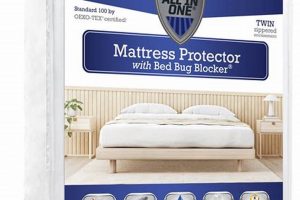
Tip 1: Choose a Certified Encasement: Look for products specifically labeled as “bed bug proof” or “bed bug certified.” This certification indicates that the encasement has been tested and proven to be impenetrable by bed bugs in all life stages.
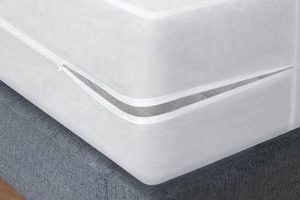
Tip 2: Inspect Zipper Quality: The zipper is a crucial component. Ensure it is finely toothed and closes completely, preventing even the smallest bed bugs from entering or exiting. Consider encasements with zipper locking mechanisms or Velcro closures for added security.
Tip 3: Select the Correct Size: Measure the mattress accurately to ensure the encasement fits snugly. An improperly sized encasement can leave gaps or create stress on the seams, compromising its effectiveness.
Tip 4: Prioritize Breathable Fabrics: While impermeability is essential, opt for encasements made of breathable materials to minimize moisture build-up. Moisture can promote mold and mildew growth within the mattress.
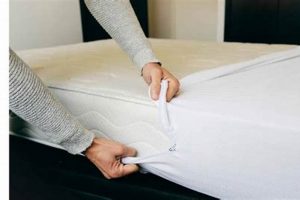
Tip 5: Install Carefully: Follow the manufacturer’s instructions meticulously during installation. Ensure the encasement is smooth and free of wrinkles, which can provide hiding places for bed bugs.
Tip 6: Regularly Inspect the Encasement: Periodically inspect the encasement for tears, punctures, or zipper malfunctions. Promptly repair any damage to maintain its protective integrity.
Tip 7: Encase Box Springs as Well: Bed bugs can infest box springs. To provide comprehensive protection, encase both the mattress and box spring simultaneously.
Proper selection, installation, and maintenance of mattress encasements can significantly reduce the risk of bed bug infestations and facilitate early detection if an infestation does occur. These actions contribute to a healthier and more hygienic sleep environment.
The following sections will address common concerns related to mattress encasements and provide a more in-depth look at their overall contribution to bed bug prevention strategies.
1. Barrier effectiveness

Barrier effectiveness is the primary determinant of whether mattress protectors function as a preventative measure against bed bugs. The protector’s physical structure must create an impenetrable shield, preventing bed bugs from accessing the mattress core, where they typically harbor and reproduce. The fabric’s weave density and the presence of a waterproof or bed bug-proof membrane directly influence this effectiveness. If the barrier is compromised by even microscopic gaps, it negates the protector’s intended purpose. A practical example illustrates this point: a protector with a loose weave, despite being marketed as protective, allowed a laboratory-introduced bed bug population to establish itself within the mattress within weeks.
The materials used in the protector’s construction, combined with manufacturing quality control, govern barrier integrity over time. Frequent washing or abrasion can degrade weaker fabrics, creating vulnerabilities. Therefore, selecting protectors constructed from durable, tightly woven materials that can withstand regular cleaning is paramount. Furthermore, the seams must be reinforced, as these are common points of failure. Another illustrative case involved a hotel that purchased a bulk shipment of seemingly suitable protectors, only to discover that the stitching at the seams failed after a few washes, rendering them ineffective and contributing to a widespread bed bug issue throughout the establishment.
In summary, a mattress protector’s ability to prevent bed bug infestations hinges directly on its barrier effectiveness. This effectiveness is not merely a claim on the product label but a verifiable characteristic dependent on fabric quality, seam integrity, and resistance to wear and tear. A superficial protector lacking these qualities offers a false sense of security and ultimately fails to prevent or contain infestations. Selecting a protector with demonstrable barrier integrity is therefore crucial for achieving the desired level of bed bug prevention.
2. Zipper Integrity

The integrity of the zipper mechanism in a mattress protector is paramount to its effectiveness as a barrier against bed bugs. A compromised zipper renders the entire encasement vulnerable, regardless of the quality of the surrounding fabric. Its crucial role necessitates careful consideration during the selection and maintenance of mattress protectors.
- Closure Security
The primary function of the zipper is to create a complete and impenetrable seal. Any gaps, however small, provide entry points for bed bugs. Examples include zippers with missing teeth, improperly aligned tracks, or those that fail to fully close at the end stops. A mattress protector with a faulty zipper becomes effectively useless in preventing bed bug infestation, as bed bugs can easily navigate through the opening.
- Material Durability
The materials used in the zipper’s construction dictate its lifespan and resistance to wear and tear. Plastic zippers are more prone to breakage and degradation compared to metal zippers, particularly under stress or frequent use. Instances of plastic zippers snapping under the pressure of a fully encased mattress are not uncommon, thereby compromising the protector’s integrity. Metal zippers, while more durable, must be resistant to corrosion to prevent malfunction over time.
- Locking Mechanisms
Some mattress protectors incorporate locking mechanisms at the zipper’s termination point. These mechanisms, such as Velcro closures or small buckles, provide an added layer of security, preventing accidental opening or slippage of the zipper head. Without such a mechanism, the zipper can gradually loosen, creating a gap over time that bed bugs can exploit. The presence of a locking feature demonstrates a higher level of attention to detail in the design, contributing to the protector’s overall reliability.
- Stitching Reinforcement
The manner in which the zipper is attached to the protector fabric is critical. Weak or poorly executed stitching around the zipper creates a potential point of failure. Bed bugs can exploit frayed or loosened threads to gain access under the zipper tape and into the mattress. Reinforced stitching, employing a higher thread count and a more robust stitching pattern, minimizes this risk and contributes to the long-term integrity of the zipper assembly.
Ultimately, the zipper represents a critical vulnerability point in a mattress protector designed to prevent bed bug infestations. Overlooking the zipper’s quality, security features, and attachment method undermines the purpose of the entire encasement. Regular inspection of the zipper and prompt repair of any defects are essential to maintaining the protector’s effectiveness. A robust and well-maintained zipper contributes significantly to the overall success of a mattress protector in creating a bed bug-free sleep environment.
3. Fabric composition
The fabric composition of a mattress protector significantly impacts its ability to prevent bed bug infestations. The choice of material directly influences the protector’s barrier properties, breathability, durability, and overall effectiveness in deterring these pests.
- Weave Density and Pore Size
The tightness of the fabric weave is a primary determinant of its impenetrability to bed bugs. A high weave density, measured in threads per inch, reduces the pore size, preventing even the smallest bed bug nymphs from passing through. For example, tightly woven microfiber fabrics with pore sizes smaller than the diameter of a bed bug’s body are more effective barriers than loosely woven cotton or polyester. The presence of microscopic openings compromises the protector, rendering it ineffective.
- Material Type: Natural vs. Synthetic
The inherent properties of different materials affect their resistance to bed bug penetration and harborage. Synthetic materials like polyester and polyurethane are generally less attractive to bed bugs than natural fibers like cotton, due to their smoother surfaces and lack of natural food sources for the pests. However, the construction of the fabric is more crucial than the fiber type. A tightly woven cotton fabric can be more effective than a loosely woven synthetic one.
- Waterproof/Water-Resistant Coatings
Many mattress protectors incorporate waterproof or water-resistant coatings, often made of polyurethane or polyethylene films. These coatings not only protect the mattress from spills but also create an additional physical barrier against bed bugs. However, it’s essential to ensure that these coatings are durable and do not delaminate over time, as cracks or tears can provide entry points. The effectiveness of the coating is directly proportional to its integrity and resistance to wear.
- Breathability and Moisture Management
While creating a barrier, the fabric must also allow for adequate breathability to prevent moisture buildup within the mattress. Excessive moisture can promote mold and mildew growth, creating an undesirable environment. Breathable fabrics, often incorporating specialized weaves or membranes, allow air to circulate while still preventing bed bug penetration. The balance between impermeability and breathability is a critical design consideration for effective mattress protectors.
In conclusion, the fabric composition of a mattress protector is a multifaceted consideration when evaluating its effectiveness in bed bug prevention. The weave density, material type, presence of coatings, and breathability all contribute to its overall performance. A mattress protector made from a tightly woven synthetic fabric with a durable waterproof coating and breathable construction offers the best combination of protection and comfort, maximizing its ability to prevent bed bug infestations.
4. Proper installation
Effective bed bug prevention using mattress protectors is intrinsically linked to proper installation techniques. Even the highest quality encasement, constructed with the most impenetrable materials, can fail to provide adequate protection if it is not correctly fitted and secured to the mattress. This cause-and-effect relationship underscores the importance of meticulous attention to detail during the installation process. A poorly installed protector leaves vulnerabilities that bed bugs will readily exploit, negating the intended benefits of the product. For instance, a protector that is too small may stretch excessively, weakening the fabric and creating gaps, while an oversized protector can bunch up, providing hiding places for the pests.
The correct installation process involves several critical steps. First, the mattress must be thoroughly inspected and cleaned before the protector is applied. Any existing bed bugs or their eggs need to be eliminated to prevent them from becoming trapped within the encasement. Next, the protector should be carefully aligned with the mattress, ensuring that it fully covers all sides and corners. The zipper must be completely closed and, if applicable, the locking mechanism secured. Real-world examples illustrate the consequences of neglecting these steps. Hotels, for example, that rush the installation process often overlook small tears or gaps, leading to recurring bed bug infestations despite the presence of protectors. Similarly, homeowners who fail to properly seal the zipper may unknowingly create an entry point for bed bugs seeking refuge.
In summary, proper installation is not merely a supplementary step but an integral component of a successful bed bug prevention strategy utilizing mattress protectors. It directly influences the protector’s ability to function as a barrier and, therefore, its overall effectiveness. By diligently following installation guidelines and paying close attention to detail, individuals and businesses can maximize the protective capabilities of mattress encasements and significantly reduce the risk of bed bug infestations. Failure to do so renders the investment in a high-quality protector largely ineffective, highlighting the practical significance of understanding and adhering to correct installation procedures.
5. Regular inspection
Regular inspection is a crucial component in determining whether mattress protectors effectively function as a preventative measure against bed bugs. The integrity of a mattress protector, while designed to serve as a barrier, can degrade over time due to normal wear and tear. This degradation can manifest as small tears, punctures, or zipper malfunctions, compromising the protector’s ability to prevent bed bugs from accessing the mattress. Frequent examination allows for the early detection of these vulnerabilities. For instance, a routine check might reveal a small hole caused by accidental contact with a sharp object, a flaw that would otherwise go unnoticed until a bed bug infestation develops.
The importance of consistent examination extends beyond the detection of physical damage. Inspection also allows for the identification of potential entry points resulting from improper sealing or shifting of the protector. A partially unzipped section, or a corner that has become dislodged, can provide easy access for bed bugs seeking harborage. In such cases, simply adjusting or resealing the protector can prevent a potential infestation. Furthermore, regular inspections can reveal evidence of early-stage bed bug activity, such as shed skins or fecal matter, even before a full-blown infestation occurs. This enables prompt intervention, such as heat treatment or professional pest control, minimizing the extent of the problem and preventing it from spreading.
In conclusion, regular inspection is not merely a supplementary task but an essential element in maximizing the preventative benefits of mattress protectors. Its practical significance lies in its ability to detect and address vulnerabilities before they lead to bed bug infestations. By incorporating frequent examination into a routine cleaning and maintenance schedule, individuals and businesses can significantly enhance the effectiveness of mattress protectors as a component of a comprehensive bed bug management strategy. Failure to conduct regular inspections can negate the value of even the most robust protector, highlighting the critical role of vigilance in maintaining a bed bug-free environment.
6. Complete encasement
Complete encasement represents a critical factor in evaluating the effectiveness of mattress protectors in bed bug prevention. The degree to which a protector fully encloses a mattress directly influences its ability to function as a barrier against infestation. Gaps or incomplete coverage undermine the protector’s intended purpose, regardless of its material composition or construction quality. The following facets detail key aspects of complete encasement.
- Sealed Perimeter
A complete encasement requires a fully sealed perimeter, typically achieved through a zippered closure. This closure must extend around the entire mattress, without gaps or breaks. The zipper should feature a locking mechanism to prevent accidental opening. A partial or incomplete seal allows bed bugs to enter or exit the mattress, rendering the protector ineffective. An example is a protector with a zipper that stops short of completely closing at the corners, leaving a small but accessible opening.
- Encasement of All Mattress Surfaces
The protector must cover all six sides of the mattress: top, bottom, and all four sides. Failure to enclose the underside of the mattress, for example, leaves a significant portion of the surface vulnerable to infestation. Bed bugs can readily access this unprotected area and establish a colony within the mattress core. This is especially relevant in scenarios where the mattress rests directly on the floor, increasing the likelihood of infestation from below.
- Box Spring Encasement
For complete protection, both the mattress and the box spring should be encased. Bed bugs often infest the box spring in addition to the mattress, creating a reservoir of pests that can re-infest a protected mattress. Enclosing both components creates a comprehensive barrier, preventing bed bugs from harboring within either structure. Failing to encase the box spring compromises the overall protection strategy.
- Secure Fit and Tension
A complete encasement requires a snug fit that maintains constant tension on the fabric. Excessively loose protectors create folds and wrinkles, providing hiding places for bed bugs. Overly tight protectors, on the other hand, can stretch the fabric and weaken the seams, compromising their integrity. A correctly sized protector, properly installed, ensures a smooth, taut surface that minimizes harborage opportunities and maintains a consistent barrier.
These facets highlight the essential role of complete encasement in bed bug prevention. A mattress protector that fails to meet these criteria provides a false sense of security and is unlikely to prevent or contain a bed bug infestation. The effectiveness of any mattress protector is directly proportional to the completeness of its encasement.
7. Limited Protection

The role of mattress protectors in averting bed bug infestations is often presented as a definitive solution. However, their protective capabilities are subject to limitations that must be acknowledged for a comprehensive understanding of bed bug prevention strategies.
- Introduction Vectors
Mattress protectors solely address infestations originating within the mattress itself. They provide no defense against bed bugs introduced from external sources, such as luggage, clothing, or furniture. For example, a traveler returning from a bed bug-infested hotel can unknowingly introduce the pests into a protected home, circumventing the protector’s barrier function. In such cases, additional preventative measures, such as careful luggage inspection and laundering, are necessary to mitigate the risk.
- Compromised Encasement Integrity
Even a properly installed mattress protector is susceptible to damage that can compromise its integrity. Tears, punctures, or zipper malfunctions can create entry points for bed bugs, negating the protector’s barrier effect. A common scenario involves pets accidentally clawing through the fabric, creating small openings that allow bed bugs to access the mattress core. Regular inspection and prompt repair of any damage are essential to maintain the protector’s effectiveness.
- Surface Infestation Potential
While mattress protectors prevent bed bugs from infesting the mattress interior, they do not eliminate the possibility of surface infestations. Bed bugs can still harbor on the exterior of the protector, particularly in seams or folds, and bite sleeping individuals. For example, a protector with loose stitching or deep wrinkles can provide hiding places for bed bugs, even if the underlying mattress remains protected. Regular cleaning and vacuuming of the protector’s surface are necessary to address this risk.
- Focus on Containment, Not Elimination
Mattress protectors primarily function to contain existing infestations or prevent new infestations from penetrating the mattress. They do not actively eliminate bed bugs. If bed bugs are already present in the room or surrounding environment, they can persist regardless of the presence of a protector. A comprehensive bed bug management strategy requires a multi-pronged approach, including professional pest control services, alongside the use of mattress protectors.
These limitations underscore the need for a holistic approach to bed bug prevention. While mattress protectors can play a valuable role in such a strategy, they should not be viewed as a standalone solution. Combining protectors with other preventative measures, such as regular inspections, careful luggage handling, and professional pest control when necessary, provides the most effective defense against bed bug infestations.
Frequently Asked Questions
The following questions address common concerns and misconceptions regarding the efficacy of mattress protectors in preventing and managing bed bug infestations. These answers provide factual information based on current understanding and best practices in pest management.
Question 1: Are all mattress protectors equally effective against bed bugs?
No. The effectiveness depends on specific features, including weave density, zipper quality, and the presence of a bed bug-proof certification. Protectors lacking these features offer limited or no protection.
Question 2: Can bed bugs bite through a mattress protector?
A properly constructed and intact mattress protector will prevent bed bugs from biting through it. However, if the protector is damaged or has a compromised zipper, bed bugs can gain access and bite through the opening.
Question 3: Will a mattress protector eliminate an existing bed bug infestation?
A mattress protector will not eliminate an existing infestation. It can trap bed bugs inside the mattress, but it will not kill them. A comprehensive treatment plan, including professional pest control services, is necessary for complete eradication.
Question 4: How often should a mattress protector be inspected for bed bugs?
Mattress protectors should be inspected regularly, ideally during routine linen changes. Look for tears, punctures, or zipper malfunctions, as well as signs of bed bug activity such as shed skins or fecal matter.
Question 5: Can a mattress protector prevent bed bugs from getting onto the bed frame?
No, a mattress protector only protects the mattress itself. Bed bugs can still infest the bed frame. Cleaning and treating the bed frame are important aspects of a complete bed bug management plan.
Question 6: Is it necessary to encase the box spring as well as the mattress?
Yes, encasing the box spring is highly recommended. Bed bugs frequently infest box springs, providing a source for re-infestation of the mattress if it is protected but the box spring is not.
These responses highlight the importance of selecting appropriate mattress protectors, maintaining their integrity, and understanding their limitations. A proactive and informed approach is crucial for effective bed bug prevention and control.
The following section will summarize the key takeaways from this discussion and offer practical recommendations for implementing a comprehensive bed bug management strategy.
Conclusion
The preceding discussion has explored the multifaceted issue of whether mattress protectors effectively prevent bed bug infestations. It has been established that while these encasements can contribute to a comprehensive prevention strategy, their efficacy is contingent upon several factors. These include the quality of materials, integrity of construction, proper installation, and consistent maintenance. Protectors with compromised zippers, tears, or improper fit offer little to no defense against these pests. Furthermore, they primarily address infestations originating within the mattress and do not prevent bed bugs from being introduced via external sources or infesting other areas within the sleeping environment.
In summary, mattress protectors are not a panacea. Their value lies in their ability to act as a barrier, containing existing infestations and preventing new ones from penetrating the mattress core, provided they are carefully selected, meticulously installed, and regularly inspected. To achieve optimal bed bug prevention, mattress protectors should be integrated into a broader strategy that includes vigilance, regular cleaning, and professional pest control intervention when necessary. Only through a comprehensive and proactive approach can the risk of bed bug infestations be effectively minimized.