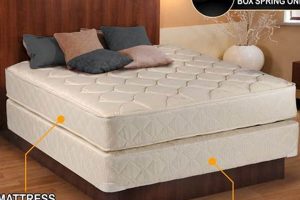
The necessity of a supportive foundation beneath a mattress is a pertinent consideration for optimal sleep and mattress longevity. Traditionally, this support was provided by a specific structure consisting of a wooden or metal frame containing springs. This structure elevated the mattress and absorbed shock, contributing to both comfort and structural integrity.
The use of a foundational support offers several benefits. It can increase mattress height, making it easier to get in and out of bed. It also improves airflow, reducing moisture buildup and potential mold growth. Historically, these supports were crucial for innerspring mattresses, providing essential support for the coil system and preventing premature sagging. They also distributed weight evenly, minimizing wear and tear on the mattress itself.
However, modern mattress designs and evolving bed frame styles have introduced alternative support systems. Platform beds, adjustable bases, and even some types of slatted frames can provide adequate support, potentially eliminating the requirement for the traditional sprung foundation. Determining the appropriate support structure involves considering mattress type, warranty requirements, and individual preferences for height and feel.
Guidance on Mattress Foundation Selection
Selecting an appropriate foundation for a mattress requires careful consideration of various factors. The following guidelines offer direction for ensuring optimal support, longevity, and compliance with manufacturer stipulations.
Tip 1: Evaluate Mattress Type: Different mattress types necessitate different support systems. Innerspring mattresses generally benefit from the additional support provided by a traditional sprung foundation, while foam or hybrid mattresses may function effectively on a solid platform or slatted frame.
Tip 2: Consult Mattress Warranty: Most mattress warranties specify the type of foundation required to maintain coverage. Failure to adhere to these requirements may void the warranty in case of defects or premature wear.
Tip 3: Assess Bed Frame Compatibility: Existing bed frames may dictate the type of foundation that can be accommodated. Platform beds, for example, eliminate the need for a separate foundation, while standard bed frames typically require a traditional box spring or alternative support system.
Tip 4: Consider Height Preferences: The combined height of the mattress and foundation affects ease of entry and exit. Individuals with mobility limitations may benefit from a higher profile, achieved through the use of both a mattress and a sprung foundation.
Tip 5: Evaluate Support Needs: Individuals with back pain or other orthopedic concerns should prioritize a firm, supportive foundation. Solid platforms or closely spaced slatted frames offer superior support compared to traditional box springs, which may compress over time.
Tip 6: Account for Airflow: Adequate airflow beneath the mattress is crucial for preventing moisture buildup and mold growth. Slatted frames or foundations with breathable covers promote ventilation, particularly in humid environments.
Tip 7: Inspect Foundation Quality: When selecting a traditional sprung foundation, prioritize models constructed from durable materials and featuring a robust frame. Inferior foundations may sag or break down prematurely, compromising mattress support.
Adhering to these guidelines ensures the selection of a suitable mattress foundation, contributing to enhanced sleep quality, mattress longevity, and the preservation of warranty coverage.
Ultimately, the choice of mattress support depends on a convergence of mattress characteristics, individual needs, and environmental considerations.
1. Mattress Type
Mattress type significantly influences the necessity of a box spring. Different internal constructions and material compositions necessitate varying levels and types of support. The following considerations outline the critical factors linking mattress type to foundation requirements.
- Innerspring Mattresses
Innerspring mattresses, characterized by their coil-based support systems, traditionally require the shock absorption and weight distribution capabilities of a box spring. Without adequate support, the coils can experience premature wear, leading to sagging and diminished comfort. The box spring acts as a buffer, extending the lifespan of the innerspring mattress.
- Foam Mattresses (Memory Foam, Latex)
Foam mattresses, including memory foam and latex models, often benefit from a solid or slatted foundation rather than a box spring. The dense construction of foam provides inherent support, reducing the need for additional spring-based shock absorption. A solid platform prevents sagging and ensures even weight distribution across the foam layers.
- Hybrid Mattresses
Hybrid mattresses, combining elements of both innerspring and foam construction, present a more nuanced scenario. The presence of coils may suggest the need for a box spring, while the foam layers might indicate a solid foundation is more appropriate. Manufacturer recommendations and warranty requirements should guide the selection of a suitable foundation for hybrid models.
- Air Mattresses
Air mattresses typically require a flat, stable surface. While a box spring can provide this, it is not essential. The primary function of the foundation is to elevate the mattress and provide a level sleeping surface. A platform bed or even the floor can suffice, provided they offer adequate support and stability.
The interplay between mattress type and support structure is critical for optimizing sleep quality and extending the lifespan of the mattress. Selecting the appropriate foundation, whether it be a box spring, platform, or slatted frame, directly impacts the comfort, durability, and warranty validity of the mattress.
2. Warranty Requirements

Mattress warranties often stipulate specific foundation requirements to maintain valid coverage. Failure to adhere to these conditions can result in the voiding of the warranty, leaving the consumer responsible for repair or replacement costs in the event of defects or premature wear. This condition establishes a direct connection: the foundation type dictates whether the mattress is supported in a manner consistent with the warranty’s terms. For instance, a warranty might specify the use of a solid platform or a box spring with particular characteristics, such as a certain number of support slats or a specific coil density. Neglecting this requirement can lead to denial of warranty claims.
The practical significance of understanding warranty requirements lies in protecting the consumer’s investment. Consider a scenario where an individual purchases a high-end memory foam mattress with a ten-year warranty. If the mattress is placed directly on the floor or on a bed frame with inadequate support, the foam may compress unevenly, leading to sagging. If the manufacturer determines that the lack of appropriate foundation support caused the sagging, the warranty claim could be denied. This emphasizes the critical importance of reviewing the warranty documentation and ensuring strict compliance with foundation specifications.
In summary, warranty requirements represent a crucial aspect of foundation selection. Non-compliance with these stipulations can invalidate coverage, exposing consumers to potentially significant financial burdens. Careful consideration of warranty terms, coupled with a thorough understanding of foundation specifications, is essential for protecting the investment in a new mattress and ensuring eligibility for warranty support when needed. This understanding is paramount when answering the question of whether or not a mattress needs a box spring.
3. Bed Frame Design

Bed frame design directly influences the necessity of a box spring. The structure and support offered by the frame determine whether additional support is required for the mattress. Platform beds, characterized by a solid or closely-slatted surface, often eliminate the need for a box spring entirely. Conversely, traditional bed frames consisting only of a headboard, footboard, and side rails necessitate a supporting structure to elevate and properly support the mattress. The absence of a suitable foundation in such cases can lead to mattress damage and voided warranties.
A frame designed with widely spaced slats, for example, may not provide adequate support, even for foam mattresses. The mattress could sag between the slats, leading to uneven wear and reduced comfort. This scenario illustrates the importance of considering slat spacing and material strength when evaluating a bed frame’s suitability. Similarly, bed frames with a recessed area designed to accommodate a box spring require the inclusion of such a foundation to provide the intended mattress height and support. Using a mattress alone in this type of frame can result in an uncomfortable sleeping surface and aesthetic issues.
In summary, bed frame design is a primary determinant in assessing the necessity of a box spring. The frame’s inherent support capabilities dictate whether additional foundational support is needed for optimal mattress performance. Evaluating the frame’s structure, slat spacing, and intended function is crucial for ensuring adequate mattress support, maintaining warranty compliance, and maximizing sleep quality. If a bed frame provides sufficient, even support, the need for a box spring diminishes or disappears. Otherwise, a box spring or alternative foundation becomes essential.
4. Support Preferences

Individual support preferences play a significant role in determining the necessity of a box spring for a mattress. The firmness and feel of the sleeping surface are subjective and influenced by factors such as body weight, sleeping position, and personal comfort thresholds. The choice between a box spring and alternative foundation systems is thus often dictated by the desired level of support and overall sleep experience.
- Firmness Level
A preference for a firmer sleeping surface may necessitate a solid platform or closely-slatted foundation, potentially eliminating the need for a box spring. These foundations provide a stable, unyielding base, promoting spinal alignment and reducing pressure points. Conversely, individuals seeking a softer, more cushioned feel may find that a box spring, particularly one with coils, enhances the mattress’s plushness and conforms more readily to the body’s contours.
- Spinal Alignment
Proper spinal alignment is crucial for preventing back pain and promoting restful sleep. Those with a predisposition to back problems may benefit from a foundation that provides consistent, even support across the entire mattress surface. A box spring, if worn or uneven, can contribute to spinal misalignment, whereas a solid platform or appropriately designed slatted frame can maintain a neutral spinal position.
- Pressure Relief
Individuals sensitive to pressure points may prioritize a foundation that enhances the mattress’s ability to conform to the body. A box spring, especially in combination with a memory foam mattress, can offer improved pressure relief compared to a rigid platform. The coils in the box spring allow for greater compression and contouring, distributing weight more evenly and reducing localized pressure.
- Motion Isolation
For couples sharing a bed, motion isolation is a key consideration. Certain foundations, such as solid platforms, can transfer motion more readily than box springs, potentially disrupting sleep. A box spring, with its spring system, absorbs some of the motion, minimizing disturbances caused by a partner’s movements.
Ultimately, the alignment between individual support preferences and the chosen foundation type determines the overall sleep quality and comfort. While some may find a box spring essential for achieving their desired level of support and feel, others may find alternative foundations more suitable. Understanding these preferences and carefully evaluating the characteristics of different foundation options is crucial in answering the fundamental question of whether a box spring is indeed necessary.
5. Height Considerations
Height considerations are intrinsically linked to the decision of whether a box spring is necessary. The combined height of a mattress and its foundation directly impacts ease of access and egress from the bed, which is a critical factor for individuals with mobility limitations or preferences for a higher or lower sleeping surface. A box spring elevates the mattress, adding substantial height compared to a platform bed or a mattress placed directly on a frame. The ergonomic implications of bed height are significant, particularly for older adults or those recovering from injuries. A bed that is too low may require excessive bending and strain upon standing, while a bed that is too high can pose a risk of falls. The selection of a box spring, therefore, can be driven primarily by the need to achieve a specific, comfortable bed height.
The absence of a box spring can be a deliberate choice to lower the overall bed profile, creating a modern, minimalist aesthetic. This approach is often employed in contemporary bedroom designs, where a low-slung bed frame paired with a mattress directly on the slats or a platform offers a sleek and streamlined appearance. Conversely, in more traditional settings, the added height of a box spring can enhance the perceived grandeur and comfort of the bed, creating a more luxurious and inviting atmosphere. Furthermore, storage considerations can also influence the decision. The additional height provided by a box spring allows for the potential storage of items beneath the bed frame, maximizing space utilization in smaller bedrooms.
In conclusion, height considerations are a pivotal component in determining the necessity of a box spring. The ergonomic, aesthetic, and practical implications of bed height weigh heavily on the decision-making process. Whether the goal is to optimize ease of access, achieve a desired visual style, or maximize storage capacity, the height added by a box spring, or the lack thereof, significantly impacts the overall functionality and comfort of the sleep environment. The correct bed height is more important than some think for the life style and mobility.
6. Airflow

Adequate airflow beneath a mattress is a critical factor impacting its longevity, hygiene, and the overall sleep environment. The presence or absence of a box spring directly influences the degree of ventilation afforded to the mattress. Mattresses, particularly those constructed with dense materials like memory foam, can trap moisture and heat, creating a breeding ground for mold, mildew, and dust mites. Box springs, especially those with open coil designs or breathable fabric coverings, facilitate air circulation, mitigating moisture accumulation and promoting a healthier sleeping surface. Conversely, a solid platform bed with limited ventilation can exacerbate moisture retention, potentially compromising the mattress’s integrity and the sleeper’s respiratory health. For example, in humid climates, the lack of airflow beneath a mattress resting directly on a solid platform can lead to the rapid development of mold, necessitating premature replacement.
The impact of airflow extends beyond mere hygiene. Proper ventilation helps regulate mattress temperature, preventing overheating and promoting more comfortable sleep. Mattresses lacking adequate airflow tend to sleep hotter, disrupting sleep cycles and potentially exacerbating conditions like night sweats. Box springs with an open design allow for the dissipation of heat, contributing to a cooler, more restful sleep experience. Conversely, a tightly sealed mattress foundation can impede heat transfer, resulting in a less comfortable sleep environment. Consider the practical application of selecting a slatted bed frame instead of a solid platform to provide adequate airflow when a box spring isn’t used. Each case will give a more breathable envrionment when you sleep.
In summary, the role of airflow is a crucial consideration when evaluating the necessity of a box spring. While not always essential, the improved ventilation offered by certain box spring designs or alternative bed frame configurations directly contributes to mattress hygiene, temperature regulation, and overall sleep quality. Prioritizing airflow, particularly in humid environments or for individuals prone to overheating, can significantly extend mattress lifespan and promote a healthier sleep environment, reducing the risk of allergen buildup and mold growth. A good box spring will assist on these problems.
7. Budget
The financial resources allocated for acquiring a mattress and its associated support structure, exert a considerable influence on the decision regarding necessity. Budgetary constraints can either necessitate or preclude the acquisition of a supporting foundation, thereby affecting the selection of the mattress itself. For instance, an individual with a limited budget might opt for a less expensive mattress and forgo a traditional box spring, instead utilizing a platform bed frame or a basic slatted foundation to achieve the requisite support at a lower overall cost. Conversely, a larger budget allows for the purchase of a higher-quality mattress and a corresponding box spring or adjustable base, optimizing comfort and extending the lifespan of the investment. The budget, therefore, dictates the scope of available options and ultimately shapes the final selection.
A practical illustration of this connection is the choice between purchasing a standard innerspring mattress with a box spring versus a higher-end memory foam mattress designed for use on a platform bed. While the initial cost of the memory foam mattress may be higher, the elimination of the box spring can offset the difference, resulting in a comparable overall expenditure. Another consideration is the potential for long-term cost savings. A higher-quality mattress and foundation, although initially more expensive, may offer greater durability and require less frequent replacement, ultimately proving more economical over the lifespan of the product. Furthermore, some manufacturers offer package deals that bundle a mattress and foundation at a discounted price, providing a cost-effective solution for consumers with budget limitations. The understanding of the budget available provides the consumer with an array of options
In summary, the budgetary allocation functions as a primary determinant in the decision-making process, dictating the available options and shaping the final selection of a bed. The budget available shapes whether a foundation is required and the style of foundation itself. The budget affects whether additional expenditure will occur due to the lower quality of products and their lifespan or if a longer-term saving can be made by getting the better quality products. This aspect highlights the critical importance of considering all costs and the long-term implications when choosing a mattress and its foundation.
Frequently Asked Questions
The following section addresses common inquiries regarding the necessity of a box spring or alternative foundation for mattresses. The objective is to provide clear, factual information to aid in informed decision-making.
Question 1: Is a foundation always required for a new mattress?
The necessity of a foundation depends on the mattress type, bed frame design, and warranty requirements. While some mattresses perform optimally on platform beds or slatted frames, others necessitate the additional support of a foundation.
Question 2: Can a mattress be placed directly on the floor?
Placing a mattress directly on the floor is generally discouraged. This practice can impede airflow, promote moisture buildup, and potentially void the warranty. Furthermore, it can increase the risk of pest infestation.
Question 3: What are the advantages of using a box spring?
A box spring provides shock absorption, elevates mattress height, and improves airflow. It can also enhance the comfort of innerspring mattresses by providing additional support and reducing motion transfer.
Question 4: Are platform beds a suitable alternative to a box spring?
Platform beds, with their solid or closely-slatted surfaces, offer a viable alternative to a box spring. They provide adequate support for most mattress types, particularly foam and hybrid models, and often eliminate the need for additional foundation support.
Question 5: How does mattress warranty influence the foundation choice?
Mattress warranties often stipulate specific foundation requirements to maintain coverage. Failure to adhere to these requirements can result in the voiding of the warranty in case of defects or premature wear. Review warranty documents to determine the type of foundation required.
Question 6: Can an old or damaged box spring be reused?
Reusing an old or damaged box spring is not recommended. A worn or uneven foundation can compromise mattress support, reduce comfort, and potentially void the warranty. It is advisable to replace a damaged box spring with a new, supportive foundation.
In summary, the decision regarding mattress foundation depends on a confluence of factors, including mattress type, bed frame design, warranty stipulations, and personal preferences. Careful consideration of these elements ensures optimal support, longevity, and warranty compliance.
The subsequent section will delve into alternative foundation options, providing a comprehensive overview of available support systems.
Determining Mattress Foundation Requirements
The preceding exploration of “do you need a box spring for a mattress” illuminates the multifaceted nature of this question. The necessity of a sprung foundation is not a universal requirement but is contingent upon various factors, including mattress type, bed frame design, warranty stipulations, individual support preferences, height considerations, airflow requirements, and budgetary constraints. A thorough assessment of these elements is paramount in making an informed decision.
Ultimately, the selection of an appropriate foundation is an investment in both sleep quality and mattress longevity. Prudent consideration of the aforementioned factors ensures optimal support, minimizes the risk of premature wear, and preserves warranty coverage. Consumers are encouraged to meticulously evaluate their specific needs and circumstances to determine the most suitable foundation solution, thereby maximizing the value and lifespan of their mattress investment.
![Best Box Springs for Your Queen Mattress [Guide] | Organic & Natural Mattress Buyer’s Guide: Non-Toxic Sleep Solutions](https://mattressworldpa.com/wp-content/uploads/2025/07/th-3491-300x200.jpg "Best Box Springs for Your Queen Mattress [Guide] Organic & Natural Mattress Buyer’s Guide: Non-Toxic Sleep Solutions")