



A common inquiry among consumers involves the compatibility of mattress and bed frame sizes. Specifically, the question arises whether a longer, narrower mattress, known as a California King, is suitable for use with a bed frame designed for a standard King-sized mattress. Confusion often stems from the similar naming conventions and the assumption that the terms “King” and “California King” are interchangeable. Understanding the precise dimensions of each is crucial to avoiding fitment issues.
The distinction between these mattress sizes is significant in terms of both surface area and proportion. A standard King mattress offers a wider sleeping surface, while the California King prioritizes length. This difference impacts comfort, particularly for taller individuals who may benefit from the added legroom afforded by the California King. Historically, mattress sizes evolved to accommodate varying body types and bedroom dimensions. Choosing the correct size contributes directly to sleep quality and overall satisfaction with bedroom furniture.
Therefore, a detailed examination of the dimensional differences between these two mattress types is necessary. The subsequent discussion will elaborate on specific measurements, potential adaptations, and the consequences of using mismatched mattress and frame sizes.
Compatibility Considerations
Addressing concerns about mattress and bed frame compatibility requires careful assessment. The following guidelines outline key considerations when evaluating the suitability of using a California King mattress with a standard King bed frame.
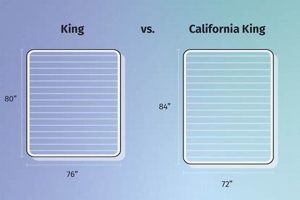
Tip 1: Measure Dimensions Accurately: Confirm the precise measurements of both the mattress and the bed frame. A California King mattress typically measures 72 inches wide by 84 inches long, while a standard King is 76 inches wide by 80 inches long. Variations, even slight ones, can impact fit.
Tip 2: Account for Gaps: If a California King mattress is placed on a King bed frame, a noticeable gap will exist along the sides. The four-inch width difference will result in a two-inch gap on each side. Assess whether this gap is aesthetically acceptable and if it compromises support.
Tip 3: Consider Support: The support structure of the bed frame is designed for a specific mattress size. Using a smaller mattress may leave sections of the frame unsupported, potentially leading to mattress sagging or premature wear. Evaluate the frame’s slat system and its ability to adequately support a smaller mattress.
Tip 4: Evaluate Aesthetics: The visual appearance of the setup should be considered. Gaps between the mattress and the frame may detract from the overall aesthetic of the bedroom. Explore options for concealing these gaps, such as using decorative pillows or side rails.
Tip 5: Investigate Adaptations: Explore solutions to modify the bed frame to better accommodate the mattress. This may involve adding padding along the sides of the frame or using a custom-made mattress support.
Tip 6: Prioritize Sleep Quality: Comfort should be paramount. If the dimensional mismatch compromises sleep quality due to inadequate support or discomfort from the gaps, it is advisable to obtain a correctly sized mattress or bed frame.
Adherence to these recommendations helps ensure optimal mattress and bed frame compatibility. Precise measurements, support considerations, and aesthetic evaluations are crucial for a satisfying bedroom setup.
This discussion provides a foundation for understanding compatibility challenges. The article will proceed to explore alternative solutions and summarize the critical aspects of choosing appropriate mattress and bed frame sizes.
1. Dimensional Differences

The central question of whether a California King mattress is suitable for a standard King bed frame is fundamentally answered by examining their dimensional differences. The standard King mattress measures 76 inches in width and 80 inches in length, whereas the California King measures 72 inches in width and 84 inches in length. This four-inch difference in width presents a direct incompatibility. Attempting to use a California King mattress on a standard King frame results in a two-inch gap on either side. These gaps, while seemingly small, impact the structural integrity of the support system and the overall sleep experience. A real-life example of this incompatibility can be observed when the California King mattress shifts within the larger frame, causing uneven weight distribution and potential damage to the mattress or the frame itself. Understanding this dimensional variance is practically significant as it informs purchasing decisions and prevents potential issues arising from mismatched components.
Further analysis reveals that the dimensional difference also affects the aesthetic of the bedroom. The gaps expose the bed frame, potentially creating an unfinished or unkempt appearance. Functionally, these gaps can become receptacles for small items, creating cleaning challenges. Moreover, the reduced width impacts the usable sleeping surface. While the California King offers additional length, the narrower width may be a significant drawback for couples or individuals who prefer more lateral space. Therefore, the practical application of understanding these dimensional differences extends beyond mere fitment; it encompasses usability, aesthetics, and long-term maintenance.
In conclusion, the dimensional differences between a standard King and a California King mattress are the definitive factor in determining whether one can fit the other’s frame. The resulting gaps compromise support, affect visual appeal, and impact the overall sleeping experience. Understanding these dimensional differences is therefore critical for making informed decisions and ensuring a functional and aesthetically pleasing bedroom setup. This knowledge mitigates potential challenges associated with mismatched components and contributes to optimized sleep quality.
2. Frame Support

Frame support is a critical element when considering whether a California King mattress is compatible with a standard King bed frame. The primary function of a bed frame is to provide uniform support across the entire mattress surface. When a California King mattress is placed on a King frame, the resulting gaps compromise this intended support structure. Specifically, the absence of support along the sides can lead to mattress sagging, particularly near the edges where individuals often sit or lie. This uneven support not only reduces the lifespan of the mattress but also negatively impacts sleep quality by creating an unlevel sleeping surface. Consider, for instance, a scenario where an individual consistently sleeps near the edge of a California King mattress on a King frame. Over time, that edge will likely compress and deform due to inadequate support, leading to discomfort and potential back problems. Therefore, understanding the importance of consistent frame support is fundamental when evaluating the compatibility of different mattress and frame sizes.
The practical significance of adequate frame support extends beyond individual comfort. A compromised support system can also damage the bed frame itself. The additional stress placed on the frame’s center due to the unsupported edges may cause warping or breakage over time. Furthermore, the uneven weight distribution can weaken the joints and connections within the frame, leading to structural instability. For example, a slatted frame designed to evenly distribute weight across a standard King mattress will experience concentrated pressure points when used with a smaller California King. This can result in broken slats or a collapsed frame, requiring costly repairs or replacement. The investment in a properly sized frame therefore protects both the mattress and the frame, ensuring longevity and preventing unnecessary expenses.
In conclusion, frame support is inextricably linked to the question of whether a California King mattress is suitable for a King bed frame. The dimensional mismatch inherently compromises the frame’s ability to provide uniform support, leading to potential mattress damage, frame instability, and reduced sleep quality. Addressing this concern requires either obtaining a correctly sized frame or implementing modifications to provide adequate support along the edges of the mattress. Prioritizing frame support is essential for maintaining the integrity of both the mattress and the frame, ultimately contributing to a more comfortable and sustainable sleep environment.
3. Gap Formation

Gap formation is a direct consequence of dimensional incompatibility when a California King mattress is placed on a standard King bed frame. The difference in widththe California King being narrowerinevitably results in noticeable gaps. Understanding these gaps is crucial for assessing both the functional and aesthetic implications of such a pairing.
- Lateral Gaps
The most obvious manifestation of gap formation occurs along the sides of the mattress. Given that a California King is four inches narrower than a standard King, a two-inch gap appears on each side. This lateral gap is not merely a visual issue; it affects the structural support of the mattress, particularly near the edges. It also creates a space where small objects can fall, complicating cleaning and maintenance.
- Compromised Edge Support
The presence of lateral gaps directly undermines the intended edge support provided by the bed frame. The mattress edges, lacking full contact with the frame, are more prone to sagging or compression. This can lead to discomfort for individuals who sleep near the edge and may reduce the overall lifespan of the mattress. The absence of support also increases the risk of rolling off the bed.
- Aesthetic Concerns
Gap formation introduces aesthetic concerns that detract from the overall appearance of the bedroom. The visible spaces between the mattress and the frame can create an unfinished or haphazard look. This visual disruption may clash with the intended design of the room and compromise the sense of cohesion and order. The gaps can be particularly noticeable if the frame is ornate or has a distinct color, highlighting the size discrepancy.
- Functional Implications
Beyond support and aesthetics, gap formation has functional implications. The gaps can trap dust, dirt, and other debris, making it more challenging to maintain a clean sleeping environment. Furthermore, the uneven surface created by the gaps can interfere with the placement of bedding, such as fitted sheets or mattress protectors, which may not fit snugly and could shift during use. This can lead to discomfort and require frequent adjustments.
In summary, gap formation is an unavoidable consequence of placing a California King mattress on a standard King bed frame. These gaps impact not only the aesthetic appeal but also the functional integrity and support provided to the mattress. Addressing these gaps, whether through modifications or alternative solutions, is crucial for ensuring a comfortable and visually pleasing sleep environment. The existence and extent of these gaps fundamentally underscore the incompatibility between these two mattress and frame sizes.
4. Aesthetic Impact
The visual presentation of a bedroom is significantly influenced by the compatibility of its components, including the mattress and bed frame. The question of whether a California King mattress is appropriately placed on a standard King bed frame directly impacts the aesthetic of the room, potentially disrupting the intended design and visual harmony.
- Visible Gaps and Proportions
When a California King mattress, narrower than a standard King, is used on a King frame, noticeable gaps emerge. These gaps, typically on either side of the mattress, disrupt the visual proportions of the bed. The intended symmetry and balance are compromised, resulting in an appearance that can be perceived as unfinished or ill-fitting. For instance, a well-designed bedroom with coordinated colors and textures can be undermined by the presence of these gaps, drawing unwanted attention to the size discrepancy.
- Frame Exposure and Design Clash
The gaps created expose the bed frame itself, which may not have been intended as a primary visual element. The design of the frame, including its material, color, and style, becomes more prominent, potentially clashing with the overall aesthetic of the room. A minimalist frame might be overwhelmed by the visible space, while an ornate frame could appear disproportionate with the smaller mattress. The intended visual harmony is disrupted, leading to a less cohesive and aesthetically pleasing bedroom.
- Disruption of Bedding Presentation
The dimensional mismatch also affects how bedding is presented. Fitted sheets and mattress protectors designed for a standard King mattress may not fit properly on a California King placed within the same frame. Excess fabric can bunch up, creating wrinkles and an untidy appearance. Similarly, blankets and comforters may not drape correctly, further emphasizing the size difference and undermining the intended visual appeal of the bedding arrangement. The overall effect is a less polished and refined aesthetic.
- Compromised Headboard Integration
The relationship between the bed frame, mattress, and headboard is crucial for a cohesive visual statement. When a California King mattress is placed on a standard King frame, the integration with the headboard can be compromised. The headboard, designed to align with the width of a King mattress, may now appear wider than the visible sleeping surface, creating a visual imbalance. This can be particularly noticeable with headboards that feature integrated storage or design elements, further accentuating the size discrepancy and disrupting the intended aesthetic integration.
The aesthetic impact of placing a California King mattress on a standard King bed frame is multi-faceted, encompassing visual proportions, frame exposure, bedding presentation, and headboard integration. These elements collectively contribute to the overall visual harmony of the bedroom. The dimensional mismatch introduces disruptions that can undermine the intended design, leading to a less cohesive and aesthetically pleasing environment. Addressing these concerns requires careful consideration of mattress and frame compatibility to ensure a visually balanced and harmonious bedroom setting.
5. Sleep Quality

Sleep quality, a critical determinant of overall well-being, is intricately linked to the physical environment in which sleep occurs. The compatibility of the mattress and bed frame directly impacts the ability to achieve restful and restorative sleep. A mismatch in sizes, as in the case of a California King mattress on a standard King bed frame, introduces factors that can significantly degrade sleep quality.
- Edge Support and Postural Alignment
Compromised edge support is a primary concern when a California King mattress is used on a King frame. The resulting gaps lead to uneven weight distribution, causing the mattress edges to sag. This lack of support disrupts postural alignment, forcing the sleeper to compensate by tensing muscles or adopting unnatural positions. For example, an individual sleeping near the edge may experience discomfort and restless sleep due to the feeling of rolling off or the need to actively maintain balance. Consequently, sleep is fragmented, and the restorative benefits are diminished.
- Temperature Regulation
A proper fit between mattress and frame facilitates optimal temperature regulation. Gaps between the mattress and frame can disrupt airflow and create pockets of stagnant air. This can lead to inconsistent temperature regulation, causing the sleeper to feel either too hot or too cold. For instance, trapped heat in the gaps may result in night sweats, further disrupting sleep. Proper mattress fit contributes to a more consistent and comfortable sleep temperature, promoting deeper and more restful sleep.
- Motion Transfer and Partner Disturbance
When a mattress is not fully supported by the bed frame, motion transfer is exacerbated. Any movement on one side of the bed is more likely to be felt on the other side, potentially disturbing a sleeping partner. The instability created by the gaps amplifies vibrations and reduces the mattress’s ability to isolate motion. A common scenario involves one partner tossing and turning, causing the other partner to wake up frequently due to the increased motion transfer. A secure and properly supported mattress minimizes motion transfer, allowing both partners to sleep undisturbed.
- Psychological Comfort and Security
A properly fitting mattress contributes to a sense of psychological comfort and security. Knowing that the sleeping surface is stable and well-supported reduces anxiety and promotes relaxation. The presence of gaps and the feeling of instability, however subtle, can create a sense of unease. An individual may subconsciously worry about rolling off the bed or the mattress shifting, leading to heightened alertness and difficulty falling asleep. A correctly sized mattress on a matching frame provides a sense of security, facilitating a more relaxed and conducive sleep environment.
The relationship between sleep quality and mattress-frame compatibility is undeniable. A mismatch, exemplified by a California King mattress on a standard King frame, introduces factors that negatively impact postural alignment, temperature regulation, motion transfer, and psychological comfort. These factors, individually and collectively, compromise the ability to achieve restful and restorative sleep. Addressing these concerns through proper mattress and frame selection is essential for optimizing sleep quality and promoting overall well-being.
6. Adaptation Options

When faced with the dimensional incompatibility of a California King mattress and a standard King bed frame, adaptation options become relevant. These adaptations aim to mitigate the negative consequences of using a mattress and frame that are not ideally matched. The necessity for adaptation arises directly from the four-inch width difference, leading to potential issues with support, aesthetics, and sleep quality. If choosing to use a California King on a King frame, various methods exist to modify the frame or compensate for the size discrepancy. Examples include adding padded inserts to fill the lateral gaps, modifying the frame’s support structure, or using specific bedding arrangements to visually minimize the mismatch. The effectiveness of these adaptations hinges on carefully assessing the resulting compromise between comfort, stability, and visual appeal.
Various specific adaptation strategies can be employed. One common method involves inserting foam or fabric fillers into the gaps along the sides of the frame. These fillers provide added edge support, preventing the mattress from sagging and creating a more uniform sleeping surface. Another option is to modify the frame’s slat system. Adding extra slats or reinforcing existing ones can improve overall support and distribute weight more evenly. For aesthetic adjustments, using a larger bed skirt can conceal the gaps and create a more cohesive visual appearance. The practical application of these adaptations ranges from simple do-it-yourself solutions to more elaborate custom modifications, each requiring careful consideration of the desired outcome and the individual’s skill level. The choice of adaptation should be tailored to the specific frame design and the user’s priorities regarding comfort and aesthetics.
The availability and effectiveness of adaptation options are critical in determining the viability of using a California King mattress on a standard King bed frame. While adaptations can address some of the challenges associated with this mismatch, they may not fully replicate the benefits of a correctly sized frame. A thorough assessment of the potential compromises is necessary. The pursuit of adaptation ultimately reflects a balancing act between cost, effort, and the desired level of comfort and aesthetic satisfaction. Evaluating adaptation options provides a practical means to reconcile dimensional differences, but should be viewed as a compromise rather than a complete solution.
Frequently Asked Questions
The following section addresses common inquiries regarding the interchangeability of mattress and bed frame sizes, specifically focusing on the compatibility between California King mattresses and standard King bed frames.
Question 1: Is a California King mattress the same size as a standard King mattress?
No, a California King mattress and a standard King mattress have different dimensions. A California King is 72 inches wide and 84 inches long, while a standard King is 76 inches wide and 80 inches long. The California King is narrower but longer.
Question 2: Can a California King mattress be used on a standard King bed frame?
While technically possible to place a California King mattress on a King bed frame, it is not recommended. The dimensional difference will result in gaps along the sides, compromising support and potentially affecting sleep quality.
Question 3: What issues arise from using a California King mattress on a standard King bed frame?
Primary issues include reduced edge support, potential mattress sagging, aesthetic concerns due to visible gaps, and possible instability, which can collectively degrade sleep quality.
Question 4: Are there any adaptations that can make a California King mattress fit a standard King bed frame better?
Adaptations such as filling the gaps with foam inserts or modifying the frame’s support system can improve the fit. However, these are compromises and may not fully replicate the benefits of a correctly sized frame.
Question 5: What should be considered when choosing between a California King and a standard King mattress?
Factors to consider include room size, individual height, and sleeping preferences. Taller individuals may prefer the added length of a California King, while those desiring more width might opt for a standard King.
Question 6: Is it better to purchase a new bed frame or adapt an existing one?
Purchasing a bed frame that matches the mattress size is generally preferable, ensuring optimal support and a cohesive aesthetic. Adapting an existing frame may be a cost-effective solution, but its success depends on the quality and suitability of the modifications.
Properly matching mattress and bed frame sizes is crucial for optimal comfort and support. Understanding the dimensional differences and potential adaptations is essential for making informed purchasing decisions.
The subsequent section will summarize the key takeaways and provide a final recommendation on mattress and bed frame compatibility.
Conclusion
The investigation into whether a California King mattress is suitable for a standard King bed frame reveals a fundamental incompatibility rooted in dimensional differences. The four-inch width disparity introduces compromises in support, aesthetics, and overall sleep quality. Adaptations can mitigate some issues, but a perfect fit remains elusive without properly matched components.
Therefore, a clear recommendation emerges: prioritizing a bed frame that precisely corresponds with the mattress size is paramount. While cost considerations or existing furniture may prompt exploration of alternatives, such choices should acknowledge the potential for diminished comfort and long-term value. A commitment to dimensional harmony ultimately ensures optimal sleep and a visually cohesive bedroom environment.


![Best Frame for a Mattress: [Material] Bed Frames Guide | Organic & Natural Mattress Buyer’s Guide: Non-Toxic Sleep Solutions](https://mattressworldpa.com/wp-content/uploads/2025/07/th-3140-300x200.jpg "Best Frame for a Mattress: [Material] Bed Frames Guide Organic & Natural Mattress Buyer’s Guide: Non-Toxic Sleep Solutions")