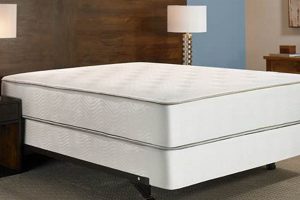
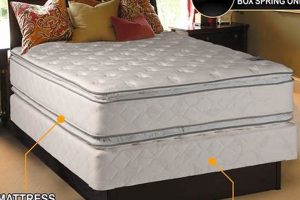
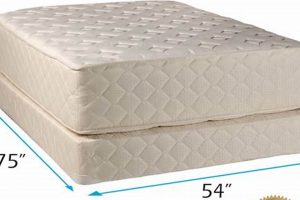
The necessity of a box spring for memory foam mattresses is a common point of inquiry among consumers. A box spring, traditionally composed of coils and a wooden frame, serves to elevate a mattress, provide support, and absorb shock. However, the construction and properties of memory foam mattresses often render the traditional benefits of a box spring redundant or even detrimental.
Modern mattress designs, particularly those employing memory foam, are engineered for compatibility with various support structures. The support provided by a traditional box spring might not be optimal, potentially affecting the lifespan and performance of the memory foam. Furthermore, the solid, even surface offered by alternative foundations can often enhance the comfort and support qualities of a memory foam mattress. The historical reliance on box springs stems from older innerspring mattress designs that lacked the inherent structural integrity of contemporary foam mattresses.
The following sections will delve into suitable alternatives, outline the factors to consider when selecting a foundation for a memory foam mattress, and address the implications of using a box spring versus other support systems. These considerations include warranty requirements, the type of bed frame used, and the desired level of support and height.
Considerations Regarding Memory Foam Mattress Support
Proper support is crucial for the longevity and performance of a memory foam mattress. The following recommendations offer guidance on choosing the appropriate foundation.
Tip 1: Review Manufacturer’s Warranty. Consult the mattress’s warranty documentation. Many manufacturers stipulate approved foundation types, and using an unapproved support system may void the warranty.
Tip 2: Evaluate Bed Frame Compatibility. The existing bed frame’s design influences foundation selection. Frames with closely spaced slats or solid platforms are generally suitable for memory foam, potentially negating the need for a separate foundation.
Tip 3: Assess Support Needs. Individuals with higher body weights or specific spinal support requirements may benefit from a solid, non-yielding foundation. This maximizes the pressure relief offered by the memory foam.
Tip 4: Consider Platform Beds. Platform beds provide a solid, even surface. This is frequently ideal for memory foam, promoting proper weight distribution and preventing sagging.
Tip 5: Explore Adjustable Bases. Adjustable bases offer customizable support and positioning. These are often compatible with memory foam mattresses, enhancing comfort and addressing specific medical needs.
Tip 6: Avoid Traditional Box Springs With Coils (Generally). Traditional box springs can create uneven support for memory foam, leading to premature wear and reduced comfort. Alternatives such as solid or slatted foundations are frequently superior.
Tip 7: Check Slat Spacing. If using a slatted foundation, ensure the spacing between slats is minimal (typically no more than a few inches). Excessive gaps can cause the mattress to sag over time.
Selecting the correct foundation ensures optimal support, extends mattress lifespan, and maintains warranty validity. Consider these factors carefully to make an informed decision.
The final section will offer a comprehensive summary of these considerations and provide conclusive guidance on foundation selection for memory foam mattresses.
1. Foundation Requirement
The foundation requirement for a memory foam mattress represents a critical factor in optimizing its performance and lifespan. Unlike traditional innerspring mattresses, memory foam often benefits from specific support structures to prevent sagging and ensure even weight distribution. This requirement directly addresses whether a box spring is necessary or if alternative supports are more suitable.
- Solid Surface Support
Memory foam mattresses typically perform best on a solid, flat surface. This prevents the foam from conforming into gaps, which can lead to uneven support and premature degradation. A solid platform bed or a closely-spaced slatted foundation fulfills this requirement, offering consistent support across the entire mattress surface. The implication is that a traditional box spring, which may lack uniform support, may not be optimal.
- Weight Distribution
Effective weight distribution is paramount for memory foam. The foundation should evenly distribute the sleeper’s weight to prevent localized compression and sagging. Foundations with adequate center support are crucial for heavier individuals. Without this even distribution, the memory foam can deform permanently, compromising comfort and support. This affects the decision of whether or not a coil-based box spring is sufficient.
- Breathability Considerations
While a solid surface is generally recommended, breathability is also a factor. Some slatted foundations are designed with small gaps to promote airflow and prevent moisture buildup within the mattress. This is especially important in humid climates. The trade-off between solid support and breathability must be considered when selecting a foundation. A box spring typically offers minimal breathability compared to slatted options.
- Bed Frame Compatibility
The design of the existing bed frame can influence the foundation requirement. Bed frames with built-in platforms or closely spaced slats may eliminate the need for an additional foundation altogether. Conversely, frames designed for traditional innerspring mattresses might necessitate a solid platform to adequately support the memory foam. Consideration of the existing frame’s structure is integral to deciding if a box spring (or its alternative) is required.
Ultimately, the foundation requirement for a memory foam mattress hinges on providing uniform support, ensuring proper weight distribution, and considering breathability. The specific choice depends on individual needs and existing bed frame configurations. While a traditional box spring may suffice in some instances, alternative foundations frequently offer superior support and longevity for memory foam mattresses.
2. Warranty Implications

The validity of a memory foam mattress warranty is inextricably linked to the type of foundation used. Manufacturers frequently stipulate specific foundation requirements within their warranty terms. Deviation from these requirements, particularly regarding the use of an unsuitable box spring, can render the warranty void. This stipulation arises from the potential for improper support to negatively impact the mattress’s structural integrity and overall performance. For example, a warranty might specify that a solid platform or slatted foundation with a maximum slat spacing be used; failure to comply may invalidate claims related to sagging or deformation. Thus, the question of the appropriate foundation is not merely about comfort but also about maintaining the legal protections afforded by the warranty.
Warranties often detail approved foundation types, considering factors like slat spacing, the presence of a center support beam, and overall structural rigidity. Some manufacturers explicitly disallow the use of traditional coil-based box springs due to their potential to create uneven support and localized pressure points. Conversely, certain “box spring” alternatives, designed with closely spaced wooden slats or solid platforms, might be approved. Therefore, before deciding on a support system, thorough examination of the warranty documentation is imperative. A real-world example includes scenarios where consumers experience premature mattress sagging and subsequently find their warranty claims denied due to the use of a non-compliant foundation.
In summary, the connection between warranty implications and foundation choice for a memory foam mattress is paramount. Neglecting the manufacturer’s stipulations can result in the forfeiture of warranty coverage, potentially leading to significant financial repercussions should the mattress develop defects. Careful adherence to the specified foundation requirements is essential to protect the investment and ensure long-term product satisfaction. The specific warranty requirements must be thoroughly understood before a determination is made regarding support, making it an integral part of the decision-making process.
3. Support Type

The support type employed beneath a memory foam mattress directly influences its performance and longevity, shaping the answer to the question of whether a conventional box spring is necessary. Different support systems offer varying degrees of firmness, flexibility, and breathability, each impacting the way a memory foam mattress conforms to the body and distributes weight. The cause-and-effect relationship is evident: a poorly chosen support type can lead to premature sagging, uneven wear, and diminished comfort, while an appropriate support enhances the mattress’s pressure-relieving properties and extends its lifespan. A key aspect is the consideration that memory foam requires a relatively firm and even surface for optimal performance, something not always provided by traditional coil-based box springs.
Examples of suitable support types include solid platform beds, closely spaced slatted foundations, and adjustable bases. Platform beds provide a completely flat and rigid surface, ideal for preventing sagging and ensuring even weight distribution. Slatted foundations, when constructed with minimal spacing between slats, offer a balance of support and breathability. Adjustable bases allow for customized positioning and support, catering to individual comfort preferences and medical needs. In contrast, traditional box springs, especially older models with worn-out coils, may create uneven support, leading to localized pressure points and accelerated degradation of the memory foam. Understanding these distinctions is critical for maximizing the benefits of a memory foam mattress. For instance, placing a high-density memory foam mattress on an old, sagging box spring would negate the benefits of the foam’s conforming properties, resulting in discomfort and a shortened lifespan for both the mattress and the box spring.
In conclusion, selecting the appropriate support type is paramount when considering a memory foam mattress. While a traditional box spring may be an option in certain circumstances, such as newer models with robust construction, alternative support systems frequently offer superior performance and longevity. Consideration of support type is vital to ensure that the investment in a memory foam mattress yields long-term comfort, proper spinal alignment, and sustained structural integrity. The choice should align with the manufacturer’s recommendations, the sleeper’s individual needs, and the desired lifespan of the mattress.
4. Mattress Longevity

Mattress longevity, the duration a mattress maintains its support and comfort characteristics, is intrinsically linked to the foundation upon which it rests. The appropriateness of the foundation, in relation to the mattress type, significantly influences its lifespan. An unsuitable support system, such as a traditional box spring beneath a memory foam mattress, can accelerate wear and reduce the mattress’s serviceable life.
- Even Weight Distribution
The capacity of a foundation to evenly distribute weight is crucial. Memory foam, in particular, requires consistent support to prevent localized compression and sagging. A foundation that lacks sufficient support, whether due to worn coils in a box spring or excessive gaps between slats, will result in uneven weight distribution, leading to premature degradation of the foam layers and reduced mattress lifespan. For example, placing a memory foam mattress on a box spring with deteriorated coils concentrates pressure on specific areas, causing those areas to break down more quickly than the rest of the mattress.
- Structural Integrity of the Foundation
The structural integrity of the foundation itself plays a vital role. A weak or unstable foundation, even if initially appearing adequate, can deform over time, compromising its ability to support the mattress effectively. This deformation translates to uneven support and accelerated wear. A common scenario involves a box spring with a broken frame or sagging springs; such a foundation will fail to provide the necessary support, causing the memory foam to distort and lose its original shape, thus reducing its useful life.
- Ventilation and Moisture Control
While less direct than weight distribution, ventilation influences longevity. Adequate airflow beneath the mattress helps to dissipate moisture and prevent the growth of mold or mildew, which can degrade the foam over time. A solid platform, lacking ventilation, may trap moisture, potentially shortening the mattress’s lifespan, unless the mattress itself incorporates breathable materials. The inverse is true for memory foam used in highly humid environments where increased care and attention to ensure consistent aeration becomes paramount.
- Compliance with Manufacturer Recommendations
Following manufacturer recommendations for foundation type is essential for maximizing mattress longevity. Manufacturers often specify approved foundations, and using an unapproved support system may not only void the warranty but also accelerate wear and tear. These recommendations are based on extensive testing and an understanding of how different foundations interact with the mattress’s materials. Ignoring these guidelines, such as using a traditional box spring when a solid platform is recommended, increases the risk of premature mattress failure.
In conclusion, the question of whether a memory foam mattress requires a box spring is fundamentally a question of optimizing mattress longevity. The selection of an appropriate foundation, one that provides even weight distribution, maintains structural integrity, facilitates adequate ventilation, and complies with manufacturer recommendations, is critical for extending the mattress’s lifespan and preserving its comfort characteristics. Disregarding these factors can lead to premature wear, reduced support, and a diminished return on the mattress investment.
5. Height Preference

Height preference in bedding configurations relates directly to the choice of foundation and, consequently, to the necessity of a box spring beneath a memory foam mattress. The desired overall bed height influences the type of support structure selected, impacting both aesthetics and ease of use.
- Accessibility Considerations
The height of a bed impacts accessibility, particularly for individuals with mobility limitations. A lower bed may be easier to get into and out of for some, while others may find a higher bed more comfortable. The choice of foundation, whether a low-profile platform or a taller box spring alternative, directly affects the overall bed height and should align with the user’s physical needs. For example, elderly individuals or those with joint pain may require a higher bed for easier ingress and egress, potentially favoring a thicker foundation or a bed frame designed to increase height.
- Aesthetic Alignment
Bed height contributes significantly to the aesthetic of a bedroom. A lower bed can create a more modern or minimalist look, while a taller bed may convey a sense of luxury or traditional elegance. The foundation choice must complement the desired aesthetic. A low-profile platform bed, often negating the need for a box spring, results in a lower overall height. Conversely, incorporating a foundation atop a standard bed frame increases height. Visual preferences often dictate whether a box spring alternative is needed to achieve the desired visual effect.
- Mattress Thickness Compensation
Memory foam mattresses vary in thickness. A thinner mattress may require a higher foundation to achieve a comfortable bed height, whereas a thicker mattress might only need a low-profile support. This relationship means the foundation choice is dictated not only by support needs, but also by the mattress’s dimensions. If a thick memory foam mattress is selected, a traditional box spring might make the bed excessively high, while a thinner mattress on a platform bed might be too low.
- Storage Considerations
The need for under-bed storage can influence height preferences and, therefore, foundation selection. A higher bed allows for greater storage space underneath, facilitating organization within the bedroom. Achieving this increased height might involve selecting a taller foundation or a bed frame designed to accommodate storage containers. The desire for storage can make a box spring alternative, one that elevates the mattress sufficiently, a practical choice.
In conclusion, height preference plays a crucial role in determining whether a box spring, or an alternative support system, is needed for a memory foam mattress. This preference is shaped by accessibility needs, aesthetic considerations, mattress thickness, and storage requirements. These factors, when considered holistically, guide the selection of a foundation that not only provides adequate support but also achieves the desired bed height and overall bedroom aesthetic.
Frequently Asked Questions
The following addresses common inquiries regarding the necessity of a box spring for memory foam mattresses, providing detailed and objective information.
Question 1: Can a traditional coil-based box spring damage a memory foam mattress?
A traditional coil-based box spring may, over time, create uneven support for a memory foam mattress. This unevenness can lead to localized pressure points and accelerated wear on the mattress, potentially diminishing its lifespan and compromising its comfort characteristics.
Question 2: Are there specific types of foundations recommended for memory foam mattresses?
Solid platform beds and slatted foundations with minimal spacing between slats are generally recommended. These foundations provide a flat, even surface that supports the memory foam and prevents sagging. Adjustable bases are also suitable, offering customizable support and positioning.
Question 3: What happens if a memory foam mattress is placed directly on the floor?
Placing a memory foam mattress directly on the floor can restrict airflow, potentially leading to moisture buildup and the growth of mold or mildew. It may also void the warranty and attract dust mites. Additionally, it reduces accessibility and can be uncomfortable for some individuals.
Question 4: How does the weight of the sleeper influence the choice of foundation?
Individuals with higher body weights require a foundation that provides robust support. A solid platform bed or a slatted foundation with reinforced center support is recommended to ensure even weight distribution and prevent sagging. The foundation must be capable of handling the combined weight of the mattress and the sleeper.
Question 5: Can an old or damaged box spring adequately support a new memory foam mattress?
An old or damaged box spring is not recommended for use with a new memory foam mattress. Worn coils or structural damage can create uneven support and accelerate wear on the mattress, negating its comfort benefits and potentially voiding the warranty.
Question 6: What are the key considerations when selecting a slatted foundation for a memory foam mattress?
Key considerations include slat spacing, slat material, and the presence of a center support beam. The spacing between slats should be minimal (typically no more than a few inches) to prevent sagging. The slats should be made of durable material, such as hardwood, and a center support beam is recommended for added stability.
In summary, while a traditional box spring might seem like a straightforward solution, careful consideration of alternative foundation types, weight distribution, warranty stipulations, and ventilation is crucial for maximizing the lifespan and comfort of a memory foam mattress.
The following section will provide a concise summary, offering final guidance regarding the question “Does a memory foam mattress need a box spring?”
Does a Memory Foam Mattress Need a Box Spring? A Summary
The preceding discussion clarifies that the suitability of a traditional box spring for use with a memory foam mattress is not absolute. While a box spring may function as a support system, its coil-based construction often fails to provide the even, rigid surface optimal for memory foam performance. Factors such as mattress warranty stipulations, weight distribution considerations, and desired bed height play crucial roles in determining the appropriate foundation. Alternative support systems, including solid platform beds and closely-spaced slatted foundations, frequently offer superior support and contribute to extended mattress lifespan. The presence of an existing, compatible bed frame may also negate the need for any additional foundation.
Therefore, the decision regarding foundation selection for a memory foam mattress necessitates a thorough evaluation of individual needs and circumstances. Prioritizing a stable, even support surface is paramount to maximizing the benefits of memory foam technology and safeguarding the mattress investment. While a traditional box spring may suffice in certain cases, the informed consumer should carefully weigh the alternatives to ensure optimal sleep quality and long-term mattress performance. A proactive approach to understanding foundation requirements is essential for achieving lasting comfort and value.