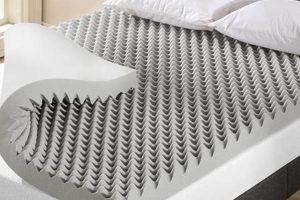
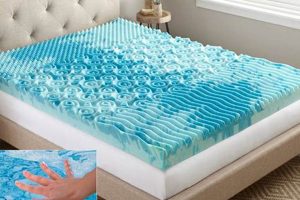
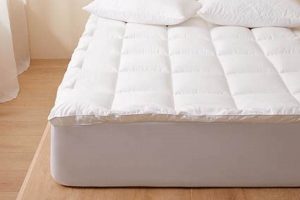
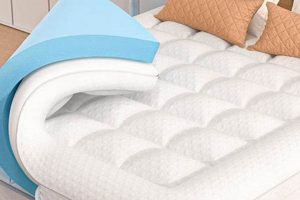
An added layer of comfort placed atop a standard college bed, this product is designed to enhance the sleeping experience in often-uncomfortable dormitory settings. Constructed from materials like memory foam, latex, or down alternatives, it aims to improve the existing, typically thin and firm, mattress. For example, a student struggling with back pain might choose a memory foam option to alleviate pressure points and promote better spinal alignment.
The value of such an addition stems from its ability to provide improved sleep quality, leading to enhanced academic performance and overall well-being. Historically, students accepted uncomfortable bedding as a necessary part of the college experience. However, increased awareness of the importance of sleep and the availability of affordable comfort solutions have made these products increasingly popular. The benefits include pressure relief, temperature regulation, and increased hygiene, protecting the underlying mattress from spills and stains.
Understanding the different types available, considering factors such as thickness, material, and budget, is essential before making a purchase. Furthermore, proper care and maintenance ensure longevity and sustained comfort throughout the academic year. The subsequent sections will delve into these crucial aspects, providing a detailed guide for selecting the ideal solution for individual needs.
Optimizing Selection and Usage
This section provides essential guidance to ensure the proper selection and maintenance of a product intended to enhance comfort and support on standard dormitory mattresses. Careful consideration of the following points can maximize the investment and contribute to improved sleep quality during the academic year.
Tip 1: Determine Ideal Material: Memory foam offers pressure relief and conforms to the body, while latex provides a more responsive and breathable surface. Consider individual sleeping preferences and sensitivities to materials. For example, individuals who sleep hot may benefit from latex or gel-infused memory foam, which promotes airflow.
Tip 2: Assess Thickness Requirements: The thickness influences the degree of comfort and support provided. A thinner profile, around 2 inches, offers moderate cushioning, while a thicker option, such as 4 inches, delivers enhanced pressure relief and support, especially beneficial for side sleepers.
Tip 3: Evaluate Density Specifications: Higher density foam tends to be more durable and supportive, offering a longer lifespan. Consider the weight capacity of the foam, especially for individuals with larger body types. Opt for higher densities to prevent premature sagging or compression.
Tip 4: Consider Waterproof or Water-Resistant Options: Dormitories are prone to spills; selecting a waterproof or water-resistant option protects the core material from damage and simplifies cleaning. A waterproof cover significantly extends the lifespan and maintains hygiene.
Tip 5: Research Mattress Size Compatibility: Dorm mattresses often have non-standard dimensions. Accurately measure the mattress before purchasing to ensure a proper fit. An ill-fitting product can shift and become uncomfortable during sleep.
Tip 6: Prioritize Proper Ventilation and Cleaning: Regular cleaning and airing out help prevent the buildup of allergens and maintain hygiene. Follow manufacturer instructions for cleaning and consider using a mattress protector to further safeguard the product.
Tip 7: Understand Warranty and Return Policies: Before finalizing a purchase, carefully review the warranty and return policies. A reputable manufacturer offers a satisfaction guarantee and a reasonable return window, allowing for assessment of comfort and support.
By thoughtfully applying these recommendations, individuals can optimize the selection and usage of products designed for enhancing dormitory sleeping arrangements, leading to improved sleep and overall well-being throughout their academic journey.
The subsequent section will discuss common issues and troubleshooting tips related to maximizing the benefits of this enhancement to the standard dormitory mattress.
1. Material Density
Material density, when referring to a dorm mattress topper, is a critical parameter dictating the product’s support, durability, and longevity. Density, measured in pounds per cubic foot (lbs/ft), signifies the amount of material packed into a given volume. Higher density foam, such as memory foam or latex, offers greater resistance to compression and deformation under pressure. This translates to enhanced support for the sleeper, maintaining proper spinal alignment and reducing pressure points, especially crucial for individuals with pre-existing back issues or those unaccustomed to the typically firm dorm mattress. A low-density product, conversely, will compress more readily, leading to sagging and a loss of support over time, diminishing its comfort and therapeutic benefits.
The practical significance of understanding material density lies in its direct impact on the lifespan and performance of the topper. For instance, a high-density memory foam topper might maintain its shape and support for several years with proper care, while a low-density alternative could degrade within a single academic year. Furthermore, density influences heat retention; denser materials tend to trap more heat, potentially causing discomfort for some sleepers. Therefore, individuals prone to overheating should consider toppers with lower densities or those infused with cooling agents like gel. The choice between density levels becomes a trade-off between support, durability, and thermal regulation, necessitating careful consideration of individual needs and preferences. Higher material density is preferable in a dorm mattress topper.
In summary, material density is a fundamental determinant of a dorm mattress topper’s effectiveness. It directly impacts the support provided, the product’s lifespan, and its thermal properties. Selecting a product with appropriate density, balanced against individual comfort preferences and budget considerations, is essential for optimizing sleep quality and overall well-being within the challenging environment of a college dormitory.
2. Thickness Measurement

Thickness measurement, in the context of a dorm mattress topper, directly influences the degree of comfort and support provided to the sleeper. This dimension, typically expressed in inches, represents the vertical distance from the top surface to the bottom surface of the topper. A greater thickness generally translates to a more substantial layer of cushioning, which can effectively mitigate the discomfort associated with the often-thin and firm mattresses found in dormitory settings. For example, a topper with a thickness of 4 inches offers significantly more pressure relief than one with
only 2 inches, particularly for side sleepers who require greater contouring to alleviate pressure on their shoulders and hips. Inadequate thickness, conversely, may fail to provide sufficient cushioning, rendering the topper ineffective in improving sleep quality.
The choice of thickness is not solely determined by comfort preference; it also depends on the sleeper’s body weight and sleeping position. Individuals with higher body weights may necessitate a thicker topper to prevent bottoming out and ensure adequate support. Furthermore, the condition of the existing dorm mattress plays a role. If the underlying mattress is severely worn or damaged, a thicker topper becomes even more crucial to compensate for the lack of support. It is vital to note that excessively thick toppers can also present challenges. They may elevate the sleeper too high, making it difficult to get in and out of bed, especially if the dorm bed frame is already raised. Therefore, a balanced approach is necessary, considering both the individual’s needs and the specific characteristics of the sleeping environment.
In summary, thickness measurement is a key factor in determining the efficacy of a dorm mattress topper. It directly affects comfort, support, and the overall sleeping experience. Careful consideration of body weight, sleeping position, and the condition of the existing mattress is essential when selecting the appropriate thickness. A well-chosen topper thickness can significantly enhance sleep quality, promoting better academic performance and overall well-being during the college years.
3. Water Resistance

Water resistance, as a characteristic of a dorm mattress topper, plays a critical role in preserving hygiene and extending the lifespan of the product. Dormitories, due to their communal nature and the habits of young adults, are susceptible to spills, stains, and accidental liquid exposure. Without water resistance, such incidents can lead to the penetration of fluids into the topper’s core material, fostering the growth of mold, mildew, and bacteria. This not only creates unsanitary sleeping conditions but also degrades the topper’s structural integrity, requiring premature replacement. The presence of water resistance acts as a protective barrier, preventing liquid absorption and simplifying cleanup, thus mitigating these risks.
The practical application of water resistance in a dorm mattress topper is evident in the variety of protective materials and construction techniques employed. These include the use of waterproof or water-resistant fabrics as outer layers, such as polyurethane laminates or tightly woven microfiber. Some toppers feature internal barriers that prevent liquid penetration even if the outer layer is compromised. For instance, a student accidentally spilling a beverage onto a topper with a waterproof cover can simply wipe the liquid away without concern for saturation or staining. In contrast, a non-water-resistant topper would require immediate and thorough cleaning to prevent permanent damage, a task often neglected in the fast-paced dormitory environment. Water resistance does not mean waterproof; resistant surfaces can handle spills for short periods but may eventually allow seepage.
In conclusion, water resistance is a non-negotiable feature for dorm mattress toppers. It offers essential protection against common dormitory mishaps, safeguarding hygiene and prolonging product life. The ability to easily clean spills and prevent the growth of harmful microorganisms contributes to a healthier and more comfortable sleeping environment, indirectly supporting academic success and overall well-being. While selecting for water resistance, users should note the distinction between resistance and full waterproofing, taking into account factors such as cost and breathability. Ensuring this feature in a dorm mattress topper is crucial for withstanding the unique challenges of dorm life.
4. Size Accuracy
Size accuracy constitutes a fundamental aspect of a dorm mattress topper, directly influencing comfort, support, and overall functionality. The dimensions of a dorm mattress frequently deviate from standard bed sizes, presenting a challenge in selecting properly fitting accessories. Inaccurate dimensions in a mattress topper can lead to several detrimental effects. A topper that is too small will leave portions of the mattress exposed, negating the intended benefits of added comfort and protection. Conversely, an oversized topper may bunch, fold, or overhang the edges of the mattress, creating an uneven sleeping surface and increasing the risk of accidental falls. The intended pressure relief and spinal alignment benefits are compromised when the product does not precisely match the dimensions of the existing mattress.
The practical significance of size accuracy is exemplified in real-world dormitory scenarios. Consider a student purchasing a “twin XL” topper without verifying the actual measurements of their dorm mattress. If the mattress is slightly shorter or narrower than the standard “twin XL” dimensions, the topper may shift during sleep, creating uncomfortable lumps or exposing sections of the original mattress. To mitigate these issues, precise measurement of the dormitory mattress prior to purchase is essential. Reviewing the manufacturer’s specifications for the topper and comparing them against the measured dimensions ensures a proper fit. Some manufacturers offer toppers in custom sizes to accommodate non-standard dormitory mattresses, albeit at a potentially higher cost. Implementing such practices becomes integral to reaping the benefits of the product within the challenging constraints of dormitory accommodations.
In conclusion, size accuracy is paramount in the selection of a dorm mattress topper. Deviations from the mattress’s actual dimensions undermine the topper’s intended function, compromising comfort, support, and overall usability. Addressing this challenge requires diligent measurement and comparison, ensuring a proper fit and maximizing the benefits of the topper. Prioritizing size accuracy ultimately contributes to a more restful and supportive sleeping environment, promoting better academic performance and overall well-being during the college experience. The potential for non-standard dorm mattress sizes should not be underestimated when seeking to enhance sleep quality within these environments.
5. Cleaning Protocol

Adhering to a stringent cleaning protocol is essential for maintaining the hygiene, longevity, and overall effectiveness of a dorm mattress topper. The unique environment of a dormitory, characterized by shared living spaces and frequent use, necessitates regular and thorough cleaning to prevent the buildup of allergens, bacteria, and stains. Failure to implement appropriate cleaning practices can compromise the topper’s comfort, structural integrity, and the health of the user.
- Preventative Measures
Employing preventative measures significantly reduces the frequency and intensity of required cleaning. Using a mattress protector, specifically designed for dorm mattress toppers, forms a barrier against spills, stains, and dust mites. For example, immediately addressing spills with a clean cloth minimizes the risk of permanent stain
ing and prevents moisture from penetrating the topper’s core. Regular vacuuming, at least bi-weekly, removes surface debris and allergens. Incorporating these measures into a routine maintenance schedule proactively preserves the cleanliness of the topper. - Spot Cleaning Techniques
Effective spot cleaning techniques are critical for addressing localized stains and spills without compromising the integrity of the topper. Identifying the type of stainbe it food, beverage, or bodily fluidguides the selection of appropriate cleaning agents. Gentle detergents, diluted according to manufacturer instructions, are preferable to harsh chemicals that can damage the topper’s material. Applying the cleaning solution sparingly, blotting rather than rubbing, and thoroughly drying the area prevents water damage and discoloration. Neglecting prompt and proper spot cleaning can result in permanent stains and the proliferation of bacteria.
- Deep Cleaning Methods
Periodically implementing deep cleaning methods revitalizes the topper and eliminates deeply embedded contaminants. Depending on the topper’s material, suitable methods may include steaming, professional cleaning, or washing (if the topper is machine-washable). Steaming, for instance, effectively sanitizes the topper without saturating it with water, while professional cleaning ensures thorough removal of stubborn stains and allergens. Prior to deep cleaning, consulting the manufacturer’s care instructions is imperative to avoid damage. Deep cleaning, conducted at least twice per academic year, enhances hygiene and extends the topper’s usable life.
- Drying and Ventilation
Proper drying and ventilation are crucial following any cleaning procedure to prevent the growth of mold and mildew within the dorm mattress topper. Direct sunlight, when feasible and appropriate for the material, offers natural sanitization and promotes rapid drying. Air drying in a well-ventilated room is an alternative. Utilizing fans or dehumidifiers expedites the drying process and minimizes the risk of moisture buildup. Reassembling the topper and mattress only after complete drying ensures a hygienic and comfortable sleeping surface. Insufficient drying leads to unpleasant odors and potentially harmful microbial growth, negating the benefits of cleaning.
These multifaceted cleaning protocols, encompassing preventative measures, spot cleaning, deep cleaning, and proper drying, collectively contribute to the sustained cleanliness and performance of the dorm mattress topper. Integrating these practices into a regular maintenance schedule is indispensable for preserving the hygiene and extending the lifespan of the product, thereby enhancing the overall sleeping experience in the often-challenging environment of a dormitory.
Frequently Asked Questions About Dorm Mattress Toppers
This section addresses common inquiries regarding dorm mattress toppers, providing essential information to aid informed decision-making.
Question 1: What are the primary benefits of utilizing a dorm mattress topper?
The addition of a dorm mattress topper enhances comfort, improves support, prolongs mattress life, and promotes better sleep quality. Dorm mattresses are often thin and uncomfortable, rendering a topper a cost-effective solution for enhanced rest.
Question 2: How does one select the appropriate thickness for a dorm mattress topper?
The selection of thickness is influenced by body weight and sleeping preferences. Lighter individuals or those preferring firmer support may opt for a thinner topper (2-3 inches), while heavier individuals or side sleepers might benefit from a thicker topper (4 inches or more).
Question 3: What materials are commonly used in dorm mattress toppers, and what are their respective advantages?
Common materials include memory foam, latex, and down alternatives. Memory foam conforms to the body, offering pressure relief; latex provides a responsive and breathable surface; down alternatives offer a plush and hypoallergenic option. Consider individual needs and sensitivities when selecting a material.
Question 4: How does one clean and maintain a dorm mattress topper?
Regular vacuuming, spot cleaning, and the use of a mattress protector are recommended. Spot cleaning should be performed with a mild detergent and water, followed by thorough drying. Consult the manufacturer’s care instructions for specific cleaning guidelines.
Question 5: Are dorm mattress toppers available in specific sizes to fit typical dorm beds?
Dorm mattress toppers are typically available in twin and twin XL sizes, which are common dimensions for dorm beds. Accurate measurement of the existing mattress is crucial to ensure a proper fit. Some suppliers offer custom sizing.
Question 6: What are the key considerations regarding water resistance in a dorm mattress topper?
Water resistance protects against spills and stains, extending the life of the topper and promoting hygiene. Look for toppers with waterproof or water-resistant covers. Note the difference between water-resistant and waterproof options, as the former will not protect against spills indefinitely.
These FAQs offer a foundational understanding of dorm mattress toppers, their benefits, and key considerations for selection and maintenance.
The subsequent section will offer a buyer’s guide for “dorm mattress toppers.”
In Summary
The preceding exploration of the dorm mattress topper has illuminated its multifaceted nature, extending beyond mere comfort enhancement. Key considerations, spanning material density, thickness, water resistance, size accuracy, and cleaning protocols, directly influence its efficacy and longevity within the unique demands of dormitory living. Failure to adequately address these elements diminishes the potential benefits, rendering the investment imprudent.
A thoughtfully selected and diligently maintained dorm mattress topper serves as an investment in academic performance and well-being, offsetting the inherent discomforts of standard dormitory mattresses. Individuals are encouraged to prioritize these factors, recognizing the correlation between sleep quality and overall success during formative academic years. Continued vigilance in product selection and maintenance will yield optimal results, maximizing the potential for improved sleep and academic achievement.