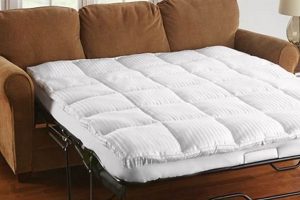
A convoluted foam pad designed to enhance the sleep surface of a king-sized bed represents an affordable method for increasing comfort and potentially alleviating pressure points. Its distinct profile, characterized by raised portions resembling an egg carton, allows for improved air circulation and a degree of conforming support. The intended application involves placement directly atop the existing mattress, beneath the fitted sheet.
This type of bedding accessory is particularly valuable for individuals seeking a budget-friendly alternative to replacing an entire mattress, or for those experiencing temporary discomfort during sleep. Historically, convoluted foam has been used in healthcare settings to prevent bedsores, highlighting its pressure-relieving capabilities. Benefits can include reduced tossing and turning, minimized motion transfer, and a cooler sleep environment due to enhanced airflow.
The subsequent discussion will explore the various factors to consider when selecting such a foam bed accessory, including density, material composition, and appropriate use cases. Additionally, it will delve into the maintenance requirements and potential drawbacks associated with this specific category of sleep product. The aim is to provide a comprehensive understanding to assist in informed purchasing decisions.
Selecting and Utilizing a Convoluted Foam King Mattress Overlay
The following recommendations provide guidance on selecting and maximizing the benefits derived from a convoluted foam pad designed for king-size mattresses. Careful consideration of these factors will contribute to an informed purchasing decision and optimal utilization.
Tip 1: Assess Foam Density: Prioritize higher-density foam options for enhanced durability and sustained support. Lower-density foams tend to degrade more rapidly, compromising their pressure-relieving capabilities over time.
Tip 2: Evaluate Material Composition: Consider the specific type of foam used. Memory foam variations offer enhanced contouring and pressure relief, while latex options provide greater resilience and breathability. Traditional polyurethane foam represents a more economical choice.
Tip 3: Measure Mattress Dimensions Accurately: Ensure the selected pad precisely corresponds to the dimensions of a king-size mattress (approximately 76 inches wide by 80 inches long). An ill-fitting topper may shift during sleep, negating its intended benefits.
Tip 4: Manage Expectations Regarding Support: While a convoluted foam overlay can augment comfort, it is not a substitute for a supportive mattress. Individuals requiring substantial spinal support should address underlying mattress deficiencies before relying solely on an overlay.
Tip 5: Consider Airflow Considerations: The convoluted design inherently promotes air circulation. Maximize this benefit by using breathable bedding materials (e.g., cotton or linen sheets) to facilitate heat dissipation.
Tip 6: Implement Regular Cleaning Practices: Vacuum the pad periodically to remove dust and debris. Address spills promptly with a damp cloth and mild detergent. Avoid harsh chemicals that could degrade the foam.
Tip 7: Rotate Periodically: To promote even wear and prevent compression in specific areas, rotate the pad 180 degrees every few months.
Adhering to these recommendations can optimize the effectiveness and longevity of a convoluted foam pad, resulting in improved sleep quality and comfort.
The subsequent section will address potential drawbacks and alternative solutions for individuals with specific sleep-related concerns.
1. Pressure Point Relief

The primary mechanism by which a convoluted foam overlay contributes to pressure point relief involves the redistribution of body weight across a larger surface area. The characteristic peaks and valleys of the “egg crate” design allow for localized compression, conforming to the body’s contours and minimizing concentrated pressure on areas such as the hips, shoulders, and knees. This reduction in localized pressure promotes improved blood circulation and reduces the likelihood of discomfort that can disrupt sleep. Individuals experiencing conditions such as arthritis or fibromyalgia often benefit from this pressure redistribution, as it mitigates pain signals arising from sensitive areas. The effectiveness of this pressure relief is directly proportional to the density and quality of the foam material used in the topper’s construction.
Consider, for instance, a person who sleeps primarily on their side. Without adequate support, the hip and shoulder joints bear a disproportionate amount of weight, potentially leading to numbness, tingling, or aching. The conforming nature of the convoluted foam enables these areas to sink slightly into the topper, effectively distributing the pressure more evenly across the body. Conversely, a firm, unyielding mattress may exacerbate these pressure points, leading to restless sleep and morning stiffness. In practical terms, the selection of a higher-density foam topper will typically provide more substantial and longer-lasting pressure relief compared to a lower-density alternative. Additionally, the design promotes airflow, reducing heat build-up, a common cause of discomfort that intensifies pressure sensitivity.
In summary, the connection between pressure point relief and a convoluted foam king-size bed accessory is rooted in the topper’s ability to contour to the body and redistribute weight. This reduction in concentrated pressure leads to improved blood circulation, minimized discomfort, and enhanced sleep quality. The efficacy of this pressure relief depends on factors such as foam density, material composition, and individual sleep position. It is, however, essential to acknowledge that such a topper addresses surface-level comfort; underlying mattress support deficiencies may necessitate more comprehensive solutions. The accessory serves as an accessible and cost-effective intervention for those seeking enhanced comfort and reduced pressure-related sleep disturbances.
2. Enhanced Air Circulation
The architectural design inherent in convoluted foam mattress overlays promotes improved airflow compared to solid, flat surfaces. This characteristic is particularly relevant for king-size beds, given their larger surface area and the potential for increased heat retention. The channels and contours facilitate the movement of air, mitigating heat build-up and contributing to a cooler sleep environment.
- Convoluted Surface Geometry
The defining feature of this product is its uneven surface, marked by raised peaks and recessed valleys. This geometry creates interconnected channels that enable air to circulate freely beneath the sleeper. The increased surface area, re
lative to a flat sheet of foam, allows for greater heat dissipation. The practical implication of this design is reduced sweating during sleep, leading to enhanced comfort and potentially fewer sleep disruptions. - Material Permeability
While the physical design of the topper facilitates airflow, the inherent breathability of the foam material also contributes to this characteristic. Open-cell foam structures, commonly employed in the construction of these overlays, permit air to pass through the material itself. Closed-cell foams, conversely, tend to trap heat and moisture. The choice of open-cell foam maximizes the benefits of the convoluted design, allowing for optimal air exchange and temperature regulation. For example, Latex and some memory foams are open-cell. Polyurethane foams are often closed-cell
- Moisture Wicking
The enhanced air circulation promoted by the convoluted design also aids in the evaporation of moisture. Body heat and perspiration can accumulate in bedding materials, creating an uncomfortable and potentially unhygienic sleep environment. The airflow channels facilitate the removal of moisture, reducing the likelihood of bacterial growth and unpleasant odors. This moisture-wicking capability contributes to a fresher, more hygienic sleep surface over time.
- Temperature Regulation
The primary benefit of enhanced air circulation lies in its ability to regulate temperature. By facilitating the movement of air and the evaporation of moisture, the convoluted foam overlay helps to maintain a more consistent and comfortable sleep temperature. This is particularly important for individuals who tend to sleep hot or who live in warmer climates. The overlay acts as a buffer, preventing excessive heat build-up and promoting a cooler, more restful night’s sleep.
In summary, the improved airflow afforded by the distinct design of a convoluted foam king-size mattress overlay offers tangible benefits for sleep comfort. The combination of surface geometry, material permeability, moisture-wicking properties, and temperature regulation contribute to a cooler, drier, and more hygienic sleep environment. This design feature serves as a crucial component in enhancing sleep quality, particularly for those sensitive to temperature fluctuations during the night.
3. Improved Sleep Quality
The link between improved sleep quality and a convoluted foam mattress overlay for a king-size bed stems from several interrelated factors. The design of the topper aims to address common sleep disruptors, thereby facilitating a more restful and uninterrupted sleep experience. A primary mechanism involves pressure redistribution, which alleviates discomfort and reduces tossing and turning. This, in turn, minimizes sleep fragmentation, allowing for longer periods spent in deeper, more restorative sleep stages. Enhanced airflow also contributes by regulating temperature, preventing overheating, a frequent cause of sleep disturbance. Individuals with mild back pain or joint discomfort may find that the conforming support offered by the topper reduces pain-related awakenings. The result is often an increase in both the duration and perceived quality of sleep.
The significance of improved sleep quality extends beyond subjective feelings of rest. Adequate sleep is crucial for a range of physiological processes, including cognitive function, immune system regulation, and hormone balance. Chronic sleep deprivation has been linked to increased risk of cardiovascular disease, diabetes, and mental health disorders. Therefore, interventions that promote better sleep, such as the use of a convoluted foam overlay, can have a positive impact on overall health and well-being. It is important to note, however, that the effectiveness of the topper may vary depending on individual sleep preferences, underlying medical conditions, and the quality of the existing mattress. If addressing sever sleep problems, a physician should be contacted for more solutions. If one is looking for a quick easy fix, this is it.
In conclusion, the potential for improved sleep quality is a key benefit associated with the use of a convoluted foam king-size mattress overlay. This improvement is achieved through a combination of pressure redistribution, enhanced airflow, and conforming support. While the topper is not a panacea for all sleep disorders, it can serve as a cost-effective and accessible tool for enhancing comfort and promoting more restful sleep, ultimately contributing to improved health outcomes. Individuals with existing sleep conditions or chronic pain should consult with a healthcare professional to determine the most appropriate course of treatment.
4. Cost-Effective Comfort
The appeal of a convoluted foam mattress overlay for a king-size bed often resides in its capacity to provide enhanced comfort at a comparatively low cost. The accessory functions as an economical alternative to replacing an entire mattress, particularly when the existing mattress retains adequate support but lacks sufficient cushioning or pressure relief. The manufacturing process for convoluted foam is generally less complex and resource-intensive than that of a complete mattress, resulting in a lower retail price. This affordability makes it an accessible option for individuals on a budget seeking to improve their sleep surface. For example, students, renters, or those in temporary living situations frequently find these overlays a suitable and budget-friendly means of enhancing comfort.
The “cost-effective” aspect extends beyond the initial purchase price. A well-maintained convoluted foam overlay can prolong the lifespan of the underlying mattress by absorbing wear and tear, thereby delaying the need for a more substantial investment in a replacement mattress. Furthermore, the comfort enhancements provided by the overlay can potentially reduce the need for other sleep-related aids, such as specialized pillows or pain medication, resulting in additional long-term cost savings. For instance, someone experiencing mild back pain might find that the addition of an egg crate topper alleviates their discomfort sufficiently to avoid costly physical therapy sessions or prescription medications. However, one must be aware of the support of an egg crate topper. If the foam becomes thin from years of use, you will need a new one as it will no longer offer comfort.
In summary, the relationship between cost and comfort is a central determinant of the popularity for egg crate mattress toppers. The accessory represents a budget-conscious solution for enhancing sleep quality without incurring the significant expense of a new mattress. While the long-term durability and comfort characteristics may vary based on foam quality and usage patterns, the initial investment is often significantly lower than alternatives, rendering it an attractive option for cost-sensitive consumers. The potential for extending mattress life and reducing reliance on other sleep aids further strengthens its appeal. In certain situations, it is an effective option.
5. Mattress Life Extension
The use of a convoluted foam mattress overlay, specifically a king-siz
e version, can contribute to the extension of a mattress’s useful life. This effect arises from the topper acting as a protective barrier, shielding the mattress surface from direct contact with the sleeper and bedding. The topper absorbs a significant portion of the wear and tear associated with nightly use, mitigating abrasion, compression, and the accumulation of body oils and fluids. By minimizing these direct impacts, the underlying mattress experiences less degradation over time. This protection is particularly relevant for mattresses constructed from materials susceptible to compression or breakdown, such as memory foam or natural latex. For example, a mattress in a guest room, infrequently used, can have its lifespan extended considerably by the use of the egg crate foam.
The ability of the topper to distribute weight more evenly also plays a role in mattress longevity. By spreading the sleeper’s weight across a larger surface area, the topper reduces localized stress on specific areas of the mattress. This is particularly beneficial for individuals who consistently sleep in the same position, as it prevents the formation of indentations or sagging in those areas. Moreover, the topper’s ability to absorb spills and moisture helps prevent these substances from penetrating the mattress core, which can lead to mold growth and structural damage. Consistent use of fitted sheets over the topper further enhances this protective effect, creating a multi-layered barrier against wear and tear. Consistent care such as vacuuming can help extend the lifespan of the topper as well.
In conclusion, the application of a convoluted foam king-size mattress topper offers a tangible means of prolonging the lifespan of an existing mattress. The topper functions as a sacrificial layer, absorbing wear and tear and protecting the underlying mattress from direct contact with the sleeper and environmental factors. While the degree of extension will vary based on the quality of the topper, the type of mattress, and usage patterns, the principle of reducing stress and protecting the surface remains consistent. This approach represents a cost-effective strategy for preserving the integrity and comfort of a mattress, delaying the need for a more substantial investment in a replacement.
6. Ease of Maintenance

The inherent design and material composition of a convoluted foam king-size mattress topper contribute to its relatively simple maintenance requirements. This characteristic stems from the topper’s construction, which primarily consists of a single layer of foam, typically polyurethane or memory foam. The absence of intricate internal components or complex layering simplifies cleaning and care procedures. Furthermore, the open-cell structure of many convoluted foam toppers facilitates ventilation, reducing the likelihood of moisture accumulation and associated bacterial growth. Regular vacuuming to remove dust and debris constitutes the primary maintenance task. Spot cleaning with mild detergent and water can address spills or stains. The lightweight nature of the topper also simplifies handling and repositioning during cleaning.
The importance of ease of maintenance is particularly pronounced in bedding products, given their direct contact with the human body and potential exposure to perspiration, body oils, and allergens. A product that is difficult or time-consuming to clean may lead to neglect, resulting in a build-up of contaminants that can compromise hygiene and sleep quality. Real-life examples include individuals with allergies or sensitivities who benefit from the ability to regularly clean their mattress topper to minimize exposure to dust mites and other allergens. Similarly, individuals with limited mobility or time constraints may appreciate the straightforward maintenance requirements of a convoluted foam topper. A product that requires professional cleaning or extensive disassembly would be less practical for such users.
In summary, the ease of maintenance associated with a convoluted foam king-size mattress topper enhances its overall practicality and appeal. The simple construction, breathable materials, and straightforward cleaning procedures contribute to a product that is easy to care for and maintain in a hygienic condition. This characteristic is especially important for individuals with allergies, mobility limitations, or time constraints. By minimizing the effort required for maintenance, the topper remains a convenient and long-lasting solution for enhancing sleep comfort. However, periodic replacement is still recommended as foam degrades with use.
7. Conforming Support

Conforming support, in the context of a convoluted foam king-size mattress topper, refers to the topper’s ability to mold or adapt to the contours of the body. This adaptation is a direct consequence of the topper’s “egg crate” design, which features a series of raised peaks and recessed valleys. When a person lies on the topper, these peaks compress to varying degrees, accommodating the body’s natural curves and distributing weight more evenly. The significance of conforming support lies in its capacity to alleviate pressure points, promote spinal alignment, and enhance overall sleep comfort. Without this characteristic, the topper would merely provide a flat, unyielding surface, failing to deliver the benefits associated with pressure redistribution and individualized support. Consider an individual with scoliosis; a traditional mattress might exacerbate spinal misalignment, leading to discomfort. The capacity of a convoluted foam topper to conform to the spinal curvature can provide noticeable relief.
The material composition of the topper also significantly impacts its ability to provide conforming support. Memory foam, for example, exhibits a higher degree of conformity compared to traditional polyurethane foam. Memory foam’s viscoelastic properties allow it to respond to body heat and pressure, molding more precisely to the body’s shape. This enhanced conformity translates to greater pressure relief and improved spinal alignment. In practical terms, an individual seeking maximum pressure relief, perhaps due to chronic pain, should prioritize a memory foam convoluted topper. Furthermore, the density of the foam influences the level of support provided; higher density foams offer greater resistance to compression, preventing the sleeper from sinking too deeply into the topper and compromising spinal alignment. Conversely, a topper of insufficient density may bottom out, providing little to no conforming support.
In summary, conforming support is a critical functional component of a convoluted foam king-size mattress topper. It enables the topper to adapt to the body’s contours, alleviating pressure points, promoting spinal alignment, and enhancing sleep comfort. The degree of conforming support depends on the design and material properties of the topper, with memory foam and higher densities offering superior performance. The practical significance of this understanding lies in the ability to select a topper that effectively addresses individual needs and preferences, ensuring a comfortable and restorative sleep experience. While conforming support represents a key benefit, it is important to recognize that the topper’s effectiveness is influenced by the underlying mattress and individual health conditions. An extremely old or unsupportive mattress will undermine benefits of the topper.
Frequently Asked Questions
This section addresses common inquirie
s regarding the selection, use, and maintenance of convoluted foam mattress overlays designed for king-size beds. The information provided aims to clarify typical consumer concerns and misconceptions.
Question 1: What distinguishes “egg crate” foam from other types of mattress toppers?
The defining characteristic is the surface texture, resembling an egg carton, which promotes airflow and pressure redistribution. Other toppers may feature a solid, flat surface lacking these properties.
Question 2: How does the density of the foam impact the performance of an egg crate king size mattress topper?
Higher density foam provides greater support, durability, and resistance to compression. Lower density foam may degrade more quickly and offer less effective pressure relief.
Question 3: Can an egg crate topper correct a sagging or unsupportive mattress?
An egg crate topper primarily enhances surface comfort and pressure relief. It is not a substitute for a supportive mattress and will not correct significant sagging.
Question 4: What is the recommended cleaning procedure for an egg crate king size mattress topper?
Regular vacuuming is essential. Spot clean spills with a damp cloth and mild detergent. Avoid harsh chemicals or submerging the topper in water.
Question 5: How frequently should an egg crate king size mattress topper be replaced?
Replacement frequency depends on usage and foam quality. Signs of degradation, such as flattening, tearing, or loss of support, indicate a need for replacement.
Question 6: Is an egg crate king size mattress topper suitable for individuals with allergies?
The open-cell structure may harbor allergens. Regular cleaning and the use of allergen-resistant bedding are recommended. Hypoallergenic foam options are also available.
In summary, these responses address prevalent concerns about egg crate mattress overlays. Understanding these points can aid in informed purchasing and proper use.
The subsequent section will explore alternative types of mattress toppers and their suitability for specific sleep needs.
Conclusion
The foregoing discussion has elucidated the multifaceted nature of the egg crate king size mattress topper. From its fundamental design and functional attributes to its potential benefits and limitations, a comprehensive understanding of this bedding accessory has been presented. Key points include the topper’s ability to enhance comfort, redistribute pressure, and improve airflow, as well as considerations regarding foam density, material composition, and maintenance requirements.
The information provided is intended to empower informed decision-making. Further research into specific product characteristics and individual sleep needs is encouraged prior to purchase. While the egg crate king size mattress topper represents a viable option for enhancing sleep quality, its suitability ultimately depends on individual circumstances and expectations. Consider this knowledge to navigate the complexities of sleep solutions for a more satisfying rest.
![Top Topper Tips: How to Keep Mattress Topper From Sliding [Guide] | Organic & Natural Mattress Buyer’s Guide: Non-Toxic Sleep Solutions](https://mattressworldpa.com/wp-content/uploads/2025/07/th-6038-300x200.jpg "Top Topper Tips: How to Keep Mattress Topper From Sliding [Guide] Organic & Natural Mattress Buyer’s Guide: Non-Toxic Sleep Solutions")