The process of locating the source of escaping air from an inflatable sleeping surface is a necessary step to maintain its functionality. This involves employing various techniques to identify the precise location from which air is emanating, thereby allowing for subsequent repair. For example, if an air bed deflates unexpectedly overnight, the task at hand is to perform the steps necessary to pinpoint the compromised area causing the deflation.
Identifying the source of air loss is crucial for extending the lifespan of the inflatable. Addressing the problem promptly can prevent further damage and ensure continued comfort during use. Historically, individuals have relied on auditory cues and tactile examination to detect escaping air; modern methods now incorporate visual aids and specialized detection solutions.
The subsequent sections will detail common methods for discovering the source of air loss in such inflatables, providing guidance on preparation, inspection, and repair techniques. This will empower the user to efficiently address the problem and restore the inflatable to its proper working condition.
Locating Imperfections
The following tips outline established procedures for identifying the precise location of air egress from inflatable sleeping surfaces. Diligence and careful execution of these steps will improve the likelihood of successful imperfection detection.
Tip 1: Conduct a Visual Inspection: Prior to any other method, perform a thorough visual examination. Look for signs of wear, punctures, or obvious damage to the surface material, particularly along seams and edges.
Tip 2: Employ the Soapy Water Test: Mix a solution of mild dish soap and water. Apply this solution to small sections of the inflated surface. Escaping air will create bubbles at the point of egress, thereby revealing its location.
Tip 3: Listen Carefully: In a quiet environment, carefully listen for the faint hissing sound of escaping air. Move slowly and deliberately across the surface to increase the chance of audibly detecting the source.
Tip 4: Utilize Tactile Examination: Slowly run a hand across the surface, focusing on areas suspected of damage. Minute air currents may be felt emanating from the imperfection.
Tip 5: Consider Submersion (Limited Application): For smaller inflatables, controlled submersion in water can be effective. Observe for bubbles rising from the point of imperfection.
Tip 6: Mark the Location Precisely: Once an imperfection is located, use a permanent marker or other suitable instrument to clearly demarcate the affected area. This will aid in subsequent repair procedures.
Successful identification of air egress points is the first step toward restoring the inflatable to its intended function. Accurate detection minimizes repair efforts and extends the useful lifespan of the product.
The subsequent section will address techniques for effectively repairing the identified imperfections, ensuring long-term usability of the inflatable.
1. Visual inspection

Visual inspection forms the foundational step in the process of identifying air egress points in inflatable sleeping surfaces. It involves a meticulous examination of the material, seams, and valve components, aiming to locate macroscopic damage or anomalies indicating potential compromise.
- Surface Material Examination
The primary focus involves scrutinizing the surface for punctures, tears, abrasions, or thinning. These defects, often caused by sharp objects or wear, can compromise the air-retention capability. For example, a small puncture from a pet’s claw or a tear resulting from improper storage could be readily identified through careful visual assessment.
- Seam Integrity Assessment
Seams represent inherently vulnerable areas in inflatable structures. Visual assessment here entails checking for separation, fraying, or adhesive failure. Compromised seams allow for air to escape, leading to deflation. Evidence of discoloration or uneven texture along the seam line can indicate a weakening of the bond, foreshadowing potential failure.
- Valve Component Review
The valve, responsible for inflation and deflation, is another critical inspection point. Visual checks should confirm proper seating, absence of cracks or deformation, and secure connection to the surrounding material. Damage or misalignment can result in slow leaks that are not immediately obvious. The valve cap should also be assessed for damage or proper sealing.
- Contamination and Degradation Detection
Visual inspection can also reveal signs of material degradation due to exposure to sunlight, chemicals, or prolonged storage in adverse conditions. Discoloration, brittleness, or a sticky surface texture can indicate that the material has become compromised, making it more susceptible to air loss. Addressing these issues proactively can prevent further deterioration and extend the lifespan of the inflatable.
The efficacy of the search relies on a detailed and systematic approach, ensuring that every area of the inflatable is thoroughly examined. While visual assessment alone may not identify all air egress locations, it significantly narrows the search area, improving the efficiency of subsequent detection methods. Integrating visual checks with other strategies ensures a more comprehensive and effective detection strategy.
2. Auditory detection

Auditory detection serves as a method for identifying air egress points in inflatable sleeping surfaces. This technique relies on the human ear’s ability to perceive the sound of escaping air, often manifested as a faint hissing noise, to pinpoint areas requiring repair.
- Quiet Environment Requirement
The effectiveness of auditory detection is highly dependent on ambient noise levels. To discern the subtle sounds of escaping air, the procedure must be conducted in a quiet environment, free from distractions such as traffic noise, conversations, or electronic devices. This ensures that the faint hissing sound is not masked by other auditory stimuli.
- Systematic Scanning Approach
Effective auditory detection necessitates a methodical approach. The user must systematically scan the surface of the inflated sleeping surface, moving slowly and deliberately to allow sufficient time for the ear to perceive any potential air leaks. This slow and steady scanning prevents overlooking subtle auditory cues indicating compromise.
- Proximity and Amplification
The proximity of the ear to the inflatable surface directly impacts the ability to detect faint air leaks. Moving the ear closer to the surface amplifies the sound, increasing the likelihood of detection. Additiona
lly, cupping the hand behind the ear can further enhance sound reception, acting as a rudimentary amplification device. - Limitations of Auditory Detection
Auditory detection has limitations. Minute imperfections causing slow leaks may produce sounds too faint to be detected by the human ear, even in a quiet environment. Moreover, individuals with hearing impairments may find this method challenging. In such cases, alternative methods such as the soapy water test may prove more effective.
While auditory detection provides a straightforward approach, its success is contingent upon a quiet setting, systematic scanning, and the user’s auditory acuity. When used in conjunction with other detection methods, auditory detection contributes to a more comprehensive assessment of air loss in inflatable sleeping surfaces.
3. Soapy water test

The soapy water test functions as a primary method to locate air egress points in inflatable sleeping surfaces. The procedure capitalizes on the principle that escaping air will create visible bubbles when forced through a thin film of soapy water. This provides a direct visual indication of an imperfection. The test is initiated by mixing a solution of mild dish soap and water, which is then applied to the inflated surface. The presence of sustained bubbling confirms the existence of a leak at that specific location. The underlying cause and effect is that the pressurized air inside the mattress escapes through a hole, causing a bubble in the soapy water due to surface tension. This is important and easy, and is commonly used to locate tire punctures, too.
Consider, for example, an air mattress that gradually deflates overnight. A visual inspection reveals no obvious damage. Applying the soapy water test across the entire surface may reveal a small puncture, undetectable by the naked eye, where a stream of tiny bubbles continuously forms. This immediate visual confirmation allows for precise marking of the affected area, facilitating efficient repair. This is also a very cost effective approach as it requires minimal resource to make the soapy water.
In summary, the soapy water test is a cost-effective, easily implemented, and highly effective means of achieving the objective of locating imperfections in an inflatable sleeping surface. While other methods may offer supplementary information, the ability to directly visualize air egress makes the soapy water test a critical component of the inspection and repair process. This approach simplifies the identification process, allowing for efficient and targeted repairs, ultimately extending the lifespan of the product. However, this process is made difficult in an windy or outdoor environment.
4. Tactile sensitivity

Tactile sensitivity, the ability to perceive physical properties through touch, represents a valuable asset in locating air egress points in inflatable sleeping surfaces. It serves as an adjunct method, employed to detect subtle air currents imperceptible to visual or auditory means. When a leak exists, air escapes, often creating a minute, localized airflow. By carefully moving a hand across the surface of the inflated sleeping surface, individuals may detect these minute airflows, thus indicating the presence and approximate location of the source of air loss. This approach is particularly effective for identifying slow leaks emanating from small punctures or seam imperfections.
The efficacy of tactile sensitivity depends on factors such as ambient temperature, humidity, and individual sensory acuity. In cooler environments, the temperature difference between the escaping air and the surrounding air enhances the sensation of airflow. Similarly, higher humidity levels can increase the perceived moisture associated with the escaping air. An individual with heightened tactile sensitivity is naturally more adept at detecting subtle variations in airflow and pressure. For example, in situations where the soapy water test is impractical due to surface texture or material composition, tactile sensitivity provides a viable alternative. Imagine scanning a velour-covered inflatable; the soapy water might not bead effectively, while tactile sensitivity could still detect subtle air movement.
In conclusion, tactile sensitivity, while subjective and reliant on individual capability and environmental context, contributes meaningfully to the comprehensive process of pinpointing air loss in inflatable sleeping surfaces. It serves as a complementary technique, particularly valuable for identifying slow leaks or in situations where other methods prove ineffective. Understanding and harnessing this sensory ability improves the likelihood of successful repair and prolongs the lifespan of the inflatable. However, one may encounter challenges with applying this method if the air mattress is very thin and flexible.
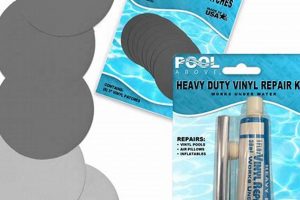
5. Patch kit application

Patch kit application is directly contingent upon successful efforts to find the source of escaping air from an inflatable sleeping surface. Without accurately pinpointing the imperfection, the application of a patch is rendered ineffective. The process follows a sequential logic: air egress must be located before remediation can be initiated. The patch kit application serves as the ultimate corrective measure for identified flaws. If, for example, one fails to accurately determine the source of air loss, the patch will be placed incorrectly, thereby failing to prevent further deflation. The consequence is a continued inability to maintain the inflatable’s intended function. The correct procedure should involve drying the contact point, abrading the surface, applying the adhesive and firmly pressing the patch to the punctured area.
The composition of a patch kit varies, but typically includes adhesive and patching material appropriate for the inflatable’s construction. The effectiveness of the applied patch is dictated by both the quality of the kit components and the precision with which the application is executed. In outdoor settings, a temporary adhesive can provide a temporary solution for emergency patching, but eventually a more permanent patching method will be required. Incorrect application, such as insufficient adhesive or inadequate pressure during bonding, undermines the repair. Conversely, a meticulously applied, high-quality patch restores structural integrity and prolongs the inflatable’s lifespan. Failure to accurately identify the leak can result in a patch being applied to an intact portion of the inflatable, thus causing waste of patching resources and a continued loss of air.
In summary, patch kit application is the restorative action resulting from the successful location of a leak. Precise identification of the compromised area is paramount to the effectiveness of the subsequent repair. While patch kits offer a practical solution for mending inflatable sleeping surfaces, their efficacy hinges on the ability to accurately find the source of air loss. Patching the wrong part would provide no utility to the inflatable product.
6. Seam examination

Seam examination plays a critical role in the process of identifying air egress points in inflatable sleeping surfaces. Seams, where different sections of the material are joined, often represent vulnerable areas susceptible to compromise and subsequent air leakage. A thorough investigation of these areas is, therefore, essential to restoring functionality.
- Types of Seams
Inflatable sleeping surfaces utilize various seam types, including welded, glued, and stitched seams. Each type exhibits unique failure modes. Welded seams may separate due to stress or improper manufacturing. Glued seams can degrade over time, leading to adhesive failure. Stitched seams can unravel or experience thread breakage, creating pathways for air to escape. Identification of the seam type is crucial for appropriate evaluation.
- Visual Indicators of Seam Compromise
Visual cues suggesting seam compromise include separation of the material layers, discoloration or residue along the seam line, and fraying of threads (in the case of stitched seams). A raised or bulging area near the seam can also indicate internal separation and trapped air. These visual indicators serve as primary targets during seam examination.
- Tactile Assessment of Seams
In addition to visual inspection, tactile assessment proves valuable. Running a finger along the seam can reveal subtle irregularities, such as loose threads, gaps, or areas of adhesive degradation that are not immediately apparent visually. The sensation of air escaping along the seam line further confirms the presence of a breach.
- Seam Stress and Location
The location of a seam influences its susceptibility to failure. Seams located in areas subject to high stress, such as corners or areas bearing significant weight, are more prone to compromise. Careful scrutiny of these high-stress seams is crucial during seam examination. Evidence of stretching or distortion near the seam indicates potential weakening.
Ultimately, seam examination constitutes an integral part of the overall strategy for identifying leaks in inflatable sleeping surfaces. Comprehensive assessment, incorporating both visual and tactile methods, improves the likelihood of detecting subtle seam defects and facilitates effective repair. Failure to thoroughly examine seams can result in missed air egress points, leading to persistent deflation problems.
7. Valve integrity

Valve integrity, referring to the state of being whole, sound, and unimpaired for the inflation and deflation mechanism, is critical when addressing air retention issues in inflatable sleeping surfaces. Compromised valve components invariably contribute to gradual air loss, necessitating careful evaluation during leak detection procedures. The proper functioning of the valve assembly dictates the long-term usability of the inflatable.
- Valve Seat Sealing
The valve seat is the internal surface against which the valve core seals to prevent air leakage. If the valve seat is damaged, dirty, or misaligned, a complete seal is not possible. This results in a slow, continuous leak that is often difficult to detect using conventional methods. The integrity of this sealing surface is paramount; even minor imperfections can negate its intended function, resulting in pressure loss over time. This leak is commonly referred to as a valve stem leak.
- Valve Core Functionality
The valve core is the removable component responsible for opening and closing the airflow path. A defective valve core, with a damaged seal or faulty mechanism, represents a direct pathway for air to escape. Valve core integrity is often compromised by debris or physical damage sustained during inflation or deflation. A loose or improperly installed valve core similarly presents a source of air loss, requiring tightening or replacement.
- Valve Housing Integrity
The valve housing, typically constructed from plastic or rubber, forms the structural framework of the valve assembly. Cracks, fractures, or deformation within the valve housing compromise the airtight seal between the valve and the inflatable material. Structural damage allows air to bypass the sealing surfaces of the valve seat and core, resulting in detectable leakage. The integration between the valve housing and the inflatable material further dictates airtightness.
- Valve Cap Sealing
Although often overlooked, the valve cap is an integral part of the sealing system. The cap provides a secondary seal that prevents air leakage and protects the valve core from debris. A missing, damaged, or improperly tightened valve cap nullifies its protective function, increasing the likelihood of slow leaks. Regular inspection of the valve cap and its secure fastening are essential components of valve integrity maintenance.
Each aspect of valve integrity directly impacts the inflatable’s capacity to maintain pressure over time. A compromised valve, regardless of the specific fault, becomes a prime suspect during diagnostic procedures, often necessitating replacement of the entire valve assembly to restore airtight functionality. Therefore, a thorough examination of the valve is a non-negotiable step during any effort to locate the source of escaping air.
Frequently Asked Questions
The following section addresses common inquiries regarding the detection of air egress points in inflatable sleeping surfaces, providing concise and informative answers to prevalent concerns.
Question 1: What is the typical timeframe within which an air mattress imperfection should be addressed?
The timeframe for addressing an imperfection is contingent upon the severity of air loss. A rapidly deflating mattress requires immediate attention, while a slow leak may permit a short delay. Prolonged use of a compromised mattress can exacerbate the imperfection and increase the complexity of subsequent repairs.
Question 2: Can an imperfection be located without inflating the air mattress fully?
While a fully inflated mattress provides optimal conditions for imperfection detection, some leaks may be identifiable with partial inflation. However, thoroughness is compromised at lower pressures. Certain methods, such as the soapy water test, necessitate a degree of inflation to effectively visualize air egress.
Question 3: What specific type of soap is recommended for the soapy water test?
Mild dish soap is generally recommended. Avoid using soaps containing abrasive agents or harsh chemicals, as these may damage the mattress material. The primary objective is to create a solution that produces stable bubbles without compromising the integrity of the inflatable.
Question 4: Is it possible for an imperfection to spontaneously seal itself?
Spontaneous sealing of an imperfection is improbable. While minor debris may temporarily obstruct airflow, a permanent seal typically requires intervention, such as patching. Reliance on spontaneous sealing is not advisable; proactive repair is the recommended approach.
Question 5: Are all air mattress imperfections repairable?
The repairability of an imperfection depends on its size, location, and the overall condition of the mattress. Small punctures and seam separations are often easily repairable. However, extensive damage, material degradation, or imperfections in critical areas (e.g.,
near the valve) may render the mattress irreparable.
Question 6: What precautions should be taken when using sharp objects near an inflated air mattress?
Sharp objects should be strictly avoided near an inflated air mattress. The risk of accidental puncture is significant. Care should be taken to clear the surrounding area of potential hazards and to exercise caution during use and storage. Protective bedding can provide an additional layer of defense against sharp objects.
Accurate imperfection detection is crucial to extending the lifespan and usability of inflatable sleeping surfaces. By employing the appropriate methods and addressing concerns promptly, optimal performance can be maintained.
The subsequent section will explore advanced techniques for leak detection and repair, catering to situations where standard methods prove insufficient.
Concluding Remarks
This exploration of methods to find leak in air mattress emphasizes the multifaceted approach required for effective detection and resolution. Visual inspection, auditory detection, the soapy water test, and tactile sensitivity are established techniques, each offering distinct advantages in pinpointing air egress. Successful application of patch kits and careful examination of seams and valve integrity are crucial for achieving a lasting repair. The integration of these methods maximizes the likelihood of accurately identifying and addressing imperfections, thereby extending the serviceable life of the inflatable.
The ability to find leak in air mattress empowers users to maintain the functionality and comfort of their inflatable sleeping surfaces. Consistent monitoring and prompt action upon detecting air loss are essential for preventing further degradation. Embracing a proactive approach to air mattress maintenance not only ensures continued usability but also minimizes the potential for costly replacements, ultimately promoting responsible resource management.