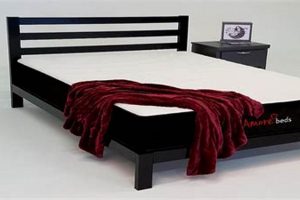
A sleep surface employing tightly coiled springs for support, combined with a rigid comfort layer, provides a stable and unyielding feel. These products typically feature interconnected or individually wrapped coils and are designed to minimize sinkage. For example, individuals seeking minimal give and enhanced support during sleep may prefer this type of product.
The benefit of a supportive sleep surface lies in its potential to promote proper spinal alignment. Historically, this type of construction has been favored for its durability and ability to withstand considerable weight. It can be significant for those with specific postural needs or those simply desiring a resilient and long-lasting bed.
The following sections will delve into the construction specifics, material composition, advantages, and potential drawbacks of these supportive sleep solutions, as well as provide guidance on selecting the appropriate product for individual needs and preferences.
Guidance for Optimal Selection
The following considerations are pertinent when selecting a product of this type. Adherence to these guidelines may assist in making a more informed decision.
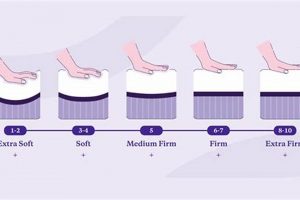
Tip 1: Assess Firmness Preference: Determine the degree of firmness required based on individual sleep position and body weight. Heavier individuals or those who sleep on their back or stomach may require a higher firmness level for adequate support.
Tip 2: Evaluate Coil Gauge: Lower gauge coils (e.g., 12.5 gauge) generally indicate a firmer and more supportive structure compared to higher gauge coils (e.g., 14.5 gauge). Examine coil specifications for optimal firmness.
Tip 3: Consider Coil Count: A higher coil count, particularly with individually wrapped (pocketed) coils, may offer enhanced support and reduced motion transfer.
Tip 4: Examine Construction Materials: Prioritize models constructed with high-density foam layers atop the spring system for enhanced comfort and durability. Investigate the foam density specifications.
Tip 5: Inquire About Warranty: Review the manufacturer’s warranty to understand the coverage period and any limitations. A comprehensive warranty indicates confidence in the product’s longevity.
Tip 6: Test the Product: Whenever possible, test the prospective bed in person. Lie in different sleep positions to assess comfort and support. Spend at least 10-15 minutes on the bed.
Tip 7: Compare Specifications: Evaluate and compare detailed specifications from various manufacturers. This includes coil type, coil count, gauge, comfort layer materials, and overall height of the mattress.
Proper selection based on firmness, coil characteristics, and material composition can significantly impact sleep quality and spinal health.
The subsequent sections will explore the long-term maintenance of such a bed and address common misconceptions.
1. Coil Gauge

Coil gauge, measured numerically, specifies the thickness of the wire used in the innerspring unit. In the context of a supportive coil system, a lower gauge number indicates a thicker wire, leading to greater resistance to compression. This translates directly to a firmer sleep surface. For example, a mattress utilizing 12.5-gauge coils will generally exhibit a substantially firmer feel compared to one constructed with 14.5-gauge coils, assuming other factors remain constant. The selection of coil gauge is thus a primary determinant of the overall firmness characteristic.
The gauge influences not only the initial feel, but also long-term performance. Thicker, lower-gauge coils are more resistant to deformation and sagging over time, thereby prolonging the lifespan. The coil thickness also affects the degree of support provided to different body weights. Lighter individuals might find a higher-gauge, more yielding coil system sufficient, while heavier individuals typically benefit from the enhanced support of a lower-gauge system. For instance, a person over 200 pounds may require a mattress with a coil gauge of 13 or lower to ensure adequate spinal alignment.
In summary, coil gauge directly impacts both the initial firmness and the long-term durability of such a type of mattress. Choosing the appropriate gauge based on individual needs and body weight is crucial for achieving optimal support and preventing premature sagging. Misunderstanding coil gauge can lead to the selection of a mattress that is either too soft, resulting in inadequate support, or too firm, causing pressure points and discomfort. Therefore, careful consideration of coil gauge is a critical step in the selection process.
2. Edge Support

Edge support refers to the structural reinforcement along the perimeter of the mattress. In a coil mattress, this often involves the use of thicker gauge coils, high-density foam encasement, or metal rods along the edges. The presence of robust edge support is particularly crucial in this type of construction because it directly counteracts the natural tendency of the springs to compress and deform near the edges. Without adequate reinforcement, the usable sleep surface is reduced, and individuals may experience a sensation of rolling off the bed when near the perimeter. This structural component is important for couples sharing a bed and maximizing usable space.
The absence of sufficient edge support can accelerate wear and tear on the springs near the perimeter. This can lead to uneven compression and sagging, ultimately reducing the overall lifespan and structural integrity. For example, constant pressure applied near the edge of a poorly supported coil mattress can result in premature coil fatigue and a noticeable dip along the perimeter within a relatively short period. Furthermore, getting in and out of bed requires considerable use of the edges; thus without proper support, this action can be difficult. Consequently, improved edge support in a sturdy coil mattress will deliver more consistent comfort and durability over an extended period.
Effective edge support not only expands the usable sleep surface but also contributes to the overall stability and longevity of the mattress. It prevents the sensation of rolling off, enhances ease of entry and exit, and mitigates premature sagging and deformation. The integration of robust edge support is, therefore, a key consideration when evaluating the overall quality and suitability of a coil mattress.
3. Surface Firmness

Surface firmness, in the context of coil support systems, refers to the initial tactile experience provided by the uppermost layers of the mattress. In these types of systems, achieving a genuinely unyielding surface requires spec
ific combinations of coil tension, gauge, and the density of the comfort materials placed above the spring unit. Without proper calibration of these factors, the perceived surface may feel firm, but might lack the deep-down support and resistance to compression that define a true rigid feel. Consequently, surface firmness directly influences the overall support characteristics of the mattress and is a key determinant of its suitability for individuals with specific postural requirements.
The firmness level can be a crucial determinant of sleep quality and musculoskeletal health. For example, individuals with lower back pain may require a more supportive surface to maintain proper spinal alignment and minimize discomfort. In this case, the surface feel is carefully engineered through a combination of high-density foam layers and tightly coiled springs. Conversely, a surface that is too soft may lead to excessive sinkage and misalignment, exacerbating existing back problems. In addition, the comfort layer may provide a softer feel.
In summary, the surface firmness is integral to the overall functionality of a firm innerspring mattress. It serves as the primary interface between the user and the support system, and its characteristics directly impact spinal alignment, pressure distribution, and long-term comfort. A proper understanding of surface firmness and its relationship to the underlying coil system is essential for selecting a mattress that meets individual needs and promotes restful sleep.
4. Spinal Alignment
Spinal alignment is critically linked to this type of mattress, as its firmness directly influences the position of the spine during sleep. A mattress that is too soft allows excessive sinking, leading to spinal curvature and potential discomfort. Conversely, a appropriately engineered firm innerspring mattress resists excessive compression, promoting a more neutral spinal posture. The cause and effect relationship is straightforward: the mattress’s support (or lack thereof) directly impacts the spine’s position, which in turn affects sleep quality and potential for musculoskeletal issues. Spinal alignment, therefore, is not merely a desirable attribute but a core functional requirement of this sleep surface. This alignment helps to reduce the pressure placed on the vertebral discs during sleep.
The importance of spinal alignment extends beyond immediate comfort. Prolonged misalignment during sleep can contribute to chronic back pain, stiffness, and even nerve compression. For example, an individual with a pre-existing back condition who sleeps on an inappropriately soft mattress may experience exacerbated pain and reduced mobility upon waking. Choosing the correct firmness of mattress supports the body in a way that minimizes strain on the back and neck muscles. This type of mattress offers support during sleep which may help reduce tossing and turning, which in turn contributes to more restful sleep and decreased risk of muscle strain.
In summary, the connection between this mattress and spinal alignment is fundamental to its effectiveness. Proper alignment mitigates the risk of back pain and promotes restful sleep. Selecting a mattress that adequately supports the spine is an investment in long-term musculoskeletal health. Challenges exist in determining the optimal firmness level due to individual variations in body weight, sleep position, and pre-existing conditions. However, understanding the direct relationship between firmness and spinal alignment is essential for making an informed decision.
5. Material Density

Material density plays a significant role in determining the overall performance and longevity of a firm innerspring mattress. The density of materials used in the comfort layers and support core influences its resistance to compression, its ability to maintain its shape, and ultimately, its durability. This section explores various facets of material density and its implications for the mattress.
- Foam Density in Comfort Layers
Higher density foam, typically measured in pounds per cubic foot (PCF), offers greater resistance to compression and a longer lifespan. In a firm innerspring mattress, high-density memory foam or polyurethane foam layers contribute to surface support and pressure relief. For example, a 5 PCF memory foam will generally provide more consistent support and last longer than a 3 PCF foam, preventing premature sagging and maintaining the firmness level.
- Coil Count and Steel Gauge Relationship
While not directly a density measure, the coil count and steel gauge in the innerspring unit contribute to the overall density of the support core. A higher coil count and lower steel gauge (thicker coils) create a denser and more supportive structure. This denser configuration resists compression and maintains the mattress’s firmness over time. For example, a mattress with 800 coils of 13-gauge steel will provide a firmer and more durable support than one with 600 coils of 14-gauge steel.
- Density in Edge Support Systems
Edge support systems often incorporate high-density foam or reinforced steel to prevent edge collapse. The density of the foam used in edge support directly affects its ability to withstand prolonged pressure. Higher density foam in the edge support contributes to a more stable sleep surface and extends the usable area of the mattress. A high-density foam edge support can prevent that feeling of rolling off the mattress.
- Fiber Density in Quilted Covers
The density of fibers used in the quilted cover affects the surface feel and resistance to wear. Denser fiber fills provide a smoother surface and reduce the likelihood of pilling or compression over time. For example, tightly packed cotton or polyester fibers in the quilting contribute to a more durable and aesthetically pleasing mattress surface.
These facets highlight the importance of material density in the construction of a firm innerspring mattress. Higher density materials in the comfort layers, support core, and edge support systems contribute to increased durability, consistent support, and a longer lifespan. Choosing a mattress with a focus on material density can ensure long-term performance and value.
6. Longevity
The longevity of a firm innerspring mattress is a crucial consideration, directly impacting its value proposition. Construction quality, material selection, and usage patterns dictate how long the mattress retains its original firmness and support characteristics. Inferior materials or inadequate construction techniques result in premature sagging, coil fatigue, and diminished support, reducing the lifespan. The practical consequence is the need for more frequent replacement, increasing the long-term cost of ownership. A well-constructed model, conversely, maintains its integrity for an extended period, providing consistent support and justifying its initial investment. Regular rotation or flipping contribute to even wear, prolonging the useful life.
The choice of materials significantly impacts a mattress’s lifespan. For instance, high-density foams used in the comfort layers resist compression and maintain their shape longer than lower-density
alternatives. Similarly, higher gauge steel coils demonstrate greater resilience to deformation, preventing sagging. The combination of robust materials and proper construction techniques translates directly to increased durability. A firm innerspring mattress built with these principles exhibits resistance to common issues such as body impressions and edge collapse, thus preserving its original functionality for a longer duration.
Longevity is a critical component, ensuring sustained support and comfort. A longer-lasting mattress provides a more favorable return on investment. Understanding the factors that contribute to durability, such as material density, coil gauge, and construction methods, is crucial for selecting a product that will maintain its performance over time. Regular maintenance, including rotation and proper support, further extends its lifespan. A firm innerspring mattress with enhanced longevity not only provides sustained value but also minimizes the environmental impact associated with frequent replacements.
Frequently Asked Questions
The following questions address common concerns and misconceptions surrounding the selection, maintenance, and performance characteristics of firm innerspring mattresses.
Question 1: Is a firm innerspring mattress suitable for individuals with back pain?
A firm innerspring mattress can provide beneficial support for certain individuals with back pain, particularly those who require enhanced spinal alignment. However, the suitability depends on individual factors such as the nature and severity of the pain, sleep position, and body weight. Consultation with a healthcare professional is advisable to determine the appropriate level of firmness.
Question 2: How does the coil count in a firm innerspring mattress affect its performance?
A higher coil count generally indicates a more supportive and contouring surface. Individually wrapped (pocketed) coils in particular contribute to reduced motion transfer and enhanced conformity to the body’s curves. However, coil count should be considered in conjunction with coil gauge and material quality for a comprehensive assessment.
Question 3: What is the expected lifespan of a firm innerspring mattress?
The lifespan of a firm innerspring mattress varies depending on factors such as construction quality, material composition, and usage patterns. A well-constructed model with high-density materials can typically last between 7 to 10 years. Regular rotation and proper support can extend the mattress’s lifespan.
Question 4: How does the edge support system impact the overall functionality of a firm innerspring mattress?
A robust edge support system prevents edge collapse, expanding the usable sleep surface and enhancing ease of entry and exit. It also contributes to the overall stability and longevity of the mattress by preventing premature sagging along the perimeter.
Question 5: What are the key considerations for cleaning and maintaining a firm innerspring mattress?
Regular vacuuming helps remove dust mites and allergens. Stains should be treated promptly with appropriate cleaning solutions. The use of a mattress protector is recommended to prevent spills and stains from penetrating the mattress. Rotation every 3-6 months promotes even wear.
Question 6: Can a firm innerspring mattress accommodate adjustable bed frames?
Compatibility with adjustable bed frames depends on the mattress’s construction and flexibility. Mattresses with individually wrapped coils and flexible comfort layers are generally more suitable for adjustable beds than those with interconnected coils or rigid construction. Checking the manufacturer’s specifications is important.
Understanding the nuances of these responses will provide a clearer view of the considerations needed for selecting a support mattress.
The subsequent section will explore emerging technologies.
Conclusion
This exploration has detailed various aspects of the “firm innerspring mattress”, from its construction and material components to its impact on spinal alignment and overall longevity. Understanding coil gauge, edge support, surface firmness, and material density is crucial for selecting a product that meets individual needs. The benefits of proper spinal alignment and the factors contributing to mattress durability have been emphasized, providing a comprehensive overview of the characteristics inherent in this type of sleep surface.
Therefore, informed decision-making remains paramount. The value of a supportive mattress is not solely in its initial firmness, but in its capacity to maintain that support over time, ensuring restful sleep and contributing to long-term musculoskeletal health. Further research and careful consideration of individual requirements are encouraged to secure a sleep solution that yields optimal outcomes.