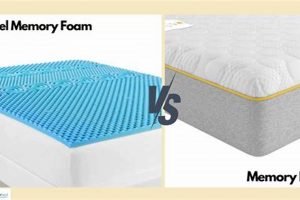
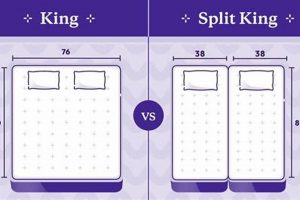
The choice between a sleeping surface offering substantial support and one with moderate give represents a critical decision for individuals seeking optimal rest. One option provides a rigid, stable plane, while the other yields somewhat under pressure. These differing levels of resistance directly impact spinal alignment and pressure point distribution during sleep.
Selecting the appropriate support level is paramount for mitigating back pain, promoting healthy posture, and enhancing sleep quality. Historically, preferences have varied based on cultural norms, evolving understandings of spinal biomechanics, and advancements in material science. The benefits of a considered choice extend beyond mere comfort, influencing long-term musculoskeletal health and restorative sleep cycles.
The subsequent sections will delve into the specific characteristics of each option, exploring their suitability for various sleeping positions, body types, and medical conditions. Furthermore, the discussion will encompass the materials typically used in construction and offer guidance on assessing individual needs to facilitate a well-informed purchasing decision.
Guidance for Choosing Between Higher and Moderate Support
Selecting the correct level of sleeping surface firmness requires careful consideration. The following guidelines assist in determining the most suitable option for individual needs.
Tip 1: Assess Primary Sleeping Position: Individuals who predominantly sleep on their back often benefit from the more substantial support offered. This helps maintain proper spinal alignment. Stomach sleepers generally require a firmer surface to prevent excessive sinking of the midsection, which can lead to back strain.
Tip 2: Consider Body Weight: Heavier individuals tend to compress the sleeping surface more. Therefore, a higher support level may be necessary to prevent bottoming out and maintain adequate support. Lighter individuals may find a moderate support level more comfortable as it allows for greater contouring to the body.
Tip 3: Evaluate Existing Aches and Pains: Individuals experiencing lower back pain may find relief with a firmer option. However, those with joint pain or pressure sensitivity may prefer the increased cushioning provided by a moderate support level.
Tip 4: Factor in Partner Preferences: If sharing a bed, consider the sleeping positions and body weights of both individuals. A compromise may be necessary, potentially involving a mattress with different support levels on each side.
Tip 5: Trial Before Purchase: Whenever possible, test out different support levels in person. Spend at least 10-15 minutes lying on each option in your typical sleeping position to assess comfort and support.
Tip 6: Research Mattress Materials: The materials used in construction significantly impact the overall feel. Memory foam tends to contour to the body, while innerspring options generally provide more bounce and support. Research the properties of different materials to determine which best aligns with your preferences.
Tip 7: Consider Mattress Foundation: The type of foundation used can affect the perceived firmness. A solid foundation will generally enhance the feeling of firmness, while a slatted foundation may offer slightly more give.
Adhering to these guidelines will increase the likelihood of selecting a sleeping surface that promotes optimal spinal alignment, pressure relief, and overall sleep quality.
The subsequent discussion will explore the long-term implications of support level choice on musculoskeletal health and restorative sleep.
1. Spinal Alignment

Maintaining proper spinal alignment during sleep is paramount for musculoskeletal health and pain prevention. The choice between a higher resistance sleeping surface and one with moderate give directly influences the spine’s position throughout the night. This impact warrants careful consideration when selecting a mattress.
- Support and Posture
A firmer sleeping surface generally provides greater resistance to compression, promoting a more neutral spinal posture, particularly for individuals who sleep on their backs. The lack of excessive sinking prevents the spine from curving unnaturally. Conversely, a medium firmness level may allow the spine to curve excessively if the sleeper is heavier or sleeps on their stomach.
- Pressure Distribution and Curvature
While firmness can support overall spinal alignment, it may also lead to increased pressure on certain points, such as the shoulders and hips, particularly for side sleepers. A medium option allows for more contouring, potentially distributing pressure more evenly and accommodating the natural curves of the spine when sleeping on the side. However, if the surface is too soft, it can lead to spinal misalignment due to excessive sinking.
- Muscle Relaxation and Tension
Proper spinal alignment facilitates muscle relaxation. When the spine is misaligned, muscles must work harder to compensate, leading to tension and potential pain. A suitable firmness level promotes a relaxed posture, reducing the strain on back muscles and allowing for more restful sleep. The ideal firmness will depend on individual anatomy and sleeping preferences.
- Long-Term Spinal Health
Consistent spinal misalignment over time can contribute to chronic back pain, disc problems, and other musculoskeletal issues. Selecting a mattress that promotes proper alignment is an investment in long-term spinal health. Careful consideration of body weight, sleeping position, and individual comfort preferences is crucial in this selection process.
The connection between spinal alignment and mattress firmness is multifaceted. While a firmer surface can provide excellent support for some, a medium firmness level may be more appropriate for others. The key is to find a balance between support and pressure relief that allows the spine to maintain its natural curvature and promotes muscle relaxation throughout the night. Trial and careful consideration of individual needs are essential for making the right choice.
2. Pressure Distribution

The distribution of pressure across the body during sleep is a critical factor influencing comfort and musculoskeletal health. The choice between a high resistance sleeping surface and one with moderate give fundamentally alters pressure point loading and overall distribution.
- Peak Pressure Points
A firmer sleeping surface typically concentrates pressure at prominent bony areas such as the hips, shoulders, and heels. The limited give results in less surface area contact and, consequently, higher pressure at these points. Prolonged concentration of pressure can impede circulation, potentially leading to discomfort, numbness, or even pressure sores in susceptible individuals. Consider, for example, an individual with limited subcutaneous fat; a firmer surface may cause significant discomfort due to the lack of cushioning.
- Surface Area Contact
A sleeping surface of moderate give allows for greater body contouring, increasing the surface area in contact with the mattress. This expanded contact area distributes the sleeper’s weight more evenly, reducing peak pressure at specific points. Increased surface area contact is particularly advantageous for side sleepers, who experience greater pressure on the shoulders and hips. The redistribution of pressure contributes to improved comfort and reduced risk of circulation impairment.
- Spinal Alignment and Pressure Relief
While pressure distribution is essential, it must be considered in conjunction with spinal alignment. If a surface offers excessive give, it may relieve pressure points but compromise spinal alignment, potentially leading to back pain. Conversely, a rigid surface may maintain spinal alignment but exacerbate pressure point discomfort. The ideal choice strikes a balance between support and pressure relief, ensuring both spinal integrity and minimized pressure concentration.
- Material Properties and Pressure Redistribution
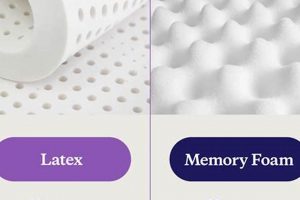
The materials used in mattress construction significantly influence pressure redistribution capabilities. Memory foam, for instance, is known for its ability to conform to the body’s shape, effectively distributing pressure. Innerspring mattresses, on the other hand, typically offer less contouring and may concentrate pressure more readily. Latex offers a balance between support and contouring, providing both pressure relief and spinal support. Understanding the material properties of different mattress types is critical for optimizing pressure distribution.
In summary, the choice between a sleeping surface offering high or moderate resistance directly impacts pressure distribution across the body. A balanced approach, considering individual body type, sleeping position, and spinal alignment needs, is essential for minimizing pressure point discomfort and promoting restful sleep. Material selection plays a pivotal role in achieving optimal pressure redistribution, further emphasizing the need for informed decision-making.
3. Sleep Position

The habitual sleep posture fundamentally influences the interplay between body weight distribution and spinal alignment. Consequently, sleep position is a primary determinant in assessing the suitability of varying support levels in mattresses. The correlation between preferred posture and optimal mattress firmness warrants careful consideration.
- Supine (Back) Sleeping
The supine position distributes weight relatively evenly along the length of the spine. A firmer sleeping surface generally provides adequate support, preventing excessive sinking and maintaining natural spinal curvature. Insufficient support can lead to lower back strain as the pelvis tilts backward. Conversely, a moderately firm surface may suffice for lighter individuals or those with a pronounced lumbar curve, offering a degree of contouring without compromising alignment.
- Lateral (Side) Sleeping
Side sleeping concentrates weight on the hips and shoulders. A moderately firm sleeping surface typically allows for sufficient compression to relieve pressure points in these areas while still providing adequate support to prevent spinal misalignment. An overly firm surface may create excessive pressure, leading to discomfort and potential circulatory issues. The degree of shoulder and hip protrusion influences the ideal support level.
- Prone (Stomach) Sleeping
The prone position is often associated with increased risk of spinal misalignment due to the tendency for the midsection to sink, arching the back. A firmer sleeping surface is generally recommended to minimize this sinking and maintain a more neutral spinal alignment. However, even with a firmer surface, stomach sleeping can place undue stress on the neck due to the head being turned to one side. A moderately firm surface could be considered if the sleeper is lightweight, but generally avoided.
- Combination Sleeping
Individuals who transition between multiple sleep positions throughout the night present a more complex scenario. The ideal sleeping surface must offer a compromise between the support requirements of each position. A moderately firm surface that provides a balance of support and contouring is often the most suitable option. However, if one position is significantly more dominant, the support level should be prioritized accordingly. Additionally, the use of specialized pillows can help to optimize spinal alignment in different positions.
In conclusion, sleep position is a critical factor in determining the appropriate sleeping surface support level. The interaction between body weight distribution, spinal alignment, and pressure point relief varies significantly depending on whether an individual sleeps on their back, side, or stomach. Understanding these nuances and considering individual body type and preferences is essential for selecting a surface that promotes optimal sleep quality and musculoskeletal health. The selection process involves carefully weighing support level in each sleep position.
4. Body Weight
Individual body weight significantly influences the perceived firmness and support characteristics of a mattress, directly impacting spinal alignment and comfort. Therefore, body weight is a crucial factor when evaluating the suitability of different mattress firmness levels.
- Support Requirements and Compression
Individuals with higher body weights exert greater pressure on a mattress surface. A higher support level is often necessary to prevent excessive compression and “bottoming out,” where the sleeper sinks too deeply, compromising spinal alignment. Conversely, lighter individuals may find that a surface with high resistance provides insufficient give, leading to pressure points and discomfort. The degree of compression is directly proportional to the applied force, necessitating a tailored approach to mattress selection.
- Surface Contour and Weight Distribution
A sleeping surface that offers moderate give allows for greater contouring to the body, distributing weight over a larger area and reducing pressure concentration. This is particularly beneficial for individuals with lower body weights who may not require the same degree of support as heavier individuals. However, if the surface is too soft, even lighter individuals may experience spinal misalignment. The relationship between body weight and surface contour is essential for optimal pressure relief.
- Spinal Alignment and Sagging Prevention
Maintaining proper spinal alignment is critical for preventing back pain and promoting restful sleep. An appropriate resistance level ensures that the spine remains in a neutral position, regardless of body weight. Insufficient support can cause the spine to sag, leading to strain and discomfort. A more substantial level of support helps counteract this effect, particularly for heavier individuals. The correlation between spinal health and resistance level is a primary consideration.
- Mattress Durability and Longevity
Body weight also impacts the durability and longevity of a mattress. Higher body weights place greater stress on the materials, potentially leading to premature sagging or breakdown. A higher-quality mattress constructed with durable materials is essential for maintaining adequate support and comfort over time, especially for heavier individuals. The investment in a robust mattress can yield long-term benefits in terms of sleep quality and musculoskeletal health.
In summary, body weight plays a fundamental role in determining the appropriate firmness and support level of a mattress. The interplay between compression, surface contour, spinal alignment, and mattress durability must be carefully considered to ensure optimal comfort, spinal health, and the longevity of the investment. Individuals are advised to trial different options and seek professional advice to make an informed decision based on their unique needs and body type.
5. Pain Mitigation

The selection of a sleeping surface profoundly impacts pain mitigation strategies, particularly concerning musculoskeletal discomfort. The distinction between a higher-resistance and a moderate-give mattress directly influences pressure distribution, spinal alignment, and muscle relaxation, all critical components of pain management during sleep. In cases of lower back pain stemming from poor posture, a firmer mattress can provide the necessary support to maintain spinal alignment, reducing stress on spinal discs and supporting muscles. Conversely, individuals suffering from arthritis or fibromyalgia may experience heightened pain due to increased pressure points on a surface with high resistance. In these instances, a medium mattress can offer more conforming support, reducing localized pressure and alleviating discomfort.
Effective pain mitigation through mattress selection necessitates a thorough understanding of the underlying causes of discomfort. For example, sciatica, characterized by nerve pain radiating down the leg, may be exacerbated by a mattress that allows the pelvis to sink excessively, compressing the sciatic nerve. A firmer option, in this case, could help stabilize the pelvis and reduce nerve compression. However, for individuals recovering from hip surgery, a medium mattress might be preferable to minimize pressure on the surgical site and promote healing. The correct choice hinges on a precise assessment of individual needs and pain etiology. Moreover, the materials used in mattress construction, such as memory foam or latex, further influence pressure distribution and pain relief capabilities. Memory foam’s contouring properties can be particularly beneficial for individuals with widespread musculoskeletal pain, while latex offers a more responsive and supportive feel.
In summary, the successful mitigation of pain through mattress selection requires a nuanced approach that considers the specific source of discomfort, individual body mechanics, and the properties of different mattress materials. While a firmer sleeping surface can provide necessary support for certain conditions, a medium option may be more suitable for others. The goal is to achieve a balance between spinal alignment and pressure relief, facilitating muscle relaxation and promoting restorative sleep. Consultation with a healthcare professional or sleep specialist is advisable to ensure the chosen mattress effectively addresses individual pain management needs and promotes long-term well-being.
Frequently Asked Questions
The following addresses common inquiries regarding the characteristics and suitability of different sleeping surfaces. Information presented aims to provide clarity and facilitate informed decision-making.
Question 1: Is a sleeping surface with high resistance universally superior for individuals with back pain?
The effectiveness of a firmer option for alleviating back pain varies. While some individuals experience relief due to improved spinal alignment, others may find it exacerbates discomfort by increasing pressure points. The specific cause and nature of the back pain are primary determinants.
Question 2: How does body weight influence the perception of mattress firmness?
Body weight significantly affects the degree of compression. Individuals with higher body weights tend to compress the sleeping surface more, potentially requiring a firmer option to prevent excessive sinking. Lighter individuals may find a medium surface more comfortable.
Question 3: What are the key differences in construction between sleeping surfaces offering high and moderate support?
The construction varies depending on the materials used. Firm options often incorporate denser foams or a greater coil count in innerspring designs. Medium options typically utilize softer foams or a less dense coil configuration to provide increased contouring.
Question 4: Does sleeping position dictate the ideal level of sleeping surface firmness?
Sleeping position is a significant factor. Back sleepers generally benefit from a firmer option to maintain spinal alignment. Side sleepers often prefer a medium surface for pressure relief on the hips and shoulders. Stomach sleepers typically require a firmer surface to prevent excessive sinking.
Question 5: How does one assess the suitability of a particular firmness level before purchase?
Whenever possible, testing in person is recommended. Spend at least 10-15 minutes lying on different options in the typical sleeping position. Pay attention to spinal alignment, pressure point discomfort, and overall comfort.
Question 6: What is the expected lifespan of sleeping surfaces with different support characteristics?
The lifespan depends on factors such as material quality, construction, and user weight. Generally, a higher support option may retain its firmness for a longer period, but regular maintenance and proper support systems are essential for maximizing longevity regardless of firmness level.
In summary, the selection of a sleeping surface necessitates careful consideration of individual needs, sleeping habits, and physical characteristics. There is no universally ideal firmness level, and informed decision-making requires a thorough assessment of personal requirements.
The subsequent discussion will explore the long-term health implications associated with sleeping surface selection.
Conclusion
This exploration has underscored the nuanced considerations inherent in selecting between sleeping surfaces offering disparate levels of support. The assessment of individual needs, encompassing spinal alignment requirements, preferred sleep position, body weight, and sensitivity to pressure points, remains paramount. There is no single, universally applicable solution. A responsible approach necessitates careful evaluation and, where possible, practical testing to determine optimal suitability.
The long-term ramifications of sleeping surface selection extend beyond immediate comfort, impacting musculoskeletal health, sleep quality, and overall well-being. Therefore, diligent evaluation and informed decision-making represent a critical investment in personal health. Continued research and advancements in sleep technology hold the potential to further refine these considerations, providing more tailored and effective solutions for optimizing restorative sleep.