The degree of support a sleep surface provides is a critical consideration for individual comfort and spinal alignment. Mattresses are commonly categorized along a firmness spectrum, with ‘firm’ and ‘medium firm’ representing distinct points. A ‘firm’ mattress typically offers minimal give and provides substantial resistance to pressure, while a ‘medium firm’ mattress offers a balance between support and cushioning, allowing for some compression.
Choosing an appropriate mattress firmness is essential for promoting restful sleep and minimizing discomfort. Historically, firmer mattresses were often recommended for individuals with back pain, based on the belief that they provided superior spinal support. However, contemporary research suggests that individual needs and sleeping positions should be the primary determinants. A suitable sleep surface can contribute to improved posture during rest, reduced pressure point discomfort, and enhanced sleep quality.
Understanding the characteristics of different firmness levels, and how they relate to individual body type, sleeping position, and personal preferences, is key to selecting the right mattress. The following sections will delve into the specific advantages and disadvantages of each option, aiding in the decision-making process for optimal sleep and overall well-being.
Selecting the appropriate mattress firmness requires careful consideration of individual needs. These guidelines offer practical advice for making an informed decision.
Tip 1: Consider Body Weight: Individuals with higher body weights generally benefit from firmer mattresses that provide adequate support and prevent excessive sinking. Conversely, lighter individuals may find that medium-firm options offer sufficient support while conforming to the body’s contours.
Tip 2: Evaluate Sleeping Position: Side sleepers often require a mattress that allows the shoulders and hips to sink in slightly to maintain spinal alignment. A medium-firm mattress may be more suitable for this position. Back sleepers typically benefit from a firmer surface that prevents the hips from sinking too deeply. Stomach sleepers often require a firmer mattress to prevent excessive arching of the back.
Tip 3: Assess Spinal Alignment: Regardless of sleeping position, prioritize maintaining proper spinal alignment. If unsure, seek guidance from a healthcare professional or a sleep specialist to determine the optimal firmness level.
Tip 4: Acknowledge Existing Pain or Conditions: Individuals with specific conditions, such as back pain or arthritis, may require a mattress that offers targeted support and pressure relief. Consult with a healthcare professional to determine the most appropriate firmness level for managing these conditions.
Tip 5: Trial Period Utilization: Take advantage of any trial periods offered by mattress retailers. Spending adequate time on a mattress before committing to a purchase allows for a more accurate assessment of its comfort and suitability.
Tip 6: Consider Partner Preferences: If sharing a bed, consider the preferences of both individuals. Compromise may be necessary, or a mattress with adjustable firmness zones may be a viable option.
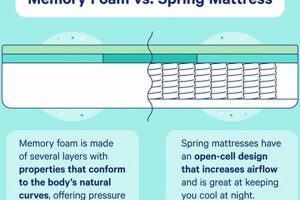
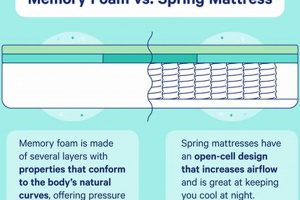
Tip 7: Review Mattress Construction: The materials and construction of a mattress significantly impact its firmness and support. Research different mattress types (e.g., innerspring, memory foam, latex) and their associated firmness characteristics.
Selecting the correct mattress firmness promotes better sleep quality, reduced discomfort, and improved spinal health. These tips provide a foundation for making an informed decision that caters to individual requirements.
Following these guidelines contributes to a personalized sleep solution that optimizes comfort and overall well-being. The subsequent sections of this article will provide further insights into the long-term considerations associated with mattress selection.
1. Support Level

Support level is a crucial determinant in mattress selection, directly influenced by the firmness classification. Firm and medium-firm mattresses offer distinct support characteristics that cater to varying individual needs and sleeping preferences.
- Core Construction and Resistance
The internal structure of a mattress dictates its support capabilities. Firm mattresses often utilize denser materials or coil systems designed to resist compression. This construction provides a stable surface, minimizing sinkage and promoting a feeling of sleeping “on top” of the mattress. Conversely, medium-firm mattresses incorporate a degree of cushioning that allows for some contouring to the body, while still maintaining underlying support. The balance between resistance and conforming comfort defines the support level of each option.
- Spinal Alignment Maintenance
Adequate support is essential for preserving proper spinal alignment during sleep. A mattress that is too soft can cause the hips to sink excessively, leading to spinal curvature and potential discomfort. Firm mattresses are frequently recommended for individuals who require substantial support to prevent this misalignment. However, a medium-firm option can also effectively maintain spinal alignment, provided it offers sufficient resistance to counteract excessive sinkage based on body weight and sleeping position. Correct spinal alignment is essential for long-term back health.
- Weight Distribution and Pressure Point Reduction
Effective support facilitates even weight distribution across the mattress surface. This is particularly important for minimizing pressure point discomfort. Firm mattresses excel at preventing localized pressure buildup due to their ability to distribute weight across a larger surface area. Medium-firm mattresses, with their added cushioning, can also alleviate pressure points by conforming to the body’s contours, redistributing weight and reducing concentrated stress on specific areas such as the shoulders and hips. Selecting the appropriate support level is essential to reduce pressure points.
- Edge Support and Usable Surface Area
The support level also influences the stability of the mattress edges. Firm mattresses typically exhibit stronger edge support, preventing excessive sagging when sitting or sleeping near the edge of the bed. This maximizes the usable surface area of the mattress and provides a more stable sleeping platform. While medium-firm mattresses may offer less pronounced edge support, some models incorporate reinforced edges to enhance stability and expand the usable sleep surface. Superior edge support gives you more room to sleep.
The interplay between core construction, spinal alignment, weight distribution, and edge support collectively defines the support level of a mattress. Choosing between a firm and medium-firm option requires careful consideration of these factors to ensure optimal sleep comfort, spinal health, and long-term mattress performance. These factors are essential for choosing a mattress to fit your preferences.
2. Pressure Relief

Pressure relief, in the context of mattresses, refers to the ability of a sleep surface to minimize concentrated stress on specific areas of the body, such as the shoulders, hips, and back. The interaction between mattress firmness and pressure relief is complex and directly influences sleep quality and comfort. Firm mattresses, by their nature, distribute weight more evenly across the surface, reducing pressure buildup in localized areas. This can be particularly beneficial for individuals who require substantial support and prefer to sleep on their stomach, as it prevents excessive sinking and spinal curvature. Conversely, medium-firm mattresses offer a degree of cushioning and conforming ability, which allows them to adapt to the body’s contours and redistribute weight more effectively. This conforming property can alleviate pressure point discomfort, especially for side sleepers who experience pressure on the shoulders and hips. The goal is to reduce any amount of tension you’re holding.
The selection of a mattress based on pressure relief considerations should take into account individual sleeping positions and body weight. For example, an individual of average weight who sleeps primarily on their side might find that a medium-firm mattress offers an optimal balance between support and pressure relief. This type of mattress will conform to the body’s curves, preventing excessive pressure on the shoulders and hips while still providing adequate support to maintain spinal alignment. However, a heavier individual in the same sleeping position might require a firmer mattress to prevent excessive sinkage, which could negate the pressure-relieving benefits. The key to the mattress working for you is finding what fits your needs.
In conclusion, the effectiveness of a mattress in providing pressure relief is intrinsically linked to its firmness level. Both firm and medium-firm mattresses can offer pressure-relieving benefits, but the suitability of each option depends on individual body weight, sleeping position, and personal preferences. The challenge lies in identifying the specific combination of firmness and support that minimizes pressure point discomfort while maintaining proper spinal alignment. Failing to consider the pressure relief when selecting your mattress can result in a rough and sleepless night.
3. Spinal Alignment

Maintaining correct spinal alignment during sleep is crucial for minimizing musculoskeletal strain and promoting overall well-being. The firmness of a mattress significantly impacts the spine’s posture throughout the night. A mattress that is too soft allows the heavier parts of the body, such as the hips and shoulders, to sink excessively, leading to spinal curvature and potential back pain. Conversely, a mattress that is too firm fails to conform to the body’s natural contours, creating pressure points and hindering proper alignment. Therefore, the selection of a mattress firmness level, whether firm or medium-firm, should prioritize supporting the spine in its neutral position.
The ideal firmness level varies depending on individual factors, including sleeping position, body weight, and existing spinal conditions. For instance, side sleepers typically benefit from a medium-firm mattress that allows the shoulders and hips to sink slightly, maintaining spinal alignment. Back sleepers generally require a firmer surface to prevent the hips from sinking too deeply, which can lead to lower back pain. Stomach sleepers often need a very firm mattress to prevent excessive arching of the back. Individuals with pre-existing spinal conditions, such as scoliosis or herniated discs, should consult with a healthcare professional to determine the most appropriate mattress firmness for their specific needs. Real-life examples include individuals experiencing chronic lower back pain due to a sagging mattress finding relief and improved spinal alignment upon switching to a firmer, more supportive option. Conversely, individuals with pressure sores developing on a very firm mattress improving when switching to a medium-firm one that allowed for better weight distribution.
In summary, the relationship between spinal alignment and mattress firmness is paramount to sleep health. The practical significance of understanding this connection lies in the ability to make informed decisions about mattress selection, leading to improved sleep quality, reduced musculoskeletal pain, and enhanced overall well-being. The challenge remains in objectively assessing individual needs and preferences to identify the optimal firmness level that promotes proper spinal alignment throughout the night, although the principles of sleeping position, weight and health conditions offer a solid starting point.
4. Sleeping Position

Sleeping position is a primary factor in determining optimal mattress firmness. The alignment of the spine, and consequent pressure distribution across the body, varies significantly depending on whether one sleeps on their back, side, or stomach. Understanding these positional differences is crucial when selecting between a firm and medium-firm mattress.
- Side Sleeping: Shoulder and Hip Accommodation
Side sleeping concentrates pressure on the shoulders and hips. A medium-firm mattress is often recommended to allow these areas to sink in slightly, maintaining spinal alignment. A firm mattress may create excessive pressure points, leading to discomfort and potential nerve compression. The goal is to minimize pressure without compromising support.
- Back Sleeping: Spinal Support and Hip Alignment
Back sleeping requires consistent support to prevent the hips from sinking too far, which can misalign the lower spine. A firm mattress generally provides better support for back sleepers, promoting proper spinal curvature. However, some back sleepers may find a medium-firm mattress acceptable if it offers sufficient resistance to prevent excessive sinkage.
- Stomach Sleeping: Preventing Spinal Arching
Stomach sleeping is often discouraged due to its tendency to arch the back and neck. A firm mattress is generally recommended for stomach sleepers to minimize this arching and maintain a more neutral spinal position. A medium-firm mattress may allow the abdomen to sink too far, exacerbating spinal misalignment.
- Combination Sleeping: Balancing Support and Pressure Relief
Individuals who switch between sleeping positions throughout the night present a unique challenge. A medium-firm mattress may offer a reasonable compromise, providing sufficient support for back sleeping while allowing for some pressure relief for side sleeping. However, combination sleepers may need to prioritize the position they spend the most time in, or consider mattresses with zoned support.
In summation, the selection between a firm and medium-firm mattress should be heavily influenced by one’s primary sleeping position. Consideration of spinal alignment, pressure distribution, and the tendency for certain sleeping positions to exacerbate misalignment is essential. While personal preference remains a factor, understanding the biomechanical implications of each sleeping position is crucial for informed decision-making.
5. Body Weight

Body weight is a significant determinant in the optimal choice between a firm and medium-firm mattress. The force exerted by the body on the mattress directly impacts the degree of compression and the resultant support. Individuals with higher body weights typically require firmer mattresses to prevent excessive sinkage, which can compromise spinal alignment and lead to discomfort. A mattress that yields too readily will fail to provide adequate support, potentially causing the spine to curve unnaturally, particularly in the lumbar region. Conversely, individuals with lower body weights may find a medium-firm mattress more suitable, as it offers sufficient support while conforming to the body’s contours to distribute weight evenly and alleviate pressure points. A heavier individual on a medium-firm mattress might experience the sensation of “bottoming out,” where the mattress compresses to its limit, offering minimal support. A lighter individual on a firm mattress, however, might find it unyielding and uncomfortable, experiencing pressure buildup on the shoulders and hips.
The interaction between body weight and mattress firmness is essential for promoting restful sleep and minimizing musculoskeletal strain. A mattress that properly supports body weight helps to maintain spinal alignment, reducing the risk of back pain and other discomforts. For example, a person weighing over 250 pounds might require a firm mattress to ensure adequate support and prevent spinal misalignment, whereas someone weighing under 150 pounds might find that a medium-firm mattress offers a more comfortable and supportive sleep surface. This consideration is practically significant in the selection process, as it directly influences the long-term comfort and health benefits derived from the mattress. Mattress firmness is best understood when selecting your options.
In summary, body weight is a critical factor in the choice between a firm and medium-firm mattress. Its influence on mattress compression and support dictates the extent to which the spine is properly aligned and pressure points are alleviated. While personal preference plays a role, understanding the direct correlation between body weight and the required level of support is crucial for making an informed decision that promotes optimal sleep health and long-term comfort. Disregarding body weight considerations can lead to discomfort, spinal misalignment, and reduced sleep quality. When you select a mattress, select according to how you sleep.
6. Durability
Durability, the capacity of a mattress to maintain its original properties over time with consistent use, is a critical consideration when evaluating firm and medium-firm options. A mattress’s longevity directly affects its long-term value and its ability to consistently deliver the intended support and comfort characteristics.
- Material Composition and Density
The materials used in mattress construction, along with their density, significantly impact durability. Firmer mattresses often employ higher-density foams or a greater number of coils, which can enhance their resistance to sagging and compression over time. For example, a firm mattress with high-density memory foam is likely to retain its shape and support longer than a medium-firm mattress with lower-density foam. The selection of materials can drastically alter the overall longevity of the product.
- Construction Techniques and Build Quality
The methods used to assemble a mattress influence its structural integrity and, consequently, its durability. Mattresses with reinforced edges, tightly stitched seams, and robust coil systems are generally more resistant to wear and tear. A firm mattress constructed with these features is more likely to withstand prolonged use without exhibiting signs of deterioration, such as sagging edges or uneven support. Superior manufacturing results in better durability.
- Weight Capacity and Intended Use
Mattresses are designed to support a specific weight range, and exceeding this limit can accelerate wear and reduce durability. Firm mattresses typically have a higher weight capacity than medium-firm mattresses, making them more suitable for individuals with higher body weights or for couples. Consistent overloading of a mattress can lead to premature sagging and reduced support, regardless of its initial firmness level. Select the mattress to fit the intended weight.
- Maintenance and Care Practices
Proper maintenance, including regular rotation and the use of a mattress protector, can significantly extend the lifespan of both firm and medium-firm mattresses. Neglecting these practices can lead to accelerated wear and tear, reducing the mattress’s overall durability. For example, failure to rotate a mattress regularly can result in uneven compression and sagging, especially in areas where weight is concentrated. Maintenance plays a vital role in longevity.
In summary, durability is a multifaceted attribute influenced by material composition, construction techniques, weight capacity, and maintenance practices. When comparing firm and medium-firm mattresses, assessing these factors is crucial for determining which option offers the best long-term value and consistent performance. A seemingly less expensive mattress may prove more costly in the long run if it lacks the durability to maintain its intended support and comfort characteristics over time. Consider all angles to find the perfect mattress for your needs.
7. Personal Preference

The subjective experience of comfort significantly influences mattress selection, making personal preference a critical, albeit individualistic, factor when considering a firm versus a medium-firm mattress. While objective criteria such as spinal alignment and body weight are important, the ultimate satisfaction with a sleep surface hinges on individual perceptions of comfort and support.
- Prior Sleep Experiences
Past experiences with different mattress types shape preferences. Individuals accustomed to sleeping on a particular firmness level often exhibit a bias toward that feel. For example, someone who has consistently used a firm mattress throughout their life may perceive a medium-firm option as unsupportive, regardless of its objective qualities. These ingrained preferences can be difficult to overcome, underscoring the importance of trial periods when evaluating mattress options. Your individual past experiences affect your decisions.
- Sensitivity to Pressure Points
Individuals vary in their sensitivity to pressure points. Some may find a firm mattress tolerable or even preferable, while others may experience discomfort due to concentrated pressure on areas such as the shoulders and hips. This sensitivity is influenced by factors such as body composition, age, and pre-existing medical conditions. Those with heightened sensitivity may gravitate towards a medium-firm mattress, seeking the additional cushioning it provides. Everyone has different sensitivities to pain, which may affect mattress choice.
- Perceived Support and Alignment
The subjective perception of support and spinal alignment plays a significant role in mattress selection. While objective measurements can assess spinal curvature, individuals may have differing perceptions of whether a mattress is adequately supporting their spine. This can be influenced by factors such as muscle tension, joint stiffness, and overall body awareness. Ultimately, the perception of proper alignment, even if not perfectly correlated with objective measurements, can drive preference for a particular firmness level. Perception is reality, so be sure your mattress reflects that!
- Psychological Comfort and Sleep Environment
The psychological associations with a particular sleep environment can influence mattress preference. Factors such as room temperature, bedding materials, and even emotional state can impact the perceived comfort of a mattress. Some individuals may associate a firm mattress with feelings of security and stability, while others may find a medium-firm option more conducive to relaxation and restful sleep. It’s about creating the perfect environment for you.
While objective factors provide a framework for mattress selection, the ultimate decision is often guided by personal preference. Understanding the factors that shape individual perceptions of comfort and support is crucial for navigating the options. Personal preference should be weighed against other considerations to achieve optimal sleep health and long-term satisfaction.
Frequently Asked Questions
The following questions address common inquiries and misconceptions surrounding mattress firmness, specifically in relation to “firm mattress vs medium firm” options. The objective is to provide clarity and informed guidance for prospective mattress purchasers.
Question 1: What distinguishes a ‘firm’ mattress from a ‘medium firm’ mattress?
A ‘firm’ mattress offers minimal give, providing substantial resistance to pressure. A ‘medium firm’ mattress offers a balance between support and cushioning, allowing for some compression. The primary difference lies in the degree of surface compliance.
Question 2: Is a ‘firm’ mattress inherently better for individuals with back pain?
While firmer mattresses were historically recommended for back pain, current evidence suggests that individual needs and sleeping position are more important factors. A suitable mattress, regardless of firmness, should maintain proper spinal alignment. Consultation with a healthcare professional is recommended.
Question 3: How does body weight influence the choice between a ‘firm’ and ‘medium firm’ mattress?
Individuals with higher body weights generally require firmer mattresses to prevent excessive sinkage and maintain spinal alignment. Lighter individuals may find that medium-firm options offer sufficient support and contouring.
Question 4: Is a ‘medium firm’ mattress suitable for stomach sleepers?
Stomach sleeping is often discouraged due to its tendency to arch the back and neck. If stomach sleeping is unavoidable, a firm mattress is generally recommended to minimize spinal arching. A medium-firm mattress may allow the abdomen to sink too far, exacerbating misalignment.
Question 5: How does sleeping position factor into the ‘firm mattress vs medium firm’ decision?
Side sleepers often benefit from a medium-firm mattress that allows the shoulders and hips to sink slightly, maintaining spinal alignment. Back sleepers typically require a firmer surface to prevent the hips from sinking too deeply. Stomach sleepers generally need a firm mattress to prevent excessive arching of the back.
Question 6: What are the long-term durability considerations when choosing between a ‘firm’ and ‘medium firm’ mattress?
Durability depends on material composition, construction techniques, weight capacity, and maintenance practices. Firmer mattresses often employ higher-density materials, which can enhance their resistance to sagging and compression. Regardless of firmness, proper maintenance is crucial for extending mattress lifespan.
In summary, the optimal choice between a ‘firm mattress vs medium firm’ option depends on individual factors, including body weight, sleeping position, and personal preferences. No single firmness level is universally superior.
The subsequent section will delve into strategies for evaluating mattresses in a retail environment, enabling informed purchasing decisions.
Firm Mattress vs. Medium Firm
The foregoing analysis has explored the distinctions between firm and medium-firm mattresses, emphasizing the complex interplay of factors that influence optimal selection. Key considerations include body weight, sleeping position, spinal alignment needs, and personal preferences. A definitive “best” firmness level remains elusive, as individual requirements vary significantly. The decision-making process necessitates a thorough evaluation of individual circumstances and a realistic assessment of long-term comfort and support needs.
Ultimately, the choice between a firm or medium-firm mattress represents a personal investment in sleep health and overall well-being. Prudent consideration of the factors discussed, coupled with objective product evaluation, will contribute to a more informed purchasing decision and, ideally, enhanced sleep quality for years to come. Continuing research and technological advancements may offer more refined and personalized solutions in the future.

![Nectar vs Puffy Mattress: Which is Best [2024]? | Organic & Natural Mattress Buyer’s Guide: Non-Toxic Sleep Solutions](https://mattressworldpa.com/wp-content/uploads/2025/07/th-1123-300x200.jpg "Nectar vs Puffy Mattress: Which is Best [2024]? Organic & Natural Mattress Buyer’s Guide: Non-Toxic Sleep Solutions")