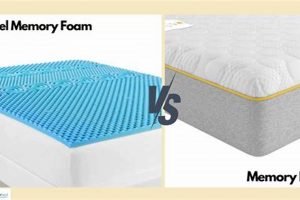
The selection of a mattress often hinges on understanding the core construction: either using layers of manufactured resilience or a system of interwoven metal springs. These represent two dominant approaches to providing support and comfort during sleep. The former relies on materials engineered for pressure relief and conforming to the body’s shape, while the latter depends on the tension and arrangement of its metallic components to achieve a similar effect.
Understanding the distinction between these two constructions is fundamental to selecting the optimal sleeping surface. Each offers a unique set of advantages relating to support, temperature regulation, motion isolation, and durability. Historically, one design dominated the market, but advancements in materials science and manufacturing techniques have elevated the alternative, leading to a more diverse marketplace and increased consumer choice. This evolution has directly impacted sleep quality and overall well-being.
A thorough comparison of these core construction methods will explore key differences in their composition, performance characteristics, and suitability for various sleep preferences. This examination will delve into the factors that contribute to a restful and restorative night’s sleep, allowing consumers to make informed decisions based on their individual needs and priorities.
Considerations for Mattress Selection
The process of choosing a sleep surface involves evaluating several key attributes to ensure compatibility with individual needs and preferences. Understanding these factors is crucial for making an informed purchase.
Tip 1: Assess Support Requirements: Individuals with back pain or specific support needs should carefully evaluate the level of firmness offered. Different densities of materials or coil gauges within the innerspring system will produce varying levels of support.
Tip 2: Evaluate Pressure Relief Capabilities: Prioritize the distribution of body weight and the mitigation of pressure points, particularly for side sleepers. Surface materials play a vital role in contouring to the body’s shape, and its density affects the degree of conformability.
Tip 3: Consider Temperature Regulation: Individuals prone to overheating during sleep should consider materials and construction techniques that promote airflow and dissipate heat effectively. Certain types of materials and coil designs offer better breathability than others.
Tip 4: Evaluate Motion Isolation Properties: Couples sharing a bed should assess the extent to which movement is isolated to one side. Materials with high damping properties minimize motion transfer, contributing to undisturbed sleep.
Tip 5: Assess Edge Support: Strong edge support prevents sagging and allows for comfortable sitting or sleeping near the perimeter of the sleep surface.
Tip 6: Evaluate Durability Expectations: Consider the long-term resilience and lifespan of different materials and construction techniques. Higher density materials and more robust spring systems typically offer greater durability.
Tip 7: Consider Budget and Value: Balance performance attributes with cost considerations. While premium materials and advanced construction techniques may offer superior comfort and durability, there are also cost-effective options that provide satisfactory performance for many individuals.
The selection process should prioritize objective evaluations of these attributes, ensuring the selected sleep surface meets individual needs and contributes to improved sleep quality. The following sections delve deeper into the specific characteristics of each construction type, providing further guidance for informed decision-making.
1. Support and Conformity

The balance between providing adequate support and conforming to the body’s contours is a critical determinant of mattress comfort and its impact on spinal alignment. The means by which different mattress constructions achieve this balance directly influence sleep quality and overall well-being.
- Foam Material Density and Composition
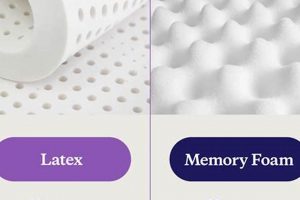
Foam mattresses utilize varying densities and compositions of materials, such as memory foam, latex, or polyurethane, to achieve support and conformity. Higher-density foams generally offer greater support, preventing excessive sinkage. Conversely, materials like memory foam excel at conforming to the body’s shape, distributing weight and reducing pressure points. The layering and combination of these materials within a mattress dictates its overall feel and suitability for different body types and sleep positions.
- Coil Gauge and Arrangement
Coil-based mattresses rely on the gauge (thickness) and arrangement of the coils to provide support. Thicker coils offer firmer support, while thinner coils allow for greater compression and contouring. The arrangement of coils, such as individually wrapped or interconnected systems, also influences the degree of conformity. Individually wrapped coils can move independently, conforming more closely to the body’s shape and minimizing motion transfer.
- Zoning and Targeted Support
Both foam and coil mattresses may incorporate zoning techniques to provide targeted support to different areas of the body. In foam mattresses, this can involve using different densities of foam in specific zones, such as the lumbar region, to enhance support where needed. In coil mattresses, zoning can be achieved through variations in coil gauge or the arrangement of coils within different zones. This targeted approach aims to maintain proper spinal alignment and reduce pressure points.
- Impact on Spinal Alignment
The effectiveness of support and conformity directly impacts spinal alignment during sleep. A mattress that provides inadequate support can lead to spinal misalignment, resulting in back pain and discomfort. Conversely, a mattress that conforms effectively to the body’s shape helps maintain natural spinal curvature, reducing stress on the spine and promoting restful sleep. The selection of a mattress that aligns with individual spinal support needs is paramount for long-term comfort and health.
In summary, the method by which either foam or coil mattresses address the fundamental requirement of providing both support and conformity determines their overall performance and suitability for individual preferences. Understanding the interplay between material properties, construction techniques, and their impact on spinal alignment is crucial for selecting a mattress that optimizes sleep quality and minimizes discomfort.
2. Motion Isolation

Motion isolation, the capacity of a mattress to minimize the transfer of movement across its surface, is a significant factor influencing sleep quality, particularly for couples. The construction of a mattress, whether based on foam or coil systems, fundamentally affects its ability to dampen and contain motion.
- Foam Density and Viscoelasticity
Foam mattresses, especially those incorporating viscoelastic materials like memory foam, excel at motion isolation. The high density and slow response of these materials absorb and dissipate energy from movement, preventing it from propagating across the mattress surface. The degree of motion isolation is directly proportional to the foam’s density and thickness; denser and thicker layers provide superior damping.
- Coil Type and Individual Encapsulation
Coil mattresses exhibit varying degrees of motion isolation depending on their coil type. Traditional interconnected coil systems tend to transfer motion more readily, as movement in one area affects the entire grid. However, individually wrapped or pocketed coils mitigate this effect significantly. Each coil responds independently to pressure, minimizing the disturbance felt by a sleeping partner. The gauge and arrangement of these coils further influence their ability to isolate motion.
- Hybrid Construction Considerations
Hybrid mattresses, which combine both foam and coil elements, offer a compromise in motion isolation. The foam layers provide initial damping, while the coil system contributes support. The overall performance depends on the relative thickness and density of the foam layers and the type of coil system used. A thicker, denser foam layer coupled with individually wrapped coils provides optimal motion isolation in a hybrid design.
- Impact on Sleep Quality and Disturbance
Effective motion isolation translates to fewer sleep disturbances caused by a partner’s movements during the night. This is particularly beneficial for individuals with differing sleep schedules, restless sleepers, or those easily awakened by movement. The choice between foam and coil mattresses, based on their motion isolation properties, should align with individual sensitivity to disturbance and the sleep habits of bed partners.
The selection of a mattress based on motion isolation characteristics requires a careful consideration of material properties and construction techniques. While foam mattresses generally offer superior motion isolation due to their inherent damping properties, coil mattresses with individually wrapped coils can provide a comparable level of performance. Hybrid designs aim to leverage the benefits of both materials, offering a balanced approach to motion isolation and overall comfort.
3. Temperature Regulation

The ability of a mattress to regulate temperature significantly impacts sleep quality and comfort. Variations in body temperature during sleep cycles necessitate a sleeping surface that effectively dissipates heat and promotes airflow. Mattress construction, specifically the choice between foam and coil systems, directly influences this thermoregulatory capability.
Foam mattresses, by their nature, tend to retain more heat due to their denser structure and reduced airflow compared to coil systems. Memory foam, in particular, is known for its heat retention properties. However, advancements in foam technology have led to the development of open-cell foams and gel-infused foams designed to improve airflow and reduce heat build-up. In contrast, coil mattresses generally offer better ventilation due to the open space between the coils, allowing for greater air circulation and heat dissipation. The type of materials used in the comfort layers above the coils also plays a crucial role; natural fibers like cotton and wool are more breathable than synthetic materials.
Therefore, individuals who tend to sleep hot may find coil mattresses more comfortable due to their inherent breathability. Conversely, those who prefer a warmer sleeping surface might find the heat-retention properties of some foam mattresses advantageous. The choice between foam and coil should therefore be based on a careful consideration of individual temperature preferences and the specific materials and construction techniques used in each mattress type. Hybrid designs, which combine foam and coil elements, offer a potential compromise by leveraging the support and comfort of foam with the breathability of coils, but the actual thermal performance depends heavily on the specific materials used and their arrangement within the mattress.
4. Durability and Lifespan
The longevity of a mattress represents a critical investment consideration, directly impacting the value proposition of foam versus coil constructions. Material degradation, structural failure, and loss of support contribute to the eventual decline in performance, necessitating replacement. Understanding the factors influencing durability is paramount for informed decision-making.
- Foam Density and Resilience
The density of foam materials directly correlates with their durability and resistance to compression over time. Higher-density foams, such as those used in premium memory foam or latex mattresses, exhibit greater resilience and retain their shape and support characteristics for longer periods. Lower-density foams are more susceptible to sagging and indentation, leading to a reduced lifespan. The specific type of foam, such as memory foam, polyurethane foam, or latex, also influences durability, with latex generally exhibiting superior longevity compared to conventional polyurethane foams. The manufacturing process and the use of additives can further impact the long-term performance of foam materials.
- Coil Gauge and Tempering
In coil mattresses, the gauge (thickness) of the steel used to construct the coils is a primary determinant of durability. Thicker-gauge coils offer greater resistance to deformation and provide more robust support over time. The tempering process, which involves heat-treating the steel to increase its strength and elasticity, also significantly impacts coil durability. Properly tempered coils are less likely to sag or break under repeated use. The design of the coil system, whether interconnected or individually pocketed, can also influence overall lifespan, with pocketed coils generally exhibiting better durability due to reduced stress on individual coils.
- Construction and Layering
The overall construction and layering of materials within a mattress contribute significantly to its durability. A well-constructed mattress with quality components and proper layering is more likely to maintain its structural integrity and performance over time. For example, the presence of a supportive base layer can prevent sagging and increase the lifespan of both foam and coil mattresses. The quality of the cover material and the stitching also play a role in protecting the internal components from wear and tear. Reinforcements along the edges of the mattress can prevent sagging and maintain edge support, contributing to overall durability.
- Usage and Maintenance
The manner in which a mattress is used and maintained directly influences its lifespan. Regular rotation of the mattress can distribute wear and prevent localized sagging. Using a mattress protector can shield the mattress from stains, spills, and dust mites, prolonging its lifespan and maintaining its hygiene. Exposing the mattress to excessive weight or impact can accelerate wear and tear. Following the manufacturer’s recommendations for cleaning and maintenance is crucial for preserving the mattress’s condition and extending its lifespan.
In summary, the durability and lifespan of foam and coil mattresses are governed by a complex interplay of material properties, construction techniques, usage patterns, and maintenance practices. While high-density foams and tempered coils generally offer greater longevity, proper care and maintenance are essential for maximizing the lifespan of any mattress type. A comprehensive assessment of these factors is crucial for making an informed purchasing decision that aligns with individual needs and budget constraints.
5. Cost Considerations

The selection between foam and coil mattress constructions is often significantly influenced by budgetary constraints. A direct correlation exists between material quality, manufacturing complexity, and the final retail price. Typically, entry-level coil mattresses represent a more accessible initial investment compared to their foam counterparts. This is primarily due to the readily available and comparatively less expensive materials used in their construction, particularly in basic interconnected coil systems. However, as coil mattresses incorporate more sophisticated features such as individually wrapped coils, zoned support, and premium comfort layers, their prices converge with and, in some cases, exceed those of mid-range foam options. Conversely, the price spectrum for foam mattresses spans a wide range, with basic polyurethane foam models at the lower end and high-density memory foam or natural latex options commanding premium prices. The inclusion of advanced features like cooling gels, specialized zoning, and organic materials further increases the cost.
The long-term cost-effectiveness of each option necessitates considering durability and lifespan. While a less expensive coil mattress might seem appealing initially, its potential for premature sagging or coil degradation could lead to earlier replacement, negating the initial savings. Conversely, a higher-priced foam mattress, particularly those constructed with durable materials like high-density memory foam or latex, may offer a longer lifespan, potentially reducing the overall cost per year of use. Therefore, a comprehensive cost analysis should extend beyond the initial purchase price to encompass the expected lifespan and potential replacement costs. This analysis should also factor in the perceived value of enhanced comfort, support, and features, as these subjective elements contribute to overall satisfaction and perceived worth. For instance, an individual experiencing chronic back pain may find the increased cost of a high-quality memory foam mattress a worthwhile investment in their health and well-being, thereby justifying the higher price point.
In conclusion, the interplay between cost and mattress construction necessitates a careful evaluation of both short-term affordability and long-term value. The selection process should involve comparing initial prices, estimating lifespan, and assessing the perceived value of specific features and benefits. Budget-conscious consumers may find entry-level coil mattresses a suitable option, while those prioritizing durability and enhanced comfort may opt for higher-end foam or hybrid models, understanding that the initial investment may be offset by increased longevity and improved sleep quality. Ultimately, the optimal choice balances budgetary limitations with individual needs and preferences, ensuring a cost-effective and satisfactory sleep experience.
Frequently Asked Questions
The following questions address common concerns and misconceptions regarding the selection between foam and coil mattress constructions. The responses aim to provide clear and informative guidance based on established industry knowledge and objective analysis.
Question 1: Which mattress type is inherently superior for back pain relief?
Neither foam nor coil mattresses possess an inherent advantage in alleviating back pain. The suitability of a particular mattress depends on individual spinal alignment needs and preferred sleeping positions. A mattress that provides adequate support and conforms to the body’s contours, regardless of construction, is crucial for minimizing back pain. Consulting with a healthcare professional is recommended for personalized guidance.
Question 2: Do foam mattresses invariably sleep hotter than coil mattresses?
While traditional foam mattresses, particularly those constructed with dense memory foam, tend to retain more heat, advancements in materials technology have mitigated this issue. Open-cell foams, gel-infused foams, and other cooling technologies are designed to enhance airflow and dissipate heat. Coil mattresses generally offer better ventilation due to their open structure, but the overall thermal performance also depends on the materials used in the comfort layers.
Question 3: Are coil mattresses always more durable than foam mattresses?
The durability of a mattress depends on various factors, including material quality, construction techniques, and usage patterns. High-density foams and tempered coils generally offer greater longevity, but proper care and maintenance are essential for maximizing the lifespan of any mattress type. A well-constructed foam mattress with quality components can be as durable as a well-constructed coil mattress.
Question 4: Which mattress type provides better motion isolation for couples?
Foam mattresses, especially those incorporating viscoelastic materials like memory foam, typically provide superior motion isolation compared to traditional coil mattresses. Individually wrapped or pocketed coils can mitigate motion transfer in coil mattresses, but the damping properties of foam generally offer better overall performance in this regard.
Question 5: Is a higher price point always indicative of a superior mattress?
While a higher price point often correlates with higher-quality materials and more advanced features, it does not guarantee a superior mattress for every individual. Personal preferences, sleeping habits, and specific needs should be prioritized over price alone. A less expensive mattress that meets individual requirements may be a more suitable choice than a more expensive model with unnecessary features.
Question 6: How frequently should a mattress be replaced?
The recommended replacement frequency for a mattress varies depending on its construction, material quality, and usage patterns. As a general guideline, mattresses should be replaced every 7-10 years. However, visible signs of wear and tear, such as sagging, indentation, or loss of support, may necessitate earlier replacement. Regular inspection and maintenance can help extend the lifespan of a mattress.
The answers provided above offer generalized guidance, and individual circumstances may warrant further research or consultation with experts. The selection of an appropriate mattress requires a thorough evaluation of personal needs and preferences, coupled with an understanding of the key characteristics of foam and coil constructions.
The subsequent sections will explore specific considerations for different sleep positions and body types, providing further insight into optimizing mattress selection for individual requirements.
Foam vs Coil Mattress
The preceding analysis underscores the nuanced distinctions between foam and coil mattress constructions, revealing inherent strengths and weaknesses relative to individual needs. Support, motion isolation, temperature regulation, durability, and cost represent key determinants in the selection process. No single construction emerges as universally superior; rather, optimal choice hinges on a comprehensive evaluation of personal priorities and sleeping habits.
The ultimate determination rests on a commitment to informed decision-making, leveraging available resources and objective assessments to align mattress characteristics with specific requirements. Continued innovation in materials science and manufacturing techniques will undoubtedly yield further refinements in both foam and coil technologies, expanding consumer options and enhancing the potential for restorative sleep. Therefore, ongoing research and critical evaluation remain essential for navigating the evolving landscape of mattress design.