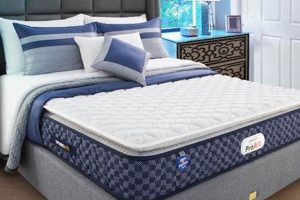
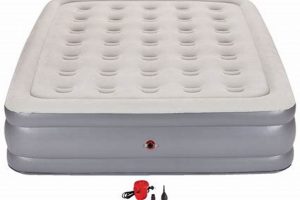
The support structure designed to elevate and provide a stable, level surface for a queen-sized bed is a crucial component of a sleep system. This structure often consists of a frame, typically made of wood or metal, combined with slats or a solid surface to uniformly distribute weight. Without adequate support, a queen mattress can sag, wear prematurely, and fail to provide optimal comfort. A common example includes a platform base with closely spaced wooden slats that prevent mattress deformation.
Proper undergirding for a queen mattress offers several advantages. It can extend the lifespan of the mattress by preventing undue stress on its internal components. Furthermore, it enhances the overall sleep experience by promoting proper spinal alignment and reducing motion transfer. Historically, these structures have evolved from simple bed frames to more sophisticated systems incorporating features like storage drawers or adjustable settings. Adequate support is an investment in both mattress longevity and restful sleep.
Understanding the various types of support systems available, their suitability for different mattress types, and the key factors to consider when selecting one are essential for maximizing sleep quality and mattress performance. The subsequent sections will delve into these aspects, offering a detailed exploration of the choices and considerations involved in securing the ideal base for a queen-size sleeping surface.
Optimizing Queen Mattress Support
Selecting an appropriate support structure significantly impacts mattress longevity, sleep quality, and overall bed stability. The following points offer guidance in choosing a queen mattress foundation.
Tip 1: Prioritize Compatibility: Confirm the chosen base is compatible with the specific queen mattress type (e.g., innerspring, memory foam, hybrid). Some mattress warranties are voided if an unsuitable support is used. For instance, memory foam often requires a solid or closely-slatted base.
Tip 2: Evaluate Weight Capacity: Ensure the support structure can adequately bear the combined weight of the mattress and its occupants. Overloading can lead to premature wear and instability, potentially causing structural failure. Verify the manufacturer’s weight limit specifications.
Tip 3: Consider Slatted Spacing: When selecting a slatted base, ensure that the spaces between slats do not exceed two to three inches. Excessive gaps can lead to mattress sagging and uneven support. A wider spacing may require additional support measures.
Tip 4: Assess Frame Material: Frame construction material significantly influences durability and stability. Steel frames generally offer superior strength and longevity compared to wood, but consider the aesthetic and overall bedroom design.
Tip 5: Inspect Leg Support: Confirm the support system has sufficient legs or center support beams, particularly for queen-size mattresses. Inadequate leg support can result in instability and sagging in the middle of the mattress. Verify the legs are securely attached and evenly distributed.
Tip 6: Account for Bed Height: Bed height influences ease of entry and exit. Consider personal preferences and physical limitations when selecting a foundation, taking into account mattress thickness. Adjustable bases can provide height customization.
Tip 7: Explore Adjustable Bases: Adjustable bases offer enhanced comfort and positioning options. Evaluate the range of adjustability, motor noise level, and remote control functionality before making a purchase.
Selecting a supportive and compatible structure extends mattress life, promotes proper spinal alignment, and optimizes sleep comfort. Ignoring these considerations can lead to premature mattress degradation and a compromised sleep experience.
The final section will cover maintenance of the chosen structure, with recommendations for prolonging its lifespan and ensuring continued optimal support for the queen mattress.
1. Support

The ability to provide adequate support is the paramount function of a queen mattress foundation. This support directly impacts the sleeper’s spinal alignment and the mattress’s lifespan. Inadequate support can lead to mattress sagging, uneven weight distribution, and, consequently, discomfort or even back pain for the user. The foundation acts as a stable base, distributing weight evenly across the mattress surface and preventing localized pressure points. For example, a platform foundation with closely spaced slats offers consistent support, minimizing the risk of mattress deformation. Without sufficient support, the mattress’s internal components can degrade more rapidly, reducing its overall lifespan and necessitating premature replacement. A foundation must, therefore, meet the load-bearing requirements of both the mattress and its users.
Different types of mattress foundations offer varying levels of support. A traditional box spring, while once common, provides less rigid support compared to platform or solid-surface foundations. Adjustable bed frames, designed to elevate the head and feet, require robust construction to maintain consistent support throughout the adjustable range. A slatted foundation’s support depends on the slat material, thickness, and spacing. Proper support ensures the mattress performs as designed, delivering the intended comfort and pressure relief. Consider the case of a memory foam mattress paired with a box spring; the lack of firm support can negate the benefits of the foam, leading to premature sagging and reduced responsiveness.
In summary, the support offered by a queen mattress foundation is a determining factor in both sleep quality and mattress longevity. The chosen foundation must be structurally sound and compatible with the specific mattress type. Insufficient support compromises sleep comfort, accelerates mattress wear, and may void manufacturer warranties. Selecting a foundation that provides adequate and uniform support is, therefore, a crucial investment in a durable and comfortable sleep system.
2. Durability

The durability of a queen mattress foundation directly influences its lifespan and long-term performance. A durable foundation withstands the constant pressure and weight exerted by the mattress and its occupants, preventing premature sagging, warping, or breakage. The choice of materials and construction methods significantly impacts this attribute. For instance, a foundation constructed from solid hardwood or heavy-gauge steel will generally exhibit greater durability compared to one made from particleboard or lightweight metal. The consequence of a foundation failure is not only a compromised sleep experience but also potential damage to the mattress itself.
The practical significance of understanding foundation durability lies in its cost-effectiveness over time. While a less durable, and often cheaper, foundation may seem appealing initially, its shorter lifespan necessitates more frequent replacements. This repeated expense can ultimately exceed the cost of a single, more durable foundation. Moreover, a durable foundation maintains its structural integrity, ensuring consistent support and preventing uneven wear on the mattress. A real-world example includes comparing a box spring with a lifespan of approximately 5-7 years to a steel platform bed frame, which can last for decades with proper care.
In summary, durability is a critical component of a queen mattress foundation. It is a direct determinant of longevity, performance, and overall value. Selecting a foundation constructed from robust materials and employing sound construction principles ensures a stable and supportive base for the mattress, minimizing the risk of premature failure and contributing to a more comfortable and restful sleep environment. The investment in a durable foundation translates into long-term savings and sustained quality of sleep.
3. Compatibility

The principle of compatibility is paramount when selecting a foundation for a queen-size mattress. Mismatched components can compromise both mattress performance and longevity, leading to a less-than-optimal sleep experience. The interplay between mattress type and foundation design requires careful consideration.
- Mattress Type and Support Structure
Different mattress typesinnerspring, memory foam, hybrid, or latexrequire specific support structures. Innerspring mattresses often function adequately with traditional box springs, while memory foam mattresses typically benefit from solid or closely-slatted platforms to prevent sagging. Hybrid mattresses may necessitate a more versatile foundation capable of accommodating varying support needs. A mismatch can result in uneven weight distribution and premature wear.
- Weight Capacity and Foundation Strength
Foundations must possess sufficient weight capacity to support both the mattress and the occupants. Overloading a foundation can lead to structural failure, rendering it ineffective and potentially damaging the mattress. Manufacturers specify weight limits for their foundations, and exceeding these limits compromises stability and durability. Heavier mattresses and/or occupants necessitate a more robust foundation.
- Foundation Height and Bed Frame Compatibility
The height of the foundation influences the overall bed height, affecting ease of entry and exit. Compatibility with existing bed frames is also crucial. Some bed frames are designed for specific foundation heights, and using an incompatible foundation can result in an aesthetically displeasing or functionally awkward setup. Adjustable bed frames impose additional compatibility considerations, requiring foundations designed to accommodate their articulating mechanisms.
- Warranty Requirements and Foundation Specifications
Many mattress warranties stipulate specific foundation requirements. Using a non-compliant foundation can void the warranty, leaving the owner responsible for repair or replacement costs resulting from foundation-related issues. Mattress manufacturers often recommend specific foundation types or brands to ensure warranty validity. Adhering to these specifications is essential for protecting the investment in the mattress.
The multifaceted nature of compatibility underscores its importance in the selection process. A properly matched foundation optimizes mattress performance, extends its lifespan, and ensures a comfortable and supportive sleep environment. Neglecting compatibility considerations can lead to both short-term discomfort and long-term financial repercussions.
4. Dimensions

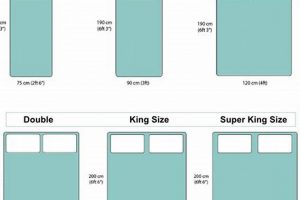
The precise dimensions of a foundation for a queen-size mattress are critical to ensuring proper support, preventing mattress damage, and maintaining overall bed stability. A queen mattress typically measures 60 inches wide by 80 inches long. The foundation must conform to these measurements, or preferably be fractionally smaller, to prevent overhang and ensure the mattress is fully supported across its surface. A foundation that is too small will lead to unsupported edges and premature sagging, while one that is too large may cause the mattress to shift and become unstable. For instance, if a foundation is even one inch too narrow, a portion of the mattress will lack support, leading to uneven wear and potential discomfort for the sleeper. This dimensional accuracy is not merely aesthetic; it is fundamental to the function and longevity of the entire sleep system.
The practical significance of dimensional accuracy extends to the ease of installation and use. A foundation that is precisely sized facilitates easy placement within a bed frame. Conversely, a foundation with incorrect dimensions may be difficult or impossible to install, requiring modification or replacement. Furthermore, the height of the foundation contributes to the overall bed height, affecting ease of entry and exit. Consider the case of individuals with mobility limitations; a foundation that is too high or too low can create challenges in getting into and out of bed. The dimensional consistency of the foundation also ensures compatibility with bedding accessories such as fitted sheets and mattress protectors. If the foundation is not properly sized, these accessories may not fit correctly, leading to slippage and discomfort.
In conclusion, the dimensions of a queen-size mattress foundation are not arbitrary figures but rather essential parameters that dictate its functionality and compatibility. Accurate dimensions ensure proper mattress support, prolong its lifespan, facilitate easy installation, and contribute to a comfortable and accessible sleep environment. Overlooking this aspect can result in a compromised sleep experience and increased expenses due to premature mattress wear or the need for replacement. Adherence to dimensional specifications is, therefore, a critical consideration in the selection and use of a foundation for a queen mattress.
5. Materials
The selection of materials for a queen mattress foundation exerts a profound influence on its durability, support capabilities, and overall lifespan. The foundational material directly dictates its capacity to withstand weight, resist deformation, and maintain structural integrity over extended use. For instance, a foundation constructed with kiln-dried hardwood offers greater resistance to warping and splitting compared to one fabricated from particleboard. The choice of materials represents a critical design consideration with far-reaching implications for the user’s sleep experience and the longevity of the mattress itself. The composition of the chosen material contributes to the distribution of weight evenly, thereby preventing localized stress and ensuring prolonged support.
The practical implications of material selection extend beyond mere structural integrity. The breathability of the materials used in a foundation can influence air circulation around the mattress, mitigating moisture buildup and preventing the growth of mold or mildew. For example, a slatted foundation allows for greater airflow compared to a solid platform, which can be particularly beneficial for mattresses containing materials prone to trapping moisture, such as memory foam. Furthermore, the materials employed impact the foundation’s susceptibility to pests such as bed bugs. A foundation with tightly sealed seams and a non-porous surface offers greater resistance to infestation compared to one with exposed crevices and absorbent fabrics. Evaluating the resistance to pests will save money and time, since mattress and materials is very expensive.
In summary, the materials comprising a queen mattress foundation are not merely passive components but rather active contributors to its performance, longevity, and hygiene. The selection of appropriate materials involves a careful assessment of structural strength, breathability, and resistance to pests. Overlooking these considerations can lead to premature foundation failure, compromised sleep quality, and potential health risks. Investing in a foundation constructed from durable, breathable, and pest-resistant materials represents a prudent decision that safeguards the mattress, enhances the sleep experience, and promotes long-term well-being.
6. Ventilation

Ventilation, in the context of a foundation for a queen-size mattress, refers to the airflow allowed around and through the mattress. The design of the foundation directly influences the degree of ventilation. A solid platform base, for example, inherently restricts airflow compared to a slatted foundation or a traditional box spring with open internal spaces. Inadequate ventilation can trap moisture released by the sleeper, potentially leading to the growth of mold, mildew, and bacteria within the mattress. This, in turn, can contribute to unpleasant odors, allergic reactions, and a reduced lifespan for the mattress. A foundations design either promotes or inhibits this vital air exchange, affecting both the mattress’s health and the sleepers well-being.
The practical significance of understanding ventilation is particularly relevant for individuals using memory foam or latex mattresses. These materials tend to retain more heat than traditional innerspring mattresses, exacerbating the issue of moisture buildup. Consequently, a foundation that facilitates ample airflow becomes crucial for preventing overheating and maintaining a hygienic sleep environment. For instance, a slatted foundation with generous spacing between the slats allows air to circulate freely beneath the mattress, dissipating heat and moisture. Conversely, encasing a memory foam mattress on a solid, non-ventilated platform can create a breeding ground for microorganisms. Mattress manufacturers increasingly acknowledge the importance of ventilation and often recommend specific foundation types to optimize airflow and prevent warranty voidance due to moisture-related damage.
In summary, ventilation is a critical, often overlooked, component of a functional support structure. The design of the foundation should actively promote airflow to mitigate moisture buildup, prevent microbial growth, and extend mattress lifespan. Choosing a foundation with adequate ventilation is particularly important for individuals using memory foam or latex mattresses. Prioritizing ventilation represents a proactive measure in maintaining a healthy and comfortable sleep environment, directly impacting both the durability of the mattress and the well-being of the sleeper.
7. Stability
The stability of a queen mattress foundation is paramount to ensuring safe, restful, and undisturbed sleep. The foundation must provide a solid and unyielding base that prevents wobbling, shaking, or collapsing under the combined weight of the mattress and its occupants. Any instability compromises sleep quality and poses a potential safety hazard.
- Frame Rigidity and Construction
The rigidity of the frame material and the quality of its construction are fundamental to foundation stability. Weak joints, flimsy materials, or inadequate support structures contribute to instability. For example, a foundation made of particleboard with poorly fastened corners is far less stable than one constructed from solid hardwood with reinforced joints. Instability in this regard can lead to squeaking noises, uneven weight distribution, and eventual collapse.
- Leg Support and Weight Distribution
The number, placement, and strength of the legs supporting the foundation directly influence its stability. Insufficient or poorly positioned legs can result in sagging or tipping, particularly under uneven weight distribution. A queen-size foundation requires a central support leg in addition to corner supports to prevent sagging in the middle. Inadequate leg support is a common cause of instability, leading to a compromised sleep surface.
- Surface Area and Contact Points
The surface area of the foundation in contact with the floor, and the friction between these surfaces, contributes to overall stability. Small or smooth contact points can result in the foundation sliding or shifting during movement on the bed. Rubberized feet or a wide base of support increase friction and prevent unwanted movement. This is especially important on smooth or polished flooring surfaces.
- Compatibility with Bed Frame
If a foundation is used within a bed frame, the compatibility between the two is crucial for stability. A foundation that is too small or too large for the frame will not be properly supported, leading to instability. The frame must provide a snug and secure fit for the foundation, preventing movement and ensuring even weight distribution. An ill-fitting foundation compromises the structural integrity of the entire bed system.
The various facets of stabilityframe rigidity, leg support, surface area, and bed frame compatibilitycollectively determine the reliability of a queen mattress foundation. Addressing each of these areas ensures a stable and secure sleep platform, promoting restful sleep and preventing potential safety hazards. Neglecting any aspect of stability can compromise the entire bed system and negatively impact the sleep experience.
Frequently Asked Questions
This section addresses common inquiries regarding queen mattress foundations, providing clarity on key aspects to aid in informed decision-making.
Question 1: What is the expected lifespan of a typical queen mattress foundation?
The lifespan of a queen mattress foundation varies depending on materials, construction, and usage. A high-quality foundation constructed from solid wood or steel can last for decades, while a lower-quality foundation made from particleboard may only last 5-7 years.
Question 2: Can any type of foundation be used with any queen mattress?
No, compatibility is essential. Memory foam mattresses, for example, generally require a solid or closely-slatted platform for optimal support. Innerspring mattresses may function adequately with a traditional box spring, but a platform foundation often provides enhanced support and longevity.
Question 3: How does the height of the foundation affect the bed’s overall comfort?
Foundation height influences ease of entry and exit. Individuals with mobility limitations may prefer a lower foundation, while others may prefer a higher bed for aesthetic reasons. Consider personal preferences and physical needs when selecting a foundation height.
Question 4: Does a foundation impact the warranty of the queen mattress?
Yes, many mattress warranties stipulate specific foundation requirements. Using a non-compliant foundation can void the warranty. Consult the mattress manufacturer’s recommendations before selecting a foundation.
Question 5: How important is ventilation in a queen mattress foundation?
Ventilation is crucial for preventing moisture buildup and microbial growth, particularly with memory foam mattresses. Slatted foundations promote airflow, while solid platforms may require additional ventilation measures.
Question 6: What factors contribute to the stability of a queen mattress foundation?
Frame rigidity, leg support, surface area, and compatibility with the bed frame all contribute to foundation stability. Inadequate support in any of these areas can compromise the foundation’s ability to provide a safe and restful sleep surface.
Key takeaways include the importance of considering material quality, mattress compatibility, ventilation, and warranty requirements when selecting a queen mattress foundation.
The subsequent section will delve into maintenance practices for queen mattress foundations, offering guidance on prolonging their lifespan and ensuring continued support.
Foundation for Queen Size Mattress
The preceding exploration has underscored the multifaceted nature of selecting a foundation for queen-size mattresses. The importance of considering factors such as support, durability, material composition, ventilation, dimensions, compatibility with the mattress, and overall stability has been thoroughly addressed. Adherence to these principles is not merely a matter of preference but a determinant of both the lifespan of the mattress and the quality of sleep it provides. Neglecting these considerations introduces the risk of compromised comfort, premature wear, and potential health implications.
In conclusion, the foundation for a queen-size mattress warrants careful consideration as an integral component of the sleep system. A well-chosen and maintained foundation serves as an investment in long-term comfort, health, and the overall value of the mattress. Ongoing diligence in assessing these criteria ensures a sustained and beneficial sleep experience.