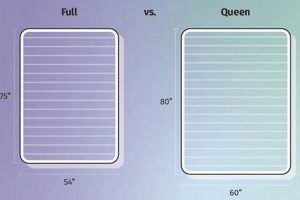
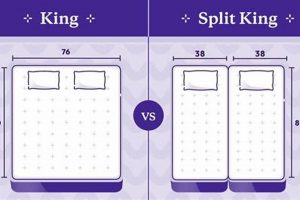
The terms “full” and “double” refer to a standard mattress dimension, typically measuring approximately 54 inches wide and 75 inches long. This size is often considered an intermediate option, larger than a twin but smaller than a queen. This makes it suitable for individuals who desire more sleeping space than a single bed provides or for smaller guest rooms where a queen-sized mattress would be too large. As an example, a single adult might opt for this size to allow for more comfortable movement during sleep.
The appeal of this mattress dimension lies in its balance between space and practicality. It offers a substantial upgrade in sleeping area compared to a twin, increasing comfort and freedom of movement. Historically, this size has been a popular choice for growing children transitioning from smaller beds, as well as for adults in apartments or homes with limited space. The reduced footprint compared to larger mattresses contributes to efficient space utilization while still providing adequate sleeping accommodations.
Understanding the specific dimensions and suitability of this size is key when selecting the appropriate mattress for individual needs and spatial constraints. Considerations such as room size, sleeping habits, and the number of occupants should factor into the decision-making process. The following sections will delve into detailed comparisons with other common mattress sizes, explore ideal user profiles, and provide guidance on selecting appropriate bedding and frames.
Essential Considerations
Selecting the appropriately sized mattress requires careful evaluation of individual needs and spatial limitations. The following tips provide guidance when considering this specific mattress size.
Tip 1: Measure the Intended Space: Before purchase, accurately measure the dimensions of the bedroom. Ensure sufficient clearance exists around the mattress for comfortable movement and placement of other furniture. An oversized mattress can make a room feel cramped.
Tip 2: Consider Occupancy: While suitable for a single adult, the bed dimension may prove insufficient for couples. Shared sleeping arrangements necessitate a larger surface area to avoid disturbances and ensure individual comfort.
Tip 3: Evaluate Sleeping Habits: Individuals who frequently change sleeping positions or prefer ample personal space may benefit from a larger mattress size. Restrictive sleep surfaces can lead to discomfort and disrupted sleep patterns.
Tip 4: Assess Frame Compatibility: Confirm that existing or newly purchased bed frames are specifically designed to accommodate the bed dimensions. Incompatible frames can compromise mattress support and longevity.
Tip 5: Factor in Budgetary Constraints: Generally, this mattress size offers a more economical option compared to queen or king sizes. However, factor in the cost of bedding and frames when evaluating overall affordability.
Tip 6: Consider Future Needs: Anticipate potential changes in living arrangements or relationship status. Selecting a larger mattress size now may provide greater long-term flexibility and avoid future replacement costs.
Tip 7: Research Mattress Construction: Investigate various mattress types (e.g., memory foam, innerspring, hybrid) to determine the most appropriate construction for individual sleep preferences and support requirements. A well-constructed mattress promotes proper spinal alignment and reduces pressure points.
Adhering to these considerations ensures an informed decision-making process, leading to the selection of a mattress that optimizes comfort, support, and spatial efficiency.
The following sections will explore additional aspects related to mattress care and maintenance, as well as address common misconceptions regarding mattress dimensions and their suitability for various user profiles.
1. Exact dimensions (54" x 75")

The precise measurement of 54 inches by 75 inches fundamentally defines the “full mattress size vs double.” This specification is not merely a detail; it is the core attribute differentiating this size from alternatives and dictating its suitability for various applications.
- Spatial Footprint
The 54″ x 75″ dimension dictates the spatial requirements of the mattress. This is crucial in smaller bedrooms, apartments, or guest rooms where maximizing usable space is paramount. The relatively compact footprint allows for greater flexibility in furniture arrangement and overall room design compared to larger queen or king-sized mattresses. Example: A studio apartment might only comfortably accommodate a full-size mattress while leaving enough room for other essential furnishings.
- Occupancy Capacity
These specific dimensions directly influence the number of individuals who can comfortably occupy the mattress. While a single adult will generally find sufficient space, two adults sharing the mattress may experience discomfort due to the restricted width. This dimension makes it better suited for single sleepers or occasional use by couples. Example: A teenager transitioning to their first “adult” bed often finds that this size offers ample space without overwhelming the room.
- Bedding and Frame Compatibility
The standardized 54″ x 75″ measurement ensures compatibility with widely available bedding and bed frames specifically designed for “full” or “double” mattresses. This standardization simplifies the process of purchasing sheets, blankets, and frames, avoiding the need for custom-sized solutions. Example: Standard full-sized fitted sheets will seamlessly fit mattresses adhering to these exact dimensions, providing a snug and secure fit.
- Cost Implications
The dimensions play a role in the cost. Because it uses less material than larger sizes, bedding and the mattress itself tend to be more economical than that of a queen or king. This affordability makes it accessible to a broader range of consumers and may be a determining factor in budget-conscious buying decisions. Example: A young adult furnishing their first apartment may opt for this due to its balance of size and affordability.
In summary, the specific dimensions of 54″ x 75″ directly impact the spatial utility, occupancy comfort, bedding compatibility, and cost-effectiveness associated with the “full mattress size vs double.” These factors collectively shape the suitability of this particular mattress size for individual consumers and their specific needs.
2. Single adult suitability

The phrase “Single adult suitability” constitutes a significant factor in the consideration and selection of a full mattress size vs double. The dimensions of this mattress are directly related to the comfort and practicality it offers to a single adult sleeper. A larger twin may feel restrictive to an adult who moves frequently during sleep or prefers to sprawl out. Conversely, a queen or king-sized mattress might be unnecessarily large for a single individual, consuming valuable floor space and potentially exceeding budgetary constraints.
The full mattress size provides a balanced approach, offering ample sleeping surface for a single adult without the excess of larger sizes. This is particularly relevant in smaller living spaces, such as apartments or guest rooms, where maximizing usable area is essential. For example, a single individual in a studio apartment might find that a full-sized mattress provides adequate comfort without sacrificing floor space needed for other essential furniture and activities. Additionally, the full-size dimensions can be more financially accessible, considering the cost of the mattress itself and the associated bedding and frames. This size offers more freedom of movement than a twin-size, accommodating a broader range of sleeping positions and body sizes than a smaller mattress.
In summary, the suitability of a full mattress size for a single adult derives from its optimal balance of space, comfort, and cost. While other sizes might be considered, the dimensions of the full-size bed strike a practical middle ground, addressing the needs of single sleepers without overwhelming smaller living spaces or budgetary resources. This positions the “full mattress size vs double” as a frequently selected option for single adults seeking a comfortable and efficient sleep solution.
3. Smaller rooms optimal

The relationship between compact living spaces and the dimensions of a full-size mattress is intrinsically linked. The designation “Smaller rooms optimal” directly reflects the advantageous use case for this mattress size, particularly where spatial efficiency is paramount. A larger mattress in a confined area may impede movement, limit furniture placement, and create an overall sense of claustrophobia. The full-size mattress, with its comparatively smaller footprint, mitigates these issues, allowing for a more balanced and functional arrangement. This is not simply a matter of aesthetics; it impacts usability and the overall comfort of the living space. As a direct result of its dimensions, it facilitates a more livable environment in areas where space is a premium. For example, in a small apartment bedroom, selecting a full-size bed enables the inclusion of a desk or dresser that would be impractical with a larger queen-size mattress. The importance of this factor becomes apparent when evaluating the usability and market preference for this mattress dimension; its appeal stems directly from its spatial appropriateness.
Furthermore, the “Smaller rooms optimal” characteristic influences furniture selection and room layout. With a full-size mattress, there is greater flexibility in arranging bedside tables, lamps, and other accessories without overcrowding the room. This is particularly relevant in older homes or apartments where bedroom sizes are often more modest. In such cases, choosing a larger mattress would necessitate compromising on other essential furnishings or sacrificing valuable floor space. For instance, selecting a full-size over a queen-size could permit the inclusion of a reading nook or a small seating area within the bedroom. This directly enhances the functionality of the room.
In conclusion, the synergy between “Smaller rooms optimal” and the dimensions of the full-size mattress reflects a practical design consideration. The suitability of the full-size mattress is derived from its spatial efficiency, which contributes to a more functional and aesthetically pleasing living environment in smaller spaces. The understanding of this relationship is essential in making informed decisions about mattress selection, particularly when prioritizing the efficient use of limited square footage. This relationship provides a functional solution where spatial constraints are a primary concern.
4. Cost-effective alternative
The positioning of the “full mattress size vs double” as a “Cost-effective alternative” is a crucial consideration for many consumers. Its inherent value proposition stems from a combination of factors that contribute to its overall affordability compared to larger mattress sizes.
- Lower Material Costs
The reduced surface area of a full-size mattress translates directly into lower material requirements during manufacturing. This reduction impacts the cost of core materials such as foam, innersprings, and fabric, resulting in a lower overall production expense. Example: A manufacturer requires significantly less memory foam to construct a full-size mattress compared to a queen-size, leading to cost savings that are often passed on to the consumer.
- Reduced Shipping Expenses
Smaller dimensions and lighter weight contribute to lower shipping costs. This factor is particularly relevant in the era of online mattress purchases, where transportation expenses can significantly impact the final price. Example: The decreased weight and volume of a full-size mattress allow for more efficient packing and transportation, reducing the per-unit shipping cost for retailers.
- Affordable Bedding and Accessories
Bedding and accessories, such as sheets, blankets, and bed frames, are generally less expensive for full-size mattresses compared to queen or king sizes. This can result in significant savings over the lifespan of the mattress, particularly for budget-conscious consumers. Example: A set of high-quality cotton sheets for a full-size mattress typically costs less than the equivalent set for a queen-size, contributing to the overall cost-effectiveness of the smaller mattress.
- Suitable for Smaller Spaces, Avoiding Renovation Costs
By fitting comfortably into smaller rooms, the full-size mattress may negate the need for costly home renovations or expansions. Selecting a smaller mattress can prevent the expense of reconfiguring a room to accommodate a larger sleeping surface. Example: An individual in a small apartment might opt for a full-size mattress to avoid the necessity of moving to a larger, more expensive unit simply to accommodate a queen or king-size bed.
In summary, the “Cost-effective alternative” status of the “full mattress size vs double” arises from lower material costs, reduced shipping expenses, affordable bedding and accessories, and the avoidance of potential renovation costs. These factors collectively contribute to its appeal as a practical and budget-friendly option for consumers seeking a comfortable and functional sleeping solution without incurring the higher expenses associated with larger mattress sizes. By optimizing space and budget, it presents a tangible financial benefit to the consumer.
5. Frame availability standard

The descriptor “Frame availability standard” is intrinsically linked to the practical utility of the “full mattress size vs double”. This refers to the readily accessible market of bed frames specifically designed to accommodate mattresses of this dimension. The standardization of this size leads to widespread production and distribution of compatible frames, greatly simplifying the purchasing process for consumers. Unlike less common mattress sizes that may necessitate custom-built or difficult-to-source frames, this bed dimension benefits from established manufacturing practices and retailer inventories. Consequently, securing a suitable frame does not present a significant hurdle, allowing consumers to focus on other factors such as style and material preferences. For instance, a first-time homebuyer can confidently select this mattress size knowing that a variety of affordable and aesthetically diverse frame options are readily available at furniture stores and online retailers.
The significance of “Frame availability standard” extends beyond mere convenience. It directly influences the overall cost-effectiveness of choosing a full-size mattress. Custom-made or rare-size frames often command a premium price, significantly increasing the total expense of a bed setup. By opting for a standard size, consumers can avoid these additional costs and allocate resources towards other aspects of their bedroom design. Furthermore, readily available frames simplify the process of replacing or upgrading the bed structure in the future. Standardized dimensions ensure backward compatibility, allowing for seamless transitions between different frame styles without the need for mattress modifications. For example, an individual moving from a traditional wooden frame to a modern metal platform frame can do so without replacing their existing full-size mattress.
In conclusion, the widespread availability of compatible bed frames is a fundamental component of the “full mattress size vs double” value proposition. This standardization simplifies purchasing, reduces overall cost, and facilitates future upgrades or replacements. The convenience and affordability associated with “Frame availability standard” contribute significantly to the continued popularity and practical appeal of this mattress dimension. The ease of procuring a supporting structure represents a considerable advantage over less common bed sizes, making it a pragmatic choice for a wide range of consumers.
6. Longevity similar queens
The assertion “Longevity similar queens” suggests a comparable lifespan between full-size and queen-size mattresses, contingent upon equivalent material composition and manufacturing processes. This point of similarity is significant when evaluating the long-term value proposition of a full-size mattress relative to a queen. If both mattress sizes are constructed with the same quality of materials such as density of foam, gauge of innerspring coils, and type of fabric and subjected to similar levels of use, the rate of wear and tear should be comparable. For example, a full-size memory foam mattress and a queen-size memory foam mattress, both made with identical foam density and construction, will likely exhibit similar levels of indentation and support degradation over time, assuming both are used by individuals of similar weight and sleeping habits. The practical significance lies in dispelling the notion that a smaller mattress inherently possesses a shorter lifespan.
Furthermore, understanding “Longevity similar queens” challenges the assumption that a larger mattress automatically equates to greater durability. While size affects the initial cost, it does not necessarily determine the lifespan. The durability of any mattress is primarily dependent on the quality of its internal components and the stress placed upon them. A poorly constructed queen-size mattress, using low-grade materials, may degrade faster than a well-constructed full-size mattress with higher-quality components. For instance, a full-size mattress with individually wrapped coils and high-density foam might outlast a queen-size mattress with interconnected coils and low-density foam, despite the queen’s larger dimensions. The practical application of this understanding lies in prioritizing mattress construction quality over simply selecting the largest possible size within a given budget.
In conclusion, “Longevity similar queens” highlights a key factor in assessing the overall value of a full-size mattress. While the size difference affects the initial price and spatial considerations, the lifespan primarily hinges on material quality and construction. A properly constructed and maintained full-size mattress can provide years of comfortable and supportive sleep, comparable to its queen-size counterpart. This understanding is crucial in making informed purchase decisions, encouraging consumers to focus on material quality and construction techniques rather than solely relying on size as an indicator of durability. The ultimate challenge lies in educating consumers to prioritize these key aspects for long-term satisfaction with their mattress investment.
Frequently Asked Questions
The following questions and answers address common inquiries and clarify prevalent misconceptions regarding the full, or double, mattress size.
Question 1: Is there a dimensional difference between a “full” and a “double” mattress?
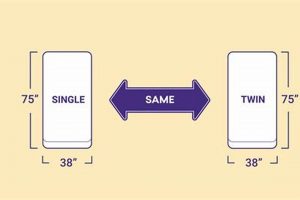
No. The terms “full” and “double” are synonymous when referring to mattress dimensions. Both designate a mattress measuring approximately 54 inches wide and 75 inches long.
Question 2: What sleeping arrangement is best suited for a full mattress size?
A full mattress size is generally considered optimal for single adults. Its width provides adequate space for individual sleepers to move and adjust positions comfortably. It can accommodate two people if they are smaller in size, but with a limited personal space.
Question 3: In what scenarios should a larger size be selected instead?
A larger mattress size, such as a queen or king, is generally recommended for couples sharing a bed or for individuals who prioritize ample sleeping space. Those who frequently change sleeping positions might also benefit from larger dimensions.
Question 4: Does the selection of a full size limit the availability of bedding options?
No. Due to the standardization of full/double mattress dimensions, a wide range of bedding options is readily available. This includes sheets, comforters, blankets, and mattress protectors designed specifically for this size.
Question 5: Is a full mattress size significantly less expensive than a queen?
Generally, a full mattress size is less expensive than a queen, primarily due to reduced material requirements. However, the exact price difference varies based on brand, construction, and retailer.
Question 6: What is the projected lifespan of a full mattress size?
The lifespan of a full mattress size depends on the quality of materials and construction, as well as the frequency and type of use. A well-maintained full-size mattress can be expected to last approximately 7-10 years, similar to other mattress sizes of comparable quality.
In summary, understanding the specifications, ideal usage scenarios, and cost implications associated with the full mattress size is crucial when making informed purchasing decisions. This size presents a viable option for single sleepers and those seeking space-saving and budget-friendly solutions.
The following section will delve into the practical aspects of maintaining and cleaning the full-size mattress, ensuring its longevity and hygiene.
Full Mattress Size vs Double
The preceding analysis has meticulously examined the “full mattress size vs double,” delineating its dimensional specifications, ideal usage profiles, and practical implications. Key aspects, including spatial efficiency, single-sleeper suitability, and cost-effectiveness, have been thoroughly explored. The standardization of frame availability and comparative longevity relative to larger mattress dimensions have also been addressed, providing a comprehensive understanding of its attributes and limitations.
The informed selection of a mattress necessitates a careful evaluation of individual needs and spatial constraints. The decision to opt for a “full mattress size vs double” should be predicated on a thorough assessment of these factors. Its suitability as a space-saving, budget-conscious option for single adults remains a significant consideration. Prospective buyers are encouraged to consider the information presented herein to facilitate a well-reasoned and practical purchasing decision, aligning with personal needs and long-term requirements.