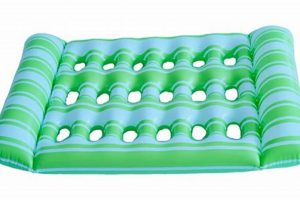
Specialized support surfaces designed for medical environments offer significant advantages in patient care. These inflatable beds, commonly found in healthcare facilities, provide a dynamic and adjustable foundation intended to minimize pressure points. For instance, a patient recovering from surgery might benefit from the customized support offered by such a system.
The implementation of these support systems is critical in preventing and treating pressure ulcers, a common concern for individuals with limited mobility. Their design facilitates even weight distribution, reducing the risk of skin breakdown. Historically, advancements in materials and technology have led to increasingly sophisticated models, enhancing both patient comfort and therapeutic outcomes. These systems represent a substantial improvement over traditional static mattresses.
The following sections will delve into the specific features, types, and operational considerations surrounding these crucial pieces of medical equipment, as well as explore guidelines for appropriate utilization and maintenance in different clinical settings.
Hospital Air Mattress
Proper utilization of specialized medical support surfaces is crucial for optimal patient outcomes. The following guidelines outline key considerations for healthcare professionals.
Tip 1: Patient Assessment is Paramount: Thoroughly evaluate the patient’s risk for pressure ulcer development prior to selecting a support surface. Factors such as mobility, nutritional status, and existing skin conditions must be considered.
Tip 2: Pressure Settings Must Be Individualized: Adjust inflation levels according to patient weight and body type to ensure adequate pressure redistribution. Monitor the patient’s skin for signs of excessive pressure or bottoming out.
Tip 3: Regular Skin Inspections are Mandatory: Conduct frequent and thorough skin assessments, particularly over bony prominences. Document findings and adjust the support surface settings as needed.
Tip 4: Implement Repositioning Schedules: Despite the pressure-redistributing properties, adhering to a consistent repositioning schedule is vital. Turning and repositioning patients at regular intervals further minimizes pressure on vulnerable areas.
Tip 5: Ensure Proper Mattress Overlay Placement: Verify that the overlay is correctly positioned on the bed frame and secured appropriately. Incorrect placement can compromise the effectiveness of the pressure redistribution.
Tip 6: Adhere to Manufacturer’s Cleaning Protocols: Implement strict infection control practices by diligently following the manufacturers recommended cleaning and disinfection protocols. This minimizes the risk of cross-contamination.
Tip 7: Regular Maintenance is Essential: Conduct routine inspections of the device, including the pump, hoses, and mattress surface, to identify and address any potential malfunctions or damage. Prompt repairs are crucial.
Adherence to these guidelines will enhance patient comfort, minimize the risk of pressure ulcers, and optimize the therapeutic benefits of hospital air mattresses.
The subsequent section will examine specific types of support surfaces and their suitability for various clinical conditions.
1. Pressure Redistribution

Pressure redistribution is a fundamental principle underpinning the design and function of hospital air mattresses. Prolonged pressure on bony prominences, a direct consequence of immobility, contributes significantly to the development of pressure ulcers. Hospital air mattresses mitigate this risk by dynamically adjusting internal air pressure, effectively distributing the patient’s weight across a larger surface area. This process reduces localized pressure concentration, thereby minimizing the potential for tissue ischemia and subsequent ulcer formation. As an example, a patient with limited mobility recovering from a hip fracture benefits significantly from this dynamic pressure redistribution, which protects vulnerable skin areas, such as the sacrum and heels, from prolonged compression.
The efficacy of pressure redistribution is directly related to the type and complexity of the air mattress. Basic alternating pressure mattresses cyclically inflate and deflate air cells, shifting pressure points and promoting blood flow. Advanced low air loss mattresses incorporate micro-perforations, facilitating air circulation and further minimizing pressure and moisture build-up on the skin. Clinical studies consistently demonstrate that utilization of appropriate pressure redistribution surfaces, in conjunction with other preventative measures, significantly reduces the incidence of hospital-acquired pressure ulcers. Furthermore, data from long-term care facilities show a positive correlation between consistent usage of these mattresses and improved patient comfort, contributing to better overall well-being.
In summary, pressure redistribution is not merely a feature of hospital air mattresses, but rather the core mechanism by which these devices provide therapeutic benefit. Understanding this principle is essential for healthcare professionals to appropriately select and utilize these mattresses, thereby optimizing patient outcomes and mitigating the risk of pressure ulcer development. Challenges remain in ensuring consistent adherence to best practices and optimizing mattress selection for individual patient needs; however, the importance of pressure redistribution in modern healthcare cannot be overstated.
2. Infection Control

In the hospital environment, infection control is paramount, and the surfaces patients come into contact with are significant vectors for the transmission of healthcare-associated infections (HAIs). Hospital air mattresses, due to their frequent use and potential exposure to bodily fluids, require rigorous infection control measures to minimize the risk of contamination and subsequent infection.
- Material Selection and Design
The materials used in the construction of hospital air mattresses must be compatible with hospital-grade disinfectants and resistant to fluid penetration. The design should minimize seams and crevices where pathogens can accumulate and persist. For example, mattresses with welded seams and impervious coatings facilitate easier cleaning and disinfection, reducing the risk of microbial growth.
- Cleaning and Disinfection Protocols
Standardized cleaning and disinfection protocols are essential components of infection control. These protocols should specify the approved disinfectants, contact times, and cleaning procedures to ensure effective removal of pathogens. Healthcare facilities must establish and enforce these protocols, training staff on proper techniques and monitoring adherence to guidelines. For instance, routine cleaning between patient use, and immedi
ate disinfection following any contamination, are critical steps. - Barrier Protection
Use of fluid-resistant and antimicrobial mattress covers provides an additional layer of protection against contamination. These covers act as a barrier, preventing fluids from penetrating the mattress core and facilitating easier cleaning. Regular inspection and replacement of damaged covers are necessary to maintain their effectiveness. Consider, for example, using a mattress cover that incorporates silver ions, which exhibit antimicrobial properties, further reducing the risk of microbial proliferation.
- Regular Inspection and Maintenance
Routine inspections are crucial for identifying damage or wear that could compromise the integrity of the mattress surface and create harborage sites for pathogens. Damaged mattresses should be promptly repaired or replaced to prevent contamination. Regular maintenance schedules should include checks for leaks, tears, and deterioration of the mattress material. Failure to conduct these checks can result in undetected contamination and an increased risk of infection transmission.
The implementation of these multifaceted infection control measures is not merely a procedural formality; it is a critical component of patient safety. The meticulous attention to material selection, cleaning protocols, barrier protection, and regular maintenance collectively contributes to minimizing the risk of HAIs associated with hospital air mattresses, thereby safeguarding patient health and promoting positive treatment outcomes.
3. Patient Comfort
Patient comfort, while seemingly a subjective element, is an objectively crucial component of effective medical care and is directly impacted by the design and functionality of a hospital air mattress. Discomfort can exacerbate pain, increase anxiety, and hinder the healing process. Hospital air mattresses, when properly selected and adjusted, mitigate these negative effects by providing a supportive and pressure-redistributing surface. For instance, a patient experiencing chronic back pain may find significant relief from a low air loss mattress that conforms to their body shape and reduces pressure on sensitive areas. This enhanced comfort can facilitate rest, improve sleep quality, and contribute to a more positive overall recovery experience. The causal relationship is clear: optimized mattress design leads to reduced pressure points, resulting in increased patient comfort and improved clinical outcomes.
The selection of an appropriate air mattress must consider individual patient needs and conditions. Factors such as weight, body shape, skin integrity, and specific medical diagnoses all influence the optimal mattress choice. A bariatric patient, for example, requires a mattress with a higher weight capacity and a wider surface area to ensure adequate support and pressure redistribution. Similarly, a patient with sensitive skin may benefit from a mattress with a low air loss feature to minimize moisture and friction. Integrating patient feedback into the mattress selection process can further enhance comfort and promote patient satisfaction. Regular monitoring of patient comfort levels and adjustments to mattress settings, as needed, are essential for maintaining optimal therapeutic benefits.
In conclusion, patient comfort is not a secondary consideration, but rather an integral aspect of hospital air mattress functionality. By reducing pressure points, minimizing friction, and promoting a supportive sleep environment, these mattresses contribute significantly to patient well-being and overall recovery. Recognizing the practical significance of this connection and prioritizing patient comfort in mattress selection and management is essential for delivering high-quality, patient-centered care. Challenges remain in optimizing mattress design for diverse patient populations and integrating objective measures of comfort into clinical practice; however, the undeniable link between patient comfort and positive health outcomes underscores the importance of continued innovation and research in this area.
4. Ulcer Prevention

The correlation between specialized medical support surfaces and pressure ulcer prevention is significant in modern healthcare. Prolonged immobility, a common condition among hospitalized patients, dramatically increases the risk of pressure ulcer development. Hospital air mattresses directly address this risk by employing dynamic pressure redistribution. Traditional static mattresses concentrate pressure on bony prominences, leading to tissue ischemia and subsequent ulcer formation. In contrast, air mattresses actively adjust pressure, minimizing localized pressure on vulnerable areas, such as the sacrum, heels, and elbows. For instance, a paraplegic patient confined to a bed is at high risk for pressure ulcers; the implementation of an alternating pressure air mattress significantly reduces this risk by cyclically changing pressure points, promoting blood flow and oxygenation of tissues.
The integration of advanced features, such as low air loss technology, further enhances the preventive capabilities of these mattresses. Low air loss mattresses utilize micro-perforations to circulate air, reducing moisture accumulation and frictiontwo major contributing factors to skin breakdown. Protocols for appropriate mattress selection, inflation level adjustment, and regular skin assessments are crucial for maximizing the benefits of these devices. Studies have demonstrated that a multifaceted approach, combining specialized support surfaces with diligent skin care, significantly reduces the incidence of hospital-acquired pressure ulcers. The financial implications of this prevention strategy are substantial, given the high cost associated with treating advanced pressure ulcers.
In conclusion, hospital air mattresses are indispensable tools in pressure ulcer prevention. Their ability to dynamically redistribute pressure, coupled with features like low air loss, minimizes the risk of skin breakdown in vulnerable patients. While challenges remain in ensuring consistent adherence to best practices and optimizing mattress selection for individual patient needs, the connection between these support surfaces and ulcer prevention is undeniable and critical for delivering high-quality, cost-effective healthcare.
5. Support Adjustment

The capability to modify the support provided by a medical support surface is critical to its therapeutic effectiveness. In the context of hospital air mattresses, support adjustment ensures that the device caters to the unique needs of each patient, optimizing pressure redistribution and minimizing the risk of pressure ulcers.
- Weight-Based Calibration
Hospital air mattresses often feature adjustable pressure settings to accommodate varying patient weights. Proper calibration ensures adequate support without bottoming out, which can negate the pressure-redistributing benefits. Incorrect calibration can lead to either insufficient support, causing pressure concentration on bony prominences, or excessive inflation, potentially increasing friction and shear forces on the skin. For example, a bariatric patient requires higher pressu
re settings compared to a frail elderly individual to achieve optimal support and pressure redistribution. - Contour Accommodation
Air mattresses allow for customization based on individual body contours. Adjusting pressure levels in specific zones can accommodate variations in body shape, providing tailored support to areas such as the sacrum, heels, and shoulders. This contour accommodation is particularly relevant for patients with skeletal deformities or uneven weight distribution. For instance, a patient with scoliosis may require differential pressure settings to ensure even weight distribution and minimize pressure on specific areas of the spine.
- Therapeutic Mode Selection
Many advanced air mattresses offer multiple therapeutic modes, such as alternating pressure, static floatation, and continuous low air loss. Each mode provides different pressure redistribution characteristics and may be selected based on the patient’s specific needs and risk factors. For example, alternating pressure mode is suitable for patients with limited mobility, while static floatation may be preferred for patients with existing pressure ulcers. Appropriate mode selection enhances therapeutic efficacy and promotes healing.
- Dynamic Responsiveness
Some advanced air mattresses incorporate sensors that automatically adjust pressure levels in response to patient movement and position changes. This dynamic responsiveness ensures continuous pressure redistribution, even as the patient shifts or turns. This feature is particularly beneficial for patients with involuntary movements or agitation. Real-time pressure adjustments minimize pressure spikes and maintain a consistent therapeutic environment.
In conclusion, the capacity for precise support adjustment is intrinsic to the functionality of hospital air mattresses. Tailoring the pressure settings, contour accommodation, therapeutic mode, and dynamic responsiveness to individual patient needs optimizes pressure redistribution, reduces the risk of pressure ulcers, and promotes patient comfort and healing. Effective utilization of these adjustment features requires thorough patient assessment and ongoing monitoring by healthcare professionals.
6. Durability

The operational lifespan and resilience of medical support surfaces are critical factors in healthcare environments. The durability of a hospital air mattress directly impacts its cost-effectiveness, patient safety, and overall performance. Investing in durable mattresses minimizes the frequency of replacements, reduces maintenance costs, and ensures consistent therapeutic benefits for patients.
- Material Composition and Construction
The type and quality of materials used in constructing a hospital air mattress significantly influence its durability. High-grade polymers, reinforced seams, and fluid-resistant coatings enhance the mattress’s ability to withstand the rigors of daily use, including frequent cleaning and disinfection. For example, mattresses constructed with multi-layered, puncture-resistant fabrics offer superior protection against damage from sharp objects or accidental tears. Failure to use robust materials leads to premature wear and tear, potentially compromising the mattress’s ability to provide effective pressure redistribution.
- Resistance to Cleaning Agents
Hospital air mattresses are subjected to frequent cleaning and disinfection to maintain infection control standards. The mattress material must be resistant to the harsh chemicals found in hospital-grade cleaning agents. Degradation from cleaning agents can cause the material to become brittle, cracked, or discolored, reducing its structural integrity and lifespan. Mattresses designed with chemical-resistant surfaces maintain their durability and functionality even after repeated exposure to disinfectants.
- Weight Capacity and Load Testing
A durable hospital air mattress must be capable of supporting a wide range of patient weights without compromising its structural integrity or pressure redistribution capabilities. Rigorous load testing ensures that the mattress can withstand prolonged use under maximum weight limits. Mattresses that exceed load testing standards demonstrate superior durability and reliability, reducing the risk of collapse or deformation that could jeopardize patient safety.
- Seam Strength and Air Retention
The integrity of the seams is essential for maintaining air pressure within the mattress. Weak or poorly constructed seams are prone to leakage, resulting in pressure loss and reduced therapeutic effectiveness. Durable mattresses feature reinforced seams that are resistant to tearing and separation, ensuring consistent air retention over time. Regular inspection and maintenance of seams are crucial for identifying and addressing any potential weaknesses before they lead to significant air loss.
The facets of material composition, resistance to cleaning agents, weight capacity, and seam strength collectively determine the durability of a hospital air mattress. Investing in mattresses that excel in these areas optimizes patient care, reduces operational costs, and ensures a longer service life. Selecting durable mattresses, therefore, is a key factor in responsible healthcare facility management.
Frequently Asked Questions
This section addresses common inquiries and concerns related to medical support surfaces, providing essential information for healthcare professionals and caregivers.
Question 1: What are the primary indications for utilizing a hospital air mattress?
Hospital air mattresses are primarily indicated for patients at high risk for, or already exhibiting, pressure ulcers. Individuals with limited mobility, impaired sensory perception, poor nutritional status, or those confined to prolonged bed rest are prime candidates for these support surfaces. The mattresses help mitigate pressure, reducing the likelihood of skin breakdown.
Question 2: How often should a hospital air mattress be cleaned and disinfected?
Cleaning and disinfection frequency depends on usage and potential contamination. As a general guideline, the surface should be cleaned and disinfected between each patient use and immediately following any soiling with bodily fluids. Strict adherence to manufacturer-recommended cleaning protocols is paramount to prevent cross-contamination.
Question 3: What is the appropriate pressure setting for a hospital air mattress?
The ideal pressure setting varies based on the patient’s weight, body composition, and clinical condition. Healthcare providers must assess the patient and adjust the mattress to a level that provides adequate support and pressure redistribution without causing the patient to “bottom out.” Regular skin assessments are essential to verify proper pressure settings.
Question 4: Can a standard mattress cover be used on a hospital air mattress?
The use of standard mattress covers may compromise the effectiveness of the air mattress. Specialized covers designed for use with these surfaces are typically fluid-resistant, breathable, and allow for optimal pressure redistribution. Employing non-approved covers can negate the therapeutic benefits and increase the risk of skin breakdown.
Question 5: What are the potential contraindications for using a hospital air mattress?
While generally safe, certain conditions may warrant caution
. Unstable spinal fractures or other conditions requiring rigid spinal immobilization may be contraindications. Individuals with severe hemodynamic instability may also require careful monitoring, as the mattress can influence fluid distribution. Clinical judgment should guide the decision-making process.
Question 6: How should a damaged hospital air mattress be handled?
Any damage to a hospital air mattress, such as punctures, tears, or malfunctioning components, necessitates immediate removal from service. Continued use of a damaged mattress can compromise its therapeutic effectiveness and pose a safety risk to the patient. The damaged unit should be repaired by qualified personnel or replaced according to facility protocols.
The proper utilization and maintenance of medical support surfaces are essential components of quality patient care. Adhering to these guidelines helps to maximize therapeutic benefits and minimize potential risks.
The following section will offer concluding remarks.
Conclusion
The preceding discussion has comprehensively explored the multifaceted aspects of the hospital air mattress. From its fundamental role in pressure redistribution and ulcer prevention to the critical importance of infection control, patient comfort, appropriate support adjustment, and the essential factor of durability, the air mattress emerges as a pivotal element in contemporary patient care. Proper selection, utilization, and maintenance are paramount to optimizing therapeutic benefits and minimizing potential risks associated with its use.
Given its direct impact on patient outcomes and the financial implications related to pressure ulcer management, continued research, innovation, and adherence to best practices in the application of the hospital air mattress remain crucial. The ultimate goal is to provide the safest, most comfortable, and most effective support possible for vulnerable patients in healthcare settings, thus enhancing their overall well-being and facilitating the healing process.