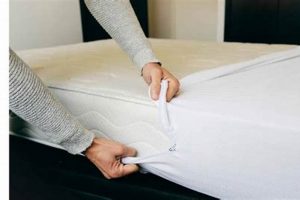
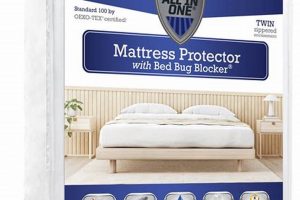
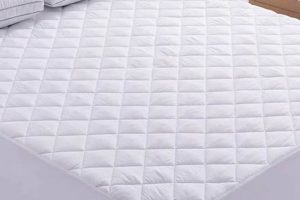
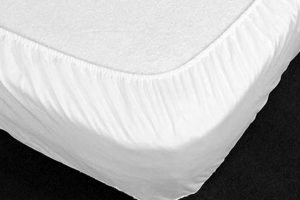
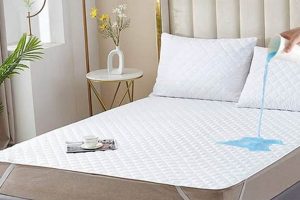
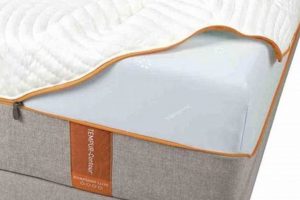
A protective covering designed to encase a hospital bed’s sleeping surface is essential for maintaining hygiene and preventing damage. These specialized covers are commonly crafted from waterproof and often antimicrobial materials, offering a barrier against fluids, bacteria, and other contaminants that are frequently encountered in healthcare environments. An example is a zippered, polyurethane-coated cover designed to completely enclose the mattress.
The utilization of such coverings is paramount for infection control, contributing significantly to patient safety by reducing the risk of cross-contamination. They also prolong the lifespan of the underlying mattress by shielding it from stains, wear, and tear. Historically, simpler versions of these protectors were used; however, modern innovations have led to materials offering enhanced comfort, breathability, and resistance to harsh cleaning agents used in hospitals.
This article will delve into the various types of these protective coverings, their construction materials, standards compliance, cleaning protocols, and factors to consider when selecting the appropriate option for different hospital settings.
Selection and Maintenance Guidelines
Optimal utilization necessitates adherence to specific selection and maintenance protocols, ensuring effective hygiene and longevity.
Tip 1: Material Composition Assessment: Evaluate the protector’s material. Polyurethane and vinyl offer fluid resistance, while breathable options enhance patient comfort and reduce moisture buildup.
Tip 2: Antimicrobial Properties Verification: Prioritize protectors with inherent antimicrobial properties to inhibit bacterial growth, contributing to infection control efforts.
Tip 3: Seam Integrity Inspection: Examine seam construction meticulously. Welded or tightly stitched seams minimize fluid penetration, improving hygiene.
Tip 4: Zippered Enclosure Evaluation: When applicable, assess zipper quality and closure security. A robust, fully encasing zipper prevents contaminant entry.
Tip 5: Compatibility with Cleaning Agents Confirmation: Verify the protector’s resistance to hospital-grade disinfectants. Degradation from harsh chemicals compromises its integrity.
Tip 6: Regular Cleaning Protocol Implementation: Establish a stringent cleaning schedule, adhering to manufacturer guidelines to maintain hygiene and prevent microbial buildup.
Tip 7: Damage Assessment and Replacement: Conduct routine inspections for tears, punctures, or compromised seams. Immediate replacement is crucial to ensure continued protection.
Tip 8: Size and Fit Verification: Confirm proper fit to the hospital bed mattress. An ill-fitting protector can reduce its effectiveness and increase the risk of damage.
Adherence to these guidelines maximizes the benefits of these protective barriers, reducing infection risks and extending the lifespan of valuable hospital assets.
The following sections will explore regulatory standards and further aspects to consider during procurement.
1. Fluid Resistance
Fluid resistance is a critical attribute of a covering for hospital bed mattresses, directly impacting infection control, hygiene maintenance, and the longevity of the underlying mattress. It is the primary defense against the constant exposure to bodily fluids, medications, and cleaning solutions inherent in a healthcare setting.
- Barrier Integrity
Barrier integrity refers to the material’s ability to prevent fluid penetration. A breach in this barrier allows liquids to permeate the protector, contaminating the mattress and fostering bacterial growth. Protector integrity is assessed through hydrostatic pressure testing, with higher pressure ratings indicating greater fluid resistance. For instance, a protector rated to withstand 50 cm of hydrostatic pressure provides more robust fluid protection than one rated for only 20 cm.
- Material Composition
The material from which the protector is made is crucial to its fluid resistance. Polyurethane and vinyl coatings are common choices due to their inherent impermeability. However, variations in material thickness and manufacturing processes can significantly affect performance. For example, a double-layered polyurethane protector will generally offer superior fluid resistance compared to a single-layer vinyl option of similar thickness.
- Seam Construction
Seams represent potential weak points where fluids can enter. Welded seams, which fuse the material together without stitching, offer the highest level of fluid resistance. In contrast, stitched seams, even those with waterproof tape, present a higher risk of leakage due to needle perforations. Therefore, the type of seam construction directly impacts the effectiveness of fluid protection.
- Chemical Compatibility
Hospital-grade disinfectants are essential for maintaining hygiene. However, some chemicals can degrade or compromise the fluid-resistant properties of certain protector materials. It is imperative that protector materials are compatible with commonly used cleaning agents, ensuring that the protector’s fluid resistance is not diminished by routine cleaning procedures. Chemical compatibility charts provided by manufacturers offer guidance on appropriate cleaning agents.
In summary, optimal fluid resistance in these coverings relies on a combination of inherent material properties, robust seam construction, and compatibility with cleaning chemicals. Selection of the appropriate protector demands careful consideration of these facets to ensure effective protection against fluid contamination and support a safe, hygienic hospital environment. Neglecting any of these factors may compromise the integrity of the protection, leading to potential health risks and increased operational costs.
2. Antimicrobial Properties

Antimicrobial properties in coverings for hospital bed mattresses are crucial for mitigating the spread of infections within healthcare environments. These properties function as a proactive defense against colonization by bacteria, fungi, and viruses on the mattress surface, complementing regular cleaning and disinfection protocols. The selection of coverings with effective antimicrobial capabilities is a significant factor in maintaining patient safety.
- Integrated Antimicrobial Agents
Some protectors incorporate antimicrobial agents directly into their material matrix. These agents, such as silver ions or quaternary ammonium compounds, are slowly released over time, providing continuous protection against microbial growth. For instance, a polyurethane covering infused with silver ions can inhibit the proliferation of common hospital-acquired pathogens, reducing the risk of cross-contamination. The effectiveness of these agents depends on their concentration, release rate, and the specific microorganisms they target.
- Surface Coatings
Antimicrobial coatings represent an alternative approach, where a layer of antimicrobial compounds is applied to the surface of the covering. These coatings create a barrier that disrupts microbial cell walls or inhibits their metabolic processes. An example is a photocatalytic titanium dioxide coating, which, when exposed to light, generates reactive oxygen species that destroy microbes. The durability and longevity of these coatings are important considerations, as they can wear down with repeated cleaning and use.
- Material Permeability
The inherent permeability of the protector material affects the efficacy of antimicrobial treatments. Impermeable materials, such as vinyl, prevent microbes from penetrating the covering and colonizing the mattress core, thereby enhancing the effectiveness of surface-applied antimicrobials. Conversely, more porous materials may allow microbes to migrate through the covering, potentially diminishing the protective benefits. The choice of material permeability should align with the overall antimicrobial strategy.
- Resistance to Cleaning Agents
Hospital-grade disinfectants are routinely used to clean coverings, but certain chemicals can degrade or neutralize antimicrobial agents. Selecting a covering that maintains its antimicrobial properties after repeated exposure to common cleaning agents is crucial for sustained protection. Manufacturers typically provide data on chemical compatibility to guide the selection of appropriate cleaning protocols. Failure to consider this factor can render the antimicrobial properties ineffective, compromising patient safety.
In conclusion, antimicrobial properties are an integral component of coverings for hospital bed mattresses, playing a pivotal role in infection control. The selection of protectors with robust and durable antimicrobial capabilities, combined with appropriate cleaning protocols, contributes to a safer healthcare environment. These attributes work in tandem with fluid resistance and durability to enhance overall patient outcomes and reduce healthcare-associated infections.
3. Durability and Longevity

Durability and longevity are paramount considerations in the context of hospital bed mattress protectors, directly influencing their cost-effectiveness, hygiene maintenance, and contribution to patient safety. A protector’s ability to withstand rigorous use and repeated cleaning cycles determines its lifespan and overall value proposition within a demanding healthcare environment.
- Material Strength and Resistance to Wear
The inherent strength of the protector’s material is a primary determinant of its durability. Materials such as reinforced polyurethane or heavy-duty vinyl offer superior resistance to tearing, punctures, and abrasion, extending the protector’s service life. For instance, a protector constructed from a multi-layer laminate with a high tensile strength rating is less likely to develop cracks or tears under constant pressure and movement, thus maintaining its protective barrier integrity. The capacity of a protector material to withstand high and repeated contact with cleaning processes is key.
- Seam Integrity Under Stress
Seams are often the weakest points in a protector’s construction, and their integrity is crucial to preventing fluid penetration and maintaining overall durability. Reinforced or welded seams provide greater resistance to stress and prevent seam separation, prolonging the protector’s lifespan. An example is a radio-frequency welded seam, which creates a strong, fluid-tight bond that is less prone to failure compared to traditional stitched seams. The stress endured by these protectors are daily, and must be designed and created accordingly.
- Resistance to Chemical Degradation
Frequent exposure to hospital-grade disinfectants and cleaning agents can degrade certain protector materials over time, compromising their fluid resistance and structural integrity. Protectors made from chemically resistant materials, such as those specifically formulated to withstand hypochlorite solutions or quaternary ammonium compounds, exhibit greater longevity in healthcare settings. For example, a protector with a fluoropolymer coating may offer superior resistance to chemical degradation compared to a standard vinyl protector, resulting in a longer service life.
- Lifecycle Cost Analysis
While initial purchase price is a consideration, the lifecycle cost of a protector, encompassing its lifespan, replacement frequency, and maintenance requirements, provides a more comprehensive assessment of its value. More durable protectors may have a higher upfront cost but offer lower lifecycle costs due to reduced replacement frequency and associated labor expenses. For instance, a higher-quality protector that lasts twice as long as a lower-cost alternative can result in significant cost savings over the long term, even with a higher initial investment. Therefore, the life cycle of the protector must be considered to assess its true economic value.
In summary, the durability and longevity of these protective coverings are critical factors that impact their performance, cost-effectiveness, and contribution to a safe and hygienic healthcare environment. Selecting protectors with robust materials, reinforced seams, chemical resistance, and favorable lifecycle costs ensures optimal value and supports effective infection control practices. The correct product is vital to both protection and fiscal responsibility.
4. Cleaning Protocols

Effective cleaning protocols are inextricably linked to the performance and longevity of hospital bed mattress protectors. These protocols are not merely hygiene practices; they are integral to maintaining the protector’s integrity, functionality, and contribution to infection control.
- Frequency and Timing of Cleaning
The frequency with which a protector is cleaned directly impacts its ability to mitigate the risk of cross-contamination. Regular cleaning schedules, adhered to after each patient discharge and following any visible soiling, prevent the accumulation of microorganisms and bodily fluids. For instance, neglecting to clean a protector promptly after a patient with a known infection leaves the bed can lead to the persistence of pathogens, posing a risk to subsequent patients. The timing of cleaning relative to incidents is therefore critical.
- Selection of Appropriate Cleaning Agents
The choice of cleaning agents must be carefully considered to balance effective disinfection with the preservation of the protector’s material properties. Harsh chemicals can degrade the protector’s fluid resistance, seam integrity, and antimicrobial properties, thereby reducing its lifespan and effectiveness. Selecting cleaning agents specifically recommended by the protector manufacturer ensures compatibility and minimizes the risk of damage. An example is the use of enzymatic cleaners on polyurethane protectors, which can break down the material over time, rendering it susceptible to fluid penetration.
- Cleaning Procedure Standardization
Standardized cleaning procedures ensure consistent and thorough disinfection, minimizing the risk of human error. Clearly defined protocols, encompassing steps such as pre-cleaning, disinfection, rinsing, and drying, contribute to optimal hygiene outcomes. For example, a standardized procedure may include a specific dwell time for the disinfectant, allowing sufficient contact time to kill microorganisms. Deviations from these standardized procedures can compromise the effectiveness of the cleaning process.
- Verification of Cleaning Effectiveness
Implementing methods to verify the effectiveness of cleaning protocols provides assurance that the protector is adequately disinfected. Techniques such as adenosine triphosphate (ATP) testing can detect residual organic matter on the protector’s surface, indicating the presence of microorganisms. Regularly monitoring ATP levels can identify areas where cleaning protocols may need refinement or where staff training may be required. The results of these verification processes inform ongoing improvements to cleaning practices.
The effectiveness of cleaning protocols, in conjunction with the inherent properties of the hospital bed mattress protector, dictates its overall contribution to infection control and patient safety. Properly executed cleaning procedures, using appropriate agents and standardized techniques, are essential for preserving the integrity and functionality of the protector, ensuring a safe and hygienic healthcare environment. These facets, when optimized, lead to greater patient outcomes.
5. Size Compatibility

Size compatibility is a non-negotiable factor in the effective deployment of a hospital bed mattress protector. A mismatch between the protector’s dimensions and the mattress’s specifications renders the protector functionally useless. This incompatibility undermines the primary objective of safeguarding the mattress against fluids, contaminants, and physical damage. A protector too small will leave portions of the mattress exposed, while one that is too large will bunch up, creating potential trip hazards and compromising patient comfort. Both scenarios negate the infection control benefits and reduce the lifespan of the underlying mattress.
The consequences of size incompatibility extend beyond mere functional ineffectiveness. An improperly sized protector can lead to increased labor costs due to the need for frequent readjustments or replacements. Moreover, it may compromise the integrity of the protector itself. For example, an overstretched protector is more susceptible to tears and seam failures, while a loose-fitting protector can trap moisture and create a breeding ground for microorganisms. The proper selection process is vital. Standard hospital bed sizes are well-defined; however, variations exist, especially with specialized beds. Thorough measurement and careful consideration of the mattress’s dimensions prior to protector procurement is therefore essential.
In summary, size compatibility is not merely a detail but a prerequisite for the effective operation of a hospital bed mattress protector. Failing to ensure a proper fit compromises patient safety, increases operational costs, and diminishes the protector’s lifespan. Understanding the specific dimensions of the mattresses in use and matching them precisely with the protector’s specifications is paramount for realizing the intended benefits. The integration of standardized sizing protocols within healthcare facilities can help to avert the challenges associated with size incompatibility.
6. Patient Comfort
Patient comfort, while often considered secondary to infection control and mattress longevity, constitutes an integral aspect of hospital bed mattress protector functionality. The protector’s design and material composition directly influence the patient’s experience and can affect factors such as sleep quality, skin integrity, and overall well-being.
- Material Breathability and Temperature Regulation
Protector materials with poor breathability can trap heat and moisture, leading to patient discomfort, skin maceration, and an increased risk of pressure ulcers. Breathable materials, such as certain types of polyurethane laminates, allow for air circulation, helping to regulate body temperature and reduce moisture buildup. The selection of breathable materials directly enhances patient comfort and minimizes skin-related complications.
- Surface Texture and Friction Reduction
The surface texture of the protector influences friction between the patient’s skin and the bed surface. Rough or abrasive surfaces can exacerbate skin irritation and increase the likelihood of pressure ulcers, especially in patients with limited mobility. Smooth, low-friction surfaces, such as those found in certain coated fabrics, minimize shear forces and promote patient comfort, particularly during repositioning or movement.
- Noise Reduction and Sleep Disturbance
Some protector materials, particularly those made of vinyl, can generate noise when the patient moves on the bed, disrupting sleep and causing discomfort. Protectors constructed from quieter materials, or those with noise-dampening features, can minimize sleep disturbances and improve the patient’s rest quality. Adequate rest is essential for recovery and overall well-being.
- Chemical Sensitivity and Allergen Reduction
Certain individuals may exhibit sensitivity to chemicals used in the manufacturing of protectors, leading to allergic reactions or skin irritation. Protectors made from hypoallergenic materials or those certified as free from harmful chemicals reduce the risk of adverse reactions and promote patient comfort, particularly for those with pre-existing sensitivities.
Therefore, while the primary function of the protector is safeguarding the mattress, the implications for patient comfort are significant. A holistic approach to protector selection considers not only infection control and durability but also the direct impact on the patient’s experience. Materials and design choices that prioritize breathability, reduce friction, minimize noise, and eliminate potential allergens contribute to a more comfortable and therapeutic hospital environment, ultimately supporting improved patient outcomes.
Frequently Asked Questions
The following section addresses common inquiries regarding the purpose, selection, and maintenance of hospital bed mattress protectors. The information provided aims to clarify critical aspects of these protective barriers within healthcare settings.
Question 1: What is the primary function of a hospital bed mattress protector?
The primary function is to safeguard the mattress from fluids, contaminants, and physical damage, thereby extending its lifespan and mitigating the risk of infection transmission to patients.
Question 2: How often should a hospital bed mattress protector be cleaned?
A protector should be cleaned after each patient discharge and following any visible soiling. Adherence to a strict cleaning schedule minimizes the accumulation of microorganisms and maintains optimal hygiene.
Question 3: What materials are commonly used in the construction of hospital bed mattress protectors?
Common materials include polyurethane, vinyl, and various coated fabrics. The selection of material depends on factors such as fluid resistance, breathability, and compatibility with hospital-grade disinfectants.
Question 4: How does the presence of an antimicrobial agent enhance the effectiveness of a protector?
Antimicrobial agents inhibit the growth of bacteria, fungi, and viruses on the protector’s surface, complementing regular cleaning protocols and further reducing the risk of infection.
Question 5: What are the key considerations when selecting a hospital bed mattress protector for a specific healthcare setting?
Key considerations include fluid resistance, antimicrobial properties, durability, cleaning protocols, size compatibility with the mattress, and the impact on patient comfort.
Question 6: How can the effectiveness of cleaning protocols for hospital bed mattress protectors be verified?
Cleaning effectiveness can be verified through methods such as adenosine triphosphate (ATP) testing, which detects residual organic matter on the protector’s surface, indicating the presence of microorganisms.
The information presented underscores the importance of selecting and maintaining appropriate protectors to ensure a safe and hygienic hospital environment. Ignoring the details of materials and care can render the protector obsolete.
The next section will discuss the regulatory standards in manufacturing the protectors.
Conclusion
This exploration has detailed the multifaceted importance of the specialized covering utilized in healthcare settings. Key points emphasized included fluid resistance, antimicrobial properties, durability, appropriate cleaning protocols, size compatibility, and patient comfort. Each attribute is critical to the overall effectiveness in mitigating infection risks and prolonging the lifespan of valuable hospital assets.
The proper selection and rigorous maintenance of a hospital bed mattress protector are not merely procedural matters, but rather essential components of a comprehensive infection control strategy. Commitment to these standards is paramount in fostering safer healthcare environments and optimizing patient outcomes. Further research and development in material science and cleaning technologies will continue to enhance the protective capabilities and hygiene standards within healthcare facilities. It is of utmost importance that these factors are never over looked.