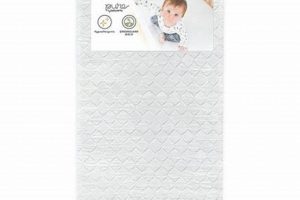
The dimensions of a standard infant bed sleeping surface are designed to ensure a safe and comfortable environment for a developing child. These measurements are not arbitrary; they adhere to specific guidelines established to minimize risks associated with entrapment and suffocation. A typical example adheres to a rectangular shape with a length of approximately 52 inches and a width of about 28 inches.
Adherence to established sizing provides significant advantages. It promotes safer sleeping conditions, reducing the potential for gaps between the sleeping surface and the surrounding frame where a child could become wedged. This standardization also simplifies the process of purchasing fitted sheets and other bedding accessories, ensuring a proper and secure fit. Historically, variations in sizing posed significant safety concerns; the establishment of regulations has mitigated these risks substantially.
Understanding these standard dimensions is the first step in selecting the appropriate sleeping arrangement for an infant. Further considerations include mattress firmness, material composition, and compliance with current safety standards, all of which will be addressed in subsequent sections.
Guidelines for Ensuring Correct Infant Bedding Surface Dimensions
Selecting the appropriate infant bedding surface requires careful attention to detail and adherence to established safety guidelines. The following tips provide essential information for navigating this process.
Tip 1: Verify Standard Dimensions: Confirm that the intended sleeping surface measures approximately 52 inches in length and 28 inches in width. This ensures compatibility with standard-sized frames and accessories.
Tip 2: Inspect for Gaps: After placing the sleeping surface within the frame, thoroughly inspect for any gaps exceeding two finger widths between the edge of the surface and the surrounding structure. Excessive gaps pose a safety hazard.
Tip 3: Prioritize Firmness: Choose a sleeping surface that is sufficiently firm. A firm surface reduces the risk of suffocation and ensures proper support for the developing infant.
Tip 4: Consider Material Composition: Investigate the materials used in the construction of the sleeping surface. Opt for materials that are non-toxic, hypoallergenic, and breathable to minimize potential health risks.
Tip 5: Check for Certifications: Seek out products that have been certified by reputable organizations, indicating that they meet or exceed established safety standards. Certifications provide an added layer of assurance.
Tip 6: Regularly Inspect for Wear and Tear: Routinely examine the sleeping surface for signs of wear and tear, such as sagging, tears, or indentations. Replace the surface if any of these issues are identified.
Tip 7: Adhere to Manufacturer Instructions: Carefully review and follow the manufacturer’s instructions regarding installation, maintenance, and cleaning procedures. Proper care prolongs the lifespan of the product and ensures continued safety.
By implementing these guidelines, caregivers can create a safer sleeping environment for infants, minimizing potential risks and promoting healthy development.
The subsequent section will delve into the specific safety regulations and standards governing the production and sale of infant bedding surfaces.
1. Standard length (52 inches)

The dimension of 52 inches represents the standardized length for infant bedding surfaces marketed as “how big is a crib mattress”. This measurement is not merely a manufacturing convenience; it is a crucial element mandated by safety regulations designed to prevent infant injury and mortality. Deviations from this standard present a heightened risk of creating unsafe sleeping environments, where gaps between the sleeping surface and the frame can lead to entrapment. For example, if a bedding surface were significantly shorter than 52 inches, a substantial gap would exist at one or both ends, posing a direct threat to infant safety.
The practical significance of adhering to this 52-inch standard extends to the selection of appropriate bedding accessories. Fitted sheets, designed to securely encase the bedding surface, are manufactured based on this dimensional expectation. Using sheets intended for a different size can result in a loose or ill-fitting cover, increasing the risk of suffocation or entanglement. Furthermore, regulatory bodies actively monitor adherence to this length requirement, conducting routine inspections and imposing penalties on manufacturers who fail to comply. This enforcement mechanism underscores the importance placed on maintaining dimensional consistency.
In summary, the 52-inch length is an integral component of the overall “how big is a crib mattress” concept, serving as a cornerstone of infant safety standards. Challenges remain in ensuring consistent adherence across all manufacturers and product lines, but the ongoing efforts to enforce dimensional compliance contribute significantly to creating safer sleeping environments for infants.
2. Standard width (28 inches)

The measurement of 28 inches, representing the standard width, is intrinsically linked to the concept of “how big is a crib mattress”. This dimension, like the standard length, is a critical parameter established to ensure infant safety and compatibility with standardized framework designs. Deviation from this measurement carries implications for both safety and functionality.
- Safety and Entrapment Prevention
The 28-inch width is calculated to minimize the risk of an infant becoming trapped between the sleeping surface and the sides of the surrounding structure. A significantly narrower surface would create potentially hazardous gaps. Conversely, a wider surface may not fit properly within a standard frame, creating instability or forcing the frame to expand beyond its design tolerances. Regulatory standards strictly enforce this width to mitigate these risks.
- Fitted Sheet Compatibility
Textile manufacturers produce fitted sheets according to the established dimensions. A surface deviating from the 28-inch width would render standard fitted sheets unusable, potentially leading to the use of improperly sized bedding. Loose or poorly fitting sheets pose a suffocation hazard, negating the intended safety benefits of adhering to standard size.
- Weight Distribution and Support
The width contributes to the overall surface area of the infant bedding, which directly impacts weight distribution and the support provided to the infant. An inadequate width could result in uneven weight distribution, potentially compromising spinal alignment and comfort. Furthermore, the internal structure of the bedding surface is often designed with the 28-inch width in mind, ensuring optimal support across the entire area.
- Regulatory Compliance and Certification
Adherence to the 28-inch standard is a prerequisite for obtaining safety certifications from recognized organizations. Manufacturers must demonstrate that their products meet this dimensional requirement to be considered compliant with established safety guidelines. Products failing to meet this standard may face regulatory action and potential removal from the market.
The multifaceted implications of the 28-inch width underscore its importance within the broader context of “how big is a crib mattress”. This seemingly simple measurement is, in reality, a critical component of a carefully engineered system designed to prioritize infant safety and well-being. Its adherence facilitates compatibility, promotes proper support, and ensures compliance with stringent regulatory standards.
3. Thickness variations
Thickness variations in infant bedding surfaces, a facet of “how big is a crib mattress”, significantly influence safety, comfort, and overall product suitability. While length and width are standardized for safety, thickness varies within an acceptable range, impacting functionality and developmental suitability. These differences are neither arbitrary nor negligible, impacting a range of factors.
- Impact on Support and Firmness
Thickness directly correlates to the internal structure and materials used, thereby affecting firmness and support. A thicker bedding surface may contain more layers of cushioning or a more robust innerspring system. Excessive thickness, however, could compromise firmness, potentially posing suffocation risks. Conversely, insufficient thickness may fail to provide adequate support for the developing spine. The ideal thickness balances safety with comfort.
- Compatibility with Frame Height
The thickness influences the overall height of the sleeping surface relative to the top of the frame. Excessive thickness could raise the infant closer to the frame’s edge, increasing the risk of falls once the child begins to stand. Conversely, inadequate thickness may make it difficult for caregivers to reach the infant comfortably. Standards bodies often provide recommendations on optimal thickness ranges to ensure a safe and accessible environment.
- Material Composition and Breathability
Thickness variations often reflect differences in the materials used. Thicker surfaces may incorporate multiple layers of different materials to achieve specific comfort or performance characteristics, such as increased breathability or hypoallergenic properties. Understanding the material composition of varying thicknesses is important for addressing potential allergies or sensitivities. The choice of materials should always prioritize safety and breathability.
- Longevity and Durability
Thickness can be an indicator of the bedding surface’s durability and longevity. A thicker, well-constructed product may be more resistant to compression and wear over time, maintaining its firmness and support for a longer period. However, thickness alone does not guarantee durability; material quality and construction techniques are equally important. Regular inspection for signs of wear and tear is essential, regardless of thickness.
Thickness variations are not merely aesthetic or marketing differentiators, but intrinsic elements of “how big is a crib mattress”. The relationship between thickness, support, safety, and compatibility demonstrates the complexity of selecting appropriate infant bedding. Caregivers must consider these factors in totality to ensure a safe and developmentally supportive sleeping environment.
4. Corner Radius

Corner radius, while seemingly a minor detail within the broader concept of “how big is a crib mattress”, is an important design element that impacts both safety and functionality. The degree of curvature at the corners directly influences the fit within the frame and the potential for injury. A properly executed corner radius promotes a safer and more aesthetically pleasing product.
- Precise Fit within the Frame
The corner radius ensures the bedding surface fits snugly within the designated frame. Sharp, unrounded corners could lead to difficulty during installation and increase the risk of damage to both the bedding and the frame. An insufficient radius may result in gaps between the corner and the frame, creating a potential entrapment hazard. The correct radius ensures a secure and gap-free fit.
- Reduced Risk of Sharp Edges
A well-defined corner radius mitigates the risk of sharp or pointed edges. These edges can pose a laceration hazard, particularly to infants with sensitive skin. A smooth, rounded corner distributes any impact force over a larger area, minimizing the potential for injury in case of accidental contact. Product liability and safety certifications often mandate specific radius dimensions to address this risk.
- Enhanced Aesthetic Appeal
The corner radius contributes to the overall aesthetic design of the bedding surface. Rounded corners generally present a more refined and visually appealing appearance compared to sharp, angular corners. This subtle detail can enhance the perceived quality of the product and its integration into the overall nursery decor. The specified radius reflects a design decision balancing safety and aesthetics.
- Manufacturing Consistency
Specifying a precise corner radius ensures consistency in manufacturing processes. Without a defined radius, variations in corner shape may occur, leading to discrepancies in fit and appearance. A standardized radius simplifies production, improves quality control, and promotes uniform product characteristics across different manufacturing lots. This precision contributes to a reliable and predictable product.
The specified corner radius, therefore, is not merely a stylistic consideration, but an integral component of “how big is a crib mattress.” It directly contributes to safety by preventing entrapment and minimizing sharp edges. It also contributes to product functionality by ensuring a proper fit within the frame and enhancing overall aesthetic appeal. Attention to corner radius reflects a comprehensive approach to product design and manufacturing, prioritizing infant safety and product quality.
5. Weight considerations

Weight, in the context of “how big is a crib mattress,” extends beyond a simple numerical value. It encompasses material density, structural integrity, and practical handling considerations. Weight directly influences safety, ease of use, and the longevity of the product. Ignoring weight parameters can compromise both infant well-being and caregiver convenience.
- Impact on Frame Compatibility
Excessive weight can stress the frame beyond its designed capacity, potentially leading to structural failure. Conversely, a bedding surface that is too light might shift or move excessively during infant activity, creating an unstable sleeping environment. Manufacturers specify weight limits for compatibility purposes, ensuring the combination of frame and sleeping surface remains safe and stable. This directly relates to the “how big is a crib mattress” concept, as overall size contributes to total weight.
- Ease of Handling and Maintenance
Caregivers frequently need to lift and move infant bedding surfaces for cleaning or changing sheets. Excessive weight can make these tasks difficult and potentially lead to back strain or injury. A manageable weight simplifies routine maintenance, contributing to a cleaner and healthier sleeping environment. The dimensions dictating “how big is a crib mattress” influence this factor significantly.
- Material Density and Support
Weight is often indicative of material density. Denser materials generally provide greater support and durability, reducing the risk of sagging or compression over time. However, excessively dense materials can also compromise breathability and increase the risk of overheating. A balanced approach is crucial, selecting materials that provide adequate support without sacrificing comfort or safety. Larger size, a key component of “how big is a crib mattress”, requires careful material selection to achieve this balance.
- Transportation and Storage
The weight affects the ease of transportation and storage. A lighter-weight product is easier to transport during relocation or for temporary storage. Excessive weight can make these processes cumbersome and potentially damage the product or surrounding surfaces. The specified dimensions influencing “how big is a crib mattress” also impact the space required for storage.
Weight considerations, therefore, are inextricably linked to the dimensional aspects defining “how big is a crib mattress.” They influence frame compatibility, ease of use, material selection, and overall product practicality. A comprehensive understanding of weight parameters is essential for selecting an infant bedding surface that prioritizes safety, convenience, and long-term value.
6. Frame Compatibility

Frame compatibility represents a critical consideration when evaluating infant bedding surfaces. The dimensions defined by “how big is a crib mattress” directly dictate whether a specific surface will fit safely and securely within a designated frame. Mismatched dimensions can compromise structural integrity and significantly increase the risk of infant injury.
- Standard Dimensions and Internal Space
The internal dimensions of infant bed frames are designed to accommodate surfaces adhering to specified length and width measurements. Deviations from these standards, even by small margins, can result in gaps between the bedding surface and the frame. These gaps pose a risk of entrapment, where an infant could become wedged and potentially suffocate. Ensuring dimensional compliance is therefore paramount for safe use. For example, a bed frame designed for a 52-inch by 28-inch surface will not safely accommodate a surface measuring 51 inches by 27 inches, as the resulting gaps violate safety standards.
- Support Structure and Weight Distribution
Bed frames are engineered to support a specific weight load and distribute it evenly across the structure. A bedding surface that is either too large or too small can compromise this weight distribution, potentially weakening the frame and increasing the risk of collapse. Proper frame compatibility ensures that the weight of the infant and the bedding surface are adequately supported, maintaining structural stability. For example, placing an oversized, heavy surface on a lightweight frame designed for a standard-sized, lighter surface could lead to premature frame failure.
- Hardware Integration and Attachment Points
Some frames incorporate hardware or attachment points designed to secure the bedding surface in place. These features rely on precise dimensional alignment between the frame and the surface. Incompatible dimensions can prevent proper attachment, rendering these safety features ineffective. For example, straps or clips intended to secure the surface may not align correctly if the dimensions are mismatched, leaving the surface prone to shifting or displacement.
- Regulatory Compliance and Safety Certifications
Regulatory bodies and safety certification organizations assess frame compatibility as part of their overall evaluation of infant sleeping products. Compliance with dimensional standards is often a prerequisite for obtaining safety certifications. Products exhibiting incompatible dimensions may fail to meet these requirements, potentially leading to regulatory action. This underscores the importance of adhering to established standards to ensure the safety of infant sleeping environments.
The foregoing facets highlight the integral role of frame compatibility within the context of “how big is a crib mattress”. Adherence to dimensional standards is not merely a matter of convenience; it is a fundamental safety requirement. Caregivers must exercise diligence in selecting bedding surfaces that are specifically designed to fit their chosen frame, prioritizing safety and structural integrity above all other considerations.
7. Internal Spring Coil Count

The internal spring coil count is a significant factor influencing the support, durability, and overall quality of an infant bedding surface. This aspect, while not directly dictating “how big is a crib mattress” in terms of length and width, is intricately connected to its performance and suitability for infant use. Variations in coil count correlate with differences in weight distribution, firmness, and long-term resilience.
- Support and Weight Distribution
A higher spring coil count generally indicates improved support and more even weight distribution across the sleeping surface. More coils provide greater resistance to compression, preventing sagging and maintaining spinal alignment. An inadequate coil count may lead to localized pressure points, potentially causing discomfort and disrupting sleep. An example includes two nominally “how big is a crib mattress” surfaces of identical dimensions, one with 150 coils and the other with 250; the latter will provide demonstrably better support. The influence of coil count is magnified with increased infant weight.
- Firmness and Infant Safety
The firmness of an infant bedding surface is paramount for safety, minimizing the risk of suffocation. The coil count contributes significantly to the overall firmness. A higher coil count generally results in a firmer surface, while a lower coil count may produce a softer, less supportive feel. Standard safety guidelines dictate a firm surface to reduce the likelihood of infant sinking into the bedding. The specification of “how big is a crib mattress” is therefore inextricably linked to maintaining appropriate firmness through coil count management. A correlation exists between high coil count and decreased SIDS risk.
- Durability and Longevity
The internal spring coil count affects the long-term durability and lifespan of the infant bedding surface. A higher coil count typically indicates a more robust construction, capable of withstanding prolonged use and resisting deformation over time. Lower coil count surfaces may exhibit premature sagging or compression, necessitating replacement sooner. Given that “how big is a crib mattress” represents a substantial investment, longevity considerations are paramount. Products with higher coil counts generally offer a greater return on investment due to their extended lifespan.
- Gauge of Steel and Edge Support
While spring coil count is crucial, steel gauge plays an equal important part. Lower steel gauge makes the mattress softer in nature. It also influence overall durability. Similarly edge support with higher coil count, offers safety benefits by offering rigid edge while infant try to move to the corners of bed. This is a great component of “how big is a crib mattress”.
In conclusion, while the internal spring coil count does not directly define “how big is a crib mattress” in terms of its physical dimensions, it plays a crucial role in determining the safety, support, and longevity of the product. Caregivers should prioritize bedding surfaces with adequate coil counts to ensure optimal infant well-being and long-term value. The dimensions influencing “how big is a crib mattress” are only one component of a multifaceted evaluation process. Equally important is an understanding of the internal construction and its impact on overall performance.
Frequently Asked Questions About Infant Bedding Surface Dimensions (“how big is a crib mattress”)
The following questions address common concerns and misconceptions regarding the dimensions of infant bedding surfaces, emphasizing safety and regulatory compliance.
Question 1: Are all infant bedding surfaces the same size?
No. While standard dimensions exist, minor variations can occur. However, deviations beyond acceptable tolerances pose safety risks. Rigorous adherence to standards ensures compatibility with frames and reduces the potential for entrapment. how big is a crib mattress requires attention and focus on the standardization in the product for sale.
Question 2: What are the standard dimensions for an infant bedding surface?
The established standard for an infant bedding surface is approximately 52 inches in length and 28 inches in width. These measurements are critical for ensuring a secure fit within standard frames and minimizing safety hazards. The keyword how big is a crib mattress is all about standardization in all area and manufacturing process.
Question 3: What happens if the bedding surface is too small for the frame?
A bedding surface that is too small creates gaps between the surface and the frame. These gaps can lead to infant entrapment, a serious safety concern. Consistent monitoring and regular size verification is key for how big is a crib mattress.
Question 4: Does the thickness of an infant bedding surface matter?
Yes. The thickness influences firmness, support, and compatibility with the frame height. Excessive thickness could elevate the infant too close to the top rail, while insufficient thickness might compromise support. Hence how big is a crib mattress has more meaning than one might think.
Question 5: Are there regulations governing the size of infant bedding surfaces?
Yes. Regulatory bodies enforce dimensional standards to ensure infant safety. Manufacturers must comply with these regulations to market and sell their products legally. One should be vigilant, while buying how big is a crib mattress.
Question 6: Where can one find reliable information about infant bedding surface safety standards?
Information can be obtained from consumer safety organizations, regulatory agencies, and reputable manufacturers committed to safety and compliance. It is important to cross reference safety ratings to fully analyze how big is a crib mattress prior to a purchase decision.
Accurate understanding of the dimensions of how big is a crib mattress is paramount for ensuring infant safety. Adherence to standards, diligent monitoring, and informed purchasing decisions are essential.
The subsequent section will address the selection of appropriate bedding accessories, further enhancing the safety and comfort of the infant sleeping environment.
Conclusion
This exploration has demonstrated that “how big is a crib mattress” extends far beyond simple dimensional measurements. It encompasses a complex interplay of safety regulations, material science, and manufacturing precision. Standardized length and width, coupled with considerations for thickness, corner radius, weight, coil count, and frame compatibility, all contribute to a secure and developmentally appropriate sleep environment for infants. Neglecting any of these elements can elevate the risk of injury or, in the worst cases, mortality.
The continued vigilance of regulatory bodies and the commitment of responsible manufacturers are crucial for maintaining the integrity of these standards. Parents and caregivers bear the responsibility of understanding and adhering to these guidelines when selecting infant bedding. Future advancements in material science and design should focus on further enhancing safety and comfort within the framework of these established dimensional parameters. Prioritizing adherence to “how big is a crib mattress” standards represents a proactive investment in infant well-being and underscores the importance of informed decision-making in this critical area.

![Best Organic Crib Mattress Protector [Safe Sleep] | Organic & Natural Mattress Buyer’s Guide: Non-Toxic Sleep Solutions](https://mattressworldpa.com/wp-content/uploads/2025/07/th-1363-300x200.jpg "Best Organic Crib Mattress Protector [Safe Sleep] Organic & Natural Mattress Buyer’s Guide: Non-Toxic Sleep Solutions")