The weight of a standard full-size mattress is a significant factor to consider during relocation, setup, or disposal. This weight is primarily determined by the materials used in its construction, which can range from traditional innerspring systems to modern memory foam or latex compositions. For instance, a basic innerspring mattress may weigh less than a hybrid model that incorporates multiple layers of foam and coils.
Understanding the typical weight range is beneficial for logistical planning. Knowledge of this allows for efficient coordination of moving efforts, minimizing the risk of injury and optimizing transportation arrangements. Historically, mattress weight has increased with the incorporation of more advanced comfort and support technologies, reflecting a move towards higher-density materials designed for enhanced sleep quality and durability. Knowing this weight is also essential when selecting appropriate bed frames or foundations.
This article will explore the factors influencing the weight, provide a typical weight range, and offer practical considerations for handling a mattress of this size.
Tips Regarding Full Size Mattress Weight
Effective management of mattress weight is crucial for safety and efficiency. The following tips offer guidance for handling, transporting, and maintaining mattresses, especially concerning the exertion involved.
Tip 1: Assess the Situation: Before attempting to move a mattress, evaluate the environment. Consider the presence of stairs, narrow doorways, or obstacles that may increase the difficulty. This pre-emptive assessment aids in strategizing the move.
Tip 2: Enlist Assistance: Avoid moving a mattress alone. Enlisting the help of at least one other person significantly reduces the risk of injury and damage to the mattress or surrounding property. Coordinate lifting techniques to ensure synchronized and balanced movements.
Tip 3: Utilize Proper Lifting Techniques: When lifting, bend at the knees, not the back, and maintain a straight posture. Keep the mattress close to the body to minimize strain. Employ leg muscles to power the lift, rather than relying on back strength.
Tip 4: Employ Protective Measures: Use a mattress bag or cover to shield it from dirt, dust, and potential damage during transport. This protective barrier safeguards the mattress’s integrity and prevents unnecessary wear and tear.
Tip 5: Consider Equipment: For difficult moves, explore the use of dollies or hand trucks. These tools provide mechanical assistance, reducing the physical demand of lifting and carrying a heavy mattress over longer distances or challenging terrain.
Tip 6: Take Breaks: Avoid overexertion by taking frequent breaks during the move. This prevents fatigue and allows for the reassessment of the plan, ensuring a safe and controlled process.
Tip 7: Consult Professionals: For particularly heavy or complex moves, consider hiring professional movers. They possess the expertise, equipment, and experience to handle large items efficiently and safely, minimizing the risk of injury or damage.
Applying these strategies mitigates the challenges associated with handling this weight, promoting safety and efficiency throughout the process.
The following sections will cover the types of full-size mattresses and the impact the material has on its mass.
1. Material Composition

The material composition of a full-size mattress exerts a significant influence on its overall weight. Different materials possess varying densities and structural properties, directly impacting the final mass of the product. The selection of materials is, therefore, a primary determinant of the burden presented by the mattress during handling and transport.
- Innerspring Cores
Mattresses featuring innerspring cores utilize steel coils for support and structure. The gauge and quantity of these coils contribute substantially to the overall weight. A higher coil count and thicker gauge steel increase the weight but provide enhanced support and durability. For example, a full-size mattress with a heavy-gauge Bonnell coil system will generally weigh more than one with a lighter-gauge, open coil system.
- Memory Foam Layers
Memory foam, known for its viscoelastic properties, adds considerable weight due to its density. High-density memory foam, designed for superior contouring and pressure relief, is heavier than conventional polyurethane foam. A full-size mattress incorporating multiple layers of high-density memory foam will exhibit a greater weight than a similar mattress with thinner or less dense foam layers. The increased weight directly correlates to the enhanced support and conforming characteristics of the foam.
- Latex Components
Latex, derived from either natural or synthetic sources, is another material that influences weight. Natural latex, while offering exceptional comfort and durability, tends to be denser and heavier than synthetic latex. A full-size mattress made entirely of natural latex will be significantly heavier than one constructed with a blend of synthetic and natural latex or other materials. The greater density provides enhanced resilience and longevity, contributing to the mattress’s value.
- Hybrid Constructions
Hybrid mattresses combine multiple materials, such as innerspring cores with memory foam or latex layers, resulting in a complex interplay of weight factors. The specific combination and thickness of each material contribute to the final weight. For instance, a full-size hybrid mattress with a thick innerspring core and multiple layers of high-density memory foam could be among the heaviest options available, demanding careful planning for handling and transportation.
The interplay between these material components fundamentally determines the mass. The combined effect of coil gauge, foam density, and latex composition dictates the exertion required for moving and positioning. Understanding the individual contributions of each material allows for informed selection based on both comfort preferences and practical considerations relating to handling and support.
2. Mattress Construction

Mattress construction significantly influences its overall weight. The method and materials used in assembling the mattress’s internal structure determine its mass and subsequent handling requirements. Variations in construction techniques dictate the distribution and density of materials, thus affecting the final figure.
- Layer Configuration
The layering of different materials impacts weight. A mattress with numerous layers of varying densities will weigh more than a simpler, single-layer design. For instance, a multi-layered memory foam mattress with a support core, transition layers, and a comfort layer will typically exhibit a higher weight compared to a basic innerspring mattress. The order and composition of these layers contribute directly to the total mass.
- Edge Support Systems
Edge support systems, designed to enhance perimeter stability, add to the overall weight. These systems often involve the use of high-density foam or reinforced coils along the mattress edges. A mattress with a robust edge support system, such as a foam encasement or steel perimeter rods, will generally weigh more than one without such reinforcement. The additional materials contribute to the structural integrity and weight of the mattress.
- Quilting and Ticking
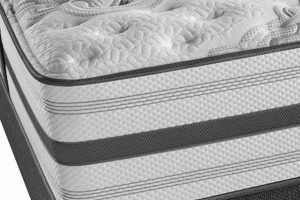
The quilting pattern and type of ticking (outer fabric) also influence weight. Thicker, more elaborate quilting adds mass, as does the use of heavier, more durable ticking materials. A mattress with a plush, deeply quilted surface and a thick, woven ticking will likely weigh more than one with minimal quilting and a lightweight ticking. The added materials contribute to the overall comfort and weight of the mattress.
- Internal Framework
The internal framework of the mattress, be it a coil system or a foam core, contributes significantly to its weight. High coil count systems or high-density foam cores add more weight than simpler systems. These frameworks provide the core support and durability of the mattress.
In summary, the interplay between layer configuration, edge support systems, quilting, and internal framework defines the construction. Each element contributes to its ultimate weight, thereby influencing handling, transportation, and overall user experience. An understanding of these factors allows for informed selection based on both comfort preferences and practical considerations regarding ease of movement and setup.
3. Density of Foam
The density of foam is a critical determinant of mattress weight. It refers to the mass per unit volume of the foam, typically measured in pounds per cubic foot (lbs/ft). Higher density foam contains more material packed into the same space, resulting in increased weight and influencing support, durability, and overall feel. It is essential to understand the density, as it dictates the mattress’s handling and lifespan.
- Impact on Support and Durability
Higher density foam provides greater support and resistance to compression. This translates to better spinal alignment and reduced sagging over time. For example, a full-size mattress with high-density memory foam (5 lbs/ft or higher) will offer superior support compared to one with low-density foam (3 lbs/ft or lower). This improved support directly contributes to a longer lifespan, but also to a heavier mattress. The support and durability from high density increases mass.
- Influence on Comfort and Pressure Relief
While high density enhances support, it also affects comfort and pressure relief. High-density foam tends to feel firmer initially, but it conforms to the body over time, distributing weight evenly and reducing pressure points. Conversely, low-density foam may feel softer initially, but it offers less support and can lead to pressure build-up. For example, a high-density latex foam in a full-size mattress contours well, providing both comfort and reducing pressure, but it contributes to increased weight. The conforming support that high density foam provides results in an incremental weight gain.
- Material Composition and Density Correlation
Different types of foam exhibit varying density ranges. Memory foam generally has a higher density than polyurethane foam, while latex foam can range from medium to high density depending on its composition. A full-size memory foam mattress will typically be heavier than a polyurethane foam mattress of similar dimensions. The material composition and density correlation play a major role in the overall mass of the mattress. Material composition directly impacts the pounds the mattress gains.
- Effect on Heat Retention
Foam density can impact heat retention. High-density foam tends to trap more heat compared to low-density foam, which allows for better airflow. A full-size mattress with high-density memory foam may feel warmer than one with low-density foam or open-cell foam. The trapping of heat results in a change in the mattress temperature. Over time, that temperature change degrades the material and causes it to gain weight.
In conclusion, foam density is a pivotal factor influencing full-size mattress weight. Higher density translates to enhanced support, durability, and potentially increased heat retention, all while contributing to a heavier overall product. An understanding of the relationship between foam density and weight is crucial for informed decision-making when purchasing or handling this.
4. Coil System

The coil system is a significant contributor to mattress weight. The type, gauge (thickness), and number of coils directly influence the mass. A higher coil count or the use of thicker gauge steel results in a heavier mattress. Innerspring mattresses, which rely heavily on coil systems for support, demonstrate this principle clearly. For example, a full-size innerspring mattress with a high coil count Bonnell coil system will invariably weigh more than a similar-sized mattress with a lower coil count or a less robust coil design. The function of the coil systemto provide support and distribute weightnecessitates a certain level of material, and therefore, a corresponding weight.
Furthermore, the arrangement and construction of the coil system impact weight distribution and overall support. Pocketed coil systems, where each coil is individually wrapped, tend to be heavier than interconnected coil systems due to the added fabric encasing each coil. These pocketed coils offer better motion isolation and contouring, but at the expense of increased weight. Hybrid mattresses that combine coil systems with foam layers also illustrate this point. A hybrid mattress may incorporate a layer of pocketed coils topped with memory foam, resulting in a heavier product than either an all-foam or a traditional innerspring mattress. Choosing the right kind of coil system directly impacts the overall weight and mass of the mattress.
In summary, the coil system plays a crucial role in determining mattress weight. Variations in coil type, gauge, and arrangement affect the overall mass, thereby influencing transportation, setup, and handling. Understanding the connection between the coil system and mattress weight is essential for making informed purchasing decisions and managing the practical aspects of mattress ownership. The challenges associated with handling heavy mattresses underscore the importance of considering the coil system’s contribution to the overall weight.
5. Overall Dimensions
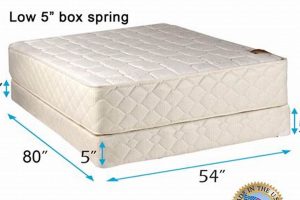
The overall dimensions of a mattress are directly proportional to its weight. A larger surface area and greater thickness invariably necessitate more materials in construction, thereby increasing the mass. The standard full-size mattress dimensionsapproximately 54 inches wide and 75 inches longestablish a baseline for material requirements. Any deviation from these measurements, such as an increase in thickness to accommodate additional comfort layers, will consequently elevate the final weight.
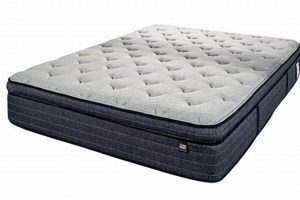
Consider two full-size mattresses with identical material composition but differing thicknesses. The mattress with a greater thickness, intended to provide enhanced cushioning, will inherently incorporate more foam, coils, or latex. This additional material directly contributes to a higher weight, potentially affecting the ease of handling and transportation. A practical example includes comparing a standard 8-inch full-size mattress to a 12-inch pillow-top model; the latter will demonstrably outweigh the former due to the added pillow-top layer and increased internal material volume. The significance of understanding this relationship lies in the ability to anticipate logistical challenges associated with moving or positioning a mattress based on its known dimensions. Therefore, understanding overall dimension plays a huge role with mattress weight, since its directly related to how much material is needed
In summary, overall dimensions serve as a primary determinant of mattress weight, influencing material requirements and subsequent handling considerations. A larger surface area or increased thickness translates directly to a heavier product, requiring appropriate planning for transport and setup. This understanding underscores the importance of considering dimensions alongside material composition when evaluating and managing the weight of a full-size mattress.
Frequently Asked Questions
The following addresses common inquiries regarding the weight of a full-size mattress, providing clarity on factors influencing its mass and related considerations.
Question 1: What is the average weight range for a full-size mattress?
The typical weight range is between 50 and 80 pounds. This variance is primarily due to differences in material composition and construction techniques. Mattresses with denser materials, such as high-density memory foam or robust coil systems, tend to weigh more.
Question 2: Does the type of mattress (innerspring, memory foam, hybrid) significantly impact its weight?
Yes, the type of mattress is a primary factor. Innerspring mattresses generally weigh less than memory foam or hybrid models. Memory foam mattresses, particularly those with multiple layers, tend to be heavier due to the density of the foam. Hybrid mattresses, combining coils and foam, can also be quite heavy.
Question 3: How does mattress thickness affect its weight?
Thickness is directly proportional to weight. A thicker mattress contains more material, whether it be foam, coils, or latex, resulting in a heavier product. For instance, a pillow-top mattress will typically weigh more than a standard-thickness mattress of the same dimensions.
Question 4: What considerations should be made when moving a full-size mattress alone?
Moving a full-size mattress alone is not recommended due to the risk of injury. However, if unavoidable, proper lifting techniques must be employed. Bending at the knees, maintaining a straight back, and utilizing leg muscles are essential. The use of a dolly or hand truck can also reduce the physical strain.
Question 5: Are there any specific safety precautions to take when handling a heavy mattress?
Safety precautions include enlisting assistance whenever possible, wearing appropriate footwear, and clearing the path of obstacles. Additionally, ensuring adequate ventilation and avoiding overexertion are crucial to prevent injury.
Question 6: Does mattress weight affect its lifespan or performance?
While weight itself does not directly affect lifespan or performance, it is indicative of the materials used. Higher-density materials, which contribute to increased weight, often correlate with enhanced durability and support, potentially extending the mattress’s lifespan.
Understanding the weight of a mattress is beneficial for safety. Consider using professional services if the mattress poses a safety risk.
The following section will discuss maintenance to ensure longevity.
Understanding Full Size Mattress Weight
The preceding analysis has explored the multifaceted nature of determining the weight of a standard full-size mattress. The investigation encompassed material composition, construction methodologies, and dimensional influences, providing a comprehensive understanding of the factors contributing to variations in weight. Material density, coil systems, and overall dimensions exert a direct impact on the final mass.
Consideration of these elements is crucial for informed decision-making during purchase, transport, and disposal. Appreciating the nuances of construction and material composition allows for a more efficient and safe approach to mattress handling. This knowledge empowers individuals to mitigate risks associated with moving or managing a full-size mattress, thereby ensuring personal safety and preserving the integrity of the product.
![Best Full Intex Air Mattress: Reviews & Guide [Year] | Organic & Natural Mattress Buyer’s Guide: Non-Toxic Sleep Solutions](https://mattressworldpa.com/wp-content/uploads/2025/07/th-2888-300x200.jpg "Best Full Intex Air Mattress: Reviews & Guide [Year] Organic & Natural Mattress Buyer’s Guide: Non-Toxic Sleep Solutions")