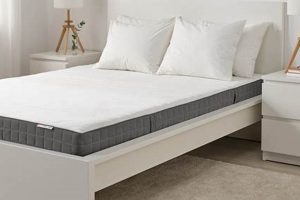
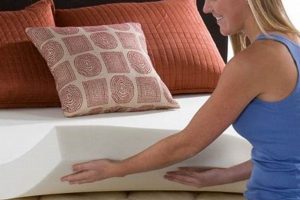
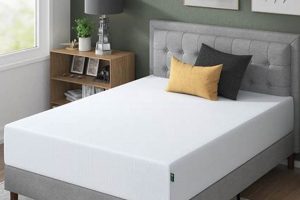
The process of resizing a conforming foam bed utilizes specific tools and techniques to alter its dimensions. This task is often undertaken to fit the mattress to a different bed frame, modify its shape for specialized applications like creating custom cushions, or to remove damaged portions. Executing this task precisely preserves the material’s integrity and functionality.
Adapting a foam mattress can provide cost savings compared to purchasing a new, appropriately sized one. It also allows for customization, addressing unique needs such as fitting into non-standard spaces or modifying the feel of specific areas of the mattress. Historically, adjustments to mattresses were less common due to the complexity of materials and construction; however, modern tools have made modification more accessible.
The subsequent sections will outline the necessary tools, detail the step-by-step procedure for altering the size, and provide guidance on ensuring a clean and professional result, along with safety considerations.
Cutting Conforming Foam
Achieving a clean and precise cut requires careful preparation and adherence to best practices. The following tips aim to minimize errors and maximize the quality of the finished product.
Tip 1: Sharpen the Blade: A dull blade will tear the foam, resulting in jagged edges. Ensure the cutting tool is impeccably sharp before commencing.
Tip 2: Compress the Foam: Applying pressure to the foam along the cut line provides stability, reducing the likelihood of the material shifting during the cut.
Tip 3: Mark Clearly: Precise measurements and clear markings are essential. Use a long ruler or straight edge and a marker that provides high contrast against the foam.
Tip 4: Cut in Stages: For thicker material, avoid attempting to cut through in a single pass. Multiple, shallower cuts offer greater control and accuracy.
Tip 5: Maintain a Steady Pace: Avoid rushing. A consistent cutting speed helps ensure a smooth, uniform edge.
Tip 6: Use Lubrication: Applying a small amount of silicone spray to the blade can reduce friction and improve the ease of cutting.
Tip 7: Support the Overhang: As the cut progresses, ensure that the unsupported portion of the mattress is adequately supported to prevent tearing.
Adhering to these guidelines will help ensure a professional-quality result when altering the dimensions of a conforming foam mattress.
The subsequent conclusion will summarize the key aspects of this modification process.
1. Sharpness of blade

The sharpness of the cutting instrument directly impacts the feasibility and quality of altering a conforming foam mattress. An inadequately sharp blade compromises the integrity of the foam and the precision of the cut. The resulting issues necessitate an understanding of the crucial role blade sharpness plays in the modification process.
- Clean Cut Precision
A sharp blade cleanly slices through the foam’s structure, minimizing tearing and producing a smooth edge. This is essential for achieving the intended dimensions and maintaining the mattress’s structural integrity. An electric knife with a dull blade, for example, may drag and bunch the foam instead of making a clean separation.
- Reduced Material Distortion
A blunt blade requires increased force, leading to distortion and compression of the foam around the cut line. This distortion can affect the accuracy of the cut and alter the comfort and support characteristics of the remaining mattress. Imagine pushing a dull knife through bread; it crushes rather than slices cleanly.
- Improved Safety
A dull blade necessitates greater physical effort, increasing the risk of slippage and potential injury. A sharper blade requires less force and provides more control, reducing the likelihood of accidents. Consider the difference between carving wood with a sharp vs. dull chisel; the dull one is far more likely to slip and cause harm.
- Minimized Foam Dust and Debris
A clean cut from a sharp blade produces less foam dust and debris compared to the ragged cut created by a dull blade. Reduced debris contributes to a cleaner work environment and minimizes the risk of respiratory irritation. A clean slice leaves far less mess than a tear.
The points above highlight that a sharp blade is not merely a convenience but a fundamental requirement for successfully modifying a conforming foam mattress. The precision, safety, and overall quality of the result are directly dependent on the blade’s sharpness.
2. Accurate Measurement

The process of altering a conforming foam mattress hinges critically on accurate measurement. Inaccurate dimensions introduce cumulative errors throughout the cutting process, leading to a final product that deviates from the intended specifications. The act of measuring serves as the foundational step, directly influencing the subsequent cutting procedure and the ultimate usability of the modified mattress. For example, if the intended reduction in width is miscalculated by even a small margin, the resulting mattress may not fit the bed frame it was intended for, rendering the modification ineffective.
Accurate measurement extends beyond simply noting dimensions; it involves precise marking on the foam itself. The cutting tool must follow the marked lines with minimal deviation. Discrepancies between the measured lines and the cut path compound the initial measurement errors, exacerbating the issue. In practical applications, this means that the measuring tools used must be calibrated and the marking process must be executed with care. This might involve using a long, rigid ruler and a fine-tipped marker, ensuring the lines are straight and easily visible. Additionally, the person performing the measurements must be trained in the correct techniques to minimize parallax errors and other potential sources of inaccuracy. For example, If the cut is done by estimation, there might be uneven edges.
In summary, the precision of measurements is not merely a preliminary step but an integral component of successfully altering a conforming foam mattress. Inaccurate measurements result in an unsatisfactory outcome, negating the potential benefits of the modification. Therefore, meticulous attention to detail during the measurement process is crucial, alongside the employment of appropriate tools and techniques to mitigate errors. It also makes the process more efficient. This process makes the final product better.
3. Controlled Pressure

Maintaining controlled pressure is a fundamental aspect of altering the dimensions of a conforming foam mattress. The application of too much or too little force can lead to inaccuracies, material damage, and potential safety hazards. Understanding the role of controlled pressure is crucial for achieving a successful modification.
- Consistent Cut Depth
Applying consistent, controlled pressure during the cutting process ensures a uniform depth of cut. This is particularly important for thicker mattresses where multiple passes are required. Inconsistent pressure can result in an uneven cutting surface, requiring additional corrections. For instance, varying pressure when using an electric knife may cause the blade to skip or dig in, leading to an irregular edge.
- Minimized Material Distortion
Excessive pressure compresses the foam, altering its density and potentially leading to inaccuracies in the cut dimensions. Conversely, insufficient pressure may cause the blade to skip or snag, resulting in a ragged or torn edge. Controlled pressure maintains the integrity of the foam structure and ensures a clean separation. Imagine trying to slice through soft bread; too much pressure and it will compress, too little and the knife will slip.
- Enhanced Blade Control
Controlled pressure provides the operator with better control over the cutting tool. This allows for precise navigation along the marked lines and reduces the risk of deviation. Without adequate control, the blade may wander, resulting in inaccurate cuts and requiring further adjustments. This is particularly relevant when using manual cutting tools like utility knives.
- Reduced Risk of Injury
Applying appropriate and controlled pressure minimizes the force required to make the cut, reducing the risk of slippage and potential injury. Excessive force is often a result of using a dull blade or failing to maintain consistent pressure, increasing the likelihood of the tool slipping and causing harm. Controlled pressure ensures that the cutting process is performed safely and efficiently.
The interplay of these facets underscores the importance of controlled pressure in the process of altering a conforming foam mattress. By understanding and implementing proper pressure techniques, one can significantly improve the accuracy, efficiency, and safety of the modification. For example, the cutting processes used to make orthopedic inserts are often delicate and require the right amount of pressure.
4. Appropriate tools

The selection of suitable tools constitutes a critical determinant in the successful execution of modifying a conforming foam mattress. Employing implements specifically designed for cutting foam enhances precision, minimizes material damage, and contributes to overall safety. The subsequent discussion elaborates on the importance of several key tools.
- Electric Knife
An electric knife, characterized by its reciprocating blades, offers a clean and efficient method for cutting foam. The dual-blade action reduces friction and prevents the foam from bunching or tearing during the cut. This tool is particularly well-suited for thicker mattresses or intricate shapes. For instance, upholstery workshops often utilize electric knives for shaping foam cushions due to their ability to create smooth, even cuts. However, caution must be exercised to maintain a steady hand and avoid overheating the motor, which can degrade the cut quality.
- Long Serrated Knife
A long, serrated knife, similar to a bread knife, can effectively cut through foam, particularly for thinner mattresses or smaller adjustments. The serrations grip the foam, preventing slippage and allowing for a more controlled cut. It is best suited to manual operation and is less suited to thick memory foam. For example, creating custom pillow shapes from a foam block may be accomplished with a serrated knife. The user needs to apply consistent pressure and maintain a steady cutting motion to achieve optimal results.
- Straight Edge and Marking Tools
A long, rigid straight edge, such as a metal ruler or level, is essential for ensuring straight and accurate cuts. In conjunction with a marking tool, like a felt-tip pen or marker, the straight edge guides the cutting tool along the intended path. Precise measurements and clear markings are necessary to achieve the desired dimensions. A home improvement project involving the resizing of a mattress for a custom bed frame would necessitate the use of a straight edge and marking tools to ensure accurate cuts. This ensures proper fit and alignment. Note that the marker should be visible but not bleed into the foam.
- Foam Cutter
A specialized foam cutter, often featuring a hot wire or blade, offers a precise and clean cutting solution. The heat melts the foam as it cuts, sealing the edges and preventing fraying. This tool is particularly useful for creating intricate shapes or designs. A custom cushion manufacturer, for example, would utilize a foam cutter to produce precise shapes and smooth edges for upholstery projects. Ventilation is often required when using hot wire foam cutters.
The selection of the appropriate cutting tool is paramount to the success of altering a conforming foam mattress. Each tool possesses specific advantages and limitations, dictating its suitability for different applications and foam thicknesses. The informed selection of tools, coupled with proper technique, will yield a professional and satisfactory result. For example, having appropriate tools would allow a person to make foam inserts for toolboxes.
5. Clean work surface

Maintaining a clean work surface is integral to the successful modification of a conforming foam mattress. The presence of debris, liquids, or contaminants can compromise the accuracy and safety of the cutting process, impacting the quality of the final result. A carefully prepared work area minimizes risks and promotes a controlled environment for precise adjustments.
- Prevention of Contamination
A clean surface prevents the transfer of dirt, dust, and oils onto the foam material. Contaminants can interfere with the cutting process, causing the blade to drag or snag. They can also become embedded in the foam, altering its texture and potentially affecting its hypoallergenic properties. For example, cutting foam on a dusty floor may introduce allergens into the mattress, which could exacerbate respiratory issues for the user. This will also affect the look of the end result.
- Enhanced Visibility
A clean, uncluttered surface ensures clear visibility of the cutting lines and the overall shape of the mattress. This allows for more precise cuts and reduces the risk of errors. Obscured markings can lead to deviations from the intended dimensions, resulting in an uneven or unusable mattress. In a cluttered workspace, identifying and following marked lines becomes challenging, increasing the potential for miscuts. Accurate cutting can save cost.
- Improved Tool Performance
A clean surface prevents the accumulation of foam debris and other materials on the cutting tools. Debris buildup can dull the blade,
reduce its efficiency, and increase the risk of overheating. Maintaining clean tools extends their lifespan and ensures optimal performance during the cutting process. Regularly wiping down the blade with a clean cloth removes residue and preserves its sharpness. - Reduced Safety Hazards
A clean work area minimizes the risk of slips, trips, and falls caused by loose debris or spilled liquids. A clear workspace also allows for better maneuverability around the mattress, reducing the chances of accidental contact with sharp tools. For instance, a cluttered workspace with loose foam scraps presents a tripping hazard, potentially leading to injury. When there is adequate safety measures, accidents can be avoided.
These interconnected facets highlight the critical role of a clean work surface in facilitating the safe, accurate, and efficient modification of a conforming foam mattress. Neglecting this preparatory step can lead to a cascade of problems, affecting not only the aesthetic and functional quality of the final product but also the safety of the process. For instance, a clean setup ensures that alterations such as cutting memory foam for custom pillows are conducted under conditions that minimize risks and maximize precision, promoting a high-quality finished product. Having a clean workspace, saves time.
6. Ventilation needed

The process of altering conforming foam mattresses, particularly when employing power tools or heated implements, often generates particulate matter and volatile organic compounds (VOCs). Inadequate ventilation during the modification process can result in the inhalation of these substances, potentially leading to respiratory irritation, allergic reactions, or other adverse health effects. The composition of some foams may include chemicals that release noxious fumes when cut or heated, emphasizing the importance of airflow. Therefore, ensuring adequate ventilation is not merely a matter of comfort, but a critical safety measure during the modification of foam mattresses.
The type of cutting tool employed significantly influences the need for ventilation. For example, the use of an electric knife, while efficient, can create substantial foam dust. Similarly, hot wire foam cutters vaporize the foam along the cut line, releasing fumes that can be hazardous if inhaled. A well-ventilated workspace facilitates the dispersal of these airborne contaminants, reducing the concentration and minimizing exposure. Practical measures include opening windows, using fans to circulate air, or employing a dedicated ventilation system to extract the contaminants. In situations where adequate natural ventilation is not feasible, the use of a respirator may be necessary to provide respiratory protection. Some people opt to cut the mattresses outside for better air flow.
In summary, the imperative for ventilation is directly linked to the potential release of harmful substances during the process of altering foam mattresses. The implementation of appropriate ventilation strategies, whether through natural means or mechanical systems, is a fundamental aspect of ensuring a safe and healthy working environment. Neglecting this consideration can lead to adverse health outcomes, underscoring the necessity of prioritizing ventilation whenever modifying foam materials. This makes the project more safe and also more comfortable. Note that fumes can also accumulate in the space which can create a hazard as well.
7. Safety precautions

Altering the dimensions of a conforming foam mattress presents inherent risks associated with the use of sharp tools and potential exposure to airborne particles. Prioritizing and implementing specific safety precautions is crucial to mitigating these risks and ensuring a safe working environment throughout the modification process.
- Eye Protection
The cutting of foam materials often generates small particles and debris that can pose a risk to the eyes. Wearing appropriate eye protection, such as safety glasses or goggles, shields the eyes from these projectiles, preventing potential injuries. This is particularly important when using power tools or cutting denser foam types, where the risk of particle ejection is higher. For example, dust or fibers from the foam could cause serious eye irritation. This protective measure is essential.
- Hand Protection
Handling sharp cutting tools necessitates the use of protective gloves to safeguard the hands from cuts and abrasions. Gloves constructed from cut-resistant materials, such as leather or reinforced fabrics, provide an additional layer of protection. The selection of appropriate gloves depends on the type of cutting tool used and the level of dexterity required. Without proper hand protection, handling knives or power tools while cutting memory foam can result in accidental lacerations. In summary, wear gloves while cutting a memory foam mattress.
- Respiratory Protection
The cutting of foam materials can release fine particles and volatile organic compounds (VOCs) into the air, posing a respiratory hazard. A respirator or dust mask filters these airborne contaminants, preventing their inhalation and reducing the risk of respiratory irritation or allergic reactions. The choice of respiratory protection depends on the type and concentration of airborne contaminants present. When using power tools or cutting foam in poorly ventilated areas, respiratory protection is paramount. Prolonged inhalation of these materials can have adverse health effects.
- Secure Work Area
A safe work area involves ensuring adequate lighting, a stable cutting surface, and the absence of obstructions that could lead to slips, trips, or falls. Maintaining a clear and organized workspace reduces the risk of accidents and allows for greater control over the cutting process. Prior to commencing any cutting activity, the work area should be thoroughly inspected and any potential hazards addressed. This includes securing the mattress to prevent movement during cutting and ensuring sufficient space for maneuvering the cutting tool safely. Make sure the work area is safe for projects.
These facets highlight the multifaceted nature of safety precautions when altering a conforming foam mattress. These measures not only minimize the risk of injury but also contribute to a more controlled and efficient working environment. The consistent application of these safety practices is integral to safeguarding both the individual performing the modification and the integrity of the final product. It is also necessary to perform these steps correctly.
Frequently Asked Questions
This section addresses common inquiries regarding the process of altering the size or shape of a conforming foam mattress. The information provided aims to clarify procedures and address potential concerns.
Question 1: Is it feasible to alter the size of a conforming foam mattress without compromising its integrity?
The structural integrity of a conforming foam mattress can be maintained if the cutting process is executed with precision, using appropriate tools, and adhering to established guidelines. Significant alterations or improper techniques, however, may negatively impact the mattress’s support and comfort characteristics.
Question 2: What type of cutting tool is best
suited for modifying a conforming foam mattress?
An electric knife with reciprocating blades is generally recommended for achieving clean and accurate cuts. Alternatively, a long serrated knife can be used for thinner mattresses or smaller adjustments. Hot wire cutters are also an option, particularly for specialized shapes, but require adequate ventilation.
Question 3: How can one ensure accurate measurements when preparing to cut a conforming foam mattress?
Accurate measurements necessitate the use of a long, rigid straight edge and a marking tool that provides high contrast against the foam. Precise marking and double-checking the measurements are crucial to minimize errors. It is also advisable to measure twice, and cut once.
Question 4: What safety precautions should be observed when modifying a conforming foam mattress?
Safety precautions include wearing eye protection (safety glasses or goggles), hand protection (cut-resistant gloves), and respiratory protection (dust mask or respirator). A clean, well-ventilated work area is also essential to minimize potential hazards.
Question 5: How does the thickness of the mattress impact the cutting process?
Thicker mattresses require more care to maintain a straight and uniform cut. Multiple passes with the cutting tool may be necessary, and it is essential to provide adequate support to the overhang portion of the mattress as the cut progresses.
Question 6: Can the cut edges of a modified conforming foam mattress be sealed to prevent fraying?
The edges of cut conforming foam may be sealed to prevent fraying. Methods such as applying a thin layer of latex adhesive or using a hot wire cutter, which melts and seals the foam as it cuts, can achieve this. The suitability of these methods depends on the type of foam.
In summary, successful alteration of a conforming foam mattress hinges on accurate measurements, the use of appropriate tools, adherence to safety protocols, and an understanding of the material’s characteristics.
The subsequent section will provide a conclusive overview of the process, summarizing key considerations.
Concluding Considerations
The preceding sections have detailed the process of altering conforming foam mattresses, emphasizing the necessity of precise measurement, appropriate tools, controlled execution, and adherence to safety protocols. The information provided underscores the potential for successful modification while acknowledging the inherent complexities and risks involved. Key considerations include blade sharpness, environmental controls, and material properties, all of which directly influence the outcome.
The decision to modify a conforming foam mattress should be carefully weighed against the alternative of replacement. While cost savings and customization are potential benefits, improper execution can compromise comfort, support, and longevity. Therefore, a thorough assessment of skills, resources, and potential consequences is essential before proceeding. The responsible application of these guidelines promotes both a successful modification and the sustained utility of the mattress.