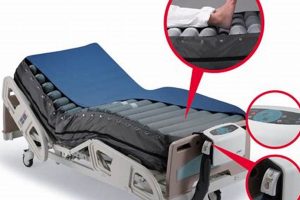
The primary action to be addressed is the removal of air from an inflatable sleeping surface. This process typically involves opening a valve or employing a mechanical device to expedite the release of pressurized air, thereby allowing the mattress to collapse for storage or transport. For example, failure to execute this action efficiently can result in bulky, unwieldy items that are difficult to manage.
The complete evacuation of air from such mattresses offers several advantages. It allows for compact storage, freeing up valuable space in homes or vehicles. Furthermore, it minimizes the risk of damage during transport by reducing the strain on seams and materials. Historically, this process was often labor-intensive, but modern designs have incorporated features that simplify and accelerate the air release.
The subsequent sections will detail specific methods and tools used to accomplish this task effectively. The objective is to provide a clear understanding of the techniques required for efficient and complete air removal.
Techniques for Expedient Air Mattress Deflation
Optimizing the air mattress deflation process can save time and effort. The following tips offer guidance on achieving effective and complete air removal.
Tip 1: Locate and Open the Primary Valve: Ensure the primary valve, typically the largest opening on the mattress, is identified and fully opened. This allows for the initial rush of air to escape freely.
Tip 2: Apply Body Weight: Gently applying consistent pressure across the surface of the mattress assists in forcing air toward the open valve. This can be accomplished by kneeling or using a flat object to distribute weight evenly.
Tip 3: Utilize a Vacuum Cleaner (Optional): When feasible, a vacuum cleaner with a hose attachment can be used to actively extract remaining air. Seal the hose around the valve opening for optimal suction.
Tip 4: Employ a Dedicated Electric Pump (If Available): Certain electric pumps include a reverse function specifically designed to evacuate air. Connecting this pump to the valve and activating the reverse function provides a more efficient method.
Tip 5: Manual Rolling and Folding: Once the majority of air has been expelled, carefully roll the mattress from the end opposite the valve, securing it tightly as air is forced out. Folding the mattress in sections as it is rolled helps maintain compression.
Tip 6: Check for Secondary Valves: Some air mattresses contain secondary valves for firmness adjustment. Opening these valves can release any remaining pockets of trapped air.
Tip 7: Secure the Deflated Mattress: Once fully deflated, use straps or a storage bag to keep the mattress compressed and prevent air from re-entering.
Implementing these techniques will result in a more compact and manageable air mattress, facilitating easier storage and transportation.
The subsequent section will address troubleshooting common challenges encountered during the air mattress deflation process.
1. Valve Location

The position of the valve directly impacts the efficiency of air removal. Identification and accessibility of this component are prerequisite to successful deflation.
- Valve Type and Airflow
The valve’s design dictates the rate and manner of airflow. Wide-aperture valves allow for rapid initial expulsion. Conversely, valves with narrow openings restrict airflow, prolonging the process. The valve’s inner mechanism, whether a simple flap or a more complex one-way system, influences the speed and completeness of air release.
- Accessibility and Obstruction
The physical accessibility of the valve is crucial. Recessed or partially obstructed valves impede connection to pumps or vacuum devices. Material folds or seams covering the valve opening hinder direct airflow, requiring manual manipulation to expose the aperture fully. Unobstructed access optimizes the application of external deflation methods.
- Valve Integrity and Leakage
A compromised valve seal diminishes deflation effectiveness. Damage or wear to the valve can cause air leakage during the deflation process, counteracting efforts to remove air completely. The integrity of the valve’s seal is paramount for achieving a fully compressed state.
- Valve Placement and Air Distribution
Valve location, whether central or peripheral, affects how uniformly air can be expelled. Central valve placement may facilitate more even deflation across the mattress surface. Peripheral locations might result in uneven air distribution, requiring localized pressure to fully evacuate air from distant chambers.
In summary, the design, accessibility, and integrity of the valve, in conjunction with its placement, dictate the ease and effectiveness of air evacuation. Addressing these valve-related factors is essential for optimizing the deflation process and achieving the desired compact storage state.
2. Pressure Application
The application of pressure is integral to the procedure for removing air from inflatable mattresses. This action provides the force necessary to displace air volume within the mattress, directing it toward the egress point, typically a valve. The degree and distribution of applied pressure directly influence the efficiency and completeness of air removal. Inadequate pressure results in residual air pockets, impeding complete deflation. For instance, simply opening the valve without applying supplemental pressure leaves a substantial amount of air trapped inside the mattress. Conversely, excessive or uneven pressure can potentially damage internal structures or seams.
The methods of applying pressure vary, ranging from manual techniques such as kneeling or rolling, to utilizing mechanical aids like vacuum cleaners or specialized pumps. Manual methods rely on distributing body weight to compress the mattress, forcing air towards the valve. Mechanical aids generate a pressure differential, creating a vacuum effect that actively draws air out. The choice of method depends on factors such as mattress size, valve design, and available equipment. Consider a large queen-sized mattress: simply opening the valve will prove insufficient. Consistent pressure applied by rolling the mattress, coupled with a vacuum cleaner attached to the valve, represents a more effective approach to achieve full deflation.
Understanding the relationship between pressure application and effective deflation is paramount for efficient storage and preservation of the air mattress. Without deliberate and appropriate pressure application, the goal of a fully deflated mattress is unattainable. This understanding facilitates optimized storage space, reduces potential for material degradation, and ensures readines
s for subsequent use. The effective and efficient deflation is more than just opening a valve; it’s also applying proper pressure and the right deflation method.
3. Vacuum Suction

Vacuum suction represents a supplementary method for expediting air removal from inflatable mattresses. This approach leverages a pressure differential to draw residual air out beyond what passive valve opening and manual compression can achieve, enhancing overall deflation efficacy.
- Enhanced Air Extraction
Vacuum suction actively removes air that may remain trapped in mattress chambers, particularly in models with complex internal structures. This forced extraction minimizes residual air pockets that contribute to bulkiness and complicate storage. For example, large mattresses with convoluted air channels often retain significant air volume even after manual efforts, which a vacuum can effectively address.
- Valve Compatibility and Sealing
The effectiveness of vacuum suction depends on proper valve compatibility and creating an airtight seal. Adapters may be necessary to ensure a secure connection between the vacuum nozzle and the mattress valve. A compromised seal reduces suction efficiency, allowing ambient air to enter and counteract the vacuum’s drawing force. The presence of dirt, debris or tears around the seal also diminishes the effect.
- Vacuum Type and Suction Power
The type of vacuum employed directly impacts the rate and completeness of air removal. High-powered vacuums generate greater suction, leading to faster deflation. Conversely, handheld or low-powered models may prove insufficient for larger mattresses. The filter within the vacuum affects the suction performance, and should be cleaned or replaced regularly.
- Material Considerations and Potential Risks
While effective, vacuum suction must be applied cautiously to prevent material damage. Excessive suction force can stress seams or internal baffles, particularly in older or lower-quality mattresses. Monitoring the mattress during the process and adjusting the suction level minimizes the risk of irreversible damage. Direct contact of the vacuum nozzle with the mattress material could also cause damage and/or abrasion.
In conclusion, vacuum suction offers a valuable augmentation to standard deflation practices, facilitating more complete air removal and reducing storage volume. However, careful attention to valve compatibility, suction power, and material integrity is paramount to prevent damage and ensure optimal results. Combining vacuum suction with manual compression techniques represents the most efficient approach to fully deflating an air mattress.
4. Reverse Pumping

The process of reverse pumping, when applied to inflatable mattresses, denotes the utilization of an air pump in a mode opposite to its conventional inflation function. Instead of introducing air into the mattress, the pump extracts air, actively reducing internal pressure and volume. The efficacy of this method directly affects the degree to which the mattress can be compressed for storage or transport. Without the capability to reverse pump, reliance is placed on gravity and manual pressure, resulting in a less complete deflation and a bulkier final form. A practical example involves an air mattress used for camping; if reverse pumping is employed, the deflated mattress occupies significantly less space in the vehicle, freeing up cargo capacity.
The ability to reverse pump streamlines the deflation process. Electric pumps equipped with this feature provide a controlled and relatively rapid method for evacuating air, minimizing the physical exertion required compared to manual rolling and valve-opening techniques. Some models incorporate sensors that automatically cease pumping when a predetermined pressure threshold is reached, preventing over-compression and potential material damage. Furthermore, reverse pumping can be particularly advantageous for mattresses with intricate internal baffling, as it actively removes air from these complex structures, ensuring a more uniform deflation. Consider a scenario involving a guest room where rapid conversion from sleeping space to usable area is necessary. Reverse pumping allows for a quick and efficient deflation and storage of the air mattress.
In summary, reverse pumping constitutes a significant component in achieving optimal deflation of air mattresses. Its implementation offers improvements in speed, efficiency, and the overall degree of compression attainable. While manual methods remain viable, the integration of reverse pumping technology presents a practical and often superior alternative, ultimately contributing to enhanced portability, storage convenience, and the extended lifespan of the inflatable product. A proper use also avoids issues during the storage of the air mattress, and avoids for example, mold formation.
5. Rolling Technique

The rolling technique, when executed correctly, serves as a cornerstone in achieving optimal air removal from inflatable mattresses. Its effectiveness stems from the directed application of pressure, systematically forcing air towards the open valve as the mattress is compressed. The consistent nature of this pressure, in contrast to localized or sporadic applications, promotes a more complete evacuation of air, leading to a significantly reduced storage volume. Without proper rolling, air becomes trapped within the mattress’s internal chambers, hindering full deflation and leading to difficulty in subsequent storage or transport.
Consider the scenario of packing an air mattress after a camping trip. A haphazard attempt at folding the mattress, without deliberate rolling, results in a bulky and unwieldy package, occupying a disproportionate amount of space within the vehicle. Conversely, meticulously rolling the mattress from the end opposite the valve, applying consistent pressure to expel air while simultaneously securing the rolled form, yields a significantly more compact and manageable package. This technique is further enhanced by periodically pausing the rolling process to manually squeeze out any remaining air pockets, ensuring maximum deflation. Also, for a better storage it is crucial to pick a perfect environment.
In conclusion, the rolling technique’s significance in deflating air mattresses extends beyond simply flattening the structure. It directly impacts the final storage volume, ease of handling, and overall practicality of the product. Mastering this method translates to tangible benefits in terms of space efficiency, reduced physical strain, and enhanced user experience. The deliberate and controlled application of pressure through rolling is an indispensable component of the overall deflation process.
6. Secure Storage
Effective storage of an air mattress is intrinsically linked to the deflation process. The method of deflation employed directly influences the storage space required and the longevity o
f the mattress. Proper deflation is the precursor to secure storage, ensuring the mattress is in a suitable state to minimize potential damage during the storage period.
- Protection from Physical Damage
Secure storage prioritizes protecting the deflated air mattress from punctures, tears, and abrasions. This often involves placing the mattress within a designated storage bag or container constructed from durable materials. For example, storing the mattress directly on a concrete floor increases the risk of abrasion, whereas storing it in a padded bag reduces this risk significantly. The storage location itself should be free from sharp objects or potential sources of physical damage.
- Environmental Considerations
The storage environment plays a critical role in preserving the integrity of the air mattress. Exposure to extreme temperatures, direct sunlight, or humidity can degrade the material over time. Storing the mattress in a climate-controlled environment, such as a closet or storage unit, mitigates these risks. For instance, storing an air mattress in an uninsulated attic during the summer months could lead to material warping and valve damage due to excessive heat. Humidity can foster mold or mildew growth within the mattress, compromising its hygiene and structural integrity.
- Compression and Air Retention
While complete deflation is the goal, some residual air may remain trapped within the mattress. Secure storage aims to maintain a compressed state to minimize stress on seams and materials. This can be achieved by using straps or bands to secure the rolled or folded mattress, preventing it from expanding during storage. For example, failing to secure the deflated mattress may result in gradual inflation over time, placing undue stress on the valve and seams. Proper compression contributes to a smaller storage footprint and reduces the potential for material fatigue.
- Pest and Infestation Prevention
Secure storage practices also encompass measures to prevent pest infestations. Rodents and insects can damage the mattress material, rendering it unusable. Storing the mattress in a sealed container or bag helps to prevent access by pests. The storage area should be clean and free from food debris or other attractants. Regularly inspecting the storage area for signs of infestation is also recommended. For example, signs of rodent droppings or insect activity near the stored mattress warrant immediate action to prevent further damage.
The preceding facets underscore the importance of secure storage in preserving the condition and lifespan of air mattresses. While the deflation process is a critical initial step, the subsequent storage practices determine the mattress’s long-term usability. By addressing physical damage, environmental factors, compression, and pest prevention, secure storage complements the initial deflation efforts, ensuring the mattress remains in optimal condition for future use. The combined approach of proper deflation and secure storage maximizes the value and longevity of the air mattress.
Frequently Asked Questions
The following questions address common inquiries regarding the proper procedure for deflating air mattresses, focusing on effective techniques and troubleshooting common issues.
Question 1: How quickly should an air mattress deflate?
The deflation timeframe varies depending on the mattress size, valve design, and method employed. A standard twin-size mattress with a wide-bore valve, deflated using a vacuum cleaner, may take approximately 5-10 minutes. Larger mattresses or those relying solely on manual deflation may require considerably longer. External factors, like room temperature, also influence this time.
Question 2: What can cause an air mattress to deflate slowly?
A slow deflation rate may indicate a partially obstructed valve, a small leak within the mattress, or insufficient pressure being applied to force air out. Examining the valve for debris or obstructions is recommended. Additionally, a thorough inspection of the mattress surface and seams may reveal the presence of a puncture or tear causing slow air leakage.
Question 3: Is it safe to use a sharp object to expedite deflation?
Employing sharp objects to puncture an air mattress is strongly discouraged. This action poses a significant risk of irreparable damage to the mattress material and internal structures, potentially rendering it unusable. Adhering to recommended deflation methods is essential to preserve the integrity of the product.
Question 4: What is the best method for removing the final pockets of air?
The most effective method for removing residual air involves a combination of rolling and vacuum suction. Carefully rolling the mattress from the end opposite the valve, while simultaneously applying vacuum suction to the valve opening, maximizes air extraction. This method addresses air pockets that may remain trapped within internal baffles.
Question 5: Can an air mattress be permanently damaged by improper deflation?
Yes, improper deflation techniques can lead to long-term damage. Forcibly folding or bending the mattress without first removing the majority of air can stress seams and internal structures, leading to leaks or tears. Consistently storing the mattress in a partially inflated state also contributes to material fatigue and premature wear.
Question 6: How should an air mattress be prepared for long-term storage after deflation?
Following complete deflation, the mattress should be thoroughly cleaned and dried to prevent mold or mildew growth. It should then be folded or rolled tightly and secured with straps to maintain compression. Storing the mattress in a cool, dry environment, away from direct sunlight and sharp objects, ensures its longevity.
In summary, effective air mattress deflation hinges upon utilizing appropriate techniques, addressing potential obstructions or leaks, and preparing the mattress correctly for storage. Adherence to these practices ensures optimal performance and extends the lifespan of the product.
The subsequent section will provide a comprehensive guide on maintaining air mattresses to prolong their usability.
How to Deflate Air Mattress
This exploration has detailed the essential procedures for effective deflation, emphasizing valve management, pressure application, vacuum suction, reverse pumping, and rolling techniques. Attention to these methodologies facilitates optimal air removal, preparing the mattress for efficient storage and minimizing the risk of damage.
Mastering these deflation techniques is crucial for responsible air mattress ownership. Consistent application of these procedures extends the lifespan of the product, ensures storage efficiency, and promotes environmental consciousness through responsible product care.