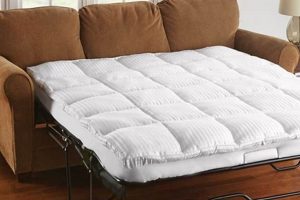
Eradicating bed bug infestations from mattresses necessitates a multi-faceted approach encompassing thorough cleaning and targeted elimination strategies. Such procedures involve meticulous vacuuming, high-heat treatment, and potentially the application of approved insecticides specifically formulated for mattress use. The objective is to eliminate all life stages of the insect, from eggs to adults, within the mattress fibers and crevices.
Effectively addressing bed bug infestations is crucial for maintaining a healthy sleeping environment and preventing further spread within a dwelling. Historically, dealing with these pests involved harsh chemicals, but modern methods emphasize integrated pest management, prioritizing safer and more sustainable solutions. Protecting residents from bites and potential allergic reactions underscores the importance of proactive and diligent eradication efforts.
The subsequent sections will detail specific methods for achieving complete mattress disinfection, covering preparation steps, appropriate equipment selection, and post-treatment monitoring to ensure long-term success in eliminating these persistent pests.
Disinfecting a Mattress from Bed Bugs
Successfully eradicating bed bugs from a mattress requires a strategic and methodical approach. The following tips provide guidance on effective disinfection techniques.
Tip 1: Thoroughly Vacuum All Surfaces. Employ a vacuum cleaner with a hose and crevice attachment to meticulously clean the entire mattress surface, including seams, tufts, and folds. Dispose of the vacuum bag immediately in a sealed plastic bag outside the dwelling to prevent re-infestation.
Tip 2: Utilize High-Heat Treatment. Steam cleaning, using a device designed for fabric, can effectively kill bed bugs and their eggs. Direct the steam slowly and methodically over the entire mattress surface, paying close attention to areas where bed bugs are likely to hide.
Tip 3: Apply Mattress Encasements. Invest in a bed bug-proof mattress encasement. These encasements completely seal the mattress, preventing bed bugs from entering or escaping, effectively starving any remaining pests inside. Choose encasements specifically designed for bed bug protection.
Tip 4: Consider Insecticide Application (With Caution). If other methods prove insufficient, consider using insecticides specifically labeled for use on mattresses and for bed bugs. Follow the manufacturer’s instructions precisely and apply the product only to seams and crevices. Allow the mattress to dry completely before use.
Tip 5: Launder Bedding at High Temperatures. Wash all bedding, including sheets, pillowcases, and mattress pads, in hot water (at least 120F or 49C) and dry them on high heat for at least 30 minutes. This will kill any bed bugs or eggs present in the fabric.
Tip 6: Regularly Inspect the Mattress. After disinfection, consistently monitor the mattress for any signs of bed bug activity, such as blood stains or shed skins. Early detection allows for prompt intervention and prevents re-establishment of the infestation.
Consistently adhering to these tips and maintaining diligence are paramount for achieving a bed bug-free sleeping environment. Implementing a comprehensive strategy increases the likelihood of successful and lasting eradication.
The concluding section will discuss preventive measures to minimize the risk of future bed bug infestations and maintain a healthy home environment.
1. Vacuuming Thoroughly

Vacuuming thoroughly represents an initial, crucial step in the process of disinfecting a mattress from bed bugs. Its effectiveness lies in the physical removal of bed bugs and their eggs from the mattress surface, reducing the overall population before employing other treatment methods.
- Surface Pest Removal
Vacuuming effectively removes visible bed bugs, shed skins, fecal matter, and eggs located on the surface of the mattress. This reduces the immediate infestation level and facilitates the penetration of subsequent treatments, such as steam or insecticide applications. Without this step, surface debris can hinder the effectiveness of other methods.
- Seam and Crevice Targeting
Utilizing a vacuum cleaner with a crevice attachment allows for focused cleaning of seams, tufts, and folds areas where bed bugs commonly harbor. Applying targeted suction to these areas dislodges and removes hidden pests, contributing significantly to population control. Regular household vacuums may lack the necessary suction power or nozzle design for this precise targeting.
- Prevention of Spread During Treatment
Vacuuming prior to other treatments minimizes the risk of spreading bed bugs during those processes. Disrupting bed bug harborages with steam or chemical applications can cause them to scatter, potentially infesting other areas of the room. Vacuuming beforehand removes a significant portion of the population, reducing the likelihood of this dispersal.
- Effectiveness Against Eggs
While vacuuming may not eliminate all bed bug eggs, it removes a substantial number, preventing them from hatching and perpetuating the infestation. The physical force of the suction dislodges eggs from the mattress fibers, preventing them from developing further. Disposing of the vacuum bag immediately in a sealed container is critical to prevent re-infestation.
In conclusion, thorough vacuuming serves as a foundational step in any comprehensive strategy for disinfecting a mattress from bed bugs. By reducing the initial pest population, targeting harborage areas, preventing spread during treatment, and removing eggs, it enhances the efficacy of subsequent disinfection methods and contributes significantly to long-term control. It is, however, not a standalone solution and must be integrated with other strategies for complete eradication.
2. Applying Heat

The application of heat plays a critical role in mattress disinfection from bed bugs. Elevated temperatures are lethal to all life stages of bed bugs, making heat treatment a valuable component of a comprehensive eradication strategy.
- Lethal Temperature Thresholds
Bed bugs and their eggs are highly susceptible to heat. Temperatures exceeding 120F (49C) for a sustained period will effectively kill them. This principle forms the basis for various heat-based disinfection methods applicable to mattresses.
- Steam Treatment
Steam cleaning delivers high-temperature vapor that penetrates mattress fibers, reaching bed bugs hidden within seams and crevices. The rapid temperature increase causes immediate mortality. Proper steam treatment involves slow, methodical application to ensure adequ
ate heat saturation throughout the treated area. - Hot Water Washing for Removable Components
Items such as mattress covers and bedding can be disinfected by washing in hot water at temperatures above 120F (49C). This ensures the elimination of any bed bugs or eggs present on these removable components, preventing re-infestation of the mattress.
- Commercial Heat Chambers
For severe infestations or large-scale treatment, specialized heat chambers can be employed. These chambers expose the entire mattress to controlled, high-temperature environments, ensuring complete eradication. This method is typically used by professional pest control services.
The successful application of heat in mattress disinfection depends on achieving and maintaining lethal temperatures throughout the infested areas. While steam and hot water washing are accessible methods for individual use, commercial heat chambers offer a more comprehensive solution for severe cases. Regardless of the method used, diligent application is crucial to ensure complete elimination of bed bugs and their eggs.
3. Mattress Encasement
The implementation of mattress encasement directly correlates with the comprehensive process of disinfecting a mattress from bed bugs. A mattress encasement, specifically designed to be bed bug-proof, serves as both a preventative and remedial measure. Encasements completely enclose the mattress, creating a barrier that prevents bed bugs from entering or escaping. This has two primary effects: it contains existing infestations within the mattress, facilitating their elimination, and it protects a clean mattress from future infestations. For example, if a mattress has been treated with insecticide, an encasement prevents any remaining bed bugs from escaping and re-infesting the surrounding environment. It also prevents newly introduced bed bugs from establishing themselves within the mattress’s intricate structure.
The practical significance lies in the encasement’s ability to simplify treatment and long-term management. Once a mattress is encased after treatment, monitoring becomes easier. Any bed bugs observed on the exterior of the encasement can be readily identified and dealt with, without the need to dismantle the mattress or apply further chemical treatments. Furthermore, encasements extend the lifespan of mattresses by protecting them from staining and general wear and tear. This is particularly relevant in multi-unit dwellings or hospitality settings where mattress replacement costs can be substantial. Regular inspection of the encasement itself for damage is necessary to maintain its protective function.
In summary, mattress encasement represents a critical component within a bed bug disinfection strategy. While not a standalone solution, its role in containment, protection, and simplified monitoring significantly enhances the effectiveness of other treatments, such as vacuuming, heat application, and insecticide use. Challenges include selecting high-quality encasements that are truly bed bug-proof and ensuring proper installation to avoid breaches in the protective barrier. Its integration into a broader pest management plan, combining preventative measures and targeted treatments, is key for achieving lasting bed bug control.
4. Insecticide Use
The application of insecticides, while often considered a last resort, forms a potential component of strategies aimed at disinfecting mattresses from bed bugs. The connection lies in the direct targeting of bed bugs and their eggs with chemical agents designed to disrupt their biological processes, leading to mortality. However, the effectiveness and safety of insecticide use are intrinsically linked to proper selection, application, and adherence to safety guidelines.
Insecticides specifically formulated for bed bug control often contain pyrethrins, pyrethroids, or other approved active ingredients. The choice of insecticide should be based on factors such as the severity of the infestation, potential resistance of local bed bug populations, and the specific recommendations of pest control professionals. Application techniques typically involve targeted spraying of seams, crevices, and other harborage areas on the mattress, avoiding widespread saturation. It is crucial to allow the mattress to dry completely before encasing it or resuming its use. Improper use can result in ineffective treatment, prolonged exposure to chemicals, and potential health risks. For instance, applying an unapproved insecticide can lead to chemical off-gassing and pose a respiratory hazard, demonstrating the importance of selecting and applying insecticides judiciously.
Despite its potential efficacy, insecticide use presents inherent challenges, including the development of resistance in bed bug populations and the potential for adverse health effects on humans and pets. Therefore, it must be considered as part of an integrated pest management approach, combining it with non-chemical methods such as vacuuming, heat treatment, and mattress encasement. Furthermore, careful monitoring following insecticide application is essential to assess its effectiveness and determine whether further treatment is necessary. The informed and responsible use of insecticides contributes to the success of mattress disinfection while minimizing potential risks.
5. Regular Inspection

Regular inspection forms an indispensable link in the process of mattress disinfection from bed bugs. The connection is predicated on the principle that effective disinfection is not a singular event, but rather an ongoing process of monitoring and intervention. Consider a scenario where a mattress has undergone initial treatment, such as vacuuming and steam cleaning. Without consistent inspection, the potential for residual bed bugs or newly hatched eggs to re-establish a population remains a significant concern. Regular inspection allows for the early detection of such recurrences, facilitating prompt retreatment and preventing a full-blown re-infestation. The cause-and-effect relationship is clear: lack of inspection increases the likelihood of bed bugs returning; diligent inspection improves the chances of sustained eradication.
The practical significance of regular inspection extends beyond immediate detection. It also enables an assessment of the effectiveness of the initial disinfection efforts. For example, if after a week of treatment, no further signs of bed bugs are observed during inspection, it can be reasonably assumed that the treatment was successful. Conversely, if bed bugs are still present, it indicates the need for a reassessment of the chosen methods or the implementation of additional strategies. This feedback loop is crucial for adapting the disinfection approach and ensuring long-term success. Examples of inspection include visual examination of seams, tufts, and folds of the mattress, as well as the surrounding areas, such as the bed frame and nearby furniture. The use of a flashlight can aid in detecting bed bugs in dark crevices.
In conclusion, regular inspection serves as an essential component of any effective bed bug mattress disinfection strategy. It enables early detection of re-infestation, facilitates assessment o
f treatment effectiveness, and informs adjustments to the overall disinfection approach. While challenges, such as the time commitment and potential for false negatives, exist, the benefits of consistent inspection far outweigh the drawbacks. This practice reinforces the broader theme of integrated pest management, emphasizing a proactive and adaptable approach to bed bug control.
Frequently Asked Questions
The following questions address common concerns and misconceptions regarding effective mattress disinfection for bed bug infestations. These answers aim to provide factual information to guide informed decision-making.
Question 1: Can sunlight alone eradicate bed bugs from a mattress?
Direct sunlight exposure can contribute to bed bug mortality, particularly at high temperatures. However, sunlight alone is unlikely to penetrate deeply enough into the mattress to eliminate all bed bugs and their eggs, particularly within seams and crevices. Supplemental treatments are necessary for comprehensive eradication.
Question 2: Are over-the-counter sprays sufficient for mattress disinfection?
Over-the-counter sprays labeled for bed bugs may provide some level of control, but their effectiveness varies depending on the active ingredient, application technique, and the extent of the infestation. Professional-grade insecticides and comprehensive treatment strategies are often required for severe or persistent infestations. Adherence to label instructions is paramount.
Question 3: Is it necessary to discard a mattress infested with bed bugs?
Discarding an infested mattress is not always necessary. With thorough and consistent treatment, including vacuuming, heat application, insecticide use (when appropriate), and mattress encasement, it is often possible to eliminate bed bugs and salvage the mattress. However, heavily damaged or severely infested mattresses may warrant replacement.
Question 4: How frequently should a mattress be inspected following treatment?
Mattress inspection should occur at least weekly for several weeks following initial treatment. This allows for early detection of any surviving bed bugs or newly hatched eggs, enabling prompt retreatment and preventing re-establishment of the infestation. Consistent monitoring is key to long-term control.
Question 5: Do mattress encasements guarantee complete bed bug protection?
Mattress encasements provide a significant barrier against bed bugs entering or escaping the mattress. However, their effectiveness depends on the quality of the encasement and proper installation. Zippers and seams should be fully sealed, and the encasement should be regularly inspected for any tears or damage. Encasements are most effective when used in conjunction with other treatment methods.
Question 6: Can professional pest control services guarantee complete eradication of bed bugs from a mattress?
Professional pest control services can significantly increase the likelihood of successful bed bug eradication. However, no guarantees can be absolute due to factors such as the complexity of the infestation, the cooperation of residents, and the potential for re-introduction. Reputable professionals typically offer follow-up treatments and monitoring to ensure long-term control.
Effectively addressing mattress infestations requires a multi-faceted approach and ongoing vigilance. Combining thorough cleaning, appropriate treatments, and consistent monitoring provides the best chance for achieving a bed bug-free sleeping environment.
The subsequent section will discuss preventative measures to minimize the risk of future bed bug infestations and maintain a healthy home environment.
Conclusion
The preceding information elucidates that “how to disinfect a mattress from bed bugs” is a complex undertaking requiring a strategic combination of methods. It has been demonstrated that relying solely on a single approach is insufficient. Complete eradication mandates meticulous vacuuming, high-heat treatment, the judicious use of appropriate insecticides, and the implementation of a robust mattress encasement strategy. Regular and diligent inspection post-treatment remains essential for monitoring and preventing re-infestation.
The successful disinfection of a mattress represents a critical step in controlling bed bug infestations and protecting public health. Neglecting this process can have significant repercussions, ranging from persistent discomfort to broader public health concerns. Therefore, consistent vigilance and the implementation of comprehensive disinfection strategies are paramount for maintaining a healthy and pest-free environment.