Identifying the precise location of escaping air from an inflatable sleeping surface is essential for maintaining its functionality and comfort. Locating the breach, which may be a puncture, seam separation, or valve malfunction, is the initial step in effective repair and prolonged use of the item.
Addressing these air leaks promptly is critical for several reasons. Delaying repair can lead to further damage, rendering the mattress unusable. Additionally, a slowly deflating sleeping surface results in discomfort and interrupted sleep. Efficient detection contributes to cost savings by avoiding premature replacement and extending the lifespan of the inflatable.
Several methods exist for accurately determining the point of air loss. These techniques range from simple auditory and tactile inspections to more involved visual and soapy water examinations, each offering varying degrees of effectiveness based on the severity and location of the problem.
Effective Leak Detection Techniques
The following techniques aid in precisely locating air leaks within inflatable sleeping surfaces.
Tip 1: Auditory Examination: Conduct a thorough listening test in a quiet environment. Slowly move around the inflated mattress, paying close attention to areas where a hissing sound might originate. Mark any suspected locations for further investigation.
Tip 2: Tactile Inspection: Systematically run a hand over the entire surface of the inflated mattress. A slight breeze or air current emanating from a specific point can indicate the presence of a leak. Special attention should be paid to seams and valve areas.
Tip 3: Soapy Water Solution: Mix a mild dish soap with water in a spray bottle or bucket. Apply the solution liberally to small sections of the inflated mattress. The formation of bubbles indicates escaping air and pinpoints the leak’s location. Wipe away the soapy residue after marking the leak.
Tip 4: Submersion Method (For Smaller Mattresses): If the mattress is small enough, submerge it partially in a tub of water. Observe for streams of bubbles rising from the submerged mattress. This method is particularly effective for pinpointing leaks in hard-to-reach areas.
Tip 5: Valve Examination: Inspect the valve for proper closure and integrity. Apply soapy water around the valve’s perimeter to check for leaks around the seal. If the valve is removable, examine the seating area for debris or damage.
Tip 6: Pressure Test: Inflate the mattress to its recommended pressure and monitor it over a period of several hours. A significant pressure drop suggests a larger leak or multiple smaller leaks that require further investigation.
Consistent application of these methods, either individually or in combination, improves the chances of effectively locating and addressing air leaks, thereby maximizing the longevity and usability of the inflatable sleeping surface.
Upon successful identification of the leak’s location, appropriate repair procedures can be implemented to restore the mattress’s functionality.
1. Auditory detection

Auditory detection serves as a primary method in the process of locating air leaks within inflatable mattresses. By carefully listening for escaping air, potential breach locations can be identified prior to more invasive inspection techniques.
- Environmental Noise Considerations
The effectiveness of auditory detection relies heavily on minimizing ambient sound. A quiet environment allows for the subtle hissing sound of escaping air to become more discernible. In noisy conditions, other methods of leak detection may prove more reliable.
- Proximity and Movement Techniques
Systematically moving one’s ear close to the surface of the inflated mattress, particularly along seams and around the valve, increases the likelihood of hearing a leak. Varying the distance and angle of approach can aid in pinpointing the exact source of the sound.
- Frequency Range and Human Perception
The frequency of the sound produced by escaping air may vary depending on the size of the leak and the internal pressure of the mattress. Individuals with acute hearing across a broader frequency range may be better equipped to detect subtle leaks.
- Limitations and Complementary Methods
Auditory detection alone may not suffice for identifying very small or obstructed leaks. It is most effective when used in conjunction with other techniques, such as soapy water application or tactile inspection, to confirm the leak’s precise location.
The successful application of auditory detection hinges on controlling external factors and employing careful listening techniques. While it represents a simple and non-invasive starting point, it is often most effective as part of a multi-faceted approach to identify the source of an air mattress leak.
2. Tactile sensitivity

Tactile sensitivity, referring to the ability to perceive physical sensations through touch, plays a crucial role in identifying air leaks within inflatable mattresses. Air escaping from a breach creates a subtle airflow, which, when detectable through tactile means, can indicate the leak’s approximate location. The effectiveness of this method is proportional to the user’s ability to perceive slight variations in air pressure and temperature, making it a valuable, albeit subjective, diagnostic tool.
The utility of tactile sensitivity is particularly evident when dealing with small or intermittent leaks that might not be immediately apparent through auditory or visual inspection alone. For example, a slow leak along a seam might only produce a faint air current detectable by carefully running a hand along the surface. Similarly, subtle temperature changes associated with escaping compressed air can be perceived by sensitive skin, offering another tactile clue. This method’s non-invasive nature allows for initial assessment without the immediate need for potentially messy techniques such as soapy water application.
While individual tactile sensitivity varies, the technique remains a relevant component in a comprehensive leak detection strategy. Its primary limitation lies in its reliance on subjective perception, making it less reliable for individuals with reduced tactile acuity. Nevertheless, combining tactile inspection with other diagnostic methods, such as auditory examination and soapy water application, offers a more robust approach to pinpointing leaks in inflatable mattresses, ultimately facilitating timely repairs and prolonging the lifespan of the product.
3. Soapy water application

The application of soapy water is a frequently employed technique in the process of locating air leaks within inflatable mattresses. The underlying principle hinges on the visual detection of bubbles forming at the site of air egress. A solution of soap and water, when applied to the surface of an inflated mattress, reduces surface tension. As air escapes through a leak, it interacts with the soapy solution, generating visible bubbles that indicate the precise location of the breach.
The effectiveness of this method relies on several factors. The concentration of soap within the water solution is critical; an excessive amount of soap can hinder bubble formation, while an insufficient amount may not produce sufficiently stable bubbles for easy detection. Furthermore, the method is best suited for relatively small leaks. Large leaks may dissipate the soapy solution too quickly, preventing clear bubble formation. Wind and drafts can also interfere with the process by prematurely bursting bubbles or displacing the solution.
Despite these limitations, soapy water application remains a practical and widely accessible technique. Its simplicity and low cost make it a standard diagnostic procedure for identifying air mattress leaks. Following the identification, targeted repairs, such as patching, can be initiated to restore the mattress’s functionality. This technique’s contribution to extending the lifespan of inflatable mattresses underscores its practical significance.
4. Valve inspection

Valve inspection constitutes a critical component of the process for identifying air mattress leaks. Given its function as the inflation and deflation point, the valve represents a high-probability location for air leakage. A compromised valve seal, a malfunctioning mechanism, or physical damage to the valve housing can directly result in air escaping from the mattress. Therefore, a thorough examination of the valve is indispensable when diagnosing air loss issues.
The connection between valve integrity and air retention is direct. For example, a common occurrence involves the valve not fully sealing after inflation, resulting in a slow, consistent leak. This may manifest as a subtle hissing sound or a gradual deflation over several hours. Similarly, physical damage, such as cracks or fractures in the valve body due to impact or material degradation, can create direct pathways for air to escape. Inspection procedures typically involve visual assessment for damage, manual testing of the sealing mechanism, and the application of soapy water around the valve perimeter to detect escaping air.
In summary, valve inspection is an essential step in any comprehensive air mattress leak detection process. The valve’s design and function make it inherently susceptible to leakage, underscoring the importance of its thorough evaluation. Neglecting this aspect can lead to misdiagnosis and ineffective repair attempts. By systematically assessing the valve’s condition and functionality, a significant source of air mattress leaks can be accurately identified and addressed.
5. Seam examination

Seam examination is a fundamental aspect of the process for identifying air mattress leaks. Seams, representing the bonded or stitched junctures of the mattress material, are inherently susceptible to stress and degradation, making them frequent points of failure. A methodical seam examination is crucial to effectively locate leaks.
- Visual Inspection for Delamination
A primary step in seam examination involves a careful visual inspection for signs of delamination, which is the separation of bonded layers or the loosening of stitches. Delamination weakens the seam’s integrity, creating pathways for air to escape. Indications include visible gaps, frayed edges, or a bubbling appearance under inflation.
- Tactile Assessment for Weak Points
Tactile assessment complements visual inspection. Applying gentle pressure along the seam line can reveal weak points or areas where the material yields under minimal force. This technique requires careful application to avoid exacerbating existing damage, but it can effectively highlight areas of compromised seam integrity.
- Soapy Water Application on Seams
The application of soapy water along the seam lines is a standard method for pinpointing leaks. The presence of bubbles forming along the seam indicates escaping air, signifying a compromised area. This method is particularly effective for identifying subtle leaks that may not be readily apparent through visual or tactile inspection alone.
- Stress Point Analysis
Seams located at stress points, such as corners or areas subjected to frequent folding or bending, warrant particular attention. These areas are more prone to wear and tear, increasing the likelihood of seam failure and subsequent air leakage. A careful examination of these regions is essential for comprehensive leak detection.
Effective seam examination requires a combination of visual acuity, tactile sensitivity, and the application of diagnostic tools like soapy water. By systematically assessing the integrity of all seams, a significant percentage of air mattress leaks can be accurately located, enabling targeted repairs and extending the usable lifespan of the product.
6. Water immersion

Water immersion, a technique involving the submersion of an inflated air mattress in water, facilitates the identification of air leaks by visually revealing escaping air as bubbles. This method capitalizes on the density difference between air and water. When an air mattress is submerged, escaping air rises to the surface as a stream of bubbles, directly indicating the leak’s location. The visibility of these bubbles is enhanced by the surrounding water, allowing for precise pinpointing of even minute perforations that may be difficult to detect using other methods. The method is particularly effective for locating leaks on the underside of the mattress or in areas that are difficult to access for visual or tactile inspection. Smaller mattresses are easier to manage, making the process more efficient.
The effectiveness of water immersion depends on several factors. The water should be clear and still to ensure optimal visibility. Gentle manipulation of the submerged mattress can help dislodge trapped air, revealing additional leak points. This technique is especially suited for scenarios where other methods, such as auditory or soapy water testing, have proven inconclusive. For instance, a slow leak in a complex seam may not produce audible hissing or readily generate bubbles with soapy water, but the continuous stream of bubbles observed during immersion would definitively indicate its presence and location. Furthermore, water immersion serves as a comprehensive method to locate multiple leaks simultaneously, expediting the overall repair process.
In conclusion, water immersion provides a reliable and visually direct method for detecting air mattress leaks. Its capacity to reveal subtle perforations and its suitability for comprehensive leak detection make it a valuable tool in mai
ntaining the functionality of inflatable mattresses. While logistical considerations such as mattress size and water availability may present challenges, the accuracy and efficiency of this technique in locating leaks often outweigh these limitations, contributing to a more effective and timely repair process.
7. Pressure monitoring
Pressure monitoring is intrinsically linked to the process of identifying air mattress leaks. The direct correlation between internal air pressure and the integrity of the mattress’s structure establishes pressure monitoring as a key diagnostic tool. A decline in internal pressure, observed over a defined period, serves as a primary indicator of one or more leaks. Cause and effect are clearly demonstrated: structural breach (leak) causes air to escape, resulting in a measurable pressure decrease. The absence of pressure stability strongly suggests the presence of a compromised area requiring investigation.
The application of pressure monitoring can range from simple observation to precise measurement. A basic approach involves inflating the mattress to its recommended fill level, marking that level, and then visually inspecting for a reduction in volume over several hours. A more refined method employs a pressure gauge to quantitatively assess pressure changes, providing a more sensitive and accurate detection of slow leaks. Consider a scenario where an air mattress is inflated to its optimal pressure, and after eight hours, a significant deflation is observed. This deflation definitively points to a leak, prompting further examination via other methods, such as soapy water or submersion, to pinpoint the breach’s specific location. Without initial pressure monitoring, the leak might go unnoticed, leading to discomfort and eventual mattress failure.
In summary, pressure monitoring is an indispensable component of the “how to find an air mattress leak” process. Its effectiveness lies in its ability to objectively confirm the presence of a leak, setting the stage for subsequent investigative techniques. While pressure monitoring alone cannot pinpoint the leak’s location, its role in initiating and guiding the search significantly enhances the efficiency and success of the overall leak detection process. Challenges associated with variations in ambient temperature, which can influence internal air pressure, can be mitigated by conducting tests under stable environmental conditions and comparing pressure readings taken at consistent time intervals. Ultimately, integrating pressure monitoring into the detection protocol ensures a more comprehensive and reliable assessment of air mattress integrity.
Frequently Asked Questions About Air Mattress Leak Detection
This section addresses common inquiries concerning the identification of air leaks in inflatable mattresses, providing clarity and practical guidance for effective troubleshooting.
Question 1: How can one differentiate between a genuine leak and normal air diffusion in an air mattress?
A gradual decrease in air pressure is typical, but a significant and rapid loss indicates a leak. Pressure should be monitored consistently over a defined period (e.g., 12-24 hours). Documenting pressure changes will establish a baseline for differentiation.
Question 2: Is there a recommended type of soapy water solution for leak detection?
A mild dish soap mixed with water generally suffices. Avoid using soaps containing oils or harsh chemicals, as these could potentially damage the mattress material. The concentration should create readily visible, stable bubbles upon air exposure.
Question 3: What if a leak cannot be located despite employing multiple detection methods?
In instances where the leak remains elusive, examine the valve with meticulous care. Internal valve component failures are often difficult to detect. Also, consider potential microscopic perforations undetectable by standard methods. Professional assessment might be required.
Question 4: Can ambient temperature affect leak detection accuracy?
Yes. Temperature variations influence air pressure. Conduct leak detection in a stable environment to minimize fluctuations. Allow the mattress to acclimate to the room temperature before initiating the process.
Question 5: Are certain areas of an air mattress more prone to leaks?
Seams, corners, and the area surrounding the valve are typically more susceptible due to increased stress and flexing. These zones merit increased scrutiny during the detection process.
Question 6: How should one proceed after successfully locating the leak?
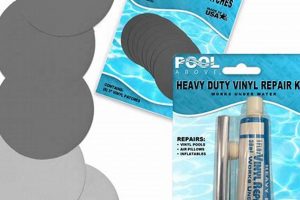
Once the leak is identified, thoroughly clean and dry the area. Apply an appropriate patching material according to the manufacturers instructions. Ensure a secure seal to prevent future air loss.
Effective leak detection requires a systematic approach and careful attention to detail. Addressing these frequently asked questions enhances the likelihood of successful identification and subsequent repair.
The following section will focus on the types of patching material to use after find leak in the air mattress.
Conclusion
The preceding discussion has elucidated multiple methodologies for the identification of air leaks within inflatable mattresses. Auditory, tactile, and visual inspection techniques, alongside the application of soapy water and the practice of pressure monitoring, constitute a comprehensive approach to leak detection. The successful implementation of these strategies allows for the precise location of breaches, enabling timely repair interventions.
Effective leak identification is crucial for preserving the functionality and extending the lifespan of air mattresses. Vigilant monitoring and prompt action contribute to both economic savings and the maintenance of optimal sleeping conditions. The diligent application of the outlined techniques empowers users to address leakage issues effectively, ensuring the continued usability of their inflatable sleeping surfaces.