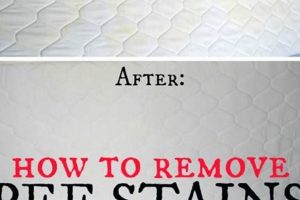
Addressing discoloration and marks left by perspiration on a sleeping surface involves specific cleaning techniques. Such stains occur when bodily fluids penetrate the fabric and underlying materials, often leaving a visible residue and potentially fostering bacterial growth. For example, yellowish or brownish patches appearing on a mattress are frequently the result of absorbed sweat.
Maintaining a clean and hygienic sleeping environment offers numerous benefits. Removing these stains helps prolong the lifespan of the mattress, preventing degradation of the materials. Furthermore, it contributes to a healthier sleep environment by minimizing potential allergens and odors. Historically, various methods have been employed, ranging from simple sun drying to the use of harsh chemicals, to combat these unsightly marks.
The following sections detail effective and appropriate methodologies for the elimination of these blemishes, focusing on readily available household products and proven stain removal processes. These methods prioritize both effectiveness and the preservation of the mattress’s integrity, ensuring a clean and comfortable sleep surface.
Techniques for Eliminating Perspiration Marks from Mattresses
Employing the correct methods is crucial for effectively removing sweat stains without damaging the mattress. The following techniques offer practical solutions for addressing this common issue.
Tip 1: Immediate Action: Promptly address spills and perspiration. The longer the stain sits, the more difficult it is to remove. Blot up excess moisture with a clean, dry cloth as soon as possible.
Tip 2: Baking Soda Application: Liberally apply baking soda to the affected area. Baking soda acts as a natural absorbent and deodorizer. Allow it to sit for several hours, or ideally overnight, before vacuuming thoroughly.
Tip 3: Hydrogen Peroxide Solution: For persistent stains, create a solution of hydrogen peroxide (3%), water, and a small amount of dish soap. Lightly spray the solution onto the stain, being careful not to oversaturate the mattress. Allow it to sit for approximately 20 minutes, then blot with a clean cloth.
Tip 4: Enzyme Cleaner Utilization: Consider using an enzyme cleaner specifically designed for stain removal. Follow the product’s instructions carefully. Enzyme cleaners break down the proteins and other organic matter that cause stains and odors.
Tip 5: Cold Water and Salt Paste: Create a paste of cold water and salt. Apply the paste to the stain and gently rub it in. Allow it to dry completely before vacuuming away the residue. Salt can help draw out moisture and lift the stain.
Tip 6: Vinegar Solution: A solution of equal parts white vinegar and water can also be effective. Spray the solution lightly onto the stain, let it sit for a few minutes, and then blot with a clean cloth. Vinegar helps to neutralize odors and break down stains.
Tip 7: Thorough Drying: After applying any cleaning solution, ensure the mattress is completely dry before making the bed. Use a fan or open windows to facilitate the drying process. This prevents mold and mildew growth.
These techniques, when applied correctly, offer effective means of eliminating blemishes and refreshing a mattress, promoting a cleaner and more hygienic sleeping environment.
Implementing these procedures contributes to the overall longevity and cleanliness of bedding, extending its usability and enhancing sleep quality.
1. Blotting

Blotting constitutes the initial and arguably most critical step in mitigating the impact of perspiration on a mattress. Its connection to effectively addressing discoloration lies in the immediate absorption of excess moisture before it penetrates deeper into the mattress fibers. This action limits the stain’s spread and intensity, simplifying subsequent cleaning efforts. Failure to promptly blot a sweat stain allows the liquid to saturate the mattress layers, leading to a more pronounced and difficult-to-remove mark.
For example, imagine two identical instances of sweat exposure on mattresses. In the first scenario, the moisture is immediately blotted with a clean, absorbent cloth. In the second, the moisture is left unattended. The first mattress will likely exhibit a significantly less visible stain after cleaning compared to the second. This illustrates the practical significance of understanding blotting’s role; it directly affects the visual outcome and the overall effort required for stain removal. The mechanical action of pressing an absorbent material against the spill draws the liquid upwards, preventing further downward seepage.
In summary, prompt blotting is an indispensable element in the process of eliminating sweat stains from a mattress. While not a complete solution in itself, it dramatically reduces the severity of the stain, making subsequent cleaning methods more effective and preserving the mattress’s integrity. Neglecting this initial step introduces greater challenges in achieving a satisfactory outcome.
2. Baking Soda

Baking soda, chemically known as sodium bicarbonate, serves as a versatile cleaning agent frequently employed in addressing perspiration marks on mattresses. Its relevance stems from its absorbent, deodorizing, and mildly abrasive properties, making it a suitable component in stain removal protocols.
- Absorption of Moisture
Baking soda’s hygroscopic nature enables it to absorb moisture effectively. When applied to a sweat stain, it draws out the liquid, preventing further penetration into the mattress fibers. For example, heavily sprinkling baking soda on a fresh sweat stain allows it to encapsulate the moisture, forming clumps that can then be vacuumed away. This process reduces the stain’s severity and inhibits the growth of odor-causing bacteria.
- Odor Neutralization
Perspiration often leaves behind unpleasant odors. Baking soda interacts with acidic and basic odor molecules, neutralizing them through a chemical reaction. By leaving a layer of baking soda on the affected area for an extended period, the compound can effectively mitigate lingering smells. The result is a fresher, more hygienic sleeping surface, free from the residual scent of sweat.
- Mild Abrasive Action
Baking soda exhibits a gentle abrasive quality, aiding in the physical removal of surface-level stains. When rubbed lightly onto the affected area, it can lift dried residue without causing significant damage to the mattress fabric. This is particularly useful for stains that have set or are embedded within the material’s texture.
- pH Regulation
Baking soda is amphoteric, meaning it can act as both an acid and a base, helping to regulate the pH of the stain. Perspiration tends to be acidic, and baking soda can help neutralize this acidity, making the stain easier to lift and prevent it from setting permanently. Its buffering capabilities contribute to a more balanced and cleaner mattress surface.
The aforementioned properties of baking soda collectively contribute to its efficacy in removing sweat stains. Its ability to absorb moisture, neutralize odors, and provide mild abrasion makes it a valuable tool in restoring a mattress to a cleaner state. While not a standalone solution for severe or deeply ingrained stains, baking soda is a safe and effective component in a comprehensive mattress cleaning strategy. Combining it with other methods, such as enzyme cleaners or hydrogen peroxide, can yield even more significant results.
3. Hydrogen Peroxide

Hydrogen peroxide (HO) functions as a bleaching agent and oxidizer, making it a relevant component in stain removal procedures for mattresses affected by perspiration. Its efficacy in the context of mitigating sweat stains stems from its ability to break down the chromophores, or color-causing molecules, present in the stain. When applied to the affected area, hydrogen peroxide releases oxygen, which reacts with these molecules, altering their structure and rendering them colorless. The result is a visible reduction or complete elimination of the stain. For instance, yellowish discoloration caused by dried sweat can be lightened or removed by the careful application of a diluted hydrogen peroxide solution.
The concentration of hydrogen peroxide is a critical factor in its successful application. A 3% solution, commonly available in pharmacies, is generally recommended for household stain removal. Higher concentrations pose a risk of damaging the mattress fabric or causing discoloration. The application process typically involves lightly spraying the solution onto the stain, allowing it to sit for a specified period (often 10-20 minutes), and then blotting the area with a clean, damp cloth. It is important to test the solution on an inconspicuous area of the mattress first to ensure it does not cause any adverse reactions, such as fading or weakening of the material. Furthermore, exposure to light can accelerate the decomposition of hydrogen peroxide, so it is best to store it in a dark, opaque container.
In summary, hydrogen peroxide represents a viable option for addressing sweat stains on mattresses due to its bleaching and oxidizing properties. However, successful implementation requires careful consideration of the concentration, application method, and potential risks. The responsible and informed use of hydrogen peroxide can contribute to restoring the appearance of a mattress affected by perspiration stains. While it is not universally effective on all types of stains or fabrics, it remains a valuable tool in mattress maintenance when used appropriately. Its integration into a broader cleaning strategy, along with other methods like baking soda and enzymatic cleaners, can yield comprehensive stain removal results.
4. Enzyme Cleaners

Enzyme cleaners play a crucial role in addressing perspiration marks on mattresses due to their ability to break down organic compounds. Sweat stains primarily consist of proteins, salts, oils, and other organic materials. Standard detergents may not fully eliminate these complex molecules, often leaving behind residue and lingering odors. Enzyme cleaners, however, contain specific enzymes, such as proteases, lipases, and amylases, that target and degrade these compounds into smaller, more easily removable components. This targeted enzymatic action results in a more thorough cleaning compared to general-purpose cleaners. For example, a protease enzyme will specifically break down the protein molecules within the sweat stain, effectively dismantling its structure and facilitating its removal.
The application of enzyme cleaners typically involves spraying the affected area with the product and allowing it to dwell for a specified period. This dwell time allows the enzymes to penetrate the stain and initiate the breakdown process. After the dwell time, the area is blotted or wiped clean. One practical example is the use of an enzyme cleaner on a mattress stained with years of accumulated perspiration. After repeated applications and blotting, the visible stain and the associated odor can be significantly reduced or eliminated. Furthermore, the continued use of enzyme cleaners as part of regular mattress maintenance can prevent the build-up of organic material, thereby reducing the likelihood of future stains and odors. It is important to note that different enzyme cleaners are formulated for specific types of stains, so selecting the appropriate cleaner for the type of stain is essential for optimal results.
In summary, enzyme cleaners offer a targeted and effective solution for removing perspiration marks from mattresses. Their ability to degrade organic compounds at a molecular level distinguishes them from traditional cleaners and makes them a valuable tool in maintaining mattress hygiene. Challenges may include selecting the appropriate enzyme cleaner for the specific type of stain and ensuring adequate dwell time for the enzymes to work effectively. Integrating enzyme cleaners into a comprehensive mattress cleaning strategy, along with techniques like blotting and the use of baking soda, maximizes the chances of completely removing sweat stains and restoring the mattress to a clean and odor-free state.
5. Vinegar
Vinegar’s connection to addressing perspiration marks on mattresses resides in its acidic properties and its effectiveness as a natural cleaning and deodorizing agent. The acetic acid present in vinegar aids in breaking down the alkaline components often found in sweat and related stains. This breakdown facilitates the lifting of the stain from the mattress fibers. A common approach involves diluting white vinegar with water in equal parts and applying the solution to the affected area. For example, a light misting of the vinegar solution, followed by gentle blotting, can visibly reduce the appearance of recent sweat stains. The acidic nature of vinegar also helps to neutralize the ammonia-based odors frequently associated with perspiration, leaving a fresher scent in its place.
The practical application extends beyond simple stain removal. Vinegar can also serve as a preventative measure. Regularly misting a mattress with a diluted vinegar solution and allowing it to air dry can inhibit the growth of mold and mildew, which are often exacerbated by trapped moisture from perspiration. Furthermore, its antimicrobial properties contribute to a more hygienic sleep environment. When using vinegar, it is essential to avoid oversaturation, as excessive moisture can create new problems. Moreover, while white vinegar is generally safe for most mattress materials, testing the solution on an inconspicuous area first is advisable, particularly for delicate fabrics or colored mattresses.
In summary, vinegar offers a cost-effective and environmentally friendly solution for mitigating the effects of perspiration on mattresses. Its acidity breaks down stains, neutralizes odors, and provides antimicrobial benefits. Challenges include avoiding oversaturation and ensuring compatibility with specific mattress materials. Integrating vinegar into a routine mattress maintenance plan can promote cleanliness, freshness, and longevity, reinforcing its role in maintaining a healthy sleep surface.
6. Complete Drying

The process of eliminating perspiration marks from a mattress necessitates complete drying following any cleaning procedure. Residual moisture can negate the benefits of stain removal efforts and introduce new complications. This phase, often overlooked, is critical to the long-term success of mattress restoration.
- Mold and Mildew Prevention
Damp mattresses provide a conducive environment for mold and mildew growth. These microorganisms thrive in moist, dark conditions and can lead to unpleasant odors, discoloration, and potential health hazards. Complete drying eliminates the moisture required for their proliferation. For instance, if a mattress cleaned with a water-based solution is not thoroughly dried, mold spores present in the air can colonize the damp fibers, resulting in musty smells and visible mold patches. This underscores the direct connection between drying and the prevention of microbial growth within the mattress.
- Odor Control
Residual moisture traps and intensifies odors. Even if the initial cleaning process effectively removes the original sweat stain and its associated scent, trapped moisture can reactivate odor-causing bacteria or create new, unpleasant smells. Ensuring complete dryness prevents the re-emergence of these odors. For example, a mattress cleaned with baking soda and not adequately dried might initially seem fresh, but as residual moisture interacts with remaining baking soda particles, it can generate a musty or chemical-like odor. Proper drying minimizes this risk.
- Material Integrity Preservation
Prolonged dampness degrades mattress materials. Memory foam, innersprings, and other components can suffer from structural damage when exposed to moisture for extended periods. Complete drying helps maintain the integrity of these materials, extending the lifespan of the mattress. For instance, innerspring mattresses can develop rust when exposed to moisture, compromising their support and comfort. Similarly, memory foam can break down and lose its shape if it remains damp, leading to uneven sleeping surfaces. Thorough drying safeguards against these forms of material degradation.
- Prevention of Re-Staining
A damp mattress can attract dirt and dust more readily than a dry one. The lingering moisture acts as an adhesive, causing particulate matter to cling to the fibers. This can lead to the formation of new stains or the reappearance of old ones. Complete drying minimizes the mattress’s susceptibility to attracting and retaining these contaminants. As an example, a mattress that is still slightly damp can quickly accumulate dust and allergens from the surrounding environment, resulting in visible stains and exacerbating allergy symptoms. Thorough drying thus helps maintain a clean and stain-free surface.
These elements highlight the integral role of complete drying in the context of “how to get rid of sweat stains on a mattress”. It is not merely a final step but a crucial phase that ensures the long-term effectiveness of the cleaning process and the overall health and longevity of the mattress.
Frequently Asked Questions
The following questions and answers address common concerns regarding the removal of perspiration marks from mattresses, offering guidance on effective techniques and preventative measures.
Question 1: Will vigorous scrubbing enhance stain removal?
Vigorous scrubbing is generally discouraged. Excessive abrasion can damage mattress fibers, potentially spreading the stain or causing further discoloration. Gentle blotting or light rubbing with a soft cloth is recommended to minimize material damage.
Question 2: Can sunlight effectively remove sweat stains?
Sunlight possesses natural bleaching properties. However, prolonged exposure to direct sunlight can fade or damage certain mattress materials. Utilizing sunlight as a supplementary drying method after cleaning is acceptable, but direct, extended exposure solely for stain removal is not advised.
Question 3: Are chemical stain removers always the best option?
Chemical stain removers can be effective, but they may contain harsh chemicals that are harmful to human health and the environment. Natural alternatives, such as baking soda, vinegar, and enzyme cleaners, offer safer and often equally effective solutions. Always follow product instructions and ensure adequate ventilation when using chemical removers.
Question 4: How often should a mattress be cleaned to prevent sweat stains?
Regular mattress maintenance, including vacuuming and spot-cleaning, is recommended every one to three months. Addressing spills and perspiration immediately is crucial to prevent stains from setting. A deep cleaning, involving more intensive methods, should be performed at least twice per year.
Question 5: Does mattress thickness affect stain removal effectiveness?
Mattress thickness can influence the difficulty of stain removal. Thicker mattresses may require more cleaning solution and longer drying times. The depth of the stain’s penetration is also greater in thicker mattresses, potentially requiring multiple cleaning applications.
Question 6: Can sweat stains permanently damage a mattress?
While prompt and effective cleaning can often remove sweat stains, prolonged neglect can lead to permanent discoloration and material degradation. The acidity and salt content of perspiration can break down fibers over time. Therefore, immediate and consistent maintenance is essential to preserve the mattress’s integrity.
These FAQs highlight the importance of gentle cleaning techniques, informed product selection, and consistent mattress maintenance in the context of addressing perspiration marks. Prioritizing preventative measures and addressing stains promptly can significantly extend the lifespan and hygiene of a mattress.
The subsequent section will explore preventative measures and protective strategies to minimize the occurrence of perspiration marks on mattresses.
Conclusion
The preceding discussion has presented various methods for mitigating the occurrence and impact of perspiration marks on mattresses. These strategies encompass immediate stain management, application of absorbent and neutralizing agents, utilization of chemical or enzymatic cleaning solutions, and critical drying protocols. The effectiveness of each approach hinges upon prompt intervention, appropriate product selection, and adherence to established procedures.
While addressing existing stains is essential, proactive measures offer a more sustainable solution. Employing mattress protectors, maintaining proper ventilation, and practicing sound sleep hygiene contribute to a cleaner, more hygienic sleep environment. Prioritizing these preventative steps alongside diligent stain removal techniques ensures the longevity and integrity of the mattress, promoting both restful sleep and a healthier living space. The responsible application of these principles ultimately minimizes the need for extensive stain remediation and contributes to the long-term preservation of bedding investments.