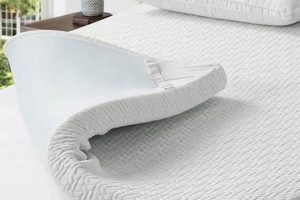
The consistent displacement of a sleep surface addition presents a common challenge. This refers to the tendency of an overlay designed to enhance comfort to shift from its intended position atop a mattress during use. As an example, consider a memory foam layer that migrates toward the foot of the bed nightly, requiring frequent readjustment.
Maintaining a stable sleep surface is crucial for optimal rest. Preventing slippage ensures even weight distribution, maximizing the benefits of the added layer, such as pressure relief and improved spinal alignment. Historically, makeshift solutions like safety pins were employed, but modern methods offer more effective and convenient alternatives. Addressing this issue enhances sleep quality and the longevity of both the mattress and the comfort layer.
Several methods can mitigate the movement of these additions. These include the utilization of specialized grip materials, the application of fitted sheets designed for enhanced security, and the strategic placement of barriers to prevent lateral movement. The subsequent sections will detail these approaches and other strategies for securing a sleep surface enhancement.
Strategies to Prevent Mattress Topper Movement
The following are established methods to minimize or eliminate the shifting of mattress toppers, ensuring a consistently comfortable and supportive sleep surface.
Tip 1: Employ Fitted Sheets with Deep Pockets: Utilize fitted sheets specifically designed with extra-deep pockets. These sheets provide a more secure enclosure, minimizing the potential for lateral movement. Prioritize sheets constructed from materials with inherent gripping properties, such as cotton blends with a tight weave.
Tip 2: Integrate a Non-Slip Mattress Pad: Position a non-slip mattress pad between the mattress and the topper. These pads feature a textured surface, often composed of rubber or silicone, that creates friction and inhibits slippage. Ensure the pad’s dimensions closely match the mattress size for optimal effectiveness.
Tip 3: Secure with Mattress Straps or Suspenders: Implement mattress straps or suspenders, which are adjustable elastic bands that wrap around the mattress and topper. These straps are typically equipped with clips or fasteners that secure the topper in place. Ensure straps are tightened appropriately to avoid over-compression or distortion.
Tip 4: Utilize Hook-and-Loop Fasteners: Strategically attach hook-and-loop fasteners (e.g., Velcro) to both the underside of the topper and the surface of the mattress. Exercise caution to prevent damage to the mattress fabric. Opt for heavy-duty fasteners for enhanced holding power.
Tip 5: Consider a Topper with Integrated Straps or Anchors: When selecting a new topper, prioritize models that incorporate built-in straps or anchor systems. These features are specifically designed to secure the topper to the mattress, offering a more integrated and reliable solution.
Tip 6: Rotate the Topper Regularly: Periodic rotation of the topper can distribute wear evenly and prevent localized compression that might contribute to slippage. Implement a rotation schedule (e.g., monthly) to maintain consistent support and minimize movement.
Tip 7: Evaluate Mattress Surface Texture: A smoother mattress surface may exacerbate slippage. Consider using a thin, textured mattress protector to create a more friction-friendly interface between the mattress and the topper.
Implementing one or a combination of these techniques can significantly reduce or eliminate the problem of mattress topper movement, leading to a more stable and restorative sleep experience.
The subsequent section will address the selection criteria for materials and products designed to prevent slippage, providing guidance for informed decision-making.
1. Friction enhancement

Friction enhancement is a primary mechanism in maintaining the stability of a mattress topper. The force of friction, which opposes motion between surfaces in contact, directly impacts the topper’s ability to remain in its intended position. Without sufficient friction, the topper is susceptible to sliding due to shifts in body weight and movement during sleep. For instance, a topper placed directly on a smooth mattress surface with a slick sheet is highly prone to displacement. The implementation of friction-enhancing materials or techniques serves to counteract this tendency, effectively immobilizing the topper relative to the underlying mattress.
Strategies for friction enhancement include the utilization of non-slip pads constructed from rubber or silicone. These materials exhibit a high coefficient of friction, creating substantial resistance against sliding. Additionally, textured mattress protectors or toppers with inherent grip can improve stability. The application of hook-and-loop fasteners provides a more aggressive friction-based solution, physically linking the topper to the mattress. A real-world example is the use of a rubberized mattress pad, commonly found in bedding stores, placed beneath a memory foam topper. This significantly increases the friction between the two layers, reducing the likelihood of nocturnal movement.
The practical significance of understanding and implementing friction enhancement lies in improved sleep quality and convenience. By effectively preventing slippage, pressure points remain consistent, optimizing the benefits of the topper. This reduces the need for nightly adjustments and contributes to a more restful sleep experience. While other strategies such as straps and deep-pocket sheets also play a role, friction enhancement provides a foundational layer of stability, and its success is crucial when considering how to keep a mattress topper from sliding.
2. Securement methods

Securement methods represent a critical component in preventing mattress topper displacement. The consistent shifting of a topper negatively impacts sleep quality and diminishes the ergonomic benefits the topper is intended to provide. These methods address the root cause of slippage by physically anchoring the topper to the mattress, resisting forces generated by movement during sleep. Without adequate securement, the topper’s position is unstable, resulting in uneven weight distribution and potential discomfort. For example, simple elastic straps, when properly positioned and tensioned, can effectively restrain lateral movement. This contrasts with a scenario where a topper rests unsecured, allowing it to migrate towards the foot of the bed overnight, negating any potential advantage it offers.
Practical applications of securement range from basic solutions to more sophisticated designs. Fitted sheets with deep pockets, while not strictly a securement device, contribute by enveloping both the mattress and topper, provi
ding a degree of containment. Dedicated mattress straps, often featuring adjustable buckles, exert controlled pressure to maintain alignment. Advanced systems may incorporate hook-and-loop fasteners that create a more robust connection between the topper and the mattress surface. The choice of securement method should align with the topper’s material, thickness, and the user’s specific needs. A lightweight memory foam topper may require only minimal restraint, while a thicker latex topper necessitates more substantial anchoring.
In summary, securement methods are integral to realizing the intended benefits of a mattress topper. By physically preventing movement, these methods contribute directly to a stable sleep surface, improved comfort, and enhanced rest. The selection of appropriate securement devices should consider factors such as topper composition, desired level of restraint, and ease of use. Overlooking this critical element can lead to diminished sleep quality and frustration, highlighting the importance of employing effective securement strategies when using a mattress topper.
3. Material selection

Material selection directly influences the propensity of a mattress topper to slide. The inherent properties of the materials used in both the topper and the underlying mattress affect the coefficient of friction between the two surfaces. A low coefficient of friction promotes slippage, whereas a high coefficient of friction inhibits it. For example, a topper made of smooth satin fabric placed on a similarly smooth mattress surface presents minimal resistance to movement. Conversely, a topper with a textured cotton or wool cover, in contact with a slightly coarser mattress surface, offers greater stability. The composition of the filling material within the topper, such as memory foam, latex, or down alternative, also plays a role in its overall weight and flexibility, impacting its tendency to shift. Therefore, selecting materials with appropriate frictional characteristics is a foundational aspect of preventing unwanted movement.
Practical application of material selection principles involves considering the combined properties of the topper and mattress. If the mattress surface is particularly slick, opting for a topper with a naturally grippy material, such as wool or a textured cotton blend, can provide a preventative measure. Alternatively, a non-slip pad placed between the mattress and topper introduces a high-friction interface, regardless of the materials used in the topper itself. Furthermore, the choice of fitted sheet can influence the situation. A sheet constructed from a tightly woven fabric, such as percale, offers a more secure enclosure than a loosely woven or satin sheet, minimizing slippage. These combined material choices directly contribute to the overall stability of the sleep surface.
In summary, material selection is a crucial determinant in mitigating mattress topper movement. The frictional characteristics of the materials employed in both the topper and mattress impact their ability to resist sliding. Strategic material choices, incorporating considerations of texture, weave, and inherent grip, contribute significantly to a stable sleep surface. The selection of an appropriate topper material can often preclude the need for additional securement methods. The combined effect of material selection and supplementary devices, such as non-slip pads, offers a comprehensive solution to minimizing unwanted topper displacement.
4. Proper fit
The correlation between proper fit and the prevention of mattress topper sliding is significant. An ill-fitting topper is inherently more prone to displacement due to excess material, inadequate surface contact, and instability. These factors collectively contribute to movement during sleep, diminishing the topper’s intended ergonomic benefits. The establishment of appropriate dimensions and secure placement is, therefore, fundamental to maintaining a stable sleep surface.
- Dimensional Accuracy
The dimensions of the topper must precisely correspond to those of the underlying mattress. Excess material, such as overhang at the edges, creates opportunities for slippage. Conversely, a topper that is too small will not adequately cover the sleep surface, resulting in uneven support and a greater likelihood of movement. Proper dimensional accuracy ensures consistent contact between the topper and mattress, maximizing friction and minimizing opportunities for displacement.
- Edge Alignment
Consistent edge alignment between the topper and the mattress is crucial for stability. Misalignment can lead to uneven weight distribution and increased pressure on specific areas, promoting sliding. Regular adjustment to maintain proper alignment is essential, particularly for toppers that lack integrated securement mechanisms. Consistent edge alignment ensures a uniform surface and minimizes stress points that can initiate movement.
- Thickness Considerations
The thickness of the topper influences its overall stability. Thicker toppers, while often providing enhanced comfort, can be more prone to shifting due to their increased mass and flexibility. Securement methods may need to be adjusted to accommodate thicker toppers, ensuring adequate restraint without over-compression. A balance between desired comfort level and securement capabilities must be achieved.
- Corner Fit
The fit at the corners of the mattress significantly affects the topper’s overall stability. Toppers with rounded or poorly defined corners are more susceptible to shifting. Conversely, toppers with well-defined, reinforced corners provide a more secure fit and minimize the risk of displacement. Corner fit directly impacts the topper’s ability to maintain its position on the mattress.
The multifaceted nature of proper fit underscores its importance in addressing the issue of mattress topper sliding. While securement methods and material selection play crucial roles, these strategies are significantly more effective when coupled with a topper that accurately matches the dimensions and contours of the underlying mattress. Prioritizing proper fit, therefore, represents a foundational step in creating a stable and comfortable sleep environment.
5. Surface preparation
Surface preparation is an often overlooked but critical factor in minimizing the unwanted movement of a mattress topper. The condition and texture of the underlying mattress surface directly impact the effectiveness of any anti-slip measures. A clean, appropriately textured surface provides an improved foundation for grip and reduces the likelihood of displacement.
- Cleaning Residue Removal
Accumulated dust, oils, and debris on the mattress surface diminish the friction between the mattress and the topper. This residue acts as a lubricant, facilitating slippage. Thorough cleaning, utilizing a vacuum cleaner with appropriate attachments, removes these contaminants, thereby enhancing grip. For example, a mattress surface coated with body oils will offer significantly less resistance to a topper’s movement than a freshly cleaned surface.
- T
exture EnhancementSmooth mattress surfaces provide minimal resistance to topper movement. The introduction of a textured layer, such as a thin mattress protector with a non-slip backing, increases the coefficient of friction between the two surfaces. This textured interface creates a more secure foundation for the topper, preventing or minimizing displacement. This method is particularly beneficial for mattresses with smooth surfaces like tightly woven fabrics or those with a laminated finish.
- Moisture Control
Dampness can exacerbate slippage. Moisture, whether from spills or humidity, reduces the frictional force between the mattress and topper. Ensuring the mattress surface is completely dry prior to topper placement is essential. The use of a waterproof mattress protector can prevent moisture from reaching the mattress surface, mitigating the risk of slippage. For instance, a spill left unattended on a mattress can create a slippery interface, even after the surface appears dry to the touch.
- Surface Leveling
Uneven surfaces can contribute to topper movement. Depressions or irregularities in the mattress create points of instability, making the topper more prone to shifting. While complete leveling may not always be possible, addressing significant irregularities with padding or shims can improve the overall surface consistency and reduce the risk of displacement. For example, a mattress with a pronounced sag in the center will offer a less stable foundation for a topper than a level surface.
In conclusion, surface preparation is a crucial preliminary step in preventing mattress topper movement. Addressing cleanliness, texture, moisture, and leveling issues prior to topper placement enhances the effectiveness of other anti-slip measures. Neglecting surface preparation can undermine the benefits of securement straps, non-slip pads, and other stabilizing devices, ultimately compromising sleep quality and comfort.
6. Regular adjustment

Regular adjustment is a critical, ongoing component of maintaining mattress topper stability. The initial placement and securement of a topper are insufficient to guarantee long-term immobility. Natural forces, including friction from movement during sleep and the gradual relaxation of securing devices, contribute to the potential for slippage over time. Therefore, a program of periodic readjustment is essential to counteract these effects and preserve the topper’s intended position and function. For example, straps securing a topper may loosen incrementally, leading to subtle shifts that, if unaddressed, can compound into significant displacement.
This process extends beyond simply tightening straps. It involves verifying the proper alignment of the topper with the mattress, ensuring that fitted sheets remain securely in place, and assessing the condition of any non-slip pads. Real-world application includes a weekly or bi-weekly visual inspection followed by tactile adjustments to straps or sheets. If hook-and-loop fasteners are employed, their integrity should be checked regularly, replacing them as necessary. The frequency of adjustment depends on factors such as the topper’s material, the activity level of the sleeper, and the effectiveness of the initial securement methods. For instance, a topper made of a dense material, such as latex, may require less frequent attention than a lighter memory foam topper.
In summation, while initial securement establishes a foundation for stability, regular adjustment ensures the continued effectiveness of these measures. By proactively addressing the inevitable loosening and shifting that occur over time, one minimizes the likelihood of significant topper displacement and maintains a consistent and comfortable sleep surface. The practical significance of this understanding lies in the sustained benefits of the topper, optimizing its pressure relief and support capabilities for long-term enhancement of sleep quality.
Frequently Asked Questions
The following questions address common concerns regarding mattress topper displacement and strategies for its prevention.
Question 1: What is the primary cause of mattress topper slippage?
The primary cause is insufficient friction between the topper and the underlying mattress surface. This is exacerbated by movement during sleep and the gradual loosening of securement devices.
Question 2: Are specific mattress topper materials more prone to sliding?
Yes, toppers constructed from smooth materials, such as satin or certain synthetic fabrics, exhibit a higher propensity for slippage compared to those with textured surfaces, like wool or cotton blends.
Question 3: Can fitted sheets alone prevent mattress topper movement?
Fitted sheets, particularly those with deep pockets, can contribute to stability, but they are generally insufficient as a sole preventative measure. Supplemental methods, such as non-slip pads or securement straps, are typically required.
Question 4: How frequently should mattress topper securement devices be adjusted?
Adjustment frequency depends on the topper material, sleeper activity, and securement method effectiveness. Weekly or bi-weekly inspections and adjustments are generally recommended.
Question 5: Does the age of the mattress influence topper slippage?
Yes, older mattresses may exhibit surface irregularities or wear that contribute to instability. Addressing these issues through surface preparation or mattress replacement can improve topper stability.
Question 6: Are mattress toppers with integrated straps more effective at preventing slippage?
Toppers with integrated straps generally offer a more reliable solution compared to those lacking such features, as the straps are specifically designed and positioned for secure attachment to the mattress.
Consistent adherence to securement strategies and regular maintenance are essential for minimizing mattress topper movement and maximizing sleep quality.
The subsequent section will provide a summary of recommended products designed to prevent mattress topper movement.
Securing Optimal Sleep
This exploration has detailed various methodologies employed to stabilize a mattress topper, mitigating its tendency to shift during use. Key strategies include friction enhancement through specialized pads, the application of securement methods such as straps and fasteners, careful material selection to maximize grip, ensuring a proper fit between the topper and mattress, meticulous surface preparation, and the implementation of a regular adjustment schedule. The consistent application of these techniques minimizes displacement, promoting a more stable and comfortable sleep surface.
Achieving uninterrupted, restful sleep hinges on maintaining a consistent and supportive sleep environment. By prioritizing the principles outlined herein, individuals can effectively address the challenge of mattress topper slippage, thereby maximizing the intended benefits of this sleep enhancement and fostering improved overall well-being. The continued refinement and application of these methods remains crucial for optimizing the sleep experience.