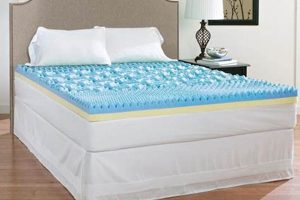
Addressing the challenge of extracting urine from viscoelastic polyurethane foam, commonly known as memory foam, requires a strategic approach due to the material’s absorbent nature. Prompt and effective intervention is crucial to minimize staining and odor retention. The process often involves a multi-step cleaning protocol incorporating absorbent materials, enzymatic cleaners, and thorough drying techniques.
Successfully mitigating urine contamination in a memory foam mattress provides several benefits. It prevents the proliferation of bacteria and mold, which can pose health risks. Furthermore, it eliminates unpleasant odors, contributing to a more hygienic and comfortable sleep environment. Historically, various methods have been employed, evolving from simple blotting techniques to the use of specialized cleaning agents and equipment.
The subsequent sections will detail specific procedures and recommended products for effectively cleansing a memory foam mattress following urine saturation. These instructions encompass immediate response protocols, stain removal methodologies, and preventative maintenance strategies designed to prolong the lifespan and cleanliness of the mattress.
Cleaning Strategies for Urine Contamination in Memory Foam Mattresses
The following guidelines provide practical strategies for addressing urine contamination in memory foam mattresses. Adherence to these protocols maximizes the likelihood of successful stain and odor removal while minimizing potential damage to the mattress material.
Tip 1: Immediate Action: Promptly address the spill. The longer urine remains in contact with the foam, the deeper it penetrates, making removal more difficult.
Tip 2: Absorbent Material Application: Utilize highly absorbent materials, such as paper towels or clean cloths, to blot the affected area. Apply firm, consistent pressure to draw out as much liquid as possible. Avoid rubbing, which can spread the stain.
Tip 3: Cold Water Flushing: Gently flush the stained area with cold water. This helps dilute the urine and facilitates its extraction. Avoid using hot water, as it can set the stain.
Tip 4: Enzymatic Cleaner Application: Apply an enzymatic cleaner specifically designed for urine removal. These cleaners contain enzymes that break down the uric acid crystals responsible for the persistent odor. Follow the product’s instructions carefully.
Tip 5: Baking Soda Treatment: Liberally apply baking soda to the treated area. Baking soda is a natural odor absorber and helps to draw out residual moisture. Allow it to sit for several hours, preferably overnight.
Tip 6: Vacuuming Residue: Thoroughly vacuum the baking soda residue from the mattress surface. Use a clean upholstery attachment to prevent recontamination.
Tip 7: Air Drying: Allow the mattress to air dry completely. This may take several days, depending on the ambient humidity. Ensure adequate ventilation to prevent mold growth.
Tip 8: Consider Professional Cleaning: For severe or persistent stains and odors, consider engaging a professional mattress cleaning service. These services possess specialized equipment and cleaning agents for optimal results.
By following these steps, the effective removal of urine stains and odors from memory foam mattresses is attainable, promoting a clean and hygienic sleep environment.
The subsequent section will address preventative measures to minimize future occurrences of urine contamination in mattresses.
1. Immediate blotting

Addressing urine contamination in memory foam mattresses begins with immediate blotting. This initial action significantly impacts the overall effectiveness of subsequent cleaning efforts, influencing the extent of stain penetration and odor retention.
- Minimizing Absorption
Prompt blotting reduces the volume of urine absorbed by the mattress. Memory foam’s open-cell structure allows rapid liquid penetration. The sooner blotting commences, the less urine diffuses into the deeper layers, simplifying later extraction processes.
- Preventing Deeper Stain Setting
Delayed blotting allows urine components to bind more strongly to the foam fibers. Uric acid crystals, responsible for persistent odors, form more readily as the urine dries. Immediate blotting disrupts this binding process, preventing the development of stubborn stains that are difficult to remove.
- Facilitating Subsequent Cleaning
By extracting a significant portion of the urine initially, immediate blotting improves the efficacy of cleaning agents. Enzymatic cleaners, for example, work more effectively on surfaces with reduced saturation. This pre-treatment maximizes the cleaner’s ability to break down odor-causing compounds.
- Reducing Mattress Degradation
Prolonged exposure to urine can contribute to the breakdown of memory foam. The acidic nature of urine can gradually degrade the foam’s structural integrity. Prompt removal minimizes this exposure, prolonging the mattress lifespan and preserving its original comfort properties.
The interconnectedness of these facets underscores the importance of immediate blotting. When enacted promptly, this action streamlines the entire urine removal process, enhancing the overall effectiveness of cleaning treatments and mitigating potential long-term damage to the mattress.
2. Enzyme cleaner

Enzymatic cleaners represent a crucial component in methodologies aimed at urine removal from memory foam mattresses due to their specific mechanism of action. Urine contains complex organic compounds, notably uric acid crystals, that adhere tenaciously to the foam’s structure, resulting in persistent odors. Traditional cleaning agents often fail to completely eliminate these compounds, merely masking the odor temporarily. Enzyme cleaners, however, contain enzymes that catalyze the breakdown of these uric acid crystals into simpler, odorless substances. For instance, protease enzymes degrade proteins, while urease enzymes break down urea, both prevalent constituents of urine. The successful application of enzymatic cleaners, therefore, fundamentally alters the chemical composition of the urine residue, ensuring lasting odor removal, which directly enhances the effectiveness of the overall cleaning process.
The practical significance of employing enzymatic cleaners in these scenarios is demonstrably evident in real-world applications. In situations where standard detergents have proven inadequate in removing urine odors from mattresses, enzymatic cleaners have frequently demonstrated superior efficacy. Consider a case involving a pet owner whose memory foam mattress was repeatedly soiled by a cat. Despite fr
equent washing with conventional cleaners, the urine odor persisted. However, after applying an enzymatic cleaner specifically formulated for pet urine, the odor was effectively eliminated, confirming the cleaner’s ability to target and neutralize the odor-causing components that other cleaning methods failed to address. This highlights the importance of selecting appropriate cleaning agents for urine removal from memory foam.
In summary, enzymatic cleaners represent a targeted solution for effectively removing urine from memory foam mattresses due to their ability to break down the complex organic compounds responsible for persistent odors. While prompt action and appropriate techniques are paramount, the use of enzymatic cleaners is a crucial factor in achieving long-lasting odor elimination. Challenges may arise in selecting the correct enzyme formulation for specific types of urine, however, understanding the fundamental principles of enzymatic action within the context of urine composition and mattress material properties is essential for successfully removing urine from memory foam.
3. Cold water only

The application of cold water, and specifically the avoidance of hot water, is a critical element in the procedure for urine removal from memory foam mattresses. The interaction between urine and heat exacerbates stain setting and odor retention, rendering subsequent cleaning efforts less effective. Urine contains proteins that coagulate when exposed to high temperatures. This coagulation process effectively bonds the proteins to the mattress fibers, creating a more stubborn stain that is significantly more challenging to remove. The use of cold water mitigates this risk, preventing the proteins from solidifying and adhering to the mattress material.
The practical significance of adhering to the “cold water only” principle can be illustrated through a comparative scenario. Consider two identical memory foam mattresses, both subjected to similar levels of urine contamination. The first mattress is treated with hot water in an attempt to clean it, while the second is treated with cold water. In the case of the mattress cleaned with hot water, the urine stain is likely to become more pronounced, and the associated odor may intensify due to the protein coagulation. Conversely, the mattress cleaned with cold water will exhibit a better response to cleaning agents, with a reduced likelihood of permanent staining and odor retention. This exemplifies the direct impact of water temperature on the outcome of the cleaning process.
In conclusion, the use of cold water is an essential step in urine removal from memory foam mattresses due to its preventative effect on protein coagulation and stain setting. While other cleaning agents and techniques play a crucial role, the initial application of cold water optimizes the effectiveness of these subsequent measures. Deviation from this principle can lead to more persistent stains and odors, complicating the cleaning process and potentially shortening the lifespan of the mattress.
4. Baking soda application
Baking soda application functions as a crucial component in procedures designed to eliminate urine from memory foam mattresses, primarily owing to its absorbent and deodorizing properties. When urine saturates memory foam, it leaves behind moisture and odor-causing compounds. Baking soda, a mild alkali, effectively neutralizes acidic urine components. This neutralization reduces the intensity of the odor and contributes to the overall sanitation of the mattress. Its granular structure provides a large surface area, facilitating the absorption of residual moisture that may remain deep within the foam even after initial blotting and cleaning.
The effectiveness of baking soda application can be observed in numerous practical scenarios. In instances where enzymatic cleaners have been employed to break down urine components, baking soda serves as a secondary agent, drawing out the decomposed matter and any remaining moisture. Consider a household with young children prone to bedwetting. After cleaning a urine-soaked mattress with an enzymatic cleaner, a generous layer of baking soda is applied and allowed to sit for several hours, or preferably overnight. The baking soda absorbs any lingering dampness and neutralizes residual odors that the cleaner may not have entirely eliminated. Upon vacuuming the baking soda, the mattress is noticeably fresher and drier compared to cleaning methods that omit this step. This integrated approach highlights the significance of baking soda in enhancing the effectiveness of overall urine removal efforts.
In summary, the application of baking soda is integral to a comprehensive urine removal strategy for memory foam mattresses. Its absorbent qualities address residual moisture, while its deodorizing properties neutralize persistent odors. While not a standalone solution, baking soda application supplements other cleaning agents, such as enzymatic cleaners, leading to a more thorough sanitization and odor removal. Understanding the interplay between its physical and chemical properties, and its contribution to the broader cleaning process is paramount for effective mattress maintenance.
5. Thorough drying

Thorough drying is a critical, non-negotiable phase in the process of urine removal from a memory foam mattress. Its direct connection to the overall success of the cleaning procedure stems from the material’s inherent properties. Memory foam, characterized by its open-cell structure, readily absorbs liquids. If moisture, especially urine or remnants thereof, remains trapped within these cells, it creates an environment conducive to microbial growth, specifically mold and mildew. These organisms not only generate unpleasant odors but also pose potential health risks, undermining the intended outcome of urine removal. Complete desiccation is, therefore, not merely desirable but fundamentally necessary to prevent secondary contamination.
Consider a scenario in which a memory foam mattress undergoes meticulous cleaning following urine saturation, involving blotting, enzymatic treatment, and baking soda application. If, however, the mattress is not allowed to dry completely, the remaining moisture provides a breeding ground for microorganisms. Within a short period, a musty odor will likely emanate from the mattress, indicating microbial activity. Furthermore, prolonged exposure to moisture can degrade the foam’s structural integrity, leading to premature wear and tear. In contrast, a mattress that undergoes the same cleaning procedure followed by thorough drying, achieved through a combination of air circulation, dehumidification, or even low-heat application, is far less susceptible to these issues. This highlights the practical significance of ensuring complete moisture removal to safeguard the mattress and maintain a hygienic sleep environment.
In conclusion, thorough drying is inextricably linked to the efficacy of urine removal from memory foam mattresses. It directly impacts the prevention of microbial growth, odor elimination, and the preservation of the mattress’s structural integrity. While effective cleaning agents and techniques are essential, the final drying stage serves as the definitive safeguard against t
he long-term consequences of urine contamination. Inadequate drying renders all prior cleaning efforts futile, underscoring the absolute necessity of ensuring complete desiccation. This step presents challenges in humid environments or with thicker mattresses, but overcoming them is paramount to a successful and lasting outcome.
6. Vacuuming residue

The process of removing urine from a memory foam mattress invariably involves the application of absorbent materials, such as baking soda or specialized cleaning powders, to draw out residual moisture and neutralize odors. While these materials serve a crucial function, their removal is equally important to prevent further complications. Vacuuming the residue, therefore, represents a critical step in the overall cleaning process. Failure to adequately remove these remnants can lead to a variety of issues, including skin irritation, dust mite proliferation, and the creation of a breeding ground for bacteria. The connection is straightforward: the absorbent materials work to mitigate the urine’s effects, but their subsequent removal is essential to finalize the cleaning process and prevent unintended consequences.
The practical significance of vacuuming residue is evident in scenarios where this step is omitted or performed inadequately. Consider a situation where baking soda is applied to a urine-soaked mattress and left for an extended period. While the baking soda may successfully absorb moisture and reduce odor, the remaining powder can become a food source for dust mites. Furthermore, individuals with sensitive skin may experience irritation upon contact with the residual baking soda. Proper vacuuming, using a suitable upholstery attachment, ensures the thorough removal of these irritants and potential allergens. Moreover, vacuuming aids in restoring the mattress’s surface texture and preventing the clumping or hardening of the remaining powder, which can compromise the mattress’s comfort.
In conclusion, vacuuming residue is not merely a final touch but an integral step in effectively removing urine from a memory foam mattress. It directly addresses the potential for secondary complications arising from the absorbent materials used in the cleaning process. While the application of these materials serves to mitigate the initial urine contamination, their complete removal via vacuuming is essential for ensuring a clean, hygienic, and comfortable sleep environment. This step, though often overlooked, plays a vital role in preventing skin irritation, controlling dust mite populations, and preserving the mattress’s overall condition.
7. Professional cleaning
Professional cleaning services represent a specialized intervention within the broader process of urine removal from memory foam mattresses. These services employ advanced equipment and specialized cleaning agents unavailable for general consumer use. The efficacy of professional cleaning is often contingent upon the severity and duration of the urine contamination. In cases of extensive saturation or deeply embedded stains, where DIY methods prove insufficient, professional intervention becomes a critical determinant in achieving complete stain and odor elimination. These services also offer expertise in identifying and addressing potential secondary issues, such as mold or mildew growth, which may accompany prolonged urine exposure.
The practical significance of professional cleaning is demonstrated in scenarios involving elderly individuals or young children, where frequent accidents can lead to chronic mattress contamination. In such situations, the accumulation of urine over time can create a highly unsanitary environment, posing health risks and necessitating a more comprehensive cleaning approach than can be achieved through standard household methods. Professional services utilize extraction equipment to remove deeply embedded urine, followed by specialized sanitizing agents to neutralize odors and eliminate bacteria. This level of intervention is particularly valuable in cases where individuals have allergies or respiratory sensitivities, as it ensures a thorough and hypoallergenic cleaning outcome.
In summary, while DIY methods can be effective for addressing minor urine contamination, professional cleaning offers a specialized solution for severe or persistent cases. The utilization of advanced equipment, specialized cleaning agents, and expert knowledge allows for a more thorough and effective cleaning outcome. The cost of professional cleaning should be weighed against the potential health risks and long-term damage associated with inadequate urine removal, making it a justifiable investment in maintaining a clean and healthy sleep environment. The challenges often lie in identifying reputable and qualified cleaning services and assessing the true extent of the mattress contamination to determine the necessity of professional intervention.
Frequently Asked Questions
The following questions and answers address common concerns and misconceptions regarding the proper procedures for removing urine from memory foam mattresses. Adherence to these guidelines can maximize the effectiveness of cleaning efforts and preserve the lifespan of the mattress.
Question 1: Does the age of the urine stain impact the cleaning process?
Yes, the age of the urine stain significantly impacts the difficulty of removal. Fresh stains are generally easier to address, as the urine has not had sufficient time to deeply penetrate the foam or chemically bond to the material. Older stains, conversely, require more aggressive cleaning methods and may prove impossible to completely remove.
Question 2: Are all enzymatic cleaners equally effective?
No, the effectiveness of enzymatic cleaners varies depending on the specific enzymes present and the concentration of those enzymes. Select a cleaner specifically formulated for urine removal and carefully follow the manufacturer’s instructions. Products designed for pet urine may be more effective due to the higher concentration of urea and ammonia.
Question 3: Is it safe to use bleach on a memory foam mattress to remove urine?
The use of bleach on a memory foam mattress is strongly discouraged. Bleach can damage the foam’s cellular structure, causing it to break down and lose its supportive properties. Furthermore, bleach can react with urine to produce hazardous gases. Safer alternatives, such as enzymatic cleaners, are recommended.
Question 4: How long should baking soda remain on the mattress after urine cleaning?
Baking soda should remain on the mattress for a minimum of several hours, ideally overnight. This allows sufficient time for the baking soda to absorb residual moisture and neutralize odors. A longer dwell time generally results in more effective odor removal.
Question 5: Can a wet/dry vacuum be used to extract urine from a memory foam mattress?
A wet/dry vacuum can be used to extract urine, but caution must be exercised. Avoid over-saturating the mattress with water during the cleaning process, as this can lead to mold growth. Ensure the vacuum is thoroughly cleaned and sanitized after use to prevent the spread of bacteria.
Question 6: How can future urine stains on a memory foam mattress be prevented?
Preventative measures include u
sing a waterproof mattress protector, addressing spills immediately, and limiting fluid consumption before bedtime. For individuals prone to incontinence, specialized bedding designed for moisture control can provide an added layer of protection.
These FAQs offer valuable insights into the complexities of urine removal from memory foam mattresses. Implementing these best practices can contribute to a cleaner and healthier sleep environment.
The subsequent section will delve into the cost considerations associated with both DIY and professional urine removal methods.
How to Remove Urine From Memory Foam Mattress
This document has explored various facets associated with how to remove urine from memory foam mattress. Key strategies have been presented, encompassing immediate action, appropriate cleaning agents, and thorough drying techniques. The importance of each step, from prompt blotting to the application of enzymatic cleaners and the effective use of baking soda, has been detailed. Adherence to these protocols enhances the likelihood of successful stain and odor elimination.
Effectively addressing urine contamination in memory foam mattresses requires diligent application of the methods outlined. Prioritization of proper techniques, coupled with timely intervention, significantly impacts the longevity and hygiene of the mattress. Continual vigilance and proactive preventative measures are critical for maintaining a healthy sleep environment.
![Best Memory Foam vs Hybrid Mattress [Guide 2024] | Organic & Natural Mattress Buyer’s Guide: Non-Toxic Sleep Solutions](https://mattressworldpa.com/wp-content/uploads/2025/07/th-4088-300x200.jpg "Best Memory Foam vs Hybrid Mattress [Guide 2024] Organic & Natural Mattress Buyer’s Guide: Non-Toxic Sleep Solutions")
![Best Soft Memory Foam Mattress [Guide & Review] | Organic & Natural Mattress Buyer’s Guide: Non-Toxic Sleep Solutions](https://mattressworldpa.com/wp-content/uploads/2025/07/th-4086-300x200.jpg "Best Soft Memory Foam Mattress [Guide & Review] Organic & Natural Mattress Buyer’s Guide: Non-Toxic Sleep Solutions")
![Best Twin Memory Foam Mattress [Comfort & Value] | Organic & Natural Mattress Buyer’s Guide: Non-Toxic Sleep Solutions](https://mattressworldpa.com/wp-content/uploads/2025/07/th-4085-300x200.jpg "Best Twin Memory Foam Mattress [Comfort & Value] Organic & Natural Mattress Buyer’s Guide: Non-Toxic Sleep Solutions")