A comparison between two distinct mattress constructions reveals key differences in their composition and resultant characteristics. One features a combination of materials, often including both coils and foam layers like memory foam or latex, to offer a multifaceted sleep experience. The other relies primarily on a network of metal springs as its core support system, often accompanied by comfort layers consisting of materials such as cotton or fiber.
Understanding the distinctions between these mattress types is crucial for consumers seeking optimal sleep solutions. The blend of materials in one construction can provide a balance of support and pressure relief, potentially catering to a broader range of sleep preferences and body types. Historically, the reliance on spring systems offered a cost-effective and widely available option, but evolving material technologies have led to the development of more diverse and potentially enhanced sleeping surfaces.
The following sections will delve into specific aspects of each construction, examining factors such as support, comfort, motion isolation, temperature regulation, and durability. This comprehensive analysis will empower individuals to make informed decisions aligned with their personal requirements and desired sleep quality.
Guidance on Mattress Selection
This section offers practical considerations when evaluating different mattress constructions. A thoughtful approach to mattress selection can significantly impact sleep quality and overall well-being.
Tip 1: Assess Individual Sleep Needs: Determine specific requirements based on sleeping position, body weight, and any existing physical conditions such as back pain. Different constructions may be more suitable for side, back, or stomach sleepers.
Tip 2: Evaluate Support and Spinal Alignment: Proper spinal alignment is crucial for preventing discomfort and promoting restful sleep. Consider the level of support offered by the mattress core, whether it be coils or a combination of materials.
Tip 3: Consider Comfort Layer Preferences: Comfort layers significantly influence the initial feel of a mattress. Explore materials such as memory foam, latex, or quilted fabrics to determine preferred levels of contouring and pressure relief.
Tip 4: Investigate Motion Isolation Properties: If sharing a bed, motion isolation can minimize sleep disturbances caused by a partner’s movements. Mattresses with individually wrapped coils or dense foam layers often excel in this area.
Tip 5: Research Temperature Regulation Capabilities: Overheating can disrupt sleep. Look for mattresses with breathable materials, such as open-cell foam or coil systems that allow for airflow.
Tip 6: Consider Durability and Longevity: Mattress lifespan varies depending on construction and materials. Research the expected lifespan of different models and consider warranties offered by manufacturers.
Tip 7: Review Consumer Reports and Ratings: Independent reviews can provide valuable insights into mattress performance and customer satisfaction. Consult reputable sources to gain a comprehensive understanding of available options.
Careful consideration of these factors, tailored to individual preferences and needs, will significantly enhance the likelihood of selecting a mattress that promotes optimal sleep. Ultimately, a well-informed decision contributes to improved rest and overall quality of life.
The subsequent sections will provide further insights into specific mattress features, allowing for a more granular comparison of their suitability.
1. Material Composition

The fundamental distinction between the two rests in the materials used. An innerspring mattress traditionally consists of a coil support core, often Bonnell or pocketed coils, and a comfort layer composed of materials such as cotton, polyester fiber, or thin layers of low-density foam. The coil system provides the primary support, while the comfort layers offer a degree of cushioning. In contrast, a hybrid construction integrates a coil support core with significant layers of foam, such as memory foam or latex, intended to provide enhanced pressure relief and contouring. The combination seeks to capitalize on the responsiveness of coils and the conforming properties of advanced foam materials.
The material composition directly influences performance characteristics. For instance, a construction incorporating high-density memory foam offers superior pressure relief compared to an innerspring relying solely on fiber batting. The layered approach allows for a greater degree of customization in terms of firmness and feel, addressing a broader range of individual preferences. Moreover, the type of coil system also contributes to material properties. Pocketed coils, individually wrapped in fabric, minimize motion transfer more effectively than interconnected Bonnell coils, affecting sleep quality for co-sleepers.
Understanding the material composition is paramount for informed purchasing decisions. The proportion and quality of different materials dictate the durability, support, and comfort offered. For example, a hybrid with a thin, low-density foam comfort layer might degrade quickly, negating the benefits of the coil support. Therefore, careful evaluation of the types and quality of materials is essential to ensure long-term satisfaction and value. The complexity of material combinations within the hybrid category presents both opportunity and challenge, underscoring the importance of detailed product specifications and customer reviews.
2. Support Structure

The support structure is a critical differentiator, profoundly influencing a mattress’s ability to maintain spinal alignment and distribute weight. The core support system fundamentally defines the overall feel and long-term durability. The following points detail significant facets of support structure in comparing two types of mattresses.
- Coil Type and Configuration
In innerspring mattresses, the coil system often consists of interconnected Bonnell coils or continuous coils, providing a uniform but potentially less conforming support. Hybrid mattresses frequently employ pocketed coils, where each coil is individually wrapped, allowing for more independent movement and targeted support. The choice of coil type significantly impacts motion isolation and the mattress’s ability to adapt to varying body contours.
- Gauge and Coil Density
Coil gauge, a measure of wire thickness, and coil density, the number of coils per unit area, both contribute to the firmness and support level. Lower gauge (thicker) coils generally provide firmer support, while higher coil density can enhance contouring and durability. Innerspring mattresses may offer a range of coil gauges, but hybrid models often leverage varied coil densities within different zones to optimize support for specific areas of the body.
- Edge Support Systems
Edge support prevents mattress sagging around the perimeter, providing a stable surface for sitting or sleeping near the edge. Innerspring models sometimes incorporate reinforced edge coils or foam encasements to improve edge support. Hybrid designs often integrate more robust edge support systems, utilizing high-density foam rails to create a consistent and supportive sleep surface across the entire mattress.
- Zoning and Targeted Support
Advanced hybrid mattresses often feature zoned support systems, where different sections of the mattress are engineered with varying coil gauges or foam densities to provide targeted support to different areas of the body. For example, firmer coils may be placed in the lumbar region to provide additional support for the lower back. This level of customization is less common in traditional innerspring mattresses, which typically offer a more uniform support structure.
The support structure is a key determinant of a mattress’s performance. The choice between them should be guided by individual preferences for firmness, support, and motion isolation. The integration of advanced coil systems and targeted support zones in certain models reflects a design emphasis on personalized comfort and enhanced spinal alignment, potentially offering a more sophisticated sleep experience than conventional coil-based options.
3. Comfort Layering

The configuration of comfort layers represents a primary distinction between an innerspring and a hybrid mattress. Comfort layers, situated atop the support core, directly influence the initial feel and pressure relief characteristics of the sleep surface. In innerspring models, these layers are typically composed of materials such as fiberfill, convoluted foam, or thin layers of low-density polyurethane foam. The objective is to provide a degree of cushioning over the coil system. However, the relatively thin and less dense nature of these materials often results in limited contouring and pressure relief compared to alternative constructions.
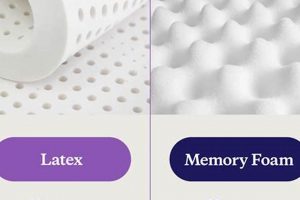
Hybrid mattresses, conversely, incorporate substantially thicker and more sophisticated comfort layers. Materials such as memory foam, latex foam, or gel-infused foam are commonly utilized. These materials are selected for their enhanced ability to conform to the body’s contours, distributing weight more evenly and alleviating pressure points. For example, a hybrid mattress featuring a memory foam comfort layer can mold to the sleeper’s body shape, reducing pressure on the shoulders and hips, particularly beneficial for side sleepers. Latex comfort layers, offer a responsive and buoyant feel, while also providing pressure relief and breathability. The specific composition of the comfort layers within a hybrid mattress can significantly alter its overall feel and suitability for different sleep preferences. The depth, density, and type of foam employed all contribute to the mattress’s pressure relief capabilities, motion isolation properties, and temperature regulation.
Understanding the role and composition of comfort layers is crucial in evaluating mattress performance. The selection of materials and their arrangement within the comfort layer structure directly impact the sleeping experience. The type of foam in hybrids results in enhanced motion isolation, improved pressure relief, and increased temperature regulation, which could be a great option to improve sleeping experience. The ability of the mattress to adapt to individual needs and preferences depends significantly on the design and materials used in the comfort layers. Therefore, careful consideration of these aspects is essential when comparing a hybrid against an innerspring model.
4. Motion Isolation

Motion isolation refers to a mattress’s ability to minimize the transfer of movement from one area of the surface to another. This attribute is particularly relevant for couples sharing a bed, as it reduces disturbances caused by one partner’s tossing, turning, or getting in and out of bed. In the context of two types of mattresses, significant differences exist in their motion isolation capabilities, stemming from their respective construction methodologies. Innerspring mattresses, especially those utilizing interconnected coils, tend to exhibit greater motion transfer due to the linked nature of the spring system. When one coil is compressed, the adjacent coils are also affected, resulting in a ripple effect across the mattress surface. The practical consequence is that movement on one side of the bed is readily felt on the other side, potentially disrupting the sleep of a partner.
Hybrid mattresses, by incorporating individually wrapped (pocketed) coils and substantial layers of memory foam or latex, offer improved motion isolation. The pocketed coils operate independently, minimizing the spread of movement. The dense foam layers further absorb and dampen motion, preventing it from traveling across the mattress. A real-world example illustrates this: a light sleeper sharing a bed with a restless sleeper is more likely to experience uninterrupted sleep on a hybrid mattress with good motion isolation compared to a traditional innerspring. The superior motion isolation characteristic of hybrid mattresses has implications for overall sleep quality and relationship harmony.
Understanding the relationship between mattress construction and motion isolation is paramount for consumers prioritizing undisturbed sleep. While innerspring mattresses may offer other advantages such as affordability and breathability, they generally fall short in providing effective motion isolation. The layered construction of hybrids addresses this limitation, often at a higher price point. The choice between these mattress types, therefore, involves a trade-off between cost, features, and the importance placed on minimizing sleep disturbances. The practical understanding of these attributes empowers consumers to make informed decisions aligned with their individual sleep needs and co-sleeping arrangements.
5. Temperature Regulation

Temperature regulation in mattresses is a critical factor influencing sleep comfort. The ability of a mattress to dissipate heat and maintain a neutral sleeping temperature significantly impacts the quality of rest. The composition and construction differences inherent to “hybrid mattress vs innerspring” models directly affect their respective temperature regulation capabilities.
- Innerspring Mattress Airflow
Innerspring mattresses typically offer inherent advantages in airflow due to the open structure of their coil systems. The spaces between the coils facilitate the circulation of air, promoting heat dissipation. This characteristic can be beneficial for individuals who tend to sleep hot. However, the comfort layers in an innerspring model, if composed of dense materials, can impede airflow and negate some of this advantage. Example: An innerspring with a thin cotton comfort layer will generally sleep cooler than one with a thick layer of synthetic foam.
- Hybrid Mattress Material Selection
Hybrid mattresses, combining coils with foam layers like memory foam or latex, present a more complex scenario. Memory foam, known for its conforming properties, can also trap heat due to its density and limited airflow. Manufacturers often address this issue by incorporating open-cell memory foam or gel infusions, designed to improve breathability. Latex, particularly Dunlop latex, generally exhibits better airflow than traditional memory foam. Example: A hybrid mattress with open-cell memory foam and a breathable cover will likely regulate temperature more effectively than one with conventional memory foam.
- Cover Material Influence
The mattress cover material plays a significant role in temperature regulation, irrespective of the internal construction. Breathable fabrics such as cotton, Tencel, or bamboo allow for better airflow and moisture wicking, contributing to a cooler sleep surface. Conversely, synthetic fabrics can restrict airflow and trap heat. Example: Both innerspring and hybrid mattresses benefit from covers made of breathable materials to enhance temperature regulation.
- Impact of Mattress Height and Density
Mattress height and overall density can influence temperature regulation. Thicker mattresses, particularly those with dense foam layers, may retain more heat. Similarly, high-density foams impede airflow compared to lower-density options. Example: A high-profile hybrid mattress with multiple layers of dense memory foam may sleep warmer than a thinner innerspring mattress with minimal comfort layers.
In summary, while innerspring mattresses often possess inherent advantages in airflow, the temperature regulation of both mattress types is heavily influenced by material selection and construction details. Hybrid mattresses can achieve comparable or superior temperature regulation through the incorporation of breathable materials, open-cell foams, and optimized cover designs. Understanding these nuances is crucial for consumers seeking a sleep surface that promotes thermal comfort.
6. Durability/Longevity
The lifespan of a mattress, directly impacting its long-term value proposition, is intrinsically linked to its construction and the quality of materials employed. When comparing innerspring and hybrid models, several factors contribute to their respective durability and longevity. Innerspring mattresses, traditionally relying on coil systems as their primary support structure, can exhibit wear and tear over time. The coils themselves may lose their tension, leading to sagging and a decline in support. The comfort layers, often composed of less resilient materials such as fiberfill or low-density foam, can compress and degrade, further diminishing the mattress’s overall lifespan. The resulting loss of support and comfort can necessitate replacement sooner than desired. The long-term performance of innerspring models hinges on the gauge and temper of the coils, as well as the density and quality of the comfort layer materials. A poorly constructed innerspring is prone to developing indentations and losing its shape, shortening its lifespan and compromising sleep quality.
Hybrid mattresses, while often commanding a higher initial investment, can potentially offer greater durability due to their combination of materials. The inclusion of high-density memory foam or latex in the comfort layers contributes to enhanced resilience and resistance to compression. The pocketed coil systems commonly found in hybrid models distribute weight more evenly, reducing stress on individual coils and minimizing the risk of sagging. However, the durability of a hybrid mattress is contingent on the quality of all its components. Low-quality foams or poorly constructed coil systems can negate the benefits of the hybrid design, leading to premature wear. Real-world examples demonstrate that hybrids with high-density foam and robust coil systems often maintain their shape and support for longer periods compared to innerspring models. A well-maintained hybrid mattress can provide consistent comfort and support for several years, justifying the initial expense.
Ultimately, the longevity of either mattress type depends on factors such as material quality, construction techniques, and usage patterns. While hybrid mattresses may offer inherent advantages in durability, careful evaluation of material specifications and construction details is essential. Regular rotation and proper support can prolong the lifespan of any mattress. The decision between an innerspring and a hybrid should consider not only initial cost but also the anticipated lifespan and long-term performance characteristics. A thorough understanding of these factors enables informed decision-making, maximizing the value and ensuring sustained sleep comfort over time.
Frequently Asked Questions
This section addresses common inquiries regarding the distinctions between hybrid and innerspring mattresses, providing clarity and factual information.
Question 1: What defines a hybrid mattress, and how does it differ from a standard innerspring?
A hybrid mattress combines a coil support core, similar to that found in innerspring models, with substantial comfort layers composed of materials such as memory foam or latex. Standard innerspring mattresses primarily utilize a coil system for support, with thinner comfort layers consisting of materials like fiberfill or quilted fabric.
Question 2: Which mattress type offers superior support for spinal alignment?
Hybrid mattresses, particularly those featuring pocketed coils and zoned support, can offer enhanced spinal alignment due to their ability to conform to the body’s contours and provide targeted support to different areas of the spine. Innerspring models, while providing a degree of support, may not offer the same level of contouring or individualized support.
Question 3: Are hybrid mattresses inherently better at isolating motion than innerspring models?
Yes, hybrid mattresses generally exhibit superior motion isolation properties. The combination of individually wrapped coils and dense foam layers minimizes the transfer of movement across the mattress surface. Innerspring mattresses, especially those with interconnected coils, tend to exhibit greater motion transfer.
Question 4: Which type of mattress is more suitable for individuals who tend to sleep hot?
The suitability of either mattress type depends on specific material choices and construction details. Innerspring mattresses often offer inherent airflow due to the open structure of their coil systems. Hybrid mattresses can also achieve effective temperature regulation through the use of breathable foams, gel infusions, and optimized cover materials.
Question 5: What is the typical lifespan of a hybrid mattress compared to an innerspring mattress?
The lifespan of a mattress depends on several factors, including material quality and usage patterns. Hybrid mattresses, with their combination of durable coils and resilient comfort layers, may potentially offer a longer lifespan compared to traditional innerspring models. However, the longevity of either type is contingent on the quality of the materials used.
Question 6: Are hybrid mattresses significantly more expensive than innerspring mattresses?
Hybrid mattresses typically command a higher initial investment compared to innerspring models. This price difference reflects the use of more advanced materials and construction techniques. However, the long-term value proposition should consider factors such as durability and potential improvements in sleep quality.
This information provides a foundational understanding of the key differences between hybrid and innerspring mattresses, empowering informed decision-making.
The subsequent section will explore specific considerations for choosing the optimal mattress based on individual needs and preferences.
Concluding Considerations
The preceding exploration of the key attributes defining hybrid mattress vs innerspring constructions reveals substantive differences. Material composition, support structure, motion isolation, temperature regulation, and durability all present differentiating factors impacting overall performance. Ultimately, the choice hinges upon individual requirements and prioritization of specific features. A thorough assessment of sleeping preferences, budgetary constraints, and long-term expectations remains paramount.
The landscape of sleep technology continues to evolve, with ongoing innovations in materials and construction techniques. Continued research and diligent evaluation of available options will be essential for informed consumer decision-making in pursuit of optimal sleep health. A thoughtful investment in a well-suited mattress represents a commitment to long-term well-being.