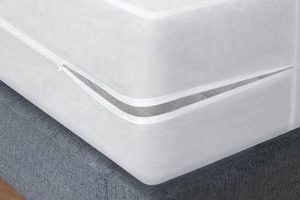
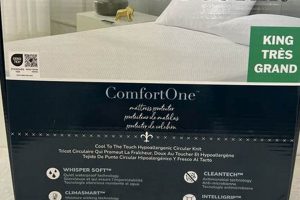
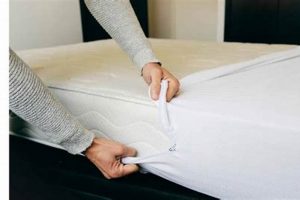
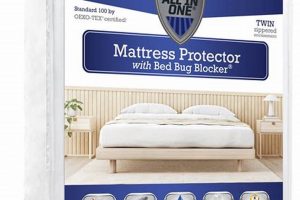
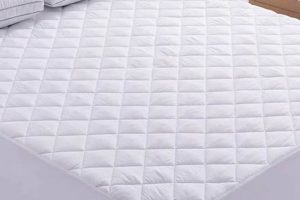
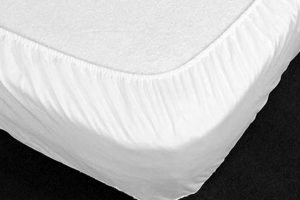
A fitted or encasement product designed to shield a baby’s sleeping surface from fluids, allergens, dust mites, and other potential contaminants. This protective layer typically fits snugly over the crib mattress, underneath the fitted sheet. Its function is to preserve the integrity and hygiene of the mattress core, contributing to a cleaner and healthier sleep environment for the infant.
The implementation of a barrier on a crib mattress offers significant advantages. It prolongs the lifespan of the mattress by preventing stains and damage from spills and accidents. Furthermore, it creates a barrier against common allergens, potentially reducing the risk of allergic reactions in sensitive infants. Historically, these protective measures were less common, with mattresses more susceptible to wear and tear and offering less defense against allergens and bacteria. Modern versions utilize advanced materials and construction techniques for enhanced protection and comfort.
The subsequent sections will delve into the material composition of these items, explore various types available on the market, and outline key considerations for selecting the appropriate style for optimal performance and safety within the nursery.
Essential Guidance
The following recommendations aim to provide clarity and direction in selecting and maintaining a sleeping surface defense, ensuring the health and safety of the infant.
Tip 1: Material Selection is Paramount: Prioritize materials certified as hypoallergenic and free from harmful chemicals such as phthalates and lead. Look for certifications like OEKO-TEX Standard 100, which verifies the absence of harmful substances.
Tip 2: Waterproofing is Critical: Opt for a reliably waterproof layer. This prevents liquids from penetrating the mattress, minimizing the risk of bacterial growth and unpleasant odors. Test the waterproofing by pouring a small amount of water onto the surface and observing its absorption.
Tip 3: Breathability Matters: Choose an option that offers adequate breathability to regulate the infant’s body temperature and reduce the risk of overheating. Materials like cotton or bamboo blends can enhance airflow.
Tip 4: Secure Fit is Non-Negotiable: Ensure the item fits snugly and securely on the mattress. A loose or ill-fitting one presents a suffocation hazard. Adherence to standard crib mattress dimensions is essential.
Tip 5: Regular Cleaning is Essential: Establish a routine for cleaning the layer. Follow the manufacturer’s instructions meticulously. Regular washing removes allergens and bacteria, maintaining a hygienic sleep environment.
Tip 6: Consider Encasement Options: Encasement styles offer comprehensive protection, covering all six sides of the mattress. This provides an additional barrier against dust mites, allergens, and bed bugs.
Tip 7: Evaluate Seam Construction: Inspect the seams for durability and water resistance. Reinforced seams prevent leaks and extend the lifespan of the item.
Adherence to these guidelines promotes a cleaner, safer, and healthier sleep environment for the infant, minimizing the risks associated with allergens, bacteria, and potential hazards.
The subsequent section will address common misconceptions and concerns related to the utilization of these safety enhancements, providing evidence-based clarifications.
1. Waterproof Barrier

The waterproof barrier represents a fundamental component of an effective protective layer for a baby’s sleeping surface. The function of a mattress encasement is predicated on its capacity to prevent liquids from penetrating the mattress core. Without a robust liquid-impermeable layer, the underlying mattress becomes vulnerable to urine, saliva, spills, and other fluids common in infant care. This exposure can foster the growth of bacteria, mold, and mildew within the mattress, creating an unsanitary sleep environment and potentially compromising the infant’s health. The waterproof characteristic is not merely an added benefit, but a core requirement for hygiene and longevity.
Consider the scenario of an infant experiencing nighttime accidents. A mattress without a waterproof barrier would absorb the urine, leading to persistent odors and potential staining. Over time, the accumulated moisture would degrade the mattress fibers, shortening its lifespan and necessitating premature replacement. In contrast, a mattress encasement effectively blocks the urine, allowing it to be easily wiped clean from the surface. This simple act of prevention significantly extends the lifespan of the mattress and reduces the risk of bacterial contamination. Modern waterproof barriers utilize materials like polyurethane film laminated to a fabric backing, offering a balance of waterproofing and breathability. Older methods, such as simple plastic sheeting, often lacked breathability, leading to discomfort and potential overheating.
In summation, the waterproof barrier is not just a feature of a protective layer but is its defining characteristic. Its presence directly affects the hygiene, longevity, and overall safety of the infant’s sleep environment. Selecting a protector with a reliable and well-constructed waterproof barrier is thus paramount. Future development of this kind of material will possibly explore sustainable and biodegradable waterproof material. The absence of this functionality undermines the entire purpose of utilizing a mattress protector.
2. Hypoallergenic Materials

The implementation of hypoallergenic materials in construction directly addresses a significant concern in infant care: minimizing exposure to potential allergens. Infants, possessing developing immune systems, are particularly susceptible to allergic reactions triggered by substances commonly found in bedding, such as dust mites, pet dander, and synthetic fibers. The selection of a product crafted from hypoallergenic materials mitigates this risk by creating a barrier against these allergens, thereby reducing the likelihood of allergic responses in the infant. These materials, often characterized by their tightly woven structure and inherent resistance to allergen accumulation, include organic cotton, bamboo rayon, and certain types of microfiber. For example, a mattress encasement fabricated from tightly woven organic cotton prevents dust mites from penetrating the mattress core, thus eliminating a primary allergen source. The direct consequence is a decreased probability of the infant experiencing allergic symptoms such as skin rashes, respiratory distress, or nasal congestion.
Further considerations include the manufacturing processes employed in the production of these materials. Hypoallergenic materials are often processed without the use of harsh chemicals or dyes, which themselves can act as irritants or allergens. This careful manufacturing approach further reduces the potential for allergic reactions. Clinically, studies have demonstrated a correlation between the use of bedding made from hypoallergenic materials and a reduction in allergy symptoms among infants and young children. From a practical standpoint, the selection of a product fabricated from these materials offers a proactive measure in managing potential allergen exposure, promoting a healthier sleep environment. This proactive approach can have a notable impact on the infant’s overall well-being, improving sleep quality and reducing the frequency of allergy-related health issues.
In summation, the integration of hypoallergenic materials is not merely an optional feature but a critical design element that directly impacts the infant’s health. By effectively minimizing allergen exposure, these materials contribute to a safer, cleaner, and more comfortable sleep environment, fostering the infant’s well-being. Challenges remain in consistently certifying and labeling materials as truly hypoallergenic, necessitating diligent research and informed consumer choices. This proactive approach is a valuable tool in managing and minimizing allergen exposure.
3. Breathable Fabric
The incorporation of breathable fabric in the construction of a crib mattress barrier directly influences the infant’s sleep environment by regulating temperature and moisture levels. A non-breathable material traps heat and humidity, potentially leading to overheating and discomfort. This can disrupt the infant’s sleep patterns and, in extreme cases, contribute to an increased risk of Sudden Infant Death Syndrome (SIDS), according to pediatric health organizations. Breathable fabrics, characterized by their porous structure, facilitate air circulation, allowing heat and moisture to dissipate from the sleeping surface. For instance, cotton, bamboo, and certain microfibers are commonly used for their breathability properties. These materials allow for efficient moisture transport, reducing the likelihood of the infant becoming damp and uncomfortable during sleep. The practical consequence of employing breathable fabric is a more stable and comfortable sleep environment, promoting restful sleep and potentially mitigating overheating risks.
Furthermore, the breathability of the fabric directly impacts the prevention of mold and mildew growth within the mattress. A non-breathable surface traps moisture, creating a conducive environment for microbial proliferation. In contrast, breathable fabrics allow moisture to evaporate, inhibiting the growth of these harmful organisms. A practical example is a side-by-side comparison of two crib mattresses, one with a breathable cotton cover and another with a non-breathable vinyl cover, after prolonged use. The vinyl-covered mattress is more likely to exhibit signs of mold or mildew due to trapped moisture, while the cotton-covered mattress remains drier and less susceptible to microbial growth. The application of breathable fabric, therefore, serves a preventative function, safeguarding the infant’s health by minimizing the risk of exposure to harmful microorganisms.
In conclusion, the utilization of breathable fabric in mattress products is not merely a comfort consideration but a crucial safety feature. It regulates temperature, manages moisture, and inhibits microbial growth, contributing to a healthier and safer sleep environment for the infant. Challenges exist in accurately quantifying breathability levels and ensuring consistent performance across different fabrics and product designs. The importance of this factor reinforces the necessity for informed purchasing decisions, prioritizing infant safety and well-being above all else.
4. Secure Fitting
Secure fitting is a paramount characteristic in the design and selection of a mattress encasement. The primary connection lies in preventing hazardous scenarios. A protector that does not fit snugly to the crib mattress can create loose fabric, posing a suffocation risk to the infant. Loose material can bunch up, wrinkle, or detach, potentially obstructing the infant’s airway during sleep. This direct cause-and-effect relationship underscores the critical importance of a secure fit. The consequence of a poorly fitted product can be life-threatening, making the dimension and design of the protector a vital safety consideration. Standard crib mattress sizes exist to promote consistent fitting, but variations necessitate careful measurement and product selection.
Real-life examples highlight the dangers of ill-fitting mattress barriers. Consumer Product Safety Commission (CPSC) reports detail incidents where infants have become entangled in loose bedding, including improperly sized protectors. To mitigate this risk, regulatory standards mandate tight-fitting designs that adhere to specific dimensional requirements. Furthermore, a secure fit contributes to the functional efficacy of the encasement. A snugly fitted barrier remains in place, providing consistent protection against fluids, allergens, and dust mites. Shifting or bunching not only creates a safety hazard but also compromises the protector’s ability to shield the mattress from contaminants, diminishing its intended benefit.
In conclusion, a secure fit is not merely a desirable attribute but a non-negotiable safety requirement. It prevents suffocation hazards, ensures consistent protection, and promotes compliance with safety regulations. Challenges persist in maintaining consistent manufacturing standards and educating consumers about the importance of precise fitting. This understanding is crucial for ensuring the infant’s safety and maximizing the effectiveness of the mattress barrier. Ignoring secure fit considerations exposes infants to preventable risks, negating the intended benefits of a protective mattress layer.
5. Washable Design
The incorporation of a washable design into an infant mattress protector directly correlates with maintaining hygiene and mitigating health risks. Infant mattresses are routinely exposed to bodily fluids, including urine, saliva, and regurgitation. The consequence of not being able to effectively clean these spills is the proliferation of bacteria, mold, and allergens within the mattress. This creates an unsanitary sleep environment, potentially leading to skin irritation, respiratory issues, and other health complications for the infant. A washable protector enables the removal of these contaminants through routine laundering, thereby minimizing the risk of microbial growth and allergen accumulation. The ability to machine wash and dry the protector is a practical necessity, not merely a convenience, in the context of infant care.
Consider the practical application: an infant experiences a nighttime accident. A non-washable protector would require extensive spot cleaning, which may not fully eliminate the contaminants or prevent them from seeping into the mattress core. Over time, this would lead to the buildup of bacteria and odors. A washable design allows for immediate removal and laundering of the protector, ensuring thorough cleaning and preventing the long-term accumulation of harmful substances. The design should facilitate easy removal and re-application to the mattress, considering the frequency with which laundering may be required. Furthermore, the washability extends the lifespan of the protector itself, preventing the need for frequent replacements due to staining or degradation from inadequate cleaning methods. Durability through repeated wash cycles is therefore a key consideration.
In conclusion, a washable design is not merely an added feature, but an integral component of an effective product. It facilitates hygiene, minimizes health risks, and extends the lifespan of both the protector and the mattress. The ability to easily launder the protector ensures a cleaner, healthier, and more sanitary sleep environment for the infant, underscoring the practical significance of this design element. Challenges remain in balancing washability with other key features, such as waterproofing and breathability, requiring careful material selection and construction techniques. The importance of washability highlights the need for clear and accurate product labeling, enabling informed consumer choices that prioritize infant health and well-being.
6. Durable Construction

The attribute of durable construction within an infant mattress protector directly influences its lifespan and efficacy in safeguarding the underlying mattress. The connection between the two lies in the protector’s ability to withstand repeated use and laundering without compromising its protective qualities. Inadequate construction leads to premature wear and tear, rendering the protector ineffective in preventing fluid penetration, allergen accumulation, and dust mite infestation. This diminished functionality negates the intended benefits of utilizing a protector. The consequence of substandard construction is a shorter product lifespan, requiring frequent replacements and increasing long-term costs. Furthermore, compromised protectors can expose the mattress to contaminants, undermining its hygiene and potentially impacting the infant’s health.
Real-world examples demonstrate the significance of durable construction. Protectors with poorly stitched seams or flimsy materials are prone to tearing and delamination, particularly after repeated washing. This compromises their waterproof barrier, allowing fluids to seep through and damage the mattress. In contrast, protectors constructed from high-quality materials with reinforced seams and robust waterproofing layers maintain their integrity and protective capabilities over extended periods. This longevity translates to cost savings and consistent protection for the infant’s sleeping surface. Consider a protector subjected to weekly laundering for a year; a durably constructed option will retain its shape, waterproofing, and overall functionality, while a poorly constructed option will likely exhibit signs of wear, compromising its ability to perform its intended function.
In conclusion, durable construction is not merely a desirable feature but an essential characteristic of an effective infant mattress protector. It directly impacts the product’s lifespan, its ability to safeguard the mattress, and the infant’s overall health and well-being. Challenges remain in identifying and consistently manufacturing protectors that balance durability with other key attributes, such as breathability and hypoallergenic properties. Prioritizing durable construction ensures long-term value and consistent protection, underscoring its importance in promoting a safe and sanitary sleep environment for the infant.
7. Chemical-Free

The designation “chemical-free” in the context of products directly relates to mitigating potential health risks for vulnerable populations. Infants, with their developing physiological systems, are particularly susceptible to the adverse effects of chemical exposure. The selection of a protective layer lacking harmful chemicals aims to minimize the infant’s contact with substances known to disrupt endocrine function, cause allergic reactions, or contribute to long-term health problems. The absence of chemicals such as phthalates, formaldehyde, volatile organic compounds (VOCs), and flame retardants in an infant mattress product is not merely a marketing claim but a critical safety consideration. The presence of these substances can lead to outgassing, releasing airborne chemicals that the infant inhales, potentially impacting respiratory health and overall development.
Consider the practical implications: An infant spends a significant portion of each day sleeping on a mattress. If that mattress protective layer contains VOCs, the continuous exposure over time can have cumulative negative effects. In contrast, a chemical-free protector constructed from materials like organic cotton or natural latex, and certified by independent organizations such as GOTS or Oeko-Tex, eliminates or significantly reduces the risk of chemical exposure. This proactive approach aligns with pediatric recommendations for creating a safe and healthy sleep environment. Furthermore, the “chemical-free” designation often reflects a commitment to sustainable manufacturing practices, reducing the environmental impact associated with the production of infant bedding products. This broader consideration aligns with a growing awareness of the interconnectedness between environmental health and human health.
In conclusion, the “chemical-free” characteristic of an infant mattress protector is a fundamental aspect of ensuring infant safety. It directly reduces the risk of exposure to harmful substances, promoting a healthier sleep environment and supporting long-term well-being. Challenges remain in clearly defining and regulating the term “chemical-free,” requiring consumers to diligently research certifications and material composition. The importance of this consideration underscores the need for transparent labeling and informed purchasing decisions, prioritizing infant health above all else.
Frequently Asked Questions Regarding Infant Mattress Protectors
The following questions and answers address common concerns and misconceptions related to the use of mattress protectors in infant cribs, providing clarity and guidance for parents and caregivers.
Question 1: What is the primary function of an infant mattress protector?
The principal function is to shield the mattress from fluids, allergens, and dust mites, thereby prolonging its lifespan and maintaining a hygienic sleep surface for the infant. The protector acts as a barrier, preventing contaminants from penetrating the mattress core.
Question 2: Are all mattress protectors waterproof?
No, not all protectors offer complete waterproofing. It is essential to verify the specific features and materials used in construction to ensure the protector effectively prevents liquid penetration. Products labeled as water-resistant may offer some protection but are not necessarily fully waterproof.
Question 3: How often should an infant mattress protector be washed?
The protector should be washed regularly, ideally once per week or immediately following any spills or accidents. Adherence to the manufacturer’s washing instructions is crucial to maintain its protective properties and prevent damage to the material.
Question 4: Can a mattress protector eliminate the need for regular mattress cleaning?
No, a protector does not negate the need for periodic mattress cleaning. While it provides a barrier against contaminants, it is still advisable to vacuum the mattress regularly to remove any accumulated dust or allergens that may penetrate the protector.
Question 5: Are there any specific certifications to look for when purchasing a mattress protector?
Certifications such as OEKO-TEX Standard 100 indicate that the product has been tested for harmful substances and is safe for infant use. Other certifications may address organic material content or specific performance standards.
Question 6: Does the thickness of a mattress protector correlate with its level of protection?
Not necessarily. The effectiveness of a protector depends more on the materials used and the quality of construction than on its thickness. A thinner protector made from high-quality, waterproof, and breathable materials can offer superior protection compared to a thicker protector with inferior materials.
These FAQs provide a foundation for understanding the purpose and appropriate use of products. Prioritizing material safety and secure fitting promotes a safer sleep environment. Consulting pediatricians or certified product specialists when addressing product-specific concerns is always advised.
The subsequent section will explore the impact of various marketing claims associated with these products, assessing their validity and providing guidance for discerning accurate information.
Conclusion
This exposition has detailed the essential attributes and functionalities associated with infant mattress protectors. Emphasis has been placed on material safety, waterproof efficacy, breathable construction, secure fitting, washability, overall durability, and the absence of harmful chemicals. These components are critical determinants of the product’s capacity to safeguard the infant’s sleep environment and promote long-term health and hygiene.
The decision to utilize an infant mattress protector warrants careful consideration, prioritizing certified materials and proven performance over unsubstantiated marketing claims. The selection must reflect a commitment to informed purchasing and diligent adherence to recommended maintenance practices. The pursuit of a safe and sanitary sleep environment for infants demands no less.