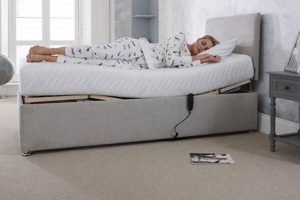
A specialized support surface designed to alleviate pressure on bony prominences is commonly utilized in healthcare settings. These surfaces, filled with air, redistribute the patient’s weight, minimizing concentrated pressure points that can lead to skin breakdown. They operate by inflating and deflating chambers to alternate pressure, an action intended to improve blood circulation and reduce the risk of pressure injuries in immobile or bedridden individuals.
The utilization of these support systems is vital in preventing and managing pressure ulcers, particularly for individuals with limited mobility. Their benefits extend to enhancing patient comfort, promoting healing, and potentially reducing the need for more intensive medical interventions. Historically, these types of support surfaces have evolved from simple static cushions to sophisticated dynamic systems with customizable pressure settings, reflecting advancements in materials science and understanding of tissue mechanics.
The remainder of this discussion will focus on the various types available, key features to consider when selecting one, proper usage and maintenance protocols, and factors influencing overall effectiveness. Further considerations will also include guidelines for appropriate patient selection, potential limitations, and emerging technologies in this field.
Essential Considerations for Utilizing Air-Filled Support Surfaces
The following provides crucial guidelines for maximizing the efficacy and safety of specialized support surfaces intended for pressure ulcer prevention and management.
Tip 1: Pressure Setting Calibration: Regularly verify and adjust pressure settings according to the patient’s weight and specific needs. Incorrect calibration can render the support surface ineffective or, conversely, cause discomfort.
Tip 2: Proper Inflation Level Maintenance: Ensure the support surface is consistently inflated to the manufacturer’s recommended level. Underinflation compromises pressure redistribution, while overinflation can reduce patient comfort.
Tip 3: Thorough Skin Assessments: Conduct routine skin inspections, particularly over bony prominences, to identify early signs of pressure injury development despite the use of the support surface. Document all findings.
Tip 4: Moisture Management: Implement strategies to minimize skin exposure to moisture from incontinence, perspiration, or wound drainage. Excessive moisture increases the risk of skin maceration and breakdown.
Tip 5: Repositioning Schedule Adherence: Despite the pressure redistribution offered by the support surface, maintain a consistent repositioning schedule. Regular turning helps to offload pressure from different areas.
Tip 6: Support Surface Compatibility Verification: Ensure the chosen support surface is compatible with the patient’s bed frame and any other medical equipment being used. Incompatibility can lead to safety hazards or equipment malfunction.
Tip 7: Education and Training: Provide comprehensive education to caregivers and family members on the proper usage, maintenance, and troubleshooting of the support surface. Informed users are more likely to ensure optimal performance.
Adherence to these guidelines can significantly enhance the preventive benefits of specialized support surfaces and contribute to improved patient outcomes. It is critical to always review the specific recommendations by the manufacturer of these surfaces and to seek guidance from healthcare professionals.
The subsequent sections will explore specific types of specialized support surfaces and compare them, contrasting relative benefits and disadvantages.
1. Pressure Redistribution
The functionality of air-filled support surfaces is intrinsically linked to pressure redistribution. The capacity of an inflatable mattress to uniformly distribute the patient’s weight across the contact surface is crucial in mitigating concentrated pressure points that contribute to pressure injury formation. The alternating inflation and deflation of air chambers within the mattress dynamically shifts the areas bearing the most load, preventing prolonged compression of tissue and promoting adequate blood flow to vulnerable areas such as the sacrum, heels, and ischial tuberosities.
Deficiencies in pressure redistribution can lead to tissue ischemia and subsequent ulceration. For instance, if a patient with limited mobility remains in a supine position on an inadequately designed or maintained support surface, constant pressure on the sacral area can impede blood supply, resulting in tissue damage within hours. Conversely, an effectively designed support surface, calibrated according to the patient’s weight and body composition, can significantly reduce the risk of pressure injury development by ensuring no single area sustains prolonged, high-intensity pressure.
Therefore, pressure redistribution serves as a central tenet in the design, selection, and implementation of air-filled support surfaces. Understanding the mechanism through which these systems operate to alleviate concentrated pressure is essential for healthcare providers to make informed decisions and optimize patient outcomes. Challenges remain in ensuring consistent and appropriate application, particularly in diverse patient populations and varying healthcare settings, requiring ongoing research and refinement of clinical practices.
2. Alternating Pressure

Alternating pressure is a key feature in many air-filled support surfaces designed to mitigate the risk of pressure injuries. It involves the cyclical inflation and deflation of air cells within the mattress, creating a dynamic pressure redistribution system. This functionality is intended to mimic the natural pressure relief achieved through regular repositioning, a crucial element in preventing skin breakdown.
- Circulation Enhancement
The cyclical change in pressure promotes blood circulation to areas at risk. By periodically relieving pressure on bony prominences, alternating pressure systems allow for reperfusion of tissue, mitigating the risk of ischemia and necrosis. For example, a patient lying supine experiences pressure on the sacrum and heels; the alternating pressure system will periodically reduce pressure in those areas, encouraging blood flow.
- Pressure Injury Prevention
The primary goal of alternating pressure is to prevent pressure injuries. By consistently changing the points of contact, these systems reduce the duration and intensity of pressure on any single area. This is particularly important for individuals with limited mobility who cannot independently reposition themselves, making them highly susceptible to pressure injury development.
- Reduced Caregiver Burdenng>
While not a replacement for manual repositioning, alternating pressure mattresses can reduce the frequency with which caregivers need to physically turn patients. This is beneficial in settings with limited staffing resources and contributes to a more sustainable care plan. However, the use of these mattresses does not negate the necessity of ongoing skin assessments and other preventative measures.
- Adjustable Settings
Many alternating pressure systems offer adjustable pressure settings to accommodate individual patient needs and weight distribution. Proper calibration is essential to ensure optimal pressure relief without compromising patient comfort. Healthcare providers should be trained on how to adjust these settings based on individual patient assessments and manufacturer guidelines.
The implementation of alternating pressure in air-filled support surfaces offers a valuable tool in the prevention and management of pressure injuries. When used in conjunction with comprehensive skin care protocols and regular patient assessments, these systems contribute to improved patient outcomes and reduced healthcare costs associated with pressure injury treatment. It is important to note that these systems are most effective when properly selected, calibrated, and maintained, emphasizing the need for ongoing education and training for healthcare providers.
3. Microclimate Control
Microclimate control, as it relates to air-filled support surfaces, pertains to the regulation of temperature and moisture levels at the interface between the patient’s skin and the mattress. Elevated skin temperature and excessive moisture, stemming from perspiration, incontinence, or wound exudate, significantly increase the risk of skin maceration and subsequent pressure injury formation. The design and material composition of specialized support surfaces can either exacerbate or mitigate these microclimate-related risks. Air-filled support surfaces with enhanced microclimate control features actively manage these factors to create a more favorable environment for skin integrity.
The integration of microclimate control features into air-filled support surfaces often involves specialized fabrics with improved breathability or ventilation systems that promote airflow. These features facilitate the evaporation of moisture, thereby reducing humidity levels and preventing skin maceration. For example, a patient with urinary incontinence lying on a standard, non-breathable mattress may experience prolonged skin exposure to moisture, leading to rapid skin breakdown. In contrast, an air-filled support surface with moisture-wicking fabric and integrated airflow can help to keep the skin drier, reducing the risk of maceration and pressure injury development. The effectiveness of microclimate control is influenced by factors such as the patient’s individual perspiration rate, the ambient temperature and humidity, and the frequency of linen changes.
Effective microclimate control is a critical component of a comprehensive pressure injury prevention strategy. While specialized support surfaces with microclimate control features offer a significant advantage, they are not a standalone solution. Adherence to established skin care protocols, including regular skin assessments, moisture management, and nutritional support, remains essential for optimal patient outcomes. Further research is needed to optimize microclimate control technologies and evaluate their long-term impact on pressure injury incidence and healthcare costs. Challenges remain in developing cost-effective and easily maintainable microclimate control systems that can be implemented across diverse healthcare settings.
4. Patient Weight Limit

The specified maximum weight capacity represents a critical parameter for the safe and effective utilization of air-filled support surfaces. Exceeding this limit can compromise the pressure redistribution capabilities of the mattress, potentially leading to suboptimal pressure relief and increased risk of pressure injury development.
- Structural Integrity and Support
Weight limits are directly tied to the structural integrity of the mattress. Air cells, seams, and the overall construction are engineered to support a defined weight range. Exceeding this limit can result in damage to the mattress, including cell rupture or seam failure, negating the intended pressure redistribution benefits. For example, a 300-pound patient on a mattress rated for 250 pounds may find that the mattress bottoms out, creating pressure points rather than alleviating them.
- Pressure Redistribution Efficacy
Air-filled support surfaces function by distributing the patient’s weight across a larger surface area. However, this capacity is finite and directly related to the weight limit. When the limit is exceeded, the mattress may not provide adequate support and immersion, leading to concentrated pressure on bony prominences. As a result, the risk of pressure injury development increases significantly, despite the use of a specialized support surface.
- Mattress Lifespan and Warranty
Consistent overloading of an air-filled mattress beyond its specified weight limit reduces its lifespan and may void any existing warranties. The stress placed on the materials and components accelerates wear and tear, leading to premature failure. This represents a significant economic consideration for healthcare facilities, as the need for frequent replacements increases operational costs.
- Patient Safety and Comfort
Beyond the risk of pressure injury, exceeding the weight limit can compromise patient safety and comfort. An overloaded mattress may become unstable, increasing the risk of falls. Moreover, inadequate support can lead to patient discomfort and agitation, potentially hindering their overall recovery process.
Therefore, adherence to the manufacturer’s specified weight limit is paramount for ensuring the safe and effective use of air-filled support surfaces. Regular assessment of patient weight and appropriate mattress selection are essential components of a comprehensive pressure injury prevention program. Failure to consider this parameter can negate the benefits of specialized support surfaces, increasing the risk of adverse patient outcomes and escalating healthcare costs.
5. Support Surface Material

The material composition of an air-filled support surface directly influences its performance in pressure injury prevention. The interface between the patient’s skin and the mattress is critical in determining moisture accumulation, friction, and shear forces all factors contributing to tissue breakdown. Materials with low breathability can trap moisture, exacerbating maceration risk. Conversely, materials with high breathability promote airflow, reducing humidity and mitigating skin breakdown. The choice of material also affects the mattress’s ability to conform to the patient’s body, influencing pressure distribution. For instance, a non-compliant surface may create concentrated pressure points, even within an air-filled system. A patient with fragile ski
n lying on a coarse or abrasive material is at increased risk for friction injuries, even with appropriate pressure redistribution.
Specific material characteristics, such as moisture-wicking properties, anti-microbial treatments, and ease of cleaning, further contribute to the effectiveness of air-filled support surfaces. Moisture-wicking fabrics actively draw moisture away from the skin, enhancing microclimate control. Anti-microbial treatments help to prevent bacterial growth and reduce the risk of infection, particularly important in patients with open wounds. Surfaces that are easy to clean and disinfect help to prevent cross-contamination and maintain a hygienic environment. Polyurethane-coated nylon, for example, is frequently employed for its durability, waterproof qualities, and ease of sanitization, allowing it to be efficiently cleaned between patients.
The selection of support surface materials must consider the patient’s specific needs and risk factors. Individuals with sensitive skin or allergies may require hypoallergenic materials. Bariatric patients necessitate materials that can withstand higher weight loads without compromising performance. Understanding the interplay between material properties and patient characteristics is essential for optimizing the effectiveness of air-filled support surfaces in pressure injury prevention. Ongoing research and development efforts are focused on creating innovative materials that offer superior microclimate control, enhanced pressure redistribution, and improved durability, advancing the field of pressure injury prevention.
Frequently Asked Questions About Air-Filled Support Surfaces
The following addresses common inquiries regarding the selection, usage, and maintenance of specialized support surfaces designed to prevent and manage pressure injuries. The information aims to provide clarity and promote optimal utilization of these devices.
Question 1: What is the primary mechanism by which air-filled support surfaces reduce the risk of pressure injuries?
These surfaces primarily function by redistributing pressure. By increasing the contact area between the patient’s body and the support surface, concentrated pressure on bony prominences is reduced, thereby minimizing the risk of tissue ischemia and subsequent ulceration.
Question 2: Are air-filled support surfaces a replacement for regular patient repositioning?
No, air-filled support surfaces are not a substitute for regular patient repositioning. While these surfaces redistribute pressure, consistent repositioning remains essential for promoting circulation and relieving pressure on different areas of the body.
Question 3: How often should the pressure settings on an air-filled support surface be checked and adjusted?
Pressure settings should be checked and adjusted at least once per shift, or more frequently if the patient’s weight or condition changes. Proper calibration ensures optimal pressure redistribution and minimizes the risk of pressure injury development.
Question 4: What steps should be taken to maintain the hygiene of an air-filled support surface?
The support surface should be cleaned and disinfected according to the manufacturer’s instructions. This typically involves using a mild detergent and disinfectant solution to remove any contaminants and prevent the spread of infection. Regular cleaning is essential for maintaining a hygienic environment.
Question 5: How is the appropriate support surface selected for a specific patient?
Selection is based on a comprehensive assessment of the patient’s risk factors, including mobility, weight, skin condition, and presence of existing pressure injuries. The support surface’s weight capacity and features, such as alternating pressure or microclimate control, should be considered in relation to the patient’s individual needs.
Question 6: What are the potential drawbacks or limitations of using air-filled support surfaces?
Potential drawbacks may include mechanical failure, noise generated by the pump, and the need for regular maintenance. Furthermore, these surfaces may not be suitable for all patients, particularly those with certain medical conditions or mobility limitations. Careful patient selection and proper usage are essential for mitigating these limitations.
In summary, air-filled support surfaces represent a valuable tool in pressure injury prevention, but are most effective when used in conjunction with comprehensive skin care protocols and regular patient assessments. Proper selection, usage, and maintenance are critical for optimizing outcomes.
The subsequent section will delve into a comparative analysis of different types of air-filled support surfaces and discuss emerging technologies in this field.
Inflatable Mattress for Bed Sores
This discourse has examined air-filled support surfaces, clarifying their role in pressure injury prevention and management. Key aspects, including pressure redistribution, alternating pressure, microclimate control, patient weight limits, and material considerations, have been outlined, emphasizing their interconnected influence on the effectiveness of these support systems. Furthermore, common inquiries concerning appropriate utilization and maintenance protocols have been addressed, reinforcing the significance of informed application.
Continued investigation into the optimization of air-filled support surface technology remains paramount. Healthcare professionals are urged to consistently evaluate and refine their protocols, ensuring that patients receive the most appropriate and effective support surfaces. The ongoing pursuit of innovation in this field is critical to reducing the incidence of pressure injuries and improving patient outcomes.

![Best Queen Murphy Bed Mattress [Guide] | Organic & Natural Mattress Buyer’s Guide: Non-Toxic Sleep Solutions](https://mattressworldpa.com/wp-content/uploads/2025/07/th-7290-300x200.jpg "Best Queen Murphy Bed Mattress [Guide] Organic & Natural Mattress Buyer’s Guide: Non-Toxic Sleep Solutions")
![Bed Bug Proofing: Protecting Your Mattress [Guide] | Organic & Natural Mattress Buyer’s Guide: Non-Toxic Sleep Solutions](https://mattressworldpa.com/wp-content/uploads/2025/07/th-7289-300x200.jpg "Bed Bug Proofing: Protecting Your Mattress [Guide] Organic & Natural Mattress Buyer’s Guide: Non-Toxic Sleep Solutions")