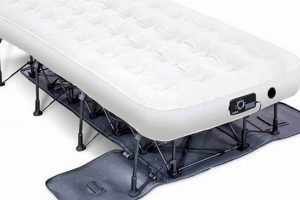
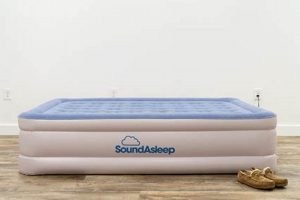
The process of filling an air mattress with air without the aid of a mechanical or electrical pump is the central topic. This involves utilizing alternative methods to introduce air into the mattress’s valve, thereby achieving the desired level of inflation. For example, individuals may employ a hairdryer (on a cool setting), a vacuum cleaner (with the hose connected to the exhaust port), or even manually compress air using a large bag.
The ability to achieve inflation without specialized equipment offers significant advantages in scenarios where a pump is unavailable, such as camping trips, power outages, or travel situations. Historically, reliance on manual methods for inflation was commonplace before the widespread availability of portable pumps. This skill promotes self-sufficiency and resourcefulness, allowing for comfortable rest even in challenging circumstances. Moreover, these techniques often require minimal additional tools, making them practical and accessible.
Subsequent sections will detail various practical approaches to achieving this inflation, outlining the necessary materials, step-by-step instructions, and potential challenges associated with each method. Furthermore, strategies for optimizing the inflation process and ensuring a secure and comfortable sleeping surface will be addressed.
Tips for Air Mattress Inflation
The following recommendations aim to enhance the efficiency and effectiveness of air mattress inflation procedures when a dedicated pump is unavailable. Adherence to these guidelines can minimize frustration and ensure a more satisfactory outcome.
Tip 1: Utilize a Hair Dryer (Cool Setting): Employ a hairdryer on its coolest setting, directing the airflow into the mattress valve. Ensure the nozzle is sealed around the valve opening to prevent air leakage. Overheating can damage the mattress material.
Tip 2: Adapt a Vacuum Cleaner: Connect the vacuum cleaner hose to the exhaust port rather than the intake. Securely attach the hose to the air mattress valve. This method is effective but requires careful monitoring to prevent overinflation.
Tip 3: Employ a Large Bag: Secure a large, sturdy bag (such as a garbage bag) to the mattress valve. Trap air inside the bag by closing the opening and then compress the bag, forcing air into the mattress. Repeat this process multiple times.
Tip 4: Consider a Leaf Blower (with Caution): A leaf blower can provide significant airflow; however, exercise extreme caution. Position the blower at a distance and use a makeshift adapter to direct the airflow into the valve. Overinflation risk is high with this method.
Tip 5: Leverage Improvised Bellows: Construct a simple bellows system using cardboard and duct tape. Create a chamber with a flap to draw air in and another to direct air into the mattress. This method is labor-intensive but can be effective in the absence of powered devices.
Tip 6: Monitor Inflation Levels: Regardless of the method employed, periodically check the firmness of the mattress to prevent overinflation. An overinflated mattress is more susceptible to damage and less comfortable.
Tip 7: Ensure Valve Security: After inflation, ensure the valve is securely closed to prevent air leakage. Check the valve periodically for any signs of loosening or damage.
These tips offer practical solutions for inflating an air mattress in situations where a conventional pump is not accessible. Careful execution and monitoring are crucial for achieving the desired inflation level and preventing damage to the mattress.
The subsequent section will delve into potential troubleshooting strategies and address common challenges encountered during manual inflation processes.
1. Alternative Airflow Methods

The process of filling an air mattress when a dedicated pump is absent necessitates the employment of alternative airflow methods. These methods function as the primary causal mechanism for achieving inflation under such circumstances. Without a mechanical or electrical pump, the successful introduction of air into the mattress hinges entirely on the ingenuity and application of these alternative techniques. For example, utilizing a hairdryer on its cool setting forces air into the mattress valve, while a modified vacuum cleaner redirects exhaust airflow for a similar purpose. The efficacy of this approach directly determines the inflation level and overall usability of the air mattress.
The importance of alternative airflow methods extends beyond mere convenience; it represents a critical component of resourcefulness in situations where conventional equipment is unavailable. In camping environments, during power outages, or while traveling, access to a standard pump may be restricted. Consequently, the ability to adapt and utilize readily available tools or create improvised devices becomes paramount. The use of a large bag, manually compressed to introduce air, or the cautious adaptation of a leaf blower exemplifies the practical application of these methods. These examples underscore the versatility required to successfully adapt the available resources.
In summary, alternative airflow methods are essential for independent inflation, offering solutions when standard pumps are unavailable. Practical proficiency in these techniques enables comfortable rest. Over-reliance on pumps is reduced by considering other methods. Future research could explore the relative efficiency and safety of these alternative methods.
2. Valve seal integrity

Valve seal integrity constitutes a critical factor in the context of inflating air mattresses without a pump. The effectiveness of any alternative inflation method hinges on the valve’s ability to maintain a leak-proof closure. Any compromise in this integrity directly impedes inflation and compromises the functionality of the mattress.
- Material Degradation
The valve’s constituent materials, typically rubber or plastic compounds, are susceptible to degradation over time. Exposure to ultraviolet radiation, temperature fluctuations, and repeated stress can lead to cracking, hardening, or deformation, thereby compromising the seal’s efficacy. For example, prolonged storage in direct sunlight can render the valve brittle, resulting in air leakage despite meticulous inflation efforts.
- Debris Contamination
The accumulation of particulate matter, such as dust, sand, or fibers, within the valve mechanism can disrupt the sealing surface. This contamination creates minute gaps through which air can escape. In outdoor settings, for instance, airborne debris may infiltrate the valve, necessitating thorough cleaning before attempting inflation.
- Structural Imperfections
Manufacturing defects or physical dama
ge can introduce structural imperfections into the valve assembly. These imperfections may manifest as hairline cracks, incomplete sealing surfaces, or misalignment of components. Such flaws compromise the valve’s ability to form a tight seal, irrespective of the inflation method employed. - Closure Mechanism Failure
The closure mechanism, which may involve a stopper, screw cap, or one-way valve, is integral to maintaining seal integrity. Failure of this mechanism, due to stripped threads, broken components, or loss of elasticity, directly impairs the valve’s ability to prevent air leakage. For instance, a worn-out screw cap may fail to compress the sealing surface adequately, leading to gradual deflation.
These interconnected aspects of valve seal integrity underscore its vital role in ensuring the successful inflation and sustained functionality of air mattresses, particularly when relying on alternative methods that may generate lower pressures. Neglecting these factors can render even the most resourceful inflation techniques ineffective.
3. Overinflation prevention

Overinflation prevention constitutes a crucial aspect of inflating air mattresses, particularly when employing methods that circumvent the use of pressure-regulated pumps. The absence of such regulation necessitates careful monitoring and proactive strategies to mitigate the risk of exceeding the mattress’s pressure threshold.
- Material Stress Management
Overinflation induces excessive tensile stress on the mattress material, increasing the probability of seam rupture, puncture expansion, and accelerated material degradation. Consider the scenario of using a high-volume air source, like a leaf blower, where the rapid introduction of air can quickly surpass the material’s elastic limit, leading to irreversible damage and rendering the mattress unusable.
- Valve Integrity Preservation
Excessive internal pressure can compromise the integrity of the mattress valve. Overinflation can cause deformation of the valve components, leading to air leakage or complete valve failure. When using a manual inflation method, diligent monitoring prevents over-pressurizing the valve, maintaining its ability to seal securely and prevent air escape.
- Comfort Optimization
While adequate inflation is necessary for support, overinflation diminishes comfort by creating an excessively rigid and unyielding surface. This reduces the mattress’s ability to conform to the body’s contours, potentially causing discomfort and disrupting sleep quality. When manual methods are used, the mattress can be felt to assess firmness and avoid this rigid state.
- Safety Considerations
The risk of catastrophic failure is elevated when an air mattress is significantly overinflated. A sudden rupture can generate a forceful release of air, potentially causing injury to individuals in close proximity. When inflating without a regulated pump, the mitigation of this potential hazard rests on controlled inflation and diligent pressure assessment.
The preceding elements highlight the importance of meticulous control during inflation when standard pumps are unavailable. Overinflation prevention is not merely a matter of convenience but a critical determinant of mattress longevity, user comfort, and safety. Furthermore, the application of these principles underscores the need for resourcefulness when inflating an air mattress using alternative methods.
4. Material temperature control

Material temperature control is a critical consideration when inflating air mattresses without a pump, influencing both the efficiency of the inflation process and the structural integrity of the mattress itself. The temperature of the air introduced and the mattress material itself can significantly impact the final result.
- Air Density and Inflation Efficiency
Air density is inversely proportional to temperature. Warmer air is less dense than cooler air. Introducing heated air into the mattress, while potentially seeming faster, results in lower mass being introduced into the same volume. Upon cooling, the air contracts, leading to a reduction in pressure and a partially deflated mattress. Consider the use of a hairdryer: while it provides airflow, the heated air necessitates overfilling to compensate for the subsequent volume reduction as the air cools to ambient temperature. The resulting inflation may initially appear satisfactory but will degrade over time.
- Material Flexibility and Elasticity
The flexibility and elasticity of the air mattress material, typically PVC or similar polymers, are temperature-dependent. Lower temperatures can cause the material to become more rigid and brittle, increasing the risk of cracking or seam separation during inflation. Conversely, excessively high temperatures can soften the material, making it more prone to stretching and permanent deformation. When inflating in colder environments, precautions must be taken to warm the mattress gradually to avoid sudden stress on the material.
- Seam Integrity and Thermal Stress
The seams of an air mattress are often the weakest points. Repeated cycles of heating and cooling can induce thermal stress on these seams, potentially weakening the adhesive bonds or causing material fatigue. The inflation process itself introduces stress on the seams, and temperature variations exacerbate this. Direct sunlight exposure while inflating, for instance, can cause localized overheating and seam failure. It is, therefore, advantageous to inflate in shaded areas or during cooler times of the day.
- Long-Term Material Degradation
Sustained exposure to elevated temperatures accelerates the degradation of polymeric materials. Ozone cracking, plasticizer migration, and oxidation processes are all accelerated at higher temperatures. When utilizing heated air sources, the long-term consequence is a reduction in the overall lifespan of the air mattress. Even if immediate damage is not apparent, repeated inflation with heated air can lead to premature failure of the mattress material over time.
Therefore, when inflating air mattresses without a pump, prudent material temperature control is essential for both optimal inflation and the sustained durability of the product. Balancing immediate convenience with long-term structural considerations ensures efficient and safe use.
5. Ambient air quality

Ambient air quality possesses a direct and often overlooked relationship with the process of inflating air mattresses without a pump. The characteristics of the surrounding air introduced into the mattress directly impact its internal environment and long-term usability. Impurities present in the air stream can affect the mattresss interior and material integrity.
- Particulate Matter Infiltration
Ambient air contains varying levels of particulate matter, including dust, pollen, and microscopic debris. When inflating an air mattress without a filter or
pump, these particles inevitably enter the mattress’s internal volume. Over time, the accumulation of particulate matter can degrade the mattress material, particularly in the seams, leading to increased wear and potential leaks. In environments with high levels of airborne dust, such as construction sites or arid regions, this effect is exacerbated. - Moisture Content and Microbial Growth
The moisture content of ambient air can promote microbial growth within the air mattress. Humid environments introduce water vapor into the mattress during inflation. This moisture, combined with any organic matter already present (e.g., skin cells, dust mites), provides a breeding ground for mold, mildew, and bacteria. Such microbial growth can lead to unpleasant odors, allergenic reactions, and material degradation. The prevalence of these issues is heightened in tropical climates or damp indoor settings.
- Volatile Organic Compounds (VOCs)
Ambient air in indoor environments often contains volatile organic compounds (VOCs) emitted from various sources, including cleaning products, paints, and furniture. When using methods like exhaling directly into the mattress valve, VOCs from breath are also introduced. These compounds can permeate the mattress material, causing it to off-gas unpleasant odors and potentially affecting the air quality of the sleeping environment. Individuals with sensitivities to VOCs may experience allergic reactions or respiratory irritation.
- Ozone and Material Degradation
While less of a concern indoors, ambient air with high ozone levels, particularly in urban or industrial areas, can accelerate the degradation of certain mattress materials, especially natural rubber or latex components. Ozone is a powerful oxidizing agent that can break down the polymer chains in these materials, leading to reduced elasticity and increased susceptibility to cracking. The degree of this effect depends on the specific material composition and ozone concentration in the surrounding air.
The connection between ambient air quality and the inflation of air mattresses without pumps highlights the importance of considering environmental factors during the process. While alternative inflation methods offer practicality, awareness of the air quality and potential contaminants is vital for preserving mattress longevity and maintaining a healthy sleeping environment. Mitigation strategies, such as inflating in well-ventilated areas or using a rudimentary air filter (e.g., cloth) over the intake, can reduce the introduction of contaminants.
6. Tool adaptation skills

Tool adaptation skills represent a core competency within the context of inflating air mattresses in the absence of a dedicated pump. The act of repurposing available implements for unintended functions forms the causal link enabling successful inflation. Without a pump, the ability to modify or leverage existing tools to generate and direct airflow becomes paramount, transforming a potential obstacle into a surmountable challenge. The hairdryer, vacuum cleaner, and even common plastic bags are recast as inflation devices through resourceful manipulation. Success is predicated on understanding a tool’s primary function and creatively applying it to an alternative task. For example, sealing a plastic bag around a mattress valve and compressing it mimics the action of a bellows, directly transferring air. Similarly, the exhaust port of a vacuum cleaner, typically used for blowing, becomes an inflation mechanism. The ability to recognize and execute these adaptations is crucial for overcoming the limitations imposed by the lack of specialized equipment.
The practical application of these skills extends beyond mere problem-solving; it embodies a broader adaptability applicable across diverse scenarios. During camping excursions or power outages, the availability of a pump is often uncertain. In such circumstances, the capacity to improvise and adapt tools proves invaluable, transforming readily available items into functional substitutes. Consider the use of a modified plastic bottle with its bottom cut off, acting as a rudimentary funnel directing air flow from the lungs into the mattress valve. Or the crafting of a bellows from cardboard, sealed with tape, providing a manual air compression system. These instances underscore the practical significance of tool adaptation in real-world settings where resourcefulness is a necessity.
In summary, the connection between tool adaptation skills and the successful inflation of air mattresses sans pump is symbiotic. These skills transform commonplace objects into inflation devices, thereby enabling users to circumvent reliance on specialized equipment. This adaptability fosters resourcefulness in various situations and, while often challenging, represents a fundamental component of self-sufficiency. Future innovation might focus on designing air mattresses that are more compatible with rudimentary inflation methods, further reducing dependency on dedicated pumps.
7. Mattress surface preparation

Mattress surface preparation directly influences the successful deployment of methods designed to inflate air mattresses without the aid of a pump. A properly prepared surface mitigates risks inherent in alternative inflation approaches, enhancing efficiency and minimizing the probability of damage. Debris and sharp objects represent primary threats; their presence can cause punctures when the mattress expands. For instance, inflating an air mattress on a rough outdoor surface without adequate clearing significantly elevates the risk of material compromise. The absence of this preliminary step undermines even the most ingenious inflation techniques.
The choice of inflation method often dictates the stringency of surface preparation. Direct lung inflation, while potentially effective for small mattresses, carries a lesser risk compared to using a modified leaf blower. The higher pressure and volume generated by the latter demand a more meticulous clearing process to prevent rapid material failure upon encountering a sharp object. Similarly, utilizing a vacuum cleaner, even with careful adaptation, introduces a degree of mechanical force that necessitates a clean, obstruction-free surface to avoid localized stress concentrations during inflation. The surface should be as smooth and even as possible.
In summation, proper mattress surface preparation forms a crucial, often underestimated, component of successful inflation when pumps are unavailable. The correlation between a well-prepared surface and a leak-free, fully inflated mattress is demonstrably strong. Future advancements might focus on developing air mattresses with more robust materials or integrated protective layers, thereby lessening the dependence on meticulous pre-inflation procedures, although proper preparation should always be considered.
Frequently Asked Questions Regarding Inflation Without a Pump
The following addresses common inquiries regarding the procedures and considerations involved in inflating an air mattress in the absence of a designated pump.
Question 1: Is it possible to fully inflate an air mattress without a dedicated pump?
Yes, complete inflation is achievable using alternative methods. Successful inflation necessitates adaptation of existing tools or the creation of improvised devices to generate
sufficient airflow. However, achieving the same level of firmness and speed as with a dedicated pump is often challenging.
Question 2: What are the most reliable methods for inflation without a pump?
The reliability of a method depends on available resources and environmental conditions. Utilizing a hairdryer (on a cool setting) or a vacuum cleaner (with the hose connected to the exhaust port) are often effective. Manual methods, such as employing a large bag to compress air, can also be successful, albeit more labor-intensive.
Question 3: Does inflating an air mattress without a pump pose a risk to the mattress itself?
Potential risks exist, primarily related to overinflation and material damage. Overinflation can stress seams and compromise valve integrity. Heated air from a hairdryer can, over time, degrade the material. Careful monitoring and avoidance of extreme temperatures are crucial.
Question 4: How can one prevent overinflation when using alternative methods?
Prevention requires diligent monitoring of the mattress’s firmness during inflation. Periodically pressing on the surface assesses pressure levels. Overinflation can cause structural damage or reduce comfort. Regular pauses during inflation are recommended.
Question 5: Are some air mattresses better suited for pump-less inflation than others?
Yes. Air mattresses with larger valve openings facilitate faster inflation with alternative methods. Mattresses made from more durable materials are less susceptible to damage from temperature fluctuations or overinflation. Construction quality influences resistance to air leakage.
Question 6: What are the limitations of inflating an air mattress without a pump?
Limitations include the increased physical effort required, the potential for inconsistent inflation levels, and the elevated risk of damage due to overinflation or contamination. Achieving the same level of convenience and precision as with a pump is unlikely.
In summary, while inflating an air mattress without a pump is feasible, it demands careful consideration of potential risks and limitations. Resourcefulness and meticulous execution are essential for achieving a satisfactory outcome.
The succeeding section will address specific case studies, examining scenarios where alternative inflation methods have been successfully implemented in real-world situations.
Conclusion
The exploration of methods to inflate air mattress without pump has revealed a spectrum of viable alternatives to traditional pumps. Successful execution hinges upon understanding the inherent risks, limitations, and necessary precautions associated with each technique. The utilization of alternative airflow sources, maintenance of valve integrity, and careful attention to material properties constitute critical factors in achieving a functional and durable outcome.
The reliance on these methods underscores a practical need, demanding resourcefulness and adaptability in situations where conventional equipment is unavailable. Further refinement of these techniques, along with advancements in mattress design, could potentially minimize dependence on dedicated pumps. The successful application of these methods promotes self-sufficiency and mitigates inconvenience, reinforcing their continued relevance.