The suitability of a rigid sleeping surface for spinal health is a subject of considerable debate. While often recommended, the assertion that a very hard mattress is universally beneficial for individuals experiencing back pain requires careful consideration. Factors such as individual sleeping position, body weight, and pre-existing conditions significantly influence the actual outcome.
Historically, firm mattresses were favored due to the belief that they provided optimal support and prevented excessive spinal curvature during sleep. The perceived benefits included improved posture, reduced pressure on intervertebral discs, and minimized muscle strain. However, empirical evidence indicates that excessively hard surfaces can lead to pressure point build-up, potentially exacerbating pain in some individuals.
Therefore, the subsequent analysis will delve into the complexities of mattress firmness and its impact on spinal alignment, pressure distribution, and overall sleep quality. It will explore the nuances of selecting an appropriate mattress firmness level based on individual needs and circumstances, moving beyond the simplistic notion of a universally “good” hard surface.
Considerations for Mattress Firmness and Back Health
Selecting a mattress that supports spinal health requires a nuanced understanding of individual needs and preferences. The following tips offer guidance on navigating the complexities of mattress firmness.
Tip 1: Prioritize Spinal Alignment. The primary function of a mattress is to maintain the spine’s natural curvature throughout the night. Regardless of chosen firmness, ensure the mattress prevents excessive sagging or arching of the back.
Tip 2: Assess Sleeping Position. Side sleepers generally benefit from a softer surface that allows the shoulder and hip to sink in slightly, maintaining spinal alignment. Back sleepers may find a medium-firm mattress provides adequate support. Stomach sleepers often require a firmer surface to prevent excessive spinal curvature.
Tip 3: Account for Body Weight. Individuals with higher body weights typically require firmer mattresses to prevent excessive sinking and maintain spinal alignment. Lighter individuals may find a softer mattress more comfortable.
Tip 4: Identify Pressure Points. Be mindful of areas where pressure builds up during sleep, such as the hips, shoulders, and knees. Excessive pressure can lead to discomfort and disrupted sleep. If pressure points are an issue, consider a mattress with pressure-relieving properties, such as memory foam.
Tip 5: Consider Medical Conditions. Individuals with specific back conditions, such as scoliosis or arthritis, should consult with a healthcare professional or physical therapist for personalized mattress recommendations.
Tip 6: Test Before Purchase. Whenever possible, test a mattress in-store for an extended period to assess its comfort and support. Take note of any areas of discomfort or pressure.
Tip 7: Understand the Return Policy. Choose a retailer with a generous return policy, allowing ample time to evaluate the mattress at home and return it if it does not meet your needs.
These considerations underscore the importance of a personalized approach to mattress selection. Focusing on spinal alignment, pressure relief, and individual needs is paramount to achieving optimal sleep quality and back health.
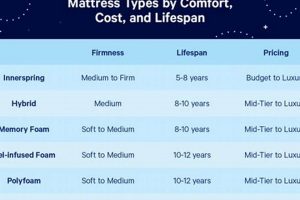
The following sections will provide further details on the impact of specific mattress types on back health.
1. Spinal Alignment

Spinal alignment constitutes a primary determinant when evaluating the suitability of a rigid sleeping surface. A mattress’s capacity to maintain the spine’s natural curvature, irrespective of sleeping position, directly influences its potential to promote or detract from back health. If a firm mattress compels the spine into an unnatural posture, whether through excessive rigidity that prevents necessary contouring or by creating pressure points that force compensatory shifts, it can negatively impact spinal alignment. The subsequent misalignment may exacerbate existing back pain or contribute to the development of new musculoskeletal issues.
For instance, an individual with a pronounced lordotic curve may find that a very hard surface amplifies this curvature, placing undue stress on the lower back. Conversely, someone with a flatter spinal profile may experience improved support from a firmer mattress, provided it effectively distributes weight and prevents sagging. Examples abound in clinical settings where patients report increased discomfort after switching to a harder mattress that fails to accommodate their unique spinal morphology. Diagnostic imaging can further substantiate these subjective experiences, revealing alterations in spinal alignment correlated with changes in mattress firmness.
In summary, the connection between spinal alignment and the appropriateness of a rigid sleeping surface is complex and individualized. While a firmer mattress may offer benefits for certain individuals, its value hinges on its ability to maintain the spine’s optimal alignment. Therefore, careful assessment of individual spinal characteristics, sleeping habits, and body weight are crucial for determining whether a firmer mattress is truly advantageous for promoting back health and restful sleep.
2. Pressure Distribution

Effective pressure distribution is a critical factor in assessing the suitability of a firm mattress for back health. The term refers to how evenly a mattress disperses the body’s weight across its surface. A mattress that fails to adequately distribute pressure can create concentrated points of stress, particularly at bony prominences such as the hips, shoulders, and heels. Excessive pressure on these areas can impede circulation, leading to discomfort, pain, and potentially disrupting sleep. A firm mattress, while offering support, may exacerbate pressure point issues if it lacks sufficient conforming ability to adapt to the body’s contours.
Consider, for example, an individual with a history of hip pain. A rigid mattress might exert excessive pressure on the greater trochanter, contributing to increased inflammation and pain during the night. Conversely, a mattress with targeted pressure relief features, such as a memory foam layer, can redistribute weight, alleviating stress on vulnerable areas. Studies involving pressure mapping technology demonstrate that firmer mattresses generally exhibit less uniform pressure distribution compared to those with conforming layers. This data underscores the importance of considering pressure distribution characteristics when evaluating the benefits of firm mattresses, especially for individuals prone to pressure-related discomfort.
In conclusion, the connection between pressure distribution and the
appropriateness of a firm mattress is undeniable. While firmness contributes to spinal support, it must be balanced with adequate pressure relief to prevent discomfort and potential harm. Individuals considering a firm mattress should carefully assess its ability to distribute weight evenly and minimize pressure point formation, thereby ensuring optimal comfort and promoting healthy sleep.
3. Sleeping Position

Sleeping position is a crucial determinant in evaluating the suitability of a firm mattress for back health. Different postures distribute weight and stress across the spine and pressure points in varying ways, influencing the type of support a mattress should provide.
- Side Sleeping
Side sleeping typically requires a mattress that allows the shoulder and hip to sink in slightly to maintain spinal alignment. A firm mattress may not offer sufficient give, leading to pressure point build-up and discomfort. Side sleepers often benefit from a softer or medium-firm mattress that conforms to the body’s contours, promoting neutral spinal alignment. A too-firm mattress can force the spine out of alignment, resulting in neck and back pain.
- Back Sleeping
Back sleepers generally require a balance of support and cushioning. A medium-firm mattress often provides adequate support for the lumbar region while still offering enough give to maintain comfort. A firm mattress can be suitable for back sleepers if it prevents excessive sinking and maintains the spine’s natural curvature. However, a mattress that is too firm can prevent proper spinal alignment by not conforming to the natural curve of the lower back, leading to discomfort.
- Stomach Sleeping
Stomach sleeping is often discouraged due to the strain it places on the neck and spine. However, if this position is preferred, a firm mattress is generally recommended. A firm surface prevents excessive sinking in the midsection, which can lead to hyperextension of the lower back. While a firm mattress can help mitigate some of the negative effects of stomach sleeping, it does not eliminate the inherent risks associated with this position. Individuals who sleep on their stomachs may also benefit from using a thin pillow or no pillow at all to further reduce strain on the neck and spine.
- Combination Sleeping
Combination sleepers, those who switch between different positions throughout the night, present a unique challenge. A medium-firm mattress with good responsiveness is often the best option. This type of mattress can adapt to different sleeping positions, providing adequate support and cushioning as needed. Combination sleepers should also consider mattresses with zoned support, which offer varying levels of firmness in different areas to accommodate different sleeping positions.
The relationship between sleeping position and mattress firmness is a significant factor in determining overall sleep quality and back health. Selecting a mattress that complements an individual’s preferred sleeping position is essential for maintaining proper spinal alignment and minimizing the risk of pain and discomfort. Consequently, considering the typical sleeping position is crucial when assessing whether a firm mattress is appropriate for an individual’s needs.
4. Body Weight

Body weight exerts a considerable influence on the suitability of a firm mattress, acting as a primary determinant in the level of support required to maintain spinal alignment and prevent pressure point formation. The following facets highlight this complex relationship.
- Support and Sinkage
Individuals with higher body weights exert greater force on a mattress. Consequently, a mattress must possess sufficient firmness to prevent excessive sinkage. If a mattress yields too much, spinal alignment is compromised, leading to potential back pain. Conversely, individuals with lower body weights may find a firm mattress too unyielding, resulting in inadequate contouring and increased pressure point discomfort. Real-world examples include heavier individuals reporting back pain on softer mattresses due to spinal misalignment, while lighter individuals experience pressure sores on excessively firm surfaces.
- Weight Distribution
Body weight distribution also plays a role. Individuals carrying more weight in the midsection may require a firmer mattress to prevent excessive sinking in that area, maintaining a neutral spinal position. Those with a more even weight distribution may find a medium-firm mattress more comfortable. For example, a person with a large abdominal area might experience lower back strain on a mattress that lacks sufficient support, whereas a more athletic build might benefit from the even support of a less firm option.
- Mattress Durability
Higher body weights can accelerate mattress wear and tear, particularly in softer mattresses. Over time, the mattress may lose its support, leading to spinal misalignment and discomfort. A firmer mattress, typically constructed with denser materials, tends to exhibit greater durability under heavier loads. Consequently, heavier individuals may find that a firmer mattress offers a longer lifespan and maintains its supportive qualities more effectively. The premature sagging of a softer mattress under significant weight serves as a practical illustration of this phenomenon.
- Pressure Point Sensitivity
While firmer mattresses are often associated with better support, they can also exacerbate pressure point sensitivity, particularly for individuals with lower body weights. Lighter individuals may not exert enough pressure to fully engage the conforming properties of a firm mattress, resulting in concentrated pressure on bony prominences. This can lead to discomfort and disrupted sleep. Conversely, heavier individuals may find that a firmer mattress provides better pressure distribution by preventing them from sinking too deeply and concentrating pressure in specific areas. The differing experiences highlight the crucial role body weight plays in determining the optimal balance between support and pressure relief.
The interplay between body weight and mattress firmness underscores the need for individualized mattress selection. While a firm mattress may offer advantages for some, its suitability is contingent on factors such as body weight, weight distribution, and individual comfort preferences. A comprehensive assessment that considers these variables is essential for ensuring optimal spinal support, pressure relief, and overall sleep quality.
5. Individual Needs

The question of whether a rigid sleeping surface is beneficial must be evaluated within the context of individual requirements. Personal health conditions, preferences, and daily activities significantly modulate the ideal mattress firmness. Therefore, a universally applicable endorsement or rejection of firm mattresses is inherently inaccurate; rather, a personalized approach is imperative.
- Pre-Existing Conditions
Pre-existing health conditions, such as arthritis, fibromyalgia, or scoliosis,
profoundly influence mattress suitability. Individuals with arthritis may find that a firm mattress exacerbates joint pain, necessitating a softer surface that conforms to the body and reduces pressure. Conversely, those with scoliosis may benefit from the structural support offered by a firmer mattress, which aids in maintaining spinal alignment. These instances exemplify the critical role medical history plays in determining the optimal mattress firmness level. - Daily Activities and Lifestyle
Occupational demands and lifestyle choices impact musculoskeletal health, subsequently affecting mattress preference. Individuals engaged in physically demanding professions, such as construction or nursing, often require mattresses that provide robust support and promote spinal decompression during sleep. Conversely, those with sedentary lifestyles may prioritize pressure relief and cushioning. The dynamic interplay between daily activity and spinal health necessitates a personalized mattress selection process.
- Subjective Comfort Preferences
Subjective comfort preferences, although difficult to quantify, exert a significant influence on sleep quality. Some individuals simply find firm mattresses uncomfortable, regardless of their objective benefits. Forcing oneself to sleep on an unsuitable surface can lead to restlessness, insomnia, and ultimately, a decline in overall well-being. Recognizing and respecting personal comfort preferences is crucial for promoting restful sleep and fostering a positive relationship with one’s sleeping environment.
- Age and Physiological Changes
Age-related physiological changes, such as decreased muscle mass and reduced joint flexibility, affect mattress requirements. Older adults may benefit from mattresses that offer a balance of support and pressure relief, accommodating age-related vulnerabilities. Children and adolescents, with their rapidly developing spines, may require mattresses that provide adequate support and promote healthy spinal growth. The dynamic nature of physiological development and aging necessitates a flexible approach to mattress selection that adapts to evolving needs.
In summary, the suitability of a firm mattress is intrinsically linked to individual needs. A holistic assessment that considers pre-existing conditions, lifestyle factors, subjective comfort preferences, and age-related changes is essential for determining whether a firm mattress is the optimal choice. By prioritizing individualized considerations, one can maximize the potential for restful sleep and promote long-term spinal health.
Frequently Asked Questions
The following addresses common inquiries regarding the suitability of rigid sleeping surfaces for individuals concerned about back support and comfort.
Question 1: What constitutes a “firm” mattress?
Mattress firmness is typically rated on a scale, though no universal standard exists. A “firm” mattress generally denotes one that offers minimal give when compressed, providing substantial support and limiting sinkage. Retailers may utilize descriptive terms such as “extra firm” or “orthopedic” to denote higher levels of rigidity.
Question 2: Can a firm mattress correct pre-existing back problems?
A firm mattress is not a substitute for medical treatment. While it may offer support and potentially alleviate certain types of back pain, it cannot cure or correct underlying spinal conditions. Consultation with a healthcare professional is essential for diagnosing and managing back problems.
Question 3: Are there specific back conditions for which a firm mattress is contraindicated?
Yes. Certain conditions, such as arthritis, bursitis, and fibromyalgia, may be exacerbated by the pressure exerted by a very firm mattress. Individuals with these conditions should prioritize pressure relief and consider softer mattress options.
Question 4: How does body weight influence the choice between a firm and soft mattress?
Individuals with higher body weights generally require firmer mattresses to prevent excessive sinkage and maintain spinal alignment. Lighter individuals may find a firm mattress too unyielding and may benefit from a softer surface that provides more contouring.
Question 5: Is a firm mattress universally recommended for stomach sleepers?
While a firm mattress is often suggested for stomach sleepers to prevent excessive spinal curvature, this sleeping position is generally discouraged due to the inherent strain it places on the neck and back. Alternative sleeping positions should be explored whenever possible.
Question 6: How can one determine if a firm mattress is too firm?
Signs that a firm mattress may be too rigid include increased pain or stiffness upon waking, pressure points that cause discomfort, and a general feeling of being unsupported. If these symptoms persist, a softer mattress or a mattress topper should be considered.
The considerations outlined above emphasize the need for a personalized approach to mattress selection. Prioritizing individual needs and consulting with healthcare professionals when necessary are crucial steps in promoting back health and ensuring restful sleep.
The subsequent section will explore alternative mattress types and their impact on back support and comfort.
Is a Firm Mattress Good for Your Back
The preceding analysis explored the multifaceted question of whether a rigid sleeping surface is universally beneficial for spinal health. While historical perspectives often championed the advantages of firmness for support and posture, contemporary understanding acknowledges the critical role of individual factors. Elements such as sleeping position, body weight, pre-existing conditions, and personal comfort preferences significantly modulate the suitability of a firm mattress. The analysis highlighted the importance of spinal alignment, appropriate pressure distribution, and careful consideration of individual needs in determining optimal mattress firmness.
Ultimately, the assertion that a firm mattress is inherently “good” for back health proves to be an oversimplification. A nuanced and individualized approach to mattress selection is paramount. Individuals should prioritize assessing their unique needs, consulting with healthcare professionals when necessary, and thoroughly evaluating mattress options before making a purchase. This informed and personalized strategy represents the most effective path towards achieving optimal spinal support, pressure relief, and overall sleep quality, moving beyond generalized endorsements or rejections of firm mattresses.