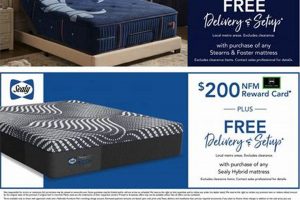
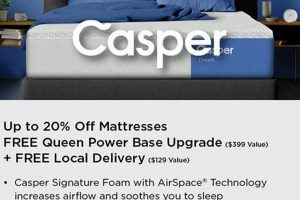
The confluence of a national holiday and the consumer demand for durable goods has created a recurring retail event. This event offers consumers an opportunity to acquire bedding products at reduced prices. These promotions frequently involve substantial discounts and financing options.
This period represents a significant commercial opportunity for retailers within the bedding industry. Consumers often postpone purchasing decisions in anticipation of holiday markdowns. Historical data indicates increased sales volume during this timeframe, contributing significantly to annual revenue targets. Furthermore, this trend has become ingrained in consumer expectations, with many individuals planning purchases around this particular seasonal event.
The subsequent discussion will delve into strategies for maximizing savings during this promotional period, analyzing the types of mattresses commonly offered, and evaluating the associated financing possibilities available to consumers.
Maximizing Value During a July 4th Mattress Promotion
Prudent planning and research are essential for securing the most advantageous deal during periods of reduced pricing on bedding. Consumers are advised to undertake thorough preparatory measures.
Tip 1: Conduct Preemptive Research: Before the promotional period commences, identify desired mattress types, brands, and features. Comparing prices across retailers in advance establishes a baseline for evaluating subsequent discounts.
Tip 2: Establish a Budget: Determine an acceptable price range and adhere to it rigorously. Avoid impulsive purchases driven by perceived savings that exceed pre-determined financial limitations.
Tip 3: Scrutinize Promotional Details: Carefully examine the fine print of all advertised discounts and financing offers. Pay close attention to potential exclusions, limitations, and associated fees.
Tip 4: Evaluate Financing Options: Compare interest rates, repayment terms, and potential penalties associated with financing plans. Consider the long-term financial implications before committing to a purchase.
Tip 5: Assess Return Policies: Understand the retailer’s return policy, including any associated restocking fees or restrictions. Verify the ability to return the mattress if it proves unsuitable.
Tip 6: Compare Warranties: Analyze warranty coverage, duration, and potential limitations. A comprehensive warranty provides protection against manufacturing defects and premature wear.
Tip 7: Negotiate Strategically: Do not hesitate to negotiate with sales representatives. Retailers may be willing to offer additional discounts or incentives to secure a sale, especially toward the end of the promotional period.
By implementing these strategies, consumers can navigate the complexities of holiday sales events and secure bedding products that align with their needs and budgetary constraints. Careful preparation and informed decision-making are paramount to maximizing value.
The following section will address specific mattress types and their suitability for various sleep preferences.
1. Discounts and Promotions

The “July 4th mattress sale” is fundamentally driven by a deliberate strategy of offering discounts and promotions. This correlation is not coincidental; the timing aligns with a national holiday, capitalizing on increased consumer leisure time and a predisposition for celebratory spending. Retailers leverage this period to stimulate sales volume, employing various promotional tactics such as percentage discounts, bundled offers (e.g., free pillows or bed frames), and limited-time financing options. These strategies directly influence consumer purchasing behavior, creating a surge in demand specifically during this period. For example, a retailer might advertise “Up to 50% off all mattresses” coupled with “0% financing for 12 months,” creating a compelling proposition for potential buyers.
The efficacy of discounts and promotions during this sale is contingent upon several factors. The perceived value of the discount, the clarity of the promotional terms, and the perceived quality of the offered products all contribute to consumer response. Retailers often employ loss-leader strategies, offering deeply discounted mattresses to attract customers who may then purchase higher-margin items. Furthermore, the effectiveness is amplified by coordinated marketing efforts, including online advertising, print media, and in-store displays. A poorly executed promotional campaign, characterized by ambiguous terms or uncompetitive discounts, can fail to achieve the desired sales lift.
Understanding the interplay between discounts and promotions within the context of the “July 4th mattress sale” is crucial for both consumers and retailers. Consumers can leverage this knowledge to identify genuine value and avoid deceptive marketing tactics. Retailers can refine their promotional strategies to maximize sales and optimize inventory management. Ultimately, this event serves as a practical demonstration of how strategic discounts and promotions can significantly impact consumer spending patterns, highlighting the importance of informed decision-making on both sides of the transaction.
2. Mattress Types Available
The “July 4th mattress sale” is characterized by the availability of a diverse range of mattress types, directly impacting consumer choice and purchase decisions. This availability is not arbitrary; retailers strategically stock a variety of mattresses to cater to varying consumer preferences and price points during this peak sales period. The effect of mattress type availability is a broader consumer appeal, thereby maximizing potential sales volume. The importance of mattress types as a component lies in its role in segmenting the market and accommodating individual needs, such as orthopedic support, temperature regulation, or motion isolation. A real-life example is a retailer offering innerspring, memory foam, latex, and hybrid mattresses, each designed to appeal to a specific segment of the consumer base. The practical significance of understanding this connection is that it empowers consumers to make informed choices, aligning their purchase with their specific needs and budget constraints.
Further analysis reveals that retailers often use the “July 4th mattress sale” to clear out older inventory, potentially offering deeper discounts on discontinued or less popular mattress types. Conversely, they may also introduce newer models at slightly reduced prices to stimulate interest and gain market share. For example, a retailer might offer a significant discount on a traditional innerspring mattress while providing a smaller discount on a newly released hybrid model featuring advanced cooling technology. This strategy capitalizes on both price-sensitive consumers seeking value and innovation-driven consumers seeking the latest features. Practically, this understanding allows consumers to discern between genuine bargains and marketing tactics, enabling them to prioritize their specific needs over perceived savings.
In summary, the availability of diverse mattress types during the “July 4th mattress sale” is a strategic component designed to maximize sales by catering to a broad spectrum of consumer preferences and budgets. Recognizing this connection allows consumers to navigate the promotional landscape effectively, making informed decisions based on their individual needs and understanding the retailer’s marketing strategies. Challenges remain in accurately assessing mattress quality and suitability without extensive testing, highlighting the importance of thorough research and understanding return policies. Ultimately, the connection between mattress types available and the sale period underscores the importance of informed consumerism in a competitive retail environment.
3. Financing Options

The availability of financing options during the “July 4th mattress sale” directly influences consumer purchasing power and sales volume. This connection is not accidental; retailers strategically offer financing to mitigate the financial barrier associated with purchasing a new mattress, particularly during a period of heightened consumer spending. The provision of financing acts as a catalyst, converting potential interest into realized sales. The importance of financing as a component lies in its ability to make higher-priced mattresses more accessible to a broader range of consumers. For example, a retailer might offer a 0% interest financing plan for 12 months, enabling a customer to purchase a $1,200 mattress with monthly payments of $100. The practical significance of this understanding is that it allows consumers to acquire mattresses that might otherwise be beyond their immediate financial reach, thus driving sales for retailers.
Further analysis reveals that the types of financing options offered can vary significantly, ranging from deferred interest plans to traditional installment loans. Retailers often partner with third-party financial institutions to provide these services, and the terms can have significant long-term financial implications for consumers. For example, a deferred interest plan may offer a seemingly attractive 0% interest rate for a set period, but if the balance is not paid in full within that period, retroactive interest charges can accrue from the date of purchase. Practically, understanding these nuances allows consumers to evaluate the true cost of financing and avoid potentially detrimental financial obligations. Retailers benefit from this offering, because it usually lead to increase the number of sales.
In summary, the presence of financing options during the “July 4th mattress sale” is a strategic component designed to increase sales by improving affordability. Recognizing this connection allows consumers to navigate the promotional landscape effectively, making informed decisions based on their individual financial situations and understanding the potential risks and benefits associated with various financing arrangements. Challenges remain in accurately assessing the long-term cost of financing and understanding the fine print associated with promotional offers. Understanding available financing unlocks the consumers to plan the purchase, and this is how retailer can benefits from it. Ultimately, the connection between financing options and the sale period underscores the importance of financial literacy in a consumer-driven economy.
4. Warranty Coverage

Warranty coverage significantly influences consumer confidence and purchase decisions during the “July 4th mattress sale.” This connection arises from the inherent risk associated with purchasing a mattress, an item intended for long-term use. Extended warranty coverage mitigates this perceived risk, assuring consumers that the product is protected against manufacturing defects or premature degradation. As a component, warranty coverage acts as a crucial differentiator among competing brands and models during this promotional period. For example, a mattress with a 10-year warranty against sagging or indentations will likely be more appealing than a comparable model with only a 1-year warranty, even if the initial price is slightly higher. The practical significance lies in the long-term financial protection afforded to the consumer, reducing the potential cost of replacement due to unforeseen product failures.
Analysis reveals that retailers often leverage enhanced warranty coverage as a key selling point during the “July 4th mattress sale.” They may offer extended warranties, either included in the purchase price or as an add-on, to incentivize sales. However, a thorough examination of warranty terms is essential. Limitations, exclusions, and the claims process can vary significantly. For example, a warranty may cover only specific types of defects, require the mattress to be used with a specific type of bed frame, or necessitate the consumer to pay for shipping and handling for warranty claims. Practically, this necessitates careful reading of the fine print to ensure that the warranty provides meaningful protection and not merely a superficial assurance.
In summary, robust warranty coverage plays a pivotal role in consumer perception and purchase behavior during the “July 4th mattress sale.” Recognizing this connection allows consumers to weigh the value of warranty protection against the purchase price and potential risks. Challenges remain in accurately assessing the true value of a warranty due to complex terms and conditions. Ultimately, understanding the intricacies of warranty coverage allows for informed decision-making, promoting a more confident and secure purchase experience during this highly competitive sales period.
5. Return Policies

Return policies constitute a critical element of consumer confidence and influence purchasing behavior, especially during events such as the “July 4th mattress sale.” These policies function as a safety net, mitigating the risk associated with purchasing a product that cannot be adequately assessed until after delivery and use.
- Trial Periods and Comfort Guarantees
Many retailers offer trial periods or comfort guarantees, allowing consumers to test a mattress for a specified duration, typically ranging from 30 to 120 days. If the consumer is not satisfied, a return or exchange is permitted. This policy significantly reduces the perceived risk of purchasing a mattress online or in-store without sufficient opportunity for evaluation. During the “July 4th mattress sale,” these guarantees can be particularly attractive, as consumers may be more inclined to make a purchase knowing they have recourse if the mattress proves unsuitable.
- Restocking Fees and Return Shipping Costs
While many retailers offer returns, some impose restocking fees or require the consumer to cover return shipping costs. These fees can substantially reduce the value of the return policy, potentially deterring consumers from making a purchase or from exercising their return rights. During the “July 4th mattress sale,” consumers should carefully examine the return policy’s fine print to understand any associated costs, as these can significantly impact the overall value proposition of a discounted mattress.
- Condition Requirements and Exclusions
Return policies often stipulate specific condition requirements for returned mattresses. Stains, damage, or the removal of tags may render a mattress ineligible for return. Additionally, certain types of mattresses, such as custom-made or adjustable beds, may be excluded from return policies altogether. During the “July 4th mattress sale,” it is crucial to understand these requirements and exclusions to avoid potential disputes or the inability to return an unsatisfactory product.
- Return Process and Customer Service
The ease and efficiency of the return process can significantly influence consumer satisfaction. Retailers with streamlined return procedures and responsive customer service are more likely to foster positive customer experiences. During the “July 4th mattress sale,” when sales volume is high, it is essential to assess the retailer’s reputation for handling returns promptly and fairly. A difficult or protracted return process can negate the benefits of a discounted price.
In summary, return policies are integral to consumer protection and influence purchase decisions during the “July 4th mattress sale.” A thorough understanding of trial periods, associated fees, condition requirements, and the return process is paramount for ensuring a satisfactory shopping experience and mitigating the risk associated with purchasing a mattress.
6. Price Comparisons
The practice of price comparison is inextricably linked to the “July 4th mattress sale,” significantly influencing consumer behavior and market dynamics. The causal relationship stems from the expectation of substantial discounts during this period, prompting consumers to actively seek out and compare prices across various retailers and brands. Price comparison’s importance as a component lies in its empowerment of consumers to make informed purchasing decisions, maximizing value and minimizing the potential for overspending. As an example, a consumer might compare the price of a specific memory foam mattress model at Mattress Firm, Sleep Number, and online retailers such as Amazon and Casper, factoring in promotional offers, financing options, and return policies to determine the most advantageous deal. The practical significance of this understanding is that it transforms the “July 4th mattress sale” from a potentially impulsive buying spree into a strategic and calculated shopping event, benefiting both informed consumers and retailers who offer genuinely competitive prices.
Further analysis reveals that the complexity of price comparison extends beyond simple dollar amounts. Factors such as included accessories (e.g., pillows, mattress protectors), delivery fees, warranty coverage, and trial periods all contribute to the overall value proposition. For example, a mattress priced slightly higher at one retailer might be more attractive if it includes free delivery and a longer trial period compared to a lower-priced option with additional fees and a limited return window. This complexity necessitates a holistic approach to price comparison, requiring consumers to carefully evaluate all aspects of the purchase rather than focusing solely on the initial price tag. Additionally, retailers often employ dynamic pricing strategies, adjusting prices in real-time based on competitor activity and consumer demand, making it essential for consumers to continuously monitor prices throughout the promotional period.
In summary, the connection between price comparisons and the “July 4th mattress sale” is fundamental to understanding consumer behavior and optimizing purchasing outcomes. The ability to effectively compare prices empowers consumers, fosters competition among retailers, and ultimately drives efficiency within the mattress market. Challenges remain in navigating the complexity of pricing structures and promotional offers, requiring diligence and informed decision-making. Ultimately, the “July 4th mattress sale” serves as a prime example of how price transparency and consumer awareness can shape market dynamics in a competitive retail environment.
7. Retailer Reputation
Retailer reputation serves as a significant determinant in consumer purchasing decisions, particularly during high-volume sales events such as the “July 4th mattress sale.” The correlation is direct; consumers are more inclined to transact with retailers possessing a favorable reputation, especially when acquiring durable goods like mattresses that represent a substantial investment.
- Customer Service Quality
Customer service quality, encompassing pre-sale assistance, delivery logistics, and post-sale support, significantly impacts retailer reputation. Positive interactions foster consumer confidence, while negative experiences can lead to reputational damage. For instance, a retailer known for seamless delivery and responsive issue resolution is likely to attract more customers during the “July 4th mattress sale” than a competitor with a history of delayed shipments and unresponsive support channels. The implications extend beyond immediate sales, influencing long-term brand loyalty and word-of-mouth referrals.
- Product Quality and Consistency
A retailer’s commitment to offering high-quality products and maintaining consistency in product standards directly influences its reputation. Consumers are more willing to purchase from retailers known for stocking reputable brands and rigorously inspecting merchandise. During the “July 4th mattress sale,” a retailer with a track record of selling durable, well-constructed mattresses is likely to attract customers seeking long-term value, whereas a retailer associated with inferior products may face consumer skepticism.
- Transparency and Ethical Practices
Transparency in pricing, promotional offers, and warranty terms contributes significantly to a retailer’s perceived integrity. Ethical practices, such as honoring advertised discounts and avoiding deceptive marketing tactics, enhance consumer trust. During the “July 4th mattress sale,” retailers who clearly communicate the terms of their promotions and avoid misleading claims are more likely to foster positive relationships with customers. Conversely, retailers engaging in deceptive practices risk damaging their reputation and losing customer trust.
- Return and Warranty Policies
The fairness and effectiveness of a retailer’s return and warranty policies play a crucial role in shaping its reputation. Generous return policies and comprehensive warranty coverage instill consumer confidence, providing assurance that the retailer stands behind its products. During the “July 4th mattress sale,” a retailer offering hassle-free returns and extended warranties is likely to attract customers concerned about potential product defects or dissatisfaction. A restrictive or poorly managed return process, however, can lead to negative reviews and damage the retailer’s reputation.
In conclusion, retailer reputation is a critical factor influencing consumer behavior during the “July 4th mattress sale.” Factors such as customer service quality, product standards, ethical practices, and return policies collectively shape consumer perception and ultimately determine which retailers are most successful in capitalizing on this annual sales event. Retailers that prioritize building and maintaining a positive reputation are better positioned to attract customers and foster long-term loyalty.
Frequently Asked Questions
The following section addresses common inquiries regarding the annual July 4th mattress sales event. These responses aim to provide clarity and inform potential consumers.
Question 1: Are the discounts offered during July 4th mattress sales genuine?
Discounts vary in authenticity. Consumers are advised to conduct thorough price comparisons and scrutinize the original prices of mattresses to ascertain the true extent of the savings. Some retailers may inflate the initial price to create the illusion of a larger discount.
Question 2: What mattress types typically feature the most significant discounts during the July 4th sales?
Older inventory and discontinued models often receive the steepest discounts. Retailers aim to clear out these products to make room for newer merchandise. However, discounts on popular models and brands may also be available, albeit potentially less substantial.
Question 3: How should one evaluate the financing options offered during these sales events?
Financing options require careful consideration. Consumers must assess the interest rates, repayment terms, and potential penalties for late payments or early termination. Deferred interest plans, in particular, warrant scrutiny, as accrued interest may be levied retroactively if the balance is not paid in full within the promotional period.
Question 4: What factors should be considered when assessing warranty coverage on mattresses purchased during the July 4th sales?
Warranty coverage varies significantly. Consumers should review the duration of the warranty, the types of defects covered, and any exclusions or limitations. Understanding the claims process and associated costs is also crucial.
Question 5: Are there any limitations or restrictions on return policies during the July 4th mattress sales?
Return policies may be subject to specific restrictions during sales events. These restrictions may include shorter return windows, restocking fees, or limitations based on the condition of the mattress. Consumers should carefully review the return policy before making a purchase.
Question 6: How can one effectively compare prices across different retailers during the July 4th mattress sales?
Effective price comparison involves considering not only the mattress price but also any associated fees, such as delivery charges, and the value of included accessories or services. Consumers should also factor in retailer reputation and customer service quality.
In summary, navigating the July 4th mattress sales requires diligent research, careful evaluation of promotional offers, and a thorough understanding of financing options, warranty coverage, and return policies.
The subsequent section will provide actionable tips to ensure a successful purchase.
July 4th Mattress Sale
The preceding analysis has explored various facets of the “July 4th mattress sale,” encompassing pricing strategies, financing options, warranty considerations, and retailer reputation. A comprehensive understanding of these elements is critical for consumers seeking to make informed purchasing decisions during this period.
Successful navigation of the “July 4th mattress sale” requires diligent research and a discerning approach. By carefully evaluating offerings and understanding the nuances of retail promotions, consumers can secure bedding products that align with their needs and budgetary constraints. The long-term benefits of a well-informed purchase far outweigh the risks associated with impulsive decision-making.