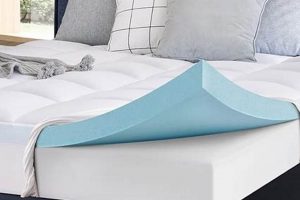
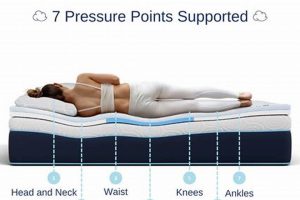
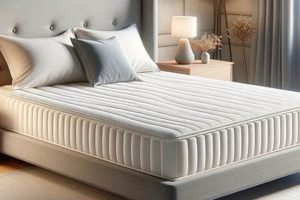
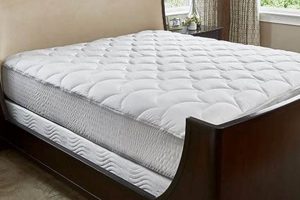
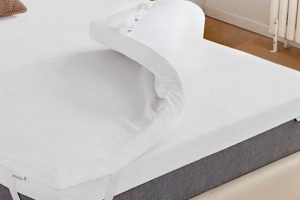
Maintaining a stable position for an additional layer of padding placed atop a mattress is a common concern. This issue arises when the supplementary cushioning shifts during sleep, detracting from the intended comfort and support.
The stability of such bedding accessories directly influences sleep quality. By preventing unwanted movement, individuals can experience uninterrupted rest, potentially leading to improved overall well-being. Historically, various methods have been developed to address this problem, reflecting an ongoing effort to optimize sleep environments.
Several practical approaches exist to mitigate this issue. These strategies encompass a range of solutions, from utilizing friction-enhancing materials to employing specialized securing devices, all aimed at ensuring a consistently comfortable sleep surface.
Strategies for Maintaining Topper Stability
The following methods are designed to prevent movement of supplementary mattress padding, thereby enhancing sleep quality.
Tip 1: Employ Gripping Material. Applying a non-slip pad between the mattress and the topper increases friction and inhibits movement. Products designed specifically for this purpose are commercially available.
Tip 2: Utilize Fitted Sheets with Deep Pockets. Sheets capable of fully encasing both the mattress and the topper create a secure fit, reducing the likelihood of slippage. Ensure the sheet dimensions are appropriate for the combined height of the mattress and topper.
Tip 3: Secure with Elastic Straps or Bands. Elastic straps or bands can be affixed to the corners of the topper and secured underneath the mattress. This method provides a physical connection, minimizing lateral movement.
Tip 4: Consider a Mattress Encasement. A mattress encasement that surrounds the entire mattress and topper offers comprehensive protection and can effectively prevent shifting. Choose an encasement constructed from a breathable material to avoid trapping heat.
Tip 5: Utilize Safety Pins or Topper Anchors. Strategically placed safety pins or specialized topper anchors can be used to subtly secure the topper to the mattress. Exercise caution to avoid damaging the mattress or topper material.
Tip 6: Reposition Regularly. Even with preventative measures in place, periodic readjustment may be necessary. Regularly inspect the topper’s position and make any needed corrections.
Adopting these strategies contributes to a more stable sleep surface and minimizes disruptions caused by shifting bedding. Consistent implementation of these techniques promotes a more restful and comfortable sleep experience.
These preventative measures represent practical solutions to a common sleep-related issue. By implementing these techniques, individuals can optimize their sleep environment and enhance overall sleep quality.
1. Friction Enhancement

Friction enhancement plays a crucial role in preventing mattress topper displacement. The interaction between the mattress and the topper relies on frictional forces to maintain positional stability. Insufficient friction between these surfaces results in the topper sliding, disrupting sleep comfort and negating the intended benefits of the topper. For instance, a memory foam topper placed directly on a slick, treated mattress is highly susceptible to movement due to the low coefficient of friction between these materials. Conversely, placing a rubberized pad between the two dramatically increases friction, minimizing slippage.
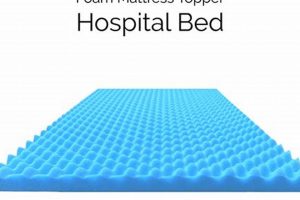
The selection of appropriate materials directly influences the effectiveness of friction enhancement. Options include non-slip fabrics, textured surfaces, and specialized grip pads. These materials increase the resistance to lateral movement, thereby improving the stability of the topper. In practical applications, using a waffle-patterned rubber pad is one possible strategy that effectively prevents the topper from sliding. Another approach involves applying a spray-on adhesive to create a more permanent, albeit potentially less desirable, bond.
Understanding and addressing frictional forces is paramount to maintaining topper stability. While various solutions exist, the underlying principle remains consistent: to increase the resistance to movement between the mattress and the topper. Overcoming the challenges of material compatibility and selecting appropriate friction-enhancing methods is important for the longevity and consistent performance of the sleep system.
2. Secure Fit

A secure fit is paramount to maintaining the position of a mattress topper and preventing its undesirable displacement during use. The absence of a snug and stable fit is a primary factor contributing to slippage, which in turn diminishes sleep quality and compromises the intended benefits of the topper. This element addresses the connection between physical dimensions, material properties, and the overall structure used to restrain the topper.
- Dimensional Compatibility
Accurate matching of topper dimensions to the underlying mattress is fundamental. Overly large toppers are prone to bunching and shifting, while those that are too small will not provide adequate coverage and are more susceptible to movement. Precision in sizing ensures a flush and stable interface. As an example, a queen-size topper placed on a full-size mattress is inherently unstable due to the dimensional mismatch.
- Sheet Depth and Elasticity
Deep-pocket fitted sheets play a critical role in securing both the mattress and the topper. Insufficient sheet depth results in inadequate encasement, increasing the likelihood of slippage, especially during sleep movements. Furthermore, the elasticity of the sheet material influences its grip on the topper. High-quality elastic provides a firmer hold, resisting displacement. Imagine using a standard sheet on a thick mattress with a topper. The sheet may constantly slip off, causing nightly disruptions.
- Attachment Mechanisms
The integration of attachment mechanisms, such as elastic straps or corner anchors, enhances the secure fit. These devices create a physical connection between the topper and the mattress, preventing lateral movement. Straps should be adjustable to accommodate varying mattress thicknesses. The absence of such features significantly increases the risk of slippage. For instance, a topper lacking corner straps will almost certainly shift during active sleep.
- Material Properties and Surface Texture
The surface texture of both the topper and the mattress, combined with the material properties of the fitted sheet, contribute to the overall secure fit. Rougher textures provide greater friction, inhibiting slippage. Similarly, certain materials, such as those with inherent n
on-slip properties, improve stability. A smooth topper on a polished mattress, covered by a satin sheet, will offer minimal resistance to movement.
The cumulative effect of these facets dictates the success of achieving a secure fit. Addressing each aspect dimensional compatibility, sheet depth and elasticity, attachment mechanisms, and material properties is essential for ensuring the topper remains stable and provides uninterrupted comfort and support. A holistic approach to achieving a secure fit minimizes the need for constant readjustment and promotes a more restful sleep experience.
3. Anchor Points

Anchor points represent a critical category of solutions employed to maintain mattress topper stability, directly addressing the common issue of unwanted movement. These solutions physically connect the topper to the underlying mattress, preventing slippage and ensuring consistent comfort. Their effectiveness depends on design, material, and proper application.
- Elastic Straps
Elastic straps, typically affixed to the corners of the topper, extend underneath the mattress, creating a secure tension that inhibits lateral movement. The elasticity allows for accommodation of varying mattress thicknesses. A practical example involves straps with adjustable buckles, enabling precise tension control. Insufficient strap tension renders them ineffective, while excessive tension can damage the topper or mattress over time. Their primary implication is providing a simple and reversible method of securing the topper.
- Button and Loop Systems
This system utilizes strategically placed buttons on the mattress and corresponding loops on the topper. By interlocking these elements, a series of fixed anchor points is established. A real-world application involves using heavy-duty buttons and reinforced loops to withstand repeated use and stress. Improperly sewn buttons or fragile loops can lead to failure, undermining the entire system. These systems offer a more integrated and potentially more secure solution compared to simple straps.
- Adhesive Strips
Adhesive strips provide a direct bonding method between the topper and the mattress. While offering strong initial adhesion, their long-term durability and potential for damage to the mattress surface are primary concerns. An example includes using double-sided, low-residue adhesive tape designed for fabric. Improper application, such as using excessive adhesive or failing to properly clean the surfaces beforehand, can result in irreversible damage. The implication is a potentially more permanent, but also riskier, approach.
- Corner Pockets
Corner pockets, integrated into the design of certain toppers, function by enveloping the corners of the mattress. This design creates a snug fit, resisting movement. An example is a topper with deep corner pockets made from a stretchable fabric. Insufficient pocket depth or use of non-elastic materials reduces their effectiveness. This approach offers a passive method of anchoring, relying on physical containment rather than active tension or adhesion.
Collectively, these anchor point strategies address the multifaceted challenge of maintaining mattress topper stability. The optimal choice depends on individual preferences, mattress and topper characteristics, and tolerance for potential drawbacks such as adhesive residue or strap visibility. Selection and proper implementation are essential for ensuring the anchor points effectively contribute to a stable and comfortable sleep environment.
4. Encasement Strategy
An encasement strategy represents a comprehensive approach to preventing mattress topper displacement. This method involves fully enclosing both the mattress and topper within a protective layer, effectively minimizing movement and maintaining a stable sleep surface. The selection and application of encasements directly impact the effectiveness of this technique.
- Complete Containment
The fundamental principle of an encasement strategy is total enclosure. This involves a zippered cover that surrounds the entire mattress and topper assembly. This barrier prevents lateral movement by physically restricting the toppers ability to shift independently. A common example is using a waterproof mattress encasement to protect against spills and allergens while simultaneously securing the topper. Failure to fully close the zipper compromises the entire strategy. The implication is a holistic protection system that addresses both stability and hygiene.
- Material Properties
The material composition of the encasement directly influences its effectiveness. Breathable fabrics, such as cotton or specialized synthetics, are preferable to prevent heat buildup and maintain airflow. Non-slip or textured surfaces on the interior of the encasement enhance friction between the mattress and topper, further reducing movement. A plastic or vinyl encasement, while waterproof, may trap heat and exacerbate slippage due to its smooth surface. The implication is a careful balance between protection, comfort, and stability.
- Zipper Quality and Placement
The zipper serves as the closure mechanism for the encasement and must be robust and reliable. A poorly constructed zipper can easily break, rendering the encasement ineffective. Zipper placement should also be considered; a zipper running along the bottom of the mattress is less likely to interfere with sleep comfort compared to one positioned on the top surface. Consider a scenario where a cheap zipper breaks after minimal use, negating the benefits of the encasement. The implication is the necessity of selecting an encasement with a durable, high-quality zipper.
- Dimensional Accuracy
Accurate sizing is crucial for effective encasement. An encasement that is too small will be difficult to install and may place undue stress on the zipper. Conversely, an encasement that is too large will not provide a snug fit and may allow the topper to shift within the cover. For example, attempting to fit a queen-size encasement onto a king-size mattress and topper is impractical. The implication is careful measurement and selection of an encasement that precisely matches the dimensions of the mattress and topper combination.
The encasement strategy offers a comprehensive solution for stabilizing mattress toppers, but its success hinges on careful consideration of these factors. By selecting a high-quality encasement with appropriate materials, a robust zipper, and accurate dimensions, individuals can significantly minimize topper movement and enhance their sleep experience. This technique integrates protection, hygiene, and stability into a single solution.
5. Regular Adjustment

Even with preventative measures implemented, mattress toppers may gradually shift over time due to sleeper movement and compression of materials. Regular adjustment, therefore, constitutes a vital maintenance practice in preserving topper stability. The absence of such adjustments can negate the effectiveness of initial stabilization e
fforts, leading to diminished sleep quality as the topper migrates from its intended position. For example, consider a scenario where a topper is initially secured with elastic straps. Over several weeks of use, the straps may loosen, and the topper begins to creep toward one side of the bed. Without regular readjustment, this misalignment will worsen, potentially causing discomfort and disrupting sleep.
The frequency of necessary adjustments depends on several factors, including the type of topper material, the activity level of the sleeper, and the effectiveness of the initial securing method. High-motion sleepers may necessitate more frequent adjustments compared to those who remain relatively still during sleep. Similarly, toppers made from materials with less inherent grip, such as down or feather, may require more attention. Practical application involves visually inspecting the topper’s position on a weekly basis, noting any signs of shifting or misalignment. Minor adjustments can be made immediately, while more substantial repositioning may require re-engaging securing mechanisms such as straps or non-slip pads.
In summary, regular adjustment serves as an ongoing process crucial for maintaining mattress topper stability. It complements initial preventative measures by addressing gradual displacement that occurs during normal use. By incorporating this practice into a routine maintenance schedule, individuals can optimize topper performance, prolong its lifespan, and ensure consistent comfort and support, thereby contributing to improved sleep quality. Failure to perform regular adjustments transforms preventive measures in momentary, while the purpose of article is to keep mattress topper from sliding.
6. Material Compatibility

The interplay between the materials comprising both the mattress and the topper exerts a significant influence on the propensity for slippage. Evaluating material characteristics is crucial when seeking to prevent undesired topper movement, as certain combinations inherently promote or inhibit stability.
- Friction Coefficients
The inherent slipperiness or grip of contacting surfaces directly impacts topper stability. A low coefficient of friction between the mattress and topper materials facilitates movement, while a high coefficient inhibits it. For example, a smooth, treated mattress paired with a silky topper will exhibit a greater tendency to slide compared to a textured mattress and a topper with a non-slip backing. The selection of materials with compatible friction properties is paramount in mitigating slippage.
- Surface Texture
The topography of the contacting surfaces influences their ability to interlock and resist movement. Rougher textures provide greater friction and interlocking potential, while smoother textures offer less resistance to slippage. Consider a memory foam topper, which often possesses a relatively smooth surface. Pairing it with a similarly smooth mattress increases the risk of sliding. Conversely, a quilted mattress surface provides more texture and may improve stability.
- Material Weight and Density
The weight and density of the topper material contribute to its overall stability. Heavier, denser materials are less prone to shifting compared to lighter, less dense options. A lightweight down topper, for instance, may be more susceptible to movement compared to a heavier latex or memory foam topper. This is because a greater force is required to initiate and sustain the movement of a heavier object.
- Conformability and Compression
The degree to which the topper conforms to the mattress surface and compresses under weight influences its stability. Toppers that readily conform and compress create a more intimate contact area, increasing friction and reducing the likelihood of slippage. Conversely, rigid or non-conforming toppers may create air gaps and reduced contact, facilitating movement. A topper made of high-density memory foam, which conforms closely to the body, will generally exhibit greater stability than a less conforming fiberfill topper.
Ultimately, effective prevention of topper slippage necessitates a thoughtful evaluation of material compatibility. Considering factors such as friction coefficients, surface texture, weight, and conformability allows for the selection of mattress and topper combinations that inherently promote stability, reducing the reliance on external securing mechanisms. A combination of compatible materials and appropriate securing methods provides the most robust solution for maintaining topper position and ensuring consistent sleep comfort.
7. Weight Distribution

The manner in which weight is distributed across a mattress topper significantly impacts its stability and its propensity to shift during use. Uneven or concentrated weight distribution can exacerbate slippage, undermining efforts to maintain its position. Therefore, understanding and addressing weight distribution is crucial for preventing unwanted topper movement.
- Center of Gravity Location
The location of an individual’s center of gravity during sleep influences pressure distribution on the topper. Those who primarily sleep on their side, for instance, concentrate weight along a narrower area compared to back sleepers. This concentrated pressure can cause localized compression of the topper and increased friction with the mattress, potentially leading to slippage over time. For example, a side sleeper repeatedly applying pressure to one side of the topper may notice it gradually migrating towards the edge of the bed. The implication is that sleep position preferences can affect topper stability.
- Support Layer Consistency
Inconsistencies in the underlying mattress’s support layers can contribute to uneven weight distribution on the topper. Sagging or worn areas in the mattress create localized depressions, causing the topper to sink disproportionately in these areas. This uneven compression can generate shear forces that promote slippage. Imagine a mattress with a prominent sag in the center. A topper placed on this mattress will be more likely to shift towards the sag due to the differential pressure. The implication is that the condition of the underlying mattress significantly affects topper stability.
- Body Mass Index (BMI) Considerations
Individuals with higher BMIs exert greater pressure on the mattress and topper, potentially increasing the likelihood of slippage. The increased weight amplifies the effects of uneven support and frictional forces, making it more challenging to maintain the topper’s position. Consider two individuals sleeping on identical mattresses and toppers, but one has a significantly higher BMI. The individual with the higher BMI will likely experience greater topper movement due to the increased downward force. The implication is that body weight influences the demands placed on the topper and the effectiveness of stabilization methods.
- Multi-Person Use
When multiple individuals share a bed, their combined weight and individual sleep movements can exacerbate the issue of uneven weight distribution. Differing sleep positions, weights, and movement patterns create a complex pattern of pressure variations across the topper, increasing the chances of slippage. For insta
nce, one partner might be a restless sleeper, while the other remains relatively still. This disparity in movement can cause the topper to shift towards the side of the more active sleeper. The implication is that shared sleeping arrangements require more robust stabilization strategies to counteract the combined effects of multiple individuals.
In conclusion, accounting for weight distribution dynamics is crucial in addressing mattress topper slippage. Factors such as sleep position, mattress condition, body weight, and shared sleeping arrangements all contribute to the overall pattern of pressure exerted on the topper. By understanding these influences, individuals can implement targeted strategies to mitigate uneven weight distribution and maintain topper stability, enhancing the quality of their sleep environment.
Frequently Asked Questions
This section addresses common inquiries regarding the prevention of mattress topper slippage, offering objective and practical solutions.
Question 1: Why does my mattress topper consistently slide out of place?
Slippage typically occurs due to insufficient friction between the topper and the mattress, coupled with movement during sleep. Material compatibility, such as smooth surfaces in contact, exacerbates the issue. Body weight and sleep position also contribute to the problem.
Question 2: Are there specific types of mattress toppers more prone to sliding?
Yes. Toppers constructed from lightweight materials like down or feather tend to shift more readily compared to denser options like memory foam or latex. The absence of a non-slip backing further increases the likelihood of movement.
Question 3: What is the most effective method for preventing a mattress topper from sliding?
A multi-faceted approach yields the best results. Combining a non-slip pad between the mattress and topper with deep-pocket fitted sheets and elastic corner straps provides a comprehensive solution. Regular adjustments are also necessary.
Question 4: Will a mattress encasement solve the problem of topper slippage?
A mattress encasement can significantly reduce slippage by fully encasing both the mattress and the topper, restricting movement. However, the encasement material should be breathable to prevent heat buildup, and the zipper must be durable.
Question 5: How often should I adjust my mattress topper to prevent sliding?
Adjustment frequency depends on individual sleep habits and the effectiveness of the securing method. A weekly inspection and readjustment, if needed, is generally recommended. More active sleepers may require more frequent adjustments.
Question 6: Can the condition of my mattress contribute to topper slippage?
Yes. A sagging or uneven mattress surface creates inconsistent support, promoting topper movement towards the weaker areas. Addressing mattress issues prior to securing the topper is advisable.
These answers provide a foundation for understanding and resolving mattress topper slippage. Applying these principles can lead to a more stable and comfortable sleep environment.
The subsequent sections will explore advanced techniques and considerations for optimizing sleep comfort.
Keep Mattress Topper From Sliding
The preceding exploration has detailed the multifaceted challenge of maintaining mattress topper stability. Effective strategies encompass friction enhancement, secure fit mechanisms, strategically placed anchor points, and comprehensive encasement techniques. Material compatibility and regular adjustments further contribute to a stable sleep surface. The interplay of these elements determines the success in preventing undesirable topper movement.
Addressing mattress topper slippage represents a commitment to optimizing sleep quality. By implementing the outlined strategies, individuals can ensure consistent support, minimize sleep disruptions, and cultivate a more restful sleep environment. The pursuit of stability translates directly to improved comfort and well-being.