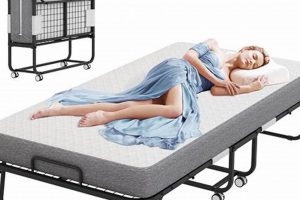
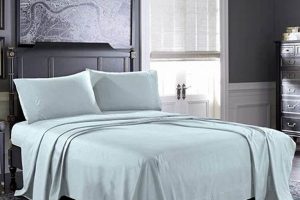
A packaged offer, frequently found in the bedding market, features both an extra-large sleeping platform and a suitably sized surface for rest. These bundles provide a convenient solution for individuals seeking to acquire both components simultaneously, often at a price point that is more attractive than purchasing each item separately. As an example, one might find a solid wood frame paired with a memory foam sleeping surface, marketed as a complete sleep system.
The appeal of these offerings stems from their simplicity and potential cost savings. By bundling the frame and sleeping surface, retailers streamline the purchasing process for consumers. Historically, consumers would source these items separately, potentially leading to compatibility issues or increased overall expense. The advent of packaged offerings simplifies the process, offering a coordinated and often more economical approach to furnishing a bedroom.
The following sections will explore the various factors to consider when evaluating these packaged offerings, including materials, construction quality, pricing considerations, and the potential benefits of purchasing these bundles versus individual components. We will also discuss the importance of considering personal preferences and sleep needs when selecting the appropriate bundled offering.
Selecting an appropriate king-size sleeping arrangement requires careful consideration. Evaluating package offerings necessitates a methodical approach, focusing on factors beyond initial pricing.
Tip 1: Assess Frame Material and Construction. Examine the materials used in the bed frame’s construction. Solid wood or reinforced metal typically indicate superior durability compared to particleboard or flimsy composites. Check the joinery; dovetail or mortise-and-tenon joints are preferable to stapled or glued connections.
Tip 2: Scrutinize Mattress Specifications. Pay close attention to the mattress’s internal components. Innerspring systems should have a high coil count for improved support and motion isolation. Foam mattresses should specify density and type (e.g., memory foam, latex) to assess firmness and longevity.
Tip 3: Evaluate Support and Comfort Preferences. Consider individual sleep needs and preferences. Side sleepers may benefit from a softer surface, while back or stomach sleepers may require a firmer option for spinal alignment. Ensure the package offering aligns with these individual requirements.
Tip 4: Compare Warranty and Return Policies. Review the warranty terms for both the frame and sleeping surface. A longer warranty period often suggests greater confidence in the product’s durability. Additionally, ascertain the retailer’s return policy in case the selected bundle does not meet expectations after purchase.
Tip 5: Verify Compatibility and Dimensions. Confirm that the sleeping surface dimensions are precisely compatible with the frame. Discrepancies, even minor ones, can lead to instability or reduced comfort. Ensure the frame’s weight capacity exceeds the combined weight of the sleeping surface and its intended occupants.
Tip 6: Investigate Foundation Requirements. Determine if the offered bundle requires a separate foundation or box spring. Some frames are designed for direct mattress placement, while others necessitate additional support. Failure to adhere to these requirements may void the warranty or compromise the sleeping surface’s integrity.
Tip 7: Analyze Pricing and Discounts. Conduct a thorough price comparison between the package offering and the individual component costs. Determine if the “deal” genuinely represents a cost savings or if comparable products are available at a lower combined price elsewhere.
Adhering to these guidelines can mitigate the risks associated with these purchases, ensuring selection of a high-quality, durable, and comfortable sleeping arrangement. Prudent evaluation facilitates informed decision-making, maximizing long-term value and satisfaction.
The concluding section will provide a summary of the key considerations and offer a final perspective on the benefits and drawbacks of selecting a king-size sleeping arrangement.
1. Cost-Effectiveness

The allure of packaged king-size sleeping arrangements often centers on the perceived financial advantage. Retailers frequently market these bundles as representing a significant reduction in overall expenditure compared to purchasing the frame and sleeping surface separately. This presumed cost-effectiveness can be a primary driver for consumer choice, particularly in budget-conscious environments. However, the actual savings achieved through packaged offerings necessitate careful scrutiny. A superficial assessment based solely on the advertised price may be misleading, as underlying compromises in material quality or construction could offset any initial financial benefit. For instance, a discounted bundle might feature a frame constructed from lower-grade wood or a sleeping surface with reduced foam density, ultimately leading to premature wear and the need for replacement sooner than anticipated.
A proper evaluation of the cost-effectiveness of these bundles requires comparing the price of the packaged option against the cost of individually sourced components of comparable quality. This comparative analysis should extend beyond initial purchase price to encompass factors such as shipping costs, warranty terms, and potential long-term maintenance expenses. Consider the hypothetical scenario of a “deal” offering a king-size frame and memory foam sleeping surface for $1200, while comparable individual components from reputable brands could be acquired for $1400. This initial $200 saving might appear substantial, but if the bundled frame exhibits substandard joinery and requires reinforcement within a year, the additional expense could negate the initial advantage. Furthermore, a restrictive warranty or unfavorable return policy on the bundled option may exacerbate the overall cost if the consumer is ultimately dissatisfied with the purchase.
In conclusion, while bundled king-size sleeping platforms can potentially offer cost savings, a thorough assessment is crucial to avoid false economies. Consumers should prioritize a detailed comparison of material quality, construction techniques, warranty provisions, and return policies to accurately determine whether the advertised financial advantage translates into genuine long-term value. A focus on quality and durability, rather than solely on the initial price point, can mitigate the risk of incurring unforeseen expenses and ensure a more satisfactory and cost-effective sleeping solution in the long run. Prioritize durable materials and construction over mere immediate savings, and scrutinize the fine print to ensure long-term value.
2. Material Durability
The longevity and overall value of king-size bed and mattress combinations are intrinsically linked to the durability of the materials used in their construction. This factor is particularly pertinent given the substantial investment these combinations represent. The frame, typically constructed from wood or metal, must withstand significant static and dynamic loads. Similarly, the mattress must maintain its structural integrity and comfort properties over extended use. Inferior materials in either component can lead to premature failure, resulting in discomfort, potential safety hazards, and the necessity for costly replacements. For instance, a frame constructed from particleboard is inherently more susceptible to cracking and joint failure compared to a solid hardwood frame, especially under the weight of a king-size mattress and two occupants. Similarly, a mattress utilizing low-density foam will exhibit quicker compression and sagging than a high-density counterpart, diminishing support and comfort over time.
The impact of material durability extends beyond the immediate lifespan of the bed and mattress. A less durable frame can compromise the integrity of the mattress itself. Warping or sagging in the frame can lead to uneven weight distribution on the sleeping surface, accelerating wear and tear and reducing the mattress’s lifespan. Conversely, a poorly constructed mattress can place undue stress on the frame. Over time, this added stress can cause joint failures or structural weakening. The interplay between frame and mattress durability underscores the importance of evaluating both components holistically. A real-world example illustrates this point: a family invested in a king-size “deal” featuring a visually appealing frame made of hollow metal tubing and a plush, low-density memory foam mattress. Within two years, the frame exhibited significant bending in the center, rendering the mattress unusable due to severe sagging. The initial cost savings were completely negated by the need to replace both components within a short timeframe.
In summation, material durability is a paramount consideration when evaluating king-size bed and mattress bundles. The long-term performance, comfort, and safety of these combinations are directly contingent on the quality and resilience of the materials employed in both the frame and sleeping surface. While attractive pricing may initially entice purchasers, prioritizing material durability will ultimately yield superior value by extending the lifespan of the investment and minimizing the potential for premature replacement. Choosing combinations that boast robust materials and construction techniques serves as a prudent strategy for securing a durable and comfortable sleeping solution.
3. Size Compatibility

Within the realm of bundled king-size sleeping arrangements, size compatibility transcends mere dimensional matching; it encompasses the intricate interplay between the frame and sleeping surface, influencing structural integrity, support distribution, and overall user experience. Incompatibility, even seemingly minor variations, can precipitate significant performance deficits and negate the intended benefits of the bundled solution.
- Dimensional Precision
Dimensional precision pertains to the exact correspondence between the internal dimensions of the bed frame and the external dimensions of the mattress. Deviations from standard king-size dimensions (typically 76 inches wide by 80 inches long) can result in the mattress either being excessively tight within the frame, leading to premature wear along the edges, or being too loose, causing instability and potential shifting during use. A common example is a frame designed for a slightly smaller “California King” mattress (72 inches wide by 84 inches long) being paired with a standard king, leading to unsightly gaps and inadequate edge support.
- Weight Distribution and Support
The frame’s internal support structure, including slats or a solid platform, must be engineered to adequately distribute the weight of the mattress and its occupants. Inadequate support can result in mattress sagging, particularly in the center, compromising spinal alignment and potentially voiding the mattress warranty. Bundled solutions must specify the maximum weight capacity of the frame and ensure it aligns with the anticipated load. A frame with widely spaced slats, for example, may not provide sufficient support for a heavy memory foam mattress, leading to premature degradation of the foam’s structural integrity.
- Height Alignment and Aesthetics
The combined height of the frame and mattress contributes significantly to the overall aesthetic appeal and functional ergonomics of the sleeping arrangement. A frame that is excessively low may result in a mattress that is difficult to get in and out of, particularly for individuals with mobility limitations. Conversely, a frame that is too high may create an ungainly appearance and necessitate the use of a step stool. Bundled solutions should specify the total height of the assembled unit and ensure it aligns with the user’s preferences and physical capabilities. Pairing a low-profile platform bed with an extra-thick pillow-top mattress, for example, can result in an uncomfortably high sleeping surface.
- Foundation Requirements
Certain mattress types, particularly innerspring models, may require a separate foundation (box spring) for optimal support and longevity. Bundled solutions must clearly indicate whether a foundation is required and, if so, whether it is included in the package. Using a mattress without the appropriate foundation can compromise its support, reduce its lifespan, and potentially void the warranty. Attempting to use a memory foam mattress, designed for a solid platform, on a traditional box spring, can lead to uneven support and premature wear.
These facets of size compatibility collectively underscore the importance of meticulous evaluation when considering bundled king-size bed and mattress deals. A seemingly attractive price point can quickly become a liability if the frame and mattress are not precisely matched in terms of dimensions, support capabilities, height alignment, and foundation requirements. Therefore, prioritizing size compatibility serves as a critical step in ensuring a comfortable, durable, and aesthetically pleasing sleeping solution.
4. Warranty Coverage

Warranty coverage represents a critical, yet often overlooked, element when evaluating king size bed and mattress combinations. This protection, offered by manufacturers or retailers, provides recourse against defects in materials or workmanship, offering consumers a degree of assurance regarding the long-term performance and durability of their investment. The specifics of warranty coverage can vary significantly, impacting the overall value proposition of a bundled offering.
- Scope of Coverage
The breadth of protection defines what types of issues are covered under the warranty. Comprehensive warranties may encompass defects in the frame’s structure, such as joint failures or warping, as well as mattress issues like sagging, indentations, or coil breakage. Limited warranties, conversely, might only cover specific defects or apply only to certain components. A consumer discovering a broken slat in a bed frame six months after p
urchase would benefit from a warranty that covers structural frame defects. Without such coverage, the repair or replacement would be at the consumer’s expense. - Duration of Coverage
The length of the warranty period is a direct indicator of the manufacturer’s confidence in the product’s longevity. Longer warranty durations generally suggest higher quality materials and construction techniques. Mattress warranties often range from one year to upwards of ten years, while frame warranties may be shorter. A ten-year non-prorated mattress warranty provides more extensive protection than a five-year prorated warranty, where the consumer is responsible for a portion of the repair or replacement cost as the mattress ages.
- Exclusions and Limitations
Warranty agreements invariably contain exclusions and limitations that define the circumstances under which coverage is voided. Common exclusions include damage resulting from misuse, improper care, or normal wear and tear. Stains, burns, or infestations may also invalidate the warranty. A warranty might exclude coverage for sagging that is less than a specified depth (e.g., 1.5 inches), defining it as acceptable wear. Understanding these exclusions is crucial to avoid disappointment should a claim be necessary.
- Claim Process and Requirements
The ease and efficiency of the claim process can significantly impact the consumer experience. Warranties often require the original proof of purchase, photographic evidence of the defect, and adherence to specific procedures for submitting a claim. Some warranties may necessitate inspection by a qualified technician. A streamlined claim process with clear instructions and prompt communication can minimize inconvenience and ensure a satisfactory resolution. Conversely, a complex or ambiguous claim process can discourage consumers from pursuing valid warranty claims.
In conclusion, warranty coverage serves as a crucial safeguard for consumers purchasing king size bed and mattress combinations. A thorough examination of the warranty’s scope, duration, exclusions, and claim process is essential to assess the true value and protection afforded by the bundled offering. Prioritizing combinations with comprehensive and consumer-friendly warranties can mitigate the risks associated with potential defects and provide peace of mind regarding the long-term performance of the investment.
5. Comfort Level
Comfort level, in the context of king size bed and mattress combinations, represents a multifaceted attribute directly influencing sleep quality, physical well-being, and overall satisfaction. It is not merely a subjective preference but a critical determinant of a sleeping arrangement’s suitability for individual needs and physical characteristics. Selecting a combination that aligns with these needs is paramount to achieving restful and restorative sleep.
- Mattress Firmness and Support
Mattress firmness, ranging from plush to extra firm, significantly affects spinal alignment and pressure point relief. Side sleepers generally benefit from softer surfaces that contour to the body’s curves, while back and stomach sleepers typically require firmer support to maintain proper spinal alignment. Insufficient support can lead to back pain, joint stiffness, and disrupted sleep. The choice of firmness should consider individual weight, sleeping position, and any pre-existing medical conditions. A person with scoliosis, for example, might require a specific firmness level recommended by a healthcare professional to minimize discomfort.
- Material Composition and Breathability
The materials comprising the mattress, such as memory foam, latex, or innerspring coils, influence temperature regulation, motion isolation, and overall comfort. Memory foam conforms closely to the body, providing pressure relief but potentially trapping heat. Latex offers a more responsive feel with better breathability. Innerspring mattresses promote airflow but may transmit motion more readily. Individuals prone to overheating during sleep might prioritize mattresses with breathable materials like latex or those incorporating cooling technologies. Couples may value mattresses with enhanced motion isolation to minimize disturbances caused by movement.
- Frame Construction and Stability
The bed frame’s design and construction contribute to the overall comfort experience. A sturdy and stable frame minimizes noise and motion transfer, preventing disruptions during sleep. Frames with inadequate support can lead to mattress sagging, compromising comfort and potentially shortening the mattress’s lifespan. A frame with poorly designed slats, for instance, may create pressure points and uneven support across the mattress surface, resulting in discomfort and restless sleep. The frame’s height also affects accessibility and ease of getting in and out of bed.
- Personal Preferences and Sensitivities
Comfort is ultimately a personal experience influenced by individual preferences and sensitivities. Some individuals prefer a plush, enveloping feel, while others prefer a firmer, more supportive surface. Allergies or sensitivities to certain materials, such as latex or certain chemicals used in foam production, must also be considered. Trying out different mattress types and firmness levels is crucial to determining personal preferences and ensuring a comfortable sleeping experience. Consulting with a sleep specialist may be beneficial for individuals with specific sleep-related issues or physical conditions.
These interconnected facets of comfort level emphasize the need for a holistic approach when selecting a king size bed and mattress combination. Prioritizing individual needs, considering material properties, and assessing frame stability are essential steps in ensuring a comfortable and restorative sleep environment. Neglecting any of these factors can lead to discomfort, disrupted sleep, and ultimately, dissatisfaction with the purchased combination.
6. Shipping Logistics

Shipping logistics represents a significant consideration in the acquisition of king size bed and mattress combinations, owing to their substantial size, weight, and associated handling complexities. The intricacies of transportation, delivery, and potential assembly directly influence the overall cost, convenience, and risk factors associated with these purchases.
- Delivery Options and Costs
Various delivery options, ranging from standard curbside drop-off to white-glove service, impact both the cost and level of convenience. Standard delivery typically involves the carrier delivering the item to the curb, leaving the responsibility of moving the heavy items into the residence to the consumer. White-glove service, on the other hand, includes inside delivery, assembly, and removal of packaging materials, albeit at a higher cost. The choice between these options hinges on individual physical capabilities, available assistance, and willingness to pay for added convenience. For example, an elderly individual living alone might find white-glove service essential, while a younger, able-bodied person could opt for the more economical curbside delivery.
- Freight Handling and Insurance
King size bed and mattress combinations necessitate specialized freight handling
due to their size and weight. Carriers must employ appropriate equipment and techniques to prevent damage during transit. Adequate insurance coverage is crucial to protect against loss or damage incurred during shipping. Consumers should carefully review the shipping terms and conditions to understand the carrier’s liability in case of damage and the procedures for filing a claim. A damaged headboard upon arrival underscores the importance of verifying adequate insurance coverage and documenting the damage upon delivery. - Delivery Timeframes and Scheduling
Delivery timeframes for these bulky items can be longer compared to smaller parcels, requiring careful planning and coordination. Consumers should inquire about estimated delivery times and the availability of scheduled delivery appointments. Unreliable delivery timeframes can disrupt schedules and cause inconvenience. For example, a delayed delivery might necessitate rescheduling movers or result in the item sitting unattended outdoors for an extended period. Precise and reliable delivery scheduling is paramount for a smooth and stress-free purchasing experience.
- Assembly Requirements and Assistance
Many king size bed frames require assembly upon delivery. The complexity of the assembly process can vary depending on the design and construction of the frame. Consumers should assess their own assembly skills and determine whether professional assembly assistance is necessary. Some retailers offer assembly services as an add-on, while others require the consumer to hire a third-party assembler. Attempting to assemble a complex bed frame without adequate skills or tools can lead to frustration, potential damage to the product, and even physical injury.
The shipping logistics associated with king size bed and mattress combinations extend beyond simple transportation. The interplay of delivery options, freight handling, timeframes, and assembly requirements directly influences the overall cost, convenience, and risk involved in acquiring these items. Prudent evaluation of these logistical factors empowers consumers to make informed decisions and ensure a positive purchasing experience.
7. Return Policies

Return policies constitute a pivotal element within transactions involving king size bed and mattress combinations, providing a safety net for consumers encountering issues with their purchases. The inherent nature of these itemstheir size, cost, and the subjective element of comfortnecessitates a clear and equitable return framework. A well-defined return policy mitigates the risk associated with online purchases, where physical inspection is precluded, and accounts for potential discrepancies between advertised specifications and actual product performance. Without a reasonable return provision, consumers face significant financial exposure if the selected combination proves unsuitable or defective.
The absence of a satisfactory return policy can directly deter potential buyers, particularly in the online marketplace. Given the intimate connection between sleeping arrangements and personal well-being, consumers are understandably hesitant to commit to a substantial investment without the assurance of recourse should the product fail to meet their expectations. A restrictive return policy, characterized by short return windows, restocking fees, or complex return procedures, can erode consumer confidence and lead to abandoned purchases. Conversely, a generous return policy, often including a trial period, can serve as a powerful incentive, fostering trust and encouraging consumers to overcome their hesitations. For example, a retailer offering a 100-night trial period on a king size mattress gains a competitive advantage, signaling confidence in product quality and a commitment to customer satisfaction. However, these policies often include stipulations regarding the condition of the returned items, requiring them to be free from stains or damage, which introduces a layer of complexity for the consumer.
In conclusion, return policies are inextricably linked to the successful marketing and consumer acceptance of king size bed and mattress bundles. They function as a risk-mitigation mechanism, fostering trust and encouraging purchasing decisions. Retailers who prioritize transparent, equitable, and customer-centric return policies are better positioned to cultivate long-term relationships and thrive in the competitive bedding market. Balancing consumer protection with business practicality remains the key challenge, ensuring return policies are both attractive and sustainable.
Frequently Asked Questions
This section addresses common inquiries regarding king size bed and mattress packaged offerings, providing clarity on key considerations and potential pitfalls.
Question 1: Are packaged sleeping platform offerings invariably more economical than purchasing components separately?
Not necessarily. While bundled pricing may appear attractive, a thorough comparison of individual component costs, considering equivalent material quality and construction, is advised. Superficial discounts can mask compromises in durability or features.
Question 2: What constitutes a suitable warranty for a king-size bundled sleeping platform?
Ideal warranty coverage should encompass structural frame defects, mattress sagging exceeding defined thresholds, and material flaws. Extended warranty durations, exceeding five years for mattresses and two years for frames, indicate greater manufacturer confidence.
Question 3: How critical is size compatibility between the frame and the sleeping surface?
Precise dimensional matching is paramount to prevent instability, uneven support, and premature wear. Verify that the sleeping surface dimensions align precisely with the frame’s internal measurements, accounting for any required foundation.
Question 4: What are the key considerations when assessing material durability in these packaged offerings?
Frame materials should prioritize solid wood or reinforced metal over particleboard. Mattresses should specify foam density (for foam models) or coil count (for innerspring models) to evaluate support and longevity. Seek certifications indicating compliance with safety standards.
Question 5: How do shipping logistics affect the overall cost and convenience of these purchases?
Shipping costs, delivery options (curbside vs. white-glove), and assembly requirements can significantly impact the total expense and effort. Evaluate these factors alongside the base price to determine the true cost of acquisition.
Question 6: What recourse is available if the bundled sleeping platform fails to meet expectations or exhibits defects?
A clear and equitable return policy is essential. Review the return window, associated fees (e.g., restocking), and the process for initiating a return to ensure adequate protection against dissatisfaction or product flaws.
These questions and answers provide a framework for evaluating the merits and potential drawbacks of packaged king size sleeping platforms. Diligent research and informed decision-making are crucial to securing a satisfactory and long-lasting sleeping solution.
The subsequent sections will present a concluding summary of the key considerations discussed and offer a final perspective on maximizing value when purchasing these bundles.
Conclusion
The preceding analysis has explored the multifaceted aspects of king size bed and mattress
combo deals. Key considerations encompass material durability, size compatibility, warranty provisions, and shipping logistics. A thorough evaluation of these elements is essential to mitigate potential risks and maximize long-term value. Superficial cost savings can be misleading if underlying compromises in quality or support are not adequately addressed.
The decision to acquire a packaged sleeping arrangement should be predicated on informed assessment, prioritizing lasting comfort, and enduring support. Neglecting due diligence may result in dissatisfaction and premature replacement costs. Prospective purchasers are urged to prioritize long-term value over immediate savings, ensuring a durable and restorative sleep environment.

![Best Foldable Murphy Bed Mattress [Guide] for Small Spaces | Organic & Natural Mattress Buyer’s Guide: Non-Toxic Sleep Solutions](https://mattressworldpa.com/wp-content/uploads/2025/07/th-7312-300x200.jpg "Best Foldable Murphy Bed Mattress [Guide] for Small Spaces Organic & Natural Mattress Buyer’s Guide: Non-Toxic Sleep Solutions")
![Best Sofa Bed Blow Up Mattress [Guide & Deals] | Organic & Natural Mattress Buyer’s Guide: Non-Toxic Sleep Solutions](https://mattressworldpa.com/wp-content/uploads/2025/07/th-7311-300x200.jpg "Best Sofa Bed Blow Up Mattress [Guide & Deals] Organic & Natural Mattress Buyer’s Guide: Non-Toxic Sleep Solutions")