A spacious sleeping surface, designed to accommodate multiple individuals or those who prefer ample personal space, offers dimensions significantly larger than standard full or queen options. This type of bedding typically measures approximately 76 inches wide and 80 inches long. The increased width and length provide freedom of movement and enhanced comfort during sleep.
The expanded area contributes to undisturbed rest by minimizing partner disturbance and allowing for various sleeping positions. Historically, larger bedding became more prevalent as houses and bedrooms grew in size, reflecting a desire for enhanced comfort and luxury within the domestic space. The benefits extend beyond just space; they can improve sleep quality, reduce pressure points, and enhance overall well-being.
The following sections will explore aspects such as material composition, construction techniques, support systems, and considerations for choosing the optimal product based on individual needs and preferences.
Considerations for Selecting Large Bedding
Selecting the appropriate large bedding option requires careful evaluation of individual needs and preferences. Several factors contribute to optimizing sleep quality and overall comfort.
Tip 1: Assess Room Dimensions: Before purchasing, meticulously measure the bedroom. Ensure adequate space for movement around the perimeter and other furniture. A cramped environment negates the advantages of the increased sleeping surface.
Tip 2: Evaluate Support Needs: Individuals with back pain or specific orthopedic requirements should prioritize models that offer targeted support. Look for certifications from chiropractic associations or orthopedic specialists, if available.
Tip 3: Consider Material Composition: The internal materials directly impact comfort and durability. Memory foam offers pressure relief, while innerspring systems provide traditional support. Latex is a durable, hypoallergenic option.
Tip 4: Assess Sleep Style: Side sleepers may benefit from a softer surface to alleviate pressure on hips and shoulders. Back and stomach sleepers typically require firmer support to maintain spinal alignment.
Tip 5: Research Edge Support: Strong edge support prevents sagging and increases the usable sleeping surface. This is particularly important for individuals who share the bed or frequently sleep near the edge.
Tip 6: Review Trial Periods and Warranties: Reputable manufacturers offer trial periods allowing returns if the product does not meet expectations. A comprehensive warranty protects against manufacturing defects and premature wear.
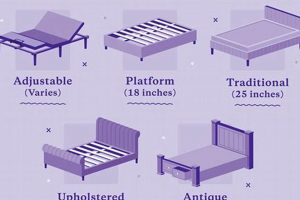
Tip 7: Factor in Foundation Compatibility: Ensure the chosen foundation is designed to support the weight and dimensions of the large bedding option. An incompatible foundation can compromise support and void warranties.
By carefully considering these factors, a more informed decision can be made, leading to improved sleep quality and a more comfortable rest environment.
The subsequent section will delve into specific brands and models known for their quality and performance in the large bedding category.
1. Dimensions
The dimensions of a sleeping surface represent a fundamental aspect influencing comfort, space utilization, and suitability for various user profiles. In the context of a “king size beds mattress,” dimensional specifications directly correlate with the bed’s ability to accommodate multiple sleepers or provide ample individual space.
- Width and Occupancy
The standard width, approximately 76 inches, dictates the lateral space available for each occupant. This dimension is particularly relevant for couples who share the bed, determining the degree of personal space and minimizing partner disturbance during sleep movements. Insufficient width may lead to restricted movement and disrupted sleep cycles.
- Length and Height Accommodation
A typical length of 80 inches caters to individuals of above-average height, preventing discomfort caused by feet hanging off the edge. Adequate length ensures proper spinal alignment and minimizes pressure points. Consumers exceeding six feet in height should prioritize mattresses with sufficient length.
- Room Proportions and Spatial Harmony
The physical size directly impacts room aesthetics and functionality. Placing an excessively large sleeping surface in a small room can create a cramped and visually unbalanced environment. Careful measurement and consideration of surrounding furniture placement are essential to maintain spatial harmony.
- Foundation and Support Compatibility
The dimensions must align with the supporting foundation. An improperly sized foundation can compromise the support structure, leading to mattress sagging and reduced lifespan. Matching the dimensions of the bedding and foundation ensures optimal weight distribution and structural integrity.
These dimensional considerations collectively determine the suitability of a “king size beds mattress” for a given individual or couple, influencing sleep quality, room functionality, and the long-term performance of the product. Accurate measurement and a thorough understanding of spatial needs are crucial for making an informed purchase.
2. Construction

The internal architecture of a “king size beds mattress” significantly impacts its performance, longevity, and suitability for individual needs. Construction refers to the specific arrangement and materials used within the mattress core, encompassing the support system, comfort layers, and encasement. Variations in these elements determine the overall feel, pressure relief, and motion isolation characteristics.
Different construction methods cater to diverse sleeping preferences. For example, innerspring designs utilize coil systems for support, often layered with foams for comfort. The gauge and configuration of the coils influence firmness and responsiveness. Foam-based constructions, on the other hand, rely on layers of varying densities of polyurethane or memory foam to provide contouring and pressure relief. Hybrid mattresses combine innerspring support with foam comfort layers, aiming to balance support and comfort. The quality of materials and their arrangement are crucial; a poorly constructed mattress, regardless of materials used, will sag prematurely and provide inadequate support. For instance, a mattress with low-density foam layers will compress over time, leading to discomfort and potential back pain. Conversely, high-density materials and reinforced edge support contribute to long-term durability and a consistent sleeping surface. Examples of notable mattress construction methodologies include pocketed coil systems that minimize motion transfer, and zoned support system
s that provide targeted firmness to different areas of the body.
In conclusion, construction represents a critical determinant of a “king size beds mattress”‘s overall value and performance. Careful consideration of the internal architecture, material quality, and construction techniques is essential for selecting a mattress that meets individual needs and ensures long-term comfort and support. The selection process should prioritize durability and construction methods appropriate for the intended users and their specific sleep requirements.
3. Support

The term “support,” when applied to a “king size beds mattress,” denotes its ability to maintain proper spinal alignment and evenly distribute body weight. This function is paramount for promoting restful sleep and preventing musculoskeletal discomfort. Inadequate support can lead to pressure points, muscle strain, and chronic back pain. The core support system often comprises innerspring coils, foam cores, or a hybrid combination of both. The effectiveness of these systems hinges on factors such as coil gauge, foam density, and zoning configurations, each contributing to the mattress’s ability to resist compression and provide consistent support across its surface. For instance, a mattress with insufficient edge support may cause sleepers to roll towards the center, disrupting sleep and potentially leading to injury. Conversely, a well-designed support system evenly distributes weight, minimizing pressure points and promoting healthy spinal alignment throughout the night. The choice of support system should align with individual sleep preferences and body type.
Consider, for example, an individual weighing over 250 pounds. Such a person would require a mattress with robust support to prevent excessive sinking and maintain spinal alignment. An innerspring mattress with heavy-gauge coils or a high-density foam core may be more suitable than a softer, less supportive option. Furthermore, individuals with pre-existing back conditions should prioritize mattresses that offer targeted support in the lumbar region. Zoned support systems, which incorporate varying levels of firmness in different areas of the mattress, can effectively address this need. Real-world applications underscore the importance of support. A study involving individuals with chronic back pain found that sleeping on a supportive mattress significantly reduced pain levels and improved sleep quality compared to sleeping on a non-supportive surface. The practical significance of understanding support lies in enabling consumers to make informed decisions that align with their individual needs and health considerations.
In summary, support constitutes a critical attribute of a “king size beds mattress.” Its effectiveness in maintaining spinal alignment and distributing body weight directly impacts sleep quality and musculoskeletal health. Selecting a mattress with appropriate support requires careful consideration of individual body type, sleep preferences, and any pre-existing health conditions. While advancements in mattress technology offer diverse support options, prioritizing a well-designed system remains fundamental for achieving restful and restorative sleep. Failure to adequately consider the support characteristics of a king-size mattress can lead to chronic pain and reduced sleep quality, underscoring the importance of a thoughtful selection process.
4. Materials

The composition of a “king size beds mattress” significantly determines its comfort, durability, support characteristics, and overall suitability. The selection of materials directly impacts factors such as temperature regulation, pressure relief, and the potential for allergic reactions. Understanding the properties of different materials is essential for making an informed purchase decision.
- Foam Density and Composition
Foam, including memory foam, polyurethane foam, and latex foam, plays a crucial role in providing comfort and pressure relief. Memory foam conforms to the body’s shape, alleviating pressure points. Polyurethane foam provides a more general level of cushioning. Latex foam, derived from rubber trees, offers a responsive and durable option. The density of the foam, measured in pounds per cubic foot, influences its durability and support. Higher-density foams generally provide better support and resist compression over time. The use of CertiPUR-US certified foams ensures that the materials are free from harmful chemicals and meet specific standards for emissions and durability. For instance, low-density foam can degrade quickly, leading to sagging and reduced support. High-density foam, while more expensive, offers superior longevity and performance.
- Coil Systems and Gauge
Innerspring mattresses utilize coil systems to provide support. The type of coil system, such as Bonnell coils, continuous coils, or pocketed coils, affects motion transfer and overall support. Bonnell coils are interconnected, providing a firm and uniform feel. Continuous coils are formed from a single wire, enhancing durability. Pocketed coils are individually wrapped, minimizing motion transfer and providing targeted support. The gauge of the coil, measured in millimeters, indicates its thickness and strength. Lower gauge numbers indicate thicker and sturdier coils, suitable for individuals requiring firmer support. The quality of the coil system directly impacts the mattress’s ability to maintain its shape and provide consistent support over time. Mattresses with weaker coil systems may develop sagging or uneven support, reducing comfort and potentially causing back pain.
- Cover Fabrics and Breathability
The outer fabric covering the mattress influences its breathability and surface comfort. Common materials include cotton, polyester, and blends of natural and synthetic fibers. Cotton is a natural fiber known for its softness and breathability. Polyester is a synthetic fiber that offers durability and stain resistance. Some covers incorporate specialized features, such as moisture-wicking properties or cooling technologies, to regulate temperature and enhance comfort. The weave and construction of the fabric also affect airflow and breathability. Tightly woven fabrics may restrict airflow, leading to increased heat retention. Loose-weave fabrics allow for better ventilation, promoting a cooler sleeping environment. The type of fabric used can directly impact sleep quality, particularly for individuals prone to overheating during the night.
- Fire Retardant Barriers
Federal regulations mandate that all mattresses include fire retardant barriers to enhance safety. These barriers can be made from various materials, including rayon, silica, and wool. The choice of material influences the mattress’s environmental impact and potential allergenicity. Some fire retardant chemicals have raised concerns about health effects, leading to increased demand for natural alternatives. Wool is a natural fire retardant that offers breathability and moisture-wicking properties. Silica-based barriers are synthetic but considered to be less harmful than some chemical alternatives. Consumers concerned about chemical exposure should research the specific fire retardant materials used in the mattress and opt for safer alternatives when possible.
In conclusion, the selection of materials for a “king size beds mattress” constitutes a critical factor determining its performance and suitability. By understanding the properties o
f different foam types, coil systems, cover fabrics, and fire retardant barriers, consumers can make informed decisions that prioritize comfort, durability, and health considerations. The long-term satisfaction with a mattress depends significantly on the quality and suitability of the materials used in its construction.
5. Comfort
Comfort, as it relates to a large sleeping surface, is not merely a subjective sensation, but rather a quantifiable attribute directly influenced by material composition, construction techniques, and support mechanisms. The dimensions of the bed contribute to comfort by providing ample space for movement and reducing partner disturbance. However, size alone does not guarantee a restful experience. The layering of materials, such as memory foam, latex, or advanced textiles, dictates the surface feel and pressure relief provided. For example, a model incorporating multiple layers of varying density foam may offer superior contouring and support compared to a simpler design with a single layer. Furthermore, the integration of cooling technologies, such as gel-infused foam or breathable fabrics, addresses the critical factor of temperature regulation, preventing overheating and promoting deeper sleep. The practical significance of understanding this lies in the ability to discern marketing claims from genuine comfort-enhancing features.
The design of the internal support structure also plays a pivotal role in establishing comfort. Innerspring systems, with their varying coil densities and configurations, determine the level of firmness and support provided to different regions of the body. Hybrid designs, which combine innerspring support with foam comfort layers, aim to balance responsiveness and pressure relief. Edge support, a frequently overlooked component, contributes to comfort by preventing sagging and expanding the usable sleeping area. Real-world examples illustrate the importance of these factors. Individuals experiencing chronic back pain often find relief from models that offer targeted lumbar support and minimize pressure points. Those who share the bed may prioritize mattresses with advanced motion isolation capabilities to reduce sleep disruptions caused by partner movements. The selection process should therefore involve a careful assessment of individual needs and preferences, considering factors such as sleeping position, body weight, and any pre-existing health conditions.
In summary, comfort is an essential and multi-faceted element of a “king size beds mattress,” intricately linked to material properties, structural design, and individual requirements. While the term itself may seem abstract, its practical implications are substantial, influencing sleep quality, physical health, and overall well-being. The challenge lies in navigating the vast array of options and identifying the specific combination of features that best meets individual needs. Understanding the science behind comfort allows consumers to make informed decisions, maximizing the potential for restful and restorative sleep.
6. Durability

The lifespan of a “king size beds mattress” is a critical factor for consumers, directly impacting value and long-term satisfaction. Durability, in this context, refers to the mattress’s capacity to withstand prolonged use and maintain its structural integrity and comfort characteristics over an extended period. Several elements contribute to the durability of a “king size beds mattress,” including the quality of materials, the construction methods employed, and the manner in which it is used and maintained. The initial purchase price becomes less significant when weighed against the potential for premature sagging, degradation of support, or loss of comfort, all of which necessitate earlier replacement. Real-world examples illustrate this point: a mattress constructed with high-density foam and a robust coil system may retain its shape and support for a decade or more, while a cheaper alternative using low-density materials might show signs of wear within a few years.
Consider the specific impact of material choices. High-density memory foam, for example, resists compression more effectively than lower-density alternatives, thus preserving its ability to contour to the body and provide pressure relief. Similarly, innerspring systems with tempered steel coils are less prone to sagging than those using lower-quality metals. Proper maintenance also plays a vital role. Regularly rotating or flipping the mattress (if designed for it) helps to distribute wear evenly, preventing localized compression and extending its lifespan. Using a mattress protector shields the surface from stains, spills, and allergens, further safeguarding its integrity. The design also affects the durability and if a mattress that is not designed to have the right support or material, it might sag quickly as time goes.
In conclusion, durability represents a cornerstone of value when considering a “king size beds mattress.” The interplay of material quality, construction techniques, and maintenance practices determines the long-term performance and cost-effectiveness of the product. Understanding these factors empowers consumers to make informed decisions, prioritizing long-term durability over short-term savings. Choosing a durable model not only ensures years of comfortable and restful sleep but also minimizes the environmental impact associated with frequent mattress replacements.
Frequently Asked Questions
The following section addresses common inquiries and concerns regarding these large beds, providing informative answers based on industry standards and expert recommendations.
Question 1: What are the standard dimensions?
The generally accepted dimensions measure approximately 76 inches in width and 80 inches in length. However, slight variations may exist depending on the manufacturer and specific model.
Question 2: What type of bedroom size can fit this bed?
A bedroom with minimum dimensions of 12 feet by 12 feet is recommended to comfortably accommodate the mattress and allow for adequate space for movement and additional furniture.
Question 3: Is special bed frame or foundation required?
A bed frame or foundation specifically designed to support the weight and dimensions of the mattress is essential. Using an inadequate support system can compromise its integrity and void warranty coverage.
Question 4: How do I choose the right firmness level?
The optimal firmness level depends on individual sleep preferences and body weight. Side sleepers generally benefit from softer surfaces, while back and stomach sleepers typically require firmer support to maintain proper spinal alignment.
Question 5: What is the average lifespan of a typical one?
The average lifespan ranges from seven to ten years, depending on the quality of materials, construction techniques, and maintenance practices. Regular rotation and the use of a mattress protector can extend its longevity.
Question 6: How can I properly clean and maintain it?
Vacuuming regularly helps remove dust mites and allergens. Spot cleaning with a mild detergent can address stains. Professional cleaning services may be necessary for more significant soiling.
These FAQs provide a foundational understanding of these large bedding. Proper research and consi
deration of individual needs are crucial for making an informed purchase.
The subsequent section will provide practical tips and best practices for selecting the optimal bedding based on specific requirements.
Conclusion
The preceding analysis has illuminated the diverse facets of this type of bedding, ranging from dimensional considerations and construction techniques to support systems, material compositions, comfort characteristics, and durability factors. These attributes collectively define the suitability of such a mattress for individual consumers, influencing sleep quality, physical well-being, and long-term cost-effectiveness. The exploration has emphasized the importance of informed decision-making, urging consumers to prioritize material quality, structural integrity, and alignment with personal sleep preferences.
As consumer preferences evolve and technological advancements continue to shape the bedding industry, understanding the core principles underlying these large mattresses becomes increasingly crucial. The ultimate goal remains achieving restorative sleep and promoting long-term health. By carefully considering the information presented, individuals can confidently navigate the available options and select a sleeping surface that aligns with their unique needs, thereby investing in their sustained well-being.