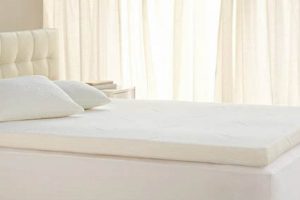
A large bed accessory, designed to enhance the comfort of a standard king-sized mattress, consists of a layer of cushioning material, commonly polyurethane or memory foam. This sleeping surface addition modifies the existing bed firmness and feel. As an example, one may select a product constructed of viscoelastic foam to contour to the body, potentially alleviating pressure points.
The integration of a supplementary layer offers multiple advantages. It can extend the lifespan of an underlying mattress by absorbing wear and tear. It may improve sleep quality by providing increased support and pressure relief. Furthermore, the development of these comfort layers reflects advancements in sleep technology, addressing the diverse needs of individuals seeking enhanced rest.
Subsequent sections will address the range of materials, thicknesses, and densities available. Consideration will also be given to factors influencing selection, such as sleeping position, budget, and individual comfort preferences. Finally, guidance on care and maintenance will be provided to maximize the longevity and performance of the chosen product.
Selecting and Maintaining a King Size Foam Mattress Topper
The following guidelines aim to inform consumers about important considerations when acquiring and preserving a king size foam mattress topper to optimize sleep quality and product longevity.
Tip 1: Density Assessment: Higher density foams typically offer greater support and durability. Examine the product specifications for density information, especially if prioritizing long-term use and consistent performance. Low-density options may degrade more quickly and offer less pressure relief.
Tip 2: Thickness Evaluation: The ideal thickness depends on individual comfort preferences and the condition of the existing mattress. A thinner profile (2-3 inches) may suffice for slightly improving comfort, while thicker options (4+ inches) can significantly alter the bed’s feel and address deeper support issues.
Tip 3: Material Composition Review: Consider the properties of different foam types. Memory foam excels at conforming to the body and isolating motion, while latex foam offers a more responsive and breathable surface. Gel-infused foams can aid in temperature regulation.
Tip 4: Off-Gassing Mitigation: New foam products may exhibit a temporary odor. Allow adequate ventilation in a well-aired room for several days before use to minimize potential off-gassing. Look for certifications indicating low VOC emissions, such as CertiPUR-US.
Tip 5: Proper Support Structure: Ensure the underlying mattress and bed frame provide adequate support. Sagging or uneven surfaces can negatively impact the performance and lifespan of the topper, potentially leading to premature wear or discomfort.
Tip 6: Regular Cleaning Protocol: Follow the manufacturer’s care instructions for cleaning. Spot clean spills promptly using a mild detergent and water. Avoid harsh chemicals or excessive moisture, which can damage the foam.
Tip 7: Protective Covering Implementation: Utilize a mattress protector to shield the topper from stains, spills, and allergens. This protective layer can also improve hygiene and extend the product’s lifespan.
Understanding these key aspects allows for a more informed purchasing decision and promotes the proper care of a king size foam mattress topper, leading to enhanced sleep and prolonged product usability.
The subsequent sections will explore common issues encountered with these products and potential solutions.
1. Material Density

Material density, measured in pounds per cubic foot (PCF), represents a critical attribute of any foam mattress topper. In the context of a king size foam mattress topper, density directly influences support, durability, and overall performance. Higher density foam contains more material per unit volume, providing enhanced resistance to compression. Consequently, a higher density topper is more likely to maintain its shape and support over time, resisting sagging and indentations. The inverse is true for low-density foam, which degrades more quickly under pressure, leading to diminished support and reduced lifespan. As an example, a 5.0 PCF memory foam topper offers noticeably greater support and durability than a 3.0 PCF counterpart.
The relationship between density and performance is readily observable in pressure relief. Higher density foam distributes weight more evenly, alleviating pressure points that can cause discomfort and disrupt sleep. For individuals experiencing back pain or joint issues, a higher density king size foam mattress topper can provide significant relief. Furthermore, density impacts motion isolation. Higher density materials absorb and dampen movement, minimizing disturbance to a sleeping partner. This factor is of particular importance in a king size bed, where two individuals may have differing sleep schedules or movement patterns.
In conclusion, material density is a primary determinant of the overall quality and long-term value of a king size foam mattress topper. While higher density options typically come with a greater initial cost, their superior support, durability, and pressure relief capabilities often justify the investment. Selecting a topper with an appropriate density, tailored to individual needs and preferences, is essential for achieving optimal sleep and maximizing product lifespan. Conversely, neglecting density as a selection criterion may result in premature product failure and compromised sleep quality.
2. Thickness Options

Thickness represents a critical parameter in defining the performance characteristics of a king size foam mattress topper. Variations in thickness directly influence the degree of contouring, support, and overall comfort experienced by the user. Thicker options, generally exceeding three inches, provide enhanced pressure relief and can significantly alter the feel of an underlying mattress, potentially mitigating discomfort caused by a firm or worn-out sleep surface. Conversely, thinner profiles, typically ranging from one to two inches, offer a subtle adjustment to the existing mattress feel, providing a gentle layer of cushioning without drastically changing the bed’s overall support characteristics. For example, an individual seeking to soften a particularly rigid mattress may benefit from a four-inch gel-infused memory foam topper, whereas someone aiming to add only a touch of plushness might prefer a two-inch latex variant.
The selection of an appropriate thickness must consider individual sleep preferences, body weight, and the condition of the existing mattress. Heavier individuals generally require greater thickness to achieve adequate support and pressure relief, preventing them from sinking too deeply into the foam and negating the benefits of the topper. Similarly, those with back pain or joint issues may find that a thicker topper provides superior spinal alignment and reduces pressure on sensitive areas. However, excessively thick options can create a feeling of instability or make it difficult to move around in bed. Furthermore, the thickness of the topper can impact the fit of fitted sheets, potentially requiring the purchase of deeper pocket sheets to accommodate the added height.
Ultimately, the optimal thickness of a king size foam mattress topper is a highly individualized decision. Understanding the interplay between thickness, material properties, and personal preferences is essential for selecting a product that effectively enhances sleep quality and addresses specific comfort needs. Failing to consider thickness as a key factor can result in a topper that provides inadequate support, alters the bed’s feel in an undesirable way, or presents practical challenges related to bedding compatibility.
3. Support Quality

Support quality, concerning a king size foam mattress topper, directly affects spinal alignment and pressure distribution. Insufficient support can cause or exacerbate back pain. An example involves a topper that initially feels soft but lacks the density to prevent sagging. Over time, this leads to improper spinal alignment, resulting in discomfort and potentially chronic pain. The quality of support relies on the density and type of foam used. Higher density foams generally provide better support, particularly for individuals with higher body mass. Additionally, zoned support designs, where different areas of the topper offer varying levels of firmness, can address specific support needs for different body regions. Neglecting support quality when selecting a topper often leads to dissatisfaction and health issues.
The practical significance of adequate support quality is evident in sleep duration and overall well-being. A properly supportive topper enables a more restful sleep cycle, reducing tossing and turning throughout the night. This translates to improved daytime alertness, cognitive function, and mood. Conversely, a topper with poor support can disrupt sleep patterns, leading to fatigue, irritability, and decreased productivity. For instance, a topper that allows the hips to sink excessively can create lower back strain, making it difficult to maintain a comfortable sleeping position. Therefore, prioritizing support quality is a direct investment in sleep health.
Assessing support quality requires considering factors beyond initial comfort. It necessitates evaluating foam density, construction, and design features like zoning or layering. While a soft surface may initially feel appealing, the ability of the topper to maintain spinal alignment and evenly distribute weight is paramount for long-term support and comfort. Ignoring these considerations can lead to negative health consequences, emphasizing the critical role support quality plays in the effectiveness of a king size foam mattress topper.
4. Conforming Ability

Conforming ability, in the context of a king size foam mattress topper, refers to the material’s capacity to mold itself to the contours of the human body. This attribute significantly impacts pressure distribution, spinal alignment, and overall sleep comfort. Variations in conforming ability arise from differences in foam composition, density, and manufacturing processes.
- Pressure Point Alleviation
Conforming ability directly influences the reduction of pressure points. By distributing weight evenly across the surface area, areas of high pressure, such as shoulders and hips, experience less stress. Viscoelastic foam, often referred to as memory foam, exemplifies this characteristic, softening and molding around the body to minimize concentrated pressure. Inadequate conforming ability results in increased pressure, leading to discomfort, tossing, and potentially disrupted sleep.
- Spinal Alignment Maintenance
Proper spinal alignment is contingent upon the mattress topper’s capacity to adapt to the natural curvature of the spine. A topper with sufficient conforming ability supports the lumbar region, preventing excessive sinking or arching. This is particularly important for side sleepers, who require greater contouring to maintain spinal neutrality. Conversely, a topper lacking conforming ability can force the spine into unnatural positions, contributing to back pain and stiffness.
- Motion Isolation Enhancement
Conforming ability contributes to motion isolation by absorbing movement and preventing it from transferring across the bed. Memory foam’s slow response to compression effectively dampens disturbances caused by a partner’s movements during the night. This characteristic is particularly advantageous in a king size bed, where two individuals may have different sleep patterns. Limited conforming ability results in greater motion transfer, potentially disrupting sleep.
- Temperature Regulation Implications
The degree to which a mattress topper conforms to the body can influence temperature regulation. While conforming ability generally enhances comfort, excessive contouring can restrict airflow, leading to heat retention. Manufacturers often incorporate cooling technologies, such as gel infusions or open-cell foam structures, to mitigate this effect. The balance between conforming ability and temperature regulation is a crucial consideration for individuals prone to overheating during sleep.
The interplay of these factors underscores the importance of conforming ability in determining the suitability of a king size foam mattress topper. A topper that effectively conforms to the body while maintaining spinal alignment and regulating temperature can significantly enhance sleep quality and overall well-being. Failure to consider conforming ability can result in discomfort, pain, and disrupted sleep patterns.
5. Heat Dissipation

Heat dissipation constitutes a crucial performance characteristic in king size foam mattress toppers, directly influencing sleep comfort and overall user experience. The ability of a topper to efficiently dissipate heat minimizes thermal buildup, preventing overheating and promoting a cooler, more restful sleep environment.
- Material Composition and Airflow
The inherent thermal properties of different foam materials significantly impact heat dissipation. Traditional memory foam, known for its dense structure and conforming ability, tends to retain heat. Conversely, open-cell foam structures and materials like latex promote airflow, facilitating heat dissipation. For example, a latex topper with pinhole ventilation will typically exhibit superior heat dissipation compared to a dense memory foam counterpart. The choice of material, therefore, is paramount in managing thermal performance.
- Gel Infusions and Phase Change Materials
To enhance heat dissipation, manufacturers often incorporate gel infusions or phase change materials (PCMs) into foam mattress toppers. Gel infusions, typically consisting of gel beads or swirls embedded within the foam, increase thermal conductivity, allowing heat to dissipate more readily. PCMs, on the other hand, absorb and release heat, maintaining a more consistent temperature. A topper infused with cooling gel, for instance, can help regulate body temperature and prevent overheating throughout the night. The effectiveness of these technologies varies depending on the concentration and distribution of the cooling agents.
- Topper Design and Ventilation Channels
The physical design of a king size foam mattress topper can also contribute to heat dissipation. Some toppers feature convoluted surfaces or ventilation channels that promote airflow and reduce heat buildup. These design elements create pathways for heat to escape, preventing it from becoming trapped between the body and the mattress. A convoluted egg-crate style topper, for example, allows air to circulate more freely compared to a flat, solid surface.
- Cover Fabric and Breathability
The fabric used to cover a king size foam mattress topper plays a crucial role in its overall breathability and heat dissipation. Natural fibers like cotton and bamboo are generally more breathable than synthetic materials like polyester. A breathable cover allows moisture vapor to escape, preventing the buildup of humidity and heat. A topper with a cotton cover, for example, will likely feel cooler and drier compared to one with a polyester cover. The weave and construction of the fabric also influence its breathability.
The interplay of material composition, cooling technologies, design features, and cover fabric determines the overall heat dissipation capabilities of a king size foam mattress topper. Selecting a topper with effective heat dissipation mechanisms is particularly important for individuals who tend to sleep hot or live in warmer climates. A failure to consider these factors can lead to discomfort, disrupted sleep, and reduced overall satisfaction with the product.
6. Size Accuracy

Size accuracy is a paramount attribute of a king size foam mattress topper, ensuring proper fit and optimal performance. Discrepancies between the stated dimensions and actual measurements can compromise comfort, support, and the overall lifespan of the product. The following considerations highlight the importance of precise sizing.
- Edge-to-Edge Coverage
Precise dimensions ensure full coverage of the underlying king mattress, preventing gaps along the edges that can create uneven support and potential tripping hazards. A topper that is too small leaves portions of the mattress exposed, leading to inconsistent comfort. Conversely, a topper that is too large may overhang the edges, creating a compressed and uncomfortable lip. Accurate sizing guarantees a seamless transition between the topper and mattress.
- Fitted Sheet Compatibility
Correct dimensions facilitate the use of standard king-size fitted sheets. A topper that deviates significantly from standard measurements may require specialty sheets with deeper pockets, adding expense and limiting bedding options. Furthermore, an ill-fitting topper can cause fitted sheets to slip off, leading to nightly adjustments and disrupted sleep. Precise sizing ensures a secure and proper fit.
- Support Uniformity
Accurate dimensions maintain uniform support across the entire sleeping surface. A topper that is narrower or shorter than the underlying mattress can create areas of increased pressure, leading to discomfort and potential spinal misalignment. Similarly, a topper that is wider or longer can result in uneven compression and reduced support in certain areas. Precise sizing ensures consistent support and pressure relief.
- Longevity and Durability
Properly sized toppers experience more even wear and tear, contributing to increased longevity. Overhanging or undersized toppers are subjected to concentrated stress, potentially leading to premature degradation and reduced lifespan. Accurate dimensions distribute weight and pressure evenly across the entire surface, minimizing stress points and maximizing durability. This results in better long-term value.
Therefore, verifying the accuracy of stated dimensions before purchasing a king size foam mattress topper is essential. Small discrepancies can significantly impact performance and satisfaction. Taking careful measurements and consulting product specifications can help ensure a proper fit and optimal performance, maximizing both comfort and longevity.
7. Longevity Expectation

Longevity expectation, concerning a king size foam mattress topper, pertains to the anticipated lifespan of the product under typical usage conditions. It is a critical factor influencing purchase decisions and overall value assessment. Several key factors determine the potential lifespan of these products, influencing whether the topper remains a worthwhile investment over time.
- Material Density and Degradation Rates
The density of the foam directly affects its resistance to compression and subsequent degradation. High-density foams exhibit slower compression rates and greater structural integrity, resulting in a longer lifespan. For example, a 5.0 PCF memory foam topper is likely to outlast a 3.0 PCF counterpart, provided both are subjected to similar conditions. Over time, lower density foams are more prone to sagging, indentations, and a loss of support, diminishing their effectiveness and necessitating replacement.
- Usage Patterns and Weight Distribution
The manner in which the topper is used significantly impacts its longevity. Individuals with higher body weights exert greater pressure, accelerating wear and tear. Uneven weight distribution, caused by sleeping primarily in one area of the bed, can lead to localized compression and premature degradation. Regular rotation of the topper can mitigate this effect, promoting more even wear across the entire surface.
- Environmental Factors and Care Protocols
Exposure to environmental factors, such as humidity and direct sunlight, can degrade foam materials over time. Humidity promotes mold and mildew growth, while sunlight can cause discoloration and embrittlement. Adhering to proper care protocols, including regular cleaning and the use of a protective mattress protector, can help mitigate these effects and extend the lifespan of the topper. Neglecting these measures can accelerate deterioration and shorten the product’s usable life.
- Construction Quality and Manufacturing Processes
The quality of construction and manufacturing processes influences the durability and longevity of the topper. Toppers constructed with reinforced seams, high-quality adhesives, and durable cover fabrics are better equipped to withstand the rigors of daily use. Advanced manufacturing techniques, such as compression molding, can enhance foam density and structural integrity, further extending the product’s lifespan. Inferior construction quality can lead to premature seam failures, foam delamination, and a reduced overall lifespan.
Considering these factors allows for a more realistic assessment of the longevity expectation of a king size foam mattress topper. A well-constructed, high-density topper, used responsibly and properly maintained, is likely to provide several years of comfortable and supportive sleep. Conversely, neglecting these considerations can lead to premature product failure and a diminished return on investment.
Frequently Asked Questions
The subsequent section addresses common inquiries regarding the selection, use, and maintenance of king size foam mattress toppers. The responses provided aim to offer clarity and informed guidance to potential consumers.
Question 1: What constitutes a “high-quality” king size foam mattress topper?
A high-quality iteration exhibits a high-density foam composition (4.0 PCF or greater), consistent dimensions adhering to king size specifications, and durable construction. Certifications, such as CertiPUR-US, indicate adherence to specific safety and environmental standards.
Question 2: How does topper thickness influence sleep quality?
Thickness affects the degree of pressure relief and support provided. Thicker toppers (3 inches or more) offer enhanced cushioning, while thinner options provide a subtle adjustment to the existing mattress feel. The optimal thickness depends on individual preferences and the condition of the underlying mattress.
Question 3: What are the primary considerations for selecting a topper based on sleeping position?
Side sleepers often benefit from toppers with enhanced conforming ability to alleviate pressure on shoulders and hips. Back sleepers typically require firmer support to maintain spinal alignment. Stomach sleepers may prefer thinner, denser toppers to prevent excessive sinking.
Question 4: How often should a king size foam mattress topper be replaced?
The replacement frequency depends on material quality, usage patterns, and maintenance practices. High-density toppers, properly maintained, may last 5-7 years. Signs of degradation, such as sagging, indentations, or reduced support, indicate the need for replacement.
Question 5: What cleaning protocols are recommended for foam mattress toppers?
Spot cleaning with a mild detergent and water is generally recommended. Avoid harsh chemicals or excessive moisture. A mattress protector should be used to shield the topper from spills and stains. Consult the manufacturer’s instructions for specific care guidelines.
Question 6: Can a king size foam mattress topper exacerbate allergies?
Toppers constructed from synthetic materials may harbor allergens. Hypoallergenic options, made from natural latex or incorporating allergen-resistant covers, are available. Regular cleaning and the use of a mattress protector can minimize allergen accumulation.
Understanding these aspects facilitates a more informed decision-making process when selecting and maintaining a king size foam mattress topper, thereby promoting enhanced sleep quality and prolonged product usability.
The subsequent section will address the common problems and solutions regarding king size foam mattress topper.
Conclusion
This exploration has addressed key facets of the king size foam mattress topper, encompassing material properties, selection criteria, maintenance protocols, and performance expectations. Understanding these elements enables a more informed purchasing decision, promoting enhanced sleep quality and maximizing product lifespan. Factors such as density, thickness, conforming ability, and heat dissipation are paramount in determining suitability for individual needs.
The informed selection and diligent maintenance of a king size foam mattress topper represents a significant investment in sleep health. Continued advancements in materials and construction techniques promise further improvements in comfort, durability, and overall performance. Consumers are encouraged to remain informed about these developments to optimize their sleep environments.
![Best Foam Mattress for SUV Camping [Guide] | Organic & Natural Mattress Buyer’s Guide: Non-Toxic Sleep Solutions](https://mattressworldpa.com/wp-content/uploads/2025/07/th-325-300x200.jpg "Best Foam Mattress for SUV Camping [Guide] Organic & Natural Mattress Buyer’s Guide: Non-Toxic Sleep Solutions")
![Foam DIY: How to Cut a Mattress [Easy Guide] | Organic & Natural Mattress Buyer’s Guide: Non-Toxic Sleep Solutions](https://mattressworldpa.com/wp-content/uploads/2025/07/th-323-300x200.jpg "Foam DIY: How to Cut a Mattress [Easy Guide] Organic & Natural Mattress Buyer’s Guide: Non-Toxic Sleep Solutions")
![Best Mattress Twin Foam [Sleep Better Now] | Organic & Natural Mattress Buyer’s Guide: Non-Toxic Sleep Solutions](https://mattressworldpa.com/wp-content/uploads/2025/07/th-321-300x200.jpg "Best Mattress Twin Foam [Sleep Better Now] Organic & Natural Mattress Buyer’s Guide: Non-Toxic Sleep Solutions")