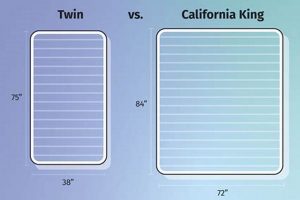
A bed configuration where a king-size mattress is divided vertically into two separate pieces, typically along the length. This design allows each side of the bed to be adjusted independently, often seen in conjunction with adjustable bed frames. For example, one individual might elevate their head while the other remains flat, accommodating different comfort preferences.
This segmented sleeping surface offers considerable advantages, primarily addressing the needs of couples with differing sleep requirements or medical conditions. Historically, modifications to sleeping arrangements have been employed to improve comfort, reduce motion transfer, and personalize the sleep experience. The segmented design builds upon these principles, enabling individualized support and positioning, which can be particularly beneficial for those with back pain, sleep apnea, or other health considerations.
The subsequent discussion will delve into the specifics of the component parts of segmented king mattresses, examining the available materials, construction methods, suitable adjustable bed frames, and factors to consider when evaluating these mattress systems.
Selecting a Segmented King Mattress
This section provides essential guidelines for making an informed decision when purchasing a segmented king mattress. Careful consideration of these points can ensure optimal comfort and satisfaction.
Tip 1: Research Mattress Construction: Investigate the materials and construction methods used in the segmented mattress. Foam density, coil count, and layering techniques significantly affect support, durability, and temperature regulation.
Tip 2: Evaluate Adjustable Base Compatibility: Confirm that the segmented mattress is fully compatible with the intended adjustable bed frame. Ensure the frame’s articulation points align with the mattress’s split design to prevent damage or uneven wear.
Tip 3: Assess Motion Isolation Properties: A primary benefit of the segmented design is motion isolation. Evaluate the degree to which movement on one side of the mattress is isolated from the other. Consider models that utilize individually wrapped coils or dense foam layers to minimize disturbance.
Tip 4: Consider Edge Support: Strong edge support is crucial for maximizing the usable sleep surface and facilitating ease of entry and exit from the bed. Look for reinforced edges or encapsulated coil systems that provide stability along the perimeter of the mattress.
Tip 5: Prioritize Trial Periods and Warranties: Opt for manufacturers that offer generous trial periods and comprehensive warranties. This allows for adequate assessment of the mattress’s suitability and provides recourse in the event of defects or premature wear.
Tip 6: Understand Return Policies: Clearly understand the return policies. Verify if there are any restocking fees or limitations. Keep the original packaging to ensure you meet the return conditions.
Tip 7: Read customer reviews: Spend time understanding other customers’ experience with their mattress and sleep position.
These key considerations will help navigate the selection process, ensuring a segmented king mattress provides optimal comfort, support, and longevity.
The following section will provide concluding remarks.
1. Individualized Comfort

The concept of individualized comfort is central to the value proposition of segmented king mattresses. This configuration directly addresses the diverse needs and preferences of individuals sharing a bed, offering the potential for optimized sleep quality and reduced partner disturbance.
- Independent Firmness Adjustments
A primary feature enabling individualized comfort is the ability to select different firmness levels for each side of the mattress. This allows individuals with varying support requirements, due to body weight, sleeping position, or medical conditions, to achieve optimal spinal alignment and pressure relief. For example, one individual may prefer a firm mattress for back support, while the other may require a softer surface to alleviate pressure points.
- Customizable Inclination and Positioning
When paired with an adjustable bed frame, a segmented king mattress permits independent inclination of each side. This is particularly beneficial for individuals who require elevation due to conditions such as sleep apnea, acid reflux, or back pain. One partner can sleep in a reclined position while the other remains flat, without compromising the other’s comfort.
- Reduced Motion Transfer
The split design inherently contributes to reduced motion transfer. Movements on one side of the mattress are less likely to disturb the sleep of the individual on the other side. This is especially important for light sleepers or individuals who are easily awakened by movement. Materials such as individually wrapped coils or dense memory foam further enhance motion isolation.
- Personalized Temperature Regulation
While less directly related to the split design, individualized comfort can also extend to temperature regulation. Some segmented mattresses offer options for different cooling technologies or materials on each side, catering to individuals with varying temperature preferences. This may involve one side incorporating gel-infused foam or breathable fabrics, while the other side utilizes more traditional materials.
These facets highlight the significant role individualized comfort plays in maximizing the benefits of a segmented king mattress. By addressing individual needs related to support, positioning, motion, and temperature, these mattresses offer a customized sleep experience that can improve overall sleep quality and relationship harmony.
2. Adjustable Base Compatibility
Adjustable base compatibility is a critical factor when considering a segmented king mattress. The inherent design of these mattresses, with their split configuration, necessitates careful consideration of the adjustable base’s features to ensure optimal functionality and longevity of both components. Failure to properly assess compatibility can result in diminished performance, accelerated wear, or even damage to the mattress.
- Articulation Point Alignment
The primary concern is the alignment of the adjustable base’s articulation points with the split in the mattress. The base must be designed to accommodate the independent movement of each side without causing undue stress or bending to the mattress components. For instance, if the articulation point falls directly on the split, it could lead to premature sagging or separation of the two mattress halves. Properly designed bases will feature articulation points that are positioned strategically to
support the mattress sections evenly. - Weight Distribution and Support
Adjustable bases must provide adequate weight distribution across the entire surface of each mattress section. Segmented king mattresses, due to their construction, can be more susceptible to uneven wear if the base lacks sufficient support. Bases with inadequate reinforcement or poorly distributed support structures can lead to localized compression and decreased comfort. Ideally, the base should offer consistent support, particularly in areas prone to stress, such as the edges and center sections.
- Motor Synchronization and Control
For dual adjustable bases, ensuring proper synchronization and independent control of the motors is paramount. The ability to adjust each side of the mattress independently is a key benefit of the segmented design. The base must allow for seamless and precise adjustments without causing jerking or misalignment between the two sides. A well-designed control system will provide intuitive operation and consistent performance over time.
- Retainer Bar Integration
Retainer bars, often included with adjustable bases, play a crucial role in preventing the mattress from sliding off the frame during articulation. The design of these bars must be compatible with the segmented configuration of the mattress. Retainer bars that are too loose or poorly positioned can fail to adequately secure the mattress, leading to instability and potential damage. The bars should be securely attached to the base and designed to conform to the contours of the mattress without impeding its movement.
These considerations underscore the importance of thorough research and careful selection when pairing a segmented king mattress with an adjustable base. Compatibility extends beyond merely fitting the mattress on the frame; it encompasses the intricate interaction between the two components to ensure optimal comfort, performance, and durability. Deviation from these suggestions may result in a less-than-desirable sleep experience and reduce the lifespan of the investment.
3. Motion Isolation
Motion isolation is a significant factor in the design and performance of a segmented king mattress. The divided construction aims to minimize the transmission of movement between sleeping partners, addressing a common concern for couples seeking undisturbed rest.
- Independent Suspension Systems
Many segmented king mattresses utilize independent suspension systems, such as individually wrapped coils, on each side. This design allows each coil to react independently to pressure, reducing the ripple effect caused by movement. For example, if one partner tosses and turns, the motion is primarily absorbed by the coils on their side of the mattress, with minimal disturbance to the other side.
- Material Damping Properties
The materials used in the construction of the mattress also play a role in motion isolation. Dense memory foam or latex can effectively dampen movement due to their inherent viscoelastic properties. These materials absorb energy and prevent it from propagating across the mattress surface. A mattress with a high density memory foam layer, for instance, will exhibit greater motion isolation than one made primarily of innerspring coils.
- Split Construction Advantage
The segmented design itself contributes to motion isolation by physically separating the two sleeping surfaces. The gap between the mattress halves acts as a barrier, limiting the transfer of vibrations and movement. This is particularly beneficial for individuals who are highly sensitive to motion or have vastly different sleep schedules.
- Edge Support Considerations
While edge support is important for maximizing the usable sleep surface, it can also impact motion isolation. Reinforced edges may inadvertently transmit more motion across the mattress. Manufacturers often balance edge support with motion isolation by using strategically placed foam or coil systems that minimize motion transfer along the perimeter.
The interplay between independent suspension, material damping, the split construction, and edge support collectively determines the motion isolation performance of a segmented king mattress. Couples who prioritize minimizing sleep disturbances should carefully evaluate these factors when selecting a mattress system.
4. Independent Support
Independent support, within the context of a segmented king mattress, refers to the ability of each half of the mattress to respond individually to the weight and contours of the sleeper. This feature is paramount in addressing the diverse support needs of couples and optimizing individual sleep quality.
- Spinal Alignment Customization
Independent support allows each side of the mattress to conform specifically to the sleeper’s body shape, maintaining proper spinal alignment. This is crucial because individuals have different body weights, sleeping positions, and anatomical curves. For instance, a side sleeper requires more cushioning to prevent shoulder compression, while a back sleeper needs firmer support to maintain the natural curvature of the spine. Segmented mattresses with independent support cater to these disparate needs, promoting healthy posture and reducing back pain.
- Pressure Point Relief Optimization
Independent support enables targeted pressure point relief. Pressure points, such as the hips, shoulders, and knees, can impede circulation and cause discomfort, leading to tossing and turning during sleep. A segmented mattress that offers independent support can distribute weight evenly and minimize pressure on these sensitive areas. For example, one side of the mattress may incorporate thicker layers of memory foam to alleviate pressure for a sleeper with joint pain, while the other side utilizes a firmer foam for enhanced support.
- Accommodation of Medical Conditions
Independent support can accommodate specific medical conditions or physical limitations. Individuals recovering from injuries or those with chronic pain may require customized support and positioning. A segmented mattress allows one side to be adjusted or modified to address these unique needs without compromising the comfort of the other sleeper. For example, one side may incorporate adjustable lumbar support for a sleeper with back problems, while the other side remains unchanged.
- Minimization of Partner Disturbance
While often discussed in the context of motion isolation, independent support also contributes to minimizing partner disturbance. When each side of the mattress provides optimal support, sleepers are less likely to toss and turn in search of a comfortable position. This reduces overall movement and minimizes the chance of disturbing the other sleeper. Furthermore, the independent nature of the support system ensures that any necessary adjustments made by one sleeper do not negatively impact the comfort or support of the other.
The benefits of independent support in a segmented king mattress extend beyond mere comfort. By addressing individual spinal alignment, pressure point relief, medical condition accommodation, and partner disturbance, this feature contributes significantl
y to improved sleep quality and overall well-being.
5. Sleeping Positions

Sleeping positions exert a significant influence on the selection and suitability of a segmented king mattress. The primary function of a mattress is to provide adequate support and pressure relief tailored to the individual’s preferred sleeping posture. A segmented configuration facilitates accommodating varying positional needs within a single bed. For example, a side sleeper typically requires a softer surface to cushion the shoulders and hips, while a stomach sleeper generally benefits from a firmer mattress to prevent excessive spinal curvature. A segmented mattress allows one side to be designed for the specific requirements of side sleeping, while the other side caters to the needs of stomach or back sleeping.
The practical implications of this understanding are considerable. Couples with disparate sleeping position preferences often experience compromised sleep quality due to mattress incompatibility. One individual may find the mattress too firm, leading to pressure points and discomfort, while the other may perceive it as too soft, resulting in inadequate support and potential back pain. A segmented king mattress mitigates this conflict by providing individualized support zones. Furthermore, individuals with medical conditions that necessitate specific sleeping positions, such as elevating the upper body to alleviate sleep apnea or heartburn, can benefit from pairing a segmented mattress with an adjustable base. The base allows one side of the bed to be inclined while the other remains flat, accommodating different health needs without compromising the other partner’s sleep.
In summary, sleeping positions are a critical consideration when evaluating a segmented king mattress. The mattress’s ability to cater to different postural needs through individualized support and adjustable features directly impacts sleep quality and overall comfort. By understanding the connection between sleeping positions and mattress design, individuals can make informed purchasing decisions that optimize their sleep experience and address potential postural-related health concerns.
6. Material Considerations

The selection of materials in a segmented king mattress directly influences comfort, support, durability, and temperature regulation. Given the individualized nature of these mattresses, material choices become even more critical in catering to differing preferences and needs on each side.
- Foam Density and Composition
Foam density, measured in pounds per cubic foot, determines the support and longevity of the mattress. Higher density foams generally offer greater support and resistance to compression over time. Composition, referring to the type of foam (e.g., memory foam, latex, polyurethane), affects factors like pressure relief, motion isolation, and temperature neutrality. For instance, one side of a segmented mattress may utilize high-density memory foam for pressure relief, while the other employs a firmer latex foam for enhanced support. Inconsistent density or inappropriate foam types can lead to uneven wear and compromised comfort.
- Coil Type and Gauge
Coil systems, if present, provide the underlying support structure. The type of coil (e.g., Bonnell, pocketed, continuous) and its gauge (thickness) influence firmness, responsiveness, and motion transfer. Pocketed coils, where each coil is individually wrapped, are often favored for their superior motion isolation capabilities. The gauge of the coil determines its stiffness; a lower gauge indicates a thicker, firmer coil. Varying coil types and gauges on each side of a segmented mattress can cater to different support preferences. For example, one side may feature a higher gauge coil system for enhanced back support, while the other uses pocketed coils to minimize motion transfer.
- Cover Fabric Properties
The cover fabric impacts breathability, moisture wicking, and overall comfort. Materials like cotton, wool, and bamboo are known for their breathability and ability to regulate temperature. Some fabrics are treated with antimicrobial or hypoallergenic finishes. The cover material should be durable and resistant to wear and tear. In a segmented mattress, different cover fabrics may be used on each side to address specific needs, such as increased breathability for individuals who sleep hot. Inadequate cover fabrics can lead to overheating, moisture buildup, and reduced mattress lifespan.
- Adhesives and Fire Retardants
Adhesives are used to bond the various layers of the mattress, while fire retardants are legally required to meet safety standards. The type and quantity of these materials can impact off-gassing, odor, and potential allergen exposure. Choosing mattresses with low-VOC (volatile organic compound) adhesives and natural fire retardant alternatives, such as wool, minimizes these risks. Transparency regarding the materials used is essential for consumers concerned about chemical exposure. Failure to address these factors can result in discomfort, allergic reactions, and long-term health concerns.
In summary, meticulous consideration of materials is paramount when selecting a segmented king mattress. The choice of foam, coil, cover fabric, adhesives, and fire retardants directly influences the mattress’s performance, longevity, and suitability for individual needs. Prioritizing high-quality, appropriate materials ensures optimal comfort, support, and overall satisfaction with the sleep system.
Frequently Asked Questions
This section addresses common inquiries regarding segmented king mattresses, providing clarity on their features, benefits, and practical considerations.
Question 1: What distinguishes a segmented king mattress from a standard king mattress?
A segmented king mattress is composed of two separate halves, typically running lengthwise. A standard king mattress is a single, continuous unit. This division allows for independent adjustability and customized support on each side.
Question 2: Are specialized bed frames required for segmented king mattresses?
While a standard king-size bed frame can accommodate a segmented mattress, an adjustable bed frame is recommended to fully leverage the mattress’s capabilities. These frames allow independent elevation and contouring of each side.
Question 3: Does a split configuration compromise mattress durability?
Durability is primarily determined by the quality of materials and construction methods. A well-constructed segmented mattress can exhibit comparable longevity to a traditional king mattress. However, improper support from the bed frame can accelerate wear.
Question 4: What is the impact of a segmented design on motion transfer?
The split configuration can enhance motion isolation, as movement on one side is less likely to propagate to the other. This benefit is further amplified by using materials with high damping properties, such as memory foam or individually wrapped coils.
Question 5: How does one clean and maintain a segmented king mattress?
Cleaning and maintenance procedures are generally similar to those for standard mattresses. Regular vacuuming and spot cleaning
are recommended. However, care should be taken to avoid excessive moisture penetration, which can damage the internal components.
Question 6: Can segmented mattresses accommodate varying firmness preferences?
Yes, segmented mattresses are specifically designed to address differing firmness needs. Each side can feature a distinct firmness level, catering to individual comfort requirements and sleeping positions.
These FAQs provide fundamental insights into segmented king mattresses. Understanding these points facilitates a more informed purchasing decision.
The subsequent section will offer concluding thoughts and final recommendations.
In Conclusion
This exploration has elucidated the defining features, benefits, and considerations surrounding the segmented king mattress. The analysis underscored the design’s capacity to accommodate differing comfort preferences, enhance motion isolation, and provide independent support for individual sleepers. Material selection, adjustable base compatibility, and maintenance protocols were identified as critical factors influencing the long-term performance and suitability of these mattresses.
The adoption of the king split mattress represents a significant investment in sleep health and relationship harmony. Careful evaluation of personal needs, material quality, and compatibility with existing sleep systems is paramount. As sleep science advances, expect further refinements in mattress technology, potentially enhancing the individualized comfort and therapeutic benefits associated with segmented sleep surfaces. Therefore, conduct thorough research and compare offerings from different manufacturers before making a purchase.
![Ultimate Tempur-Pedic King Size Mattress [Guide & Review] | Organic & Natural Mattress Buyer’s Guide: Non-Toxic Sleep Solutions](https://mattressworldpa.com/wp-content/uploads/2025/07/th-8395-300x200.jpg "Ultimate Tempur-Pedic King Size Mattress [Guide & Review] Organic & Natural Mattress Buyer’s Guide: Non-Toxic Sleep Solutions")