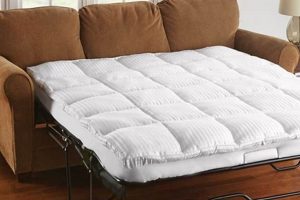
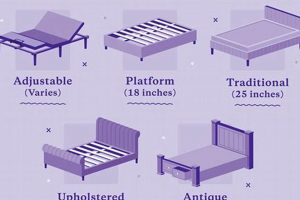
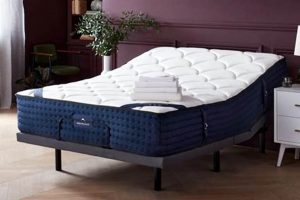
A bed designed to collapse or fold into a compact form for storage utilizes a specialized sleep surface. This component must balance comfort with the ability to withstand frequent folding and unfolding. The functionality of a folding bed necessitates a mattress that is both supportive for the user and adaptable to the mechanical constraints of the frame.
The appropriate sleep surface enhances space utilization in environments where square footage is limited. It provides a practical solution for accommodating guests or for use in multi-functional rooms. Historically, these compact sleeping solutions have served as vital components in residences with limited living areas, as well as in mobile living spaces. Their ongoing utility reflects the need for adaptable furniture designs.
Considerations for selecting an appropriate model include its thickness, material composition, and durability. The weight and density also play crucial roles in ensuring ease of use and longevity of both the mattress and the folding bed mechanism. Subsequent sections will delve into specific attributes and considerations regarding the selection process.
Selection Guidance
This section outlines crucial considerations for selecting a suitable sleep surface for a compact, folding bed frame. Prioritize both comfort and functionality when evaluating different options.
Tip 1: Measure Accurately. Precise measurements of the folding bed frame are paramount. An incorrectly sized sleep surface will either fail to fit or compromise the folding mechanism’s operation.
Tip 2: Consider Thickness Constraints. Folding bed frames often have specific limitations on the maximum allowable thickness. Exceeding this limit may prevent the bed from folding completely or damage the frame.
Tip 3: Evaluate Material Durability. The selected material must withstand repeated folding and unfolding without premature wear or compression. High-density foam or innerspring constructions are frequently chosen for their resilience.
Tip 4: Assess Weight Implications. A heavier sleep surface can strain the folding mechanism and make it more difficult to operate. Balance comfort with a manageable weight to ensure ease of use.
Tip 5: Prioritize Breathability. Adequate airflow prevents moisture buildup and maintains a comfortable sleeping temperature. Materials with open-cell structures promote better ventilation.
Tip 6: Examine Firmness Level. User preference for firmness is a key factor. A balance between support and cushioning ensures proper spinal alignment and reduces pressure points.
Tip 7: Check for Certifications. Look for certifications indicating the mattress has been tested for harmful chemicals and meets certain safety standards. This can help ensure a healthier sleep environment.
Selecting the appropriate sleep surface for a folding bed involves careful consideration of dimensions, materials, and user preferences. Prioritizing these factors will lead to a product that offers both comfort and longevity.
The next section will address common issues and maintenance procedures related to these specialized sleep solutions.
1. Dimensions and Fit

The dimensional accuracy of a mattress intended for a folding bed is paramount. Incompatibility in size can compromise the folding mechanism, prevent proper closure, or result in damage to both the mattress and the frame. The ensuing discussion highlights essential aspects of dimensional conformity.
- Length and Width Conformity
Precise length and width measurements are critical for seamless integration with the folding frame. Overhang or insufficient coverage can lead to instability and uneven weight distribution. For example, a mattress that is too short will leave gaps, while one that is too wide will impede the folding process.
- Thickness Tolerance
Folding bed frames typically have a maximum thickness tolerance. Exceeding this limit can prevent the bed from fully collapsing, potentially damaging the folding mechanism. Certain designs may necessitate a thinner profile to ensure proper functionality.
- Corner Curvature Compatibility
The corners of the mattress should ideally match the corner geometry of the folding frame. Square corners might not fit seamlessly into frames with rounded corners, and vice versa. This misalignment can cause unnecessary wear and tear over time.
- Edge Support Considerations
While crucial for overall sleep quality, excessive edge support can hinder the folding process. The edges must be flexible enough to allow for bending without significant resistance. Reinforced edges that lack sufficient flexibility may prevent the bed from fully closing.
The interplay between the dimensions of a sleep surface and the structural constraints of a folding bed frame directly impacts the bed’s usability, durability, and overall functionality. Adhering to dimensional specifications is essential to maintain both the integrity of the folding mechanism and the user’s comfort.
2. Thickness Limitations

The physical depth of a mattress intended for a folding bed is a critical constraint governing the functionality and longevity of both components. Exceeding prescribed thickness parameters jeopardizes the folding mechanism and storage capability, necessitating careful consideration of this dimension.
- Folding Mechanism Clearance
The design of folding bed frames incorporates specific clearances to allow for complete and unhindered closure. A mattress exceeding the allowable thickness will obstruct the folding process, potentially damaging hinges, latches, and support structures. For instance, a frame designed for an 8-inch mattress cannot accommodate a 12-inch model without compromising its functionality.
- Storage Space Constraints
When folded, the bed must occupy a predetermined volume for storage. An overly thick mattress increases the folded dimensions, rendering the unit difficult to store in its intended location. Compact apartments or mobile homes often have limited storage space, making thickness considerations paramount.
- Weight Distribution and Stability
Excessive mattress thickness can alter the weight distribution of the folded bed, creating instability and increasing the risk of tipping during movement or storage. The center of gravity shifts, making the unit more susceptible to imbalance, particularly if the mattress is significantly heavier than the frame was designed to support.
- Ventilation and Moisture Trapping
A thicker mattress, especially one composed of dense materials, may impede airflow around the folded bed. This can lead to moisture a
ccumulation and the development of mold or mildew, particularly in humid environments. Adequate ventilation is crucial to maintain hygiene and prevent material degradation.
Consequently, careful adherence to thickness limitations is essential when selecting a sleep surface for a folding bed. Deviation from the prescribed dimensions can result in compromised functionality, reduced lifespan, and potential health hazards. Prioritizing dimensional compatibility ensures optimal performance and long-term viability of the folding bed system.
3. Material Durability
Material durability directly impacts the lifespan and functionality of a sleep surface designed for a folding bed. The repeated action of folding and unfolding places substantial stress on the mattress’s internal structure and outer materials. Inadequate durability leads to premature wear, compression, and potential structural failure, rendering the mattress unsuitable for its intended purpose. For instance, a low-density foam mattress may quickly compress and lose its shape after repeated folding, resulting in diminished comfort and support. Conversely, a high-density memory foam or innerspring mattress, engineered with robust materials and construction, is more likely to withstand the rigors of frequent folding and unfolding, maintaining its integrity and comfort over an extended period. This consideration is particularly crucial in environments where the folding bed is used regularly, such as small apartments or guest rooms, where space optimization is paramount. A failure to prioritize material durability results in increased replacement costs and reduced user satisfaction.
The selection of specific materials significantly influences the overall performance. High-density foams, such as polyurethane or latex, exhibit superior resistance to compression compared to lower-density alternatives. Innerspring mattresses, particularly those with individually wrapped coils, provide enhanced support and durability by distributing weight evenly and minimizing motion transfer. The outer fabric covering also plays a vital role. Durable, tightly woven fabrics, like polyester blends or reinforced cotton, resist tearing, abrasion, and stretching, protecting the internal mattress components from damage during folding and storage. The stitching and seams must also be reinforced to prevent separation or unraveling, which can compromise the mattress’s structural integrity. Selecting a mattress with reinforced edges further enhances its durability by preventing edge collapse, a common issue in folding bed applications. Failing to consider these material-specific properties results in a product that deteriorates rapidly, impacting both comfort and functionality.
In summary, the correlation between material durability and the lifespan of a mattress designed for a folding bed is undeniable. Prioritizing high-quality materials and robust construction techniques is essential to ensure long-term performance and user satisfaction. Understanding the specific stresses imposed by the folding mechanism allows for informed material selection, mitigating the risk of premature failure and maximizing the value of the investment. While initial cost may be higher for a more durable mattress, the long-term benefits of reduced replacement costs and sustained comfort justify the investment. Neglecting material durability results in a compromised sleep experience and a shortened product lifespan, undermining the primary purpose of a space-saving folding bed solution.
4. Weight Considerations

The mass of a mattress significantly influences the operability and longevity of a folding bed mechanism. A disproportionately heavy mattress places undue stress on hinges, support structures, and locking mechanisms. This increased strain can accelerate wear and tear, leading to premature failure of critical components and a reduction in the overall lifespan of the folding bed. As an example, a folding bed designed to support a maximum mattress weight of 50 pounds may experience operational difficulties and eventual damage if paired with a mattress exceeding that limit. The additional weight compromises the structural integrity, potentially causing the bed to become difficult to fold and unfold, or even rendering it unusable. Therefore, careful attention to weight compatibility is paramount for the safe and efficient operation of the folding bed system.
Furthermore, the weight of the mattress affects the ease of use for individuals operating the folding bed. A heavier mattress requires more physical exertion to lift and maneuver, making the process challenging, especially for elderly or physically limited users. This can deter regular use and negate the space-saving benefits of the folding bed. Practical applications, such as smaller living spaces or guest rooms, often necessitate ease of operation. Therefore, manufacturers and consumers alike must consider the user’s physical capabilities when selecting a mattress. Lighter materials or construction techniques, such as using lighter-density foams or strategically removing unnecessary weight, can mitigate these challenges and improve the user experience. Balancing weight with comfort and support remains a crucial design consideration.
In conclusion, weight considerations are integral to the successful integration of a mattress with a folding bed. Excessive weight compromises the folding mechanism, shortens the lifespan of the bed, and impacts user-friendliness. By adhering to weight specifications and prioritizing lighter, yet durable, mattress materials, manufacturers can ensure the long-term functionality and practicality of folding bed systems. The challenge lies in achieving an optimal balance between weight, comfort, and cost, ensuring the end product meets the needs of a diverse user base without sacrificing durability or ease of operation.
5. Folding Mechanism Compatibility

Successful integration of a sleep surface with a folding bed hinges on the degree of compatibility between the mattress and the bed’s folding mechanism. This compatibility dictates the ease of operation, longevity of the system, and overall user satisfaction. Several facets of this relationship warrant detailed examination.
- Hinge Clearance and Movement
The mattress must allow sufficient clearance for hinges to operate without obstruction. Excessive mattress thickness or rigidity can impede hinge movement, leading to increased stress and potential failure. For instance, a mattress that is too thick may prevent the bed from fully closing, or force the hinges beyond their design limits, ultimately causing damage.
- Locking Mechanism Engagement
The design of the folding bed relies on secure locking mechanisms to maintain stability in both the open and closed positions. The mattress should not interfere with the engagement of these mechanisms. Bulky or irregularly shaped mattresses can prevent proper latching, compromising safety and stability. For example, a mattress with protruding edges may obstruct the locking mechanism, rendering the bed unstable.
- Weight Distribution and Balance
The mattress weight distribution must align with the
design parameters of the folding mechanism. Uneven weight distribution can create imbalances, making the bed difficult to maneuver and increasing the risk of tipping. If a mattress is significantly heavier on one end, the folding mechanism may require excessive force to operate, potentially damaging the frame or creating a safety hazard. - Material Flexibility and Compression
The materials used in the mattress construction must exhibit sufficient flexibility to accommodate the bending and folding actions of the mechanism. Rigid or non-compressible materials can resist the folding process, placing undue stress on the frame and reducing its lifespan. A mattress constructed with highly resilient materials that readily conform to the folding contours will ensure smoother operation and minimize wear and tear.
In conclusion, the interplay between the sleep surface and the folding mechanism is crucial for ensuring seamless operation, long-term durability, and user safety. Each facet discussed above contributes to the overall compatibility and must be carefully considered when selecting a mattress for a folding bed. A mismatch in any of these areas can lead to compromised functionality and a diminished lifespan of the entire system.
6. Storage Requirements
The folded dimensions of a mattress intended for a folding bed are a primary concern. These dimensions directly influence the suitability of the unit for environments where space optimization is paramount. The ability to compactly store the folded bed, including its mattress, dictates its practicality in limited living areas.
- Height Restrictions within Storage Spaces
Storage areas frequently have height restrictions that directly impact the selection of a mattress for a folding bed. The combined height of the folded frame and mattress must not exceed the available vertical space. Exceeding this limit can prevent the bed from being fully stored, rendering it an impractical solution. For example, a closet intended for storage might only accommodate a folded unit with a maximum height of 12 inches; a thicker mattress would thus be unsuitable.
- Width and Depth Limitations of Storage Areas
Beyond height, the width and depth of the intended storage area dictate the maximum permissible footprint of the folded bed and mattress. The unit must fit comfortably within these dimensions without obstructing access to other items stored nearby. In a multi-functional room, a folding bed that occupies a disproportionate amount of storage space negates its space-saving advantage. An ideal unit maximizes storage efficiency by minimizing its folded width and depth.
- Weight Considerations for Maneuverability during Storage
While not directly a dimensional constraint, the overall weight of the folded bed and mattress significantly impacts the ease of storage. A heavier unit is more difficult to lift and maneuver, particularly for individuals with limited physical strength. This consideration is especially relevant in smaller living spaces where frequent deployment and storage of the folding bed may be required. A lighter unit facilitates easier handling, promoting greater usability and convenience.
- Impact of Mattress Material on Folded Size
The material composition of the mattress directly influences its compressibility and, consequently, its folded dimensions. Mattresses constructed from high-density materials or those with innerspring systems tend to be less compressible, resulting in larger folded profiles. Conversely, mattresses composed of memory foam or latex can be compressed to a greater extent, allowing for more compact storage. Material selection should therefore be guided by the available storage space and the desired ease of handling.
Consideration of these storage requirements is essential for selecting a mattress that complements the functionality of a folding bed. Prioritizing dimensions, weight, and material properties ensures that the unit can be stored efficiently and maneuvered with ease, maximizing the space-saving benefits it is intended to provide.
7. Support and Comfort

The essential function of any sleep surface is to provide adequate support and comfort, and this imperative holds true for models designed for folding beds. The ability of a mattress to properly align the spine, distribute pressure, and facilitate restful sleep directly affects the user’s well-being. A mattress lacking in support can lead to musculoskeletal strain, exacerbating existing conditions or causing new discomfort. For instance, an individual with pre-existing back pain who sleeps on an unsupportive folding bed mattress may experience a significant increase in pain intensity and frequency. Conversely, a properly supportive mattress helps to maintain proper spinal alignment, reducing stress on joints and muscles. Comfort, in turn, influences the ability to fall asleep easily and maintain restful sleep throughout the night. A mattress that is too firm or too soft can disrupt sleep patterns, leading to fatigue and reduced cognitive function. A folding bed mattress must therefore strike a balance between providing sufficient support and conforming to the body’s contours to minimize pressure points and promote relaxation.
The design constraints inherent in folding beds present unique challenges in achieving optimal support and comfort. The limited thickness often dictates the types of materials and construction methods that can be employed. Traditional innerspring mattresses, known for their support, may be too thick for some folding bed frames. Foam mattresses, particularly memory foam and latex, offer a viable alternative, as they can be compressed to a thinner profile while still providing adequate support. However, the density and quality of the foam are critical factors. Low-density foams may compress excessively over time, leading to a loss of support and the development of uncomfortable pressure points. High-density foams, on the other hand, retain their shape and support capabilities for a longer period. Furthermore, the presence of ventilation channels or open-cell foam structures enhances breathability, preventing heat buildup and promoting a more comfortable sleep environment. The specific combination of materials and design features must be carefully considered to mitigate the limitations imposed by the folding bed’s structural constraints. Practical application involves considering the sleeper’s weight, sleeping position, and any existing health conditions to determine the most appropriate balance of support and comfort features.
Ultimately, the effectiveness of a mattress for a folding bed hinges on its ability to reconcile the competing demands of space efficiency and ergonomic performance. The pursuit of optimal support and comfort must be balanced against the constraints of thickness, weight, and durability imposed by the folding mechanism. Advances in materials science and mattress design are continually pushing the boundaries of what is achievable within these constraints. While a folding bed mattress may not perfectly replicate the experience of a traditional bed, careful selection and attention to detail can ensure a sleep surface that provides adequate support, promotes restful sleep, and contributes to the overall well-being of the user. The challenge lies in identifying those products that effectively address these dual imper
atives, offering a practical and comfortable sleep solution for space-conscious environments.
Frequently Asked Questions
This section addresses common inquiries and concerns regarding sleep surfaces designed specifically for folding bed frames. The information presented aims to provide clarity and guidance for informed decision-making.
Question 1: What constitutes the primary difference between a standard mattress and one designed for a folding bed?
The defining characteristic lies in the mattress’s ability to withstand repeated folding and unfolding without compromising its structural integrity or comfort. Standard mattresses are not typically engineered to endure such stresses.
Question 2: Are there specific thickness limitations to consider when selecting a mattress for a folding bed?
Yes. Folding bed frames are often designed with a maximum mattress thickness in mind. Exceeding this limit may prevent the bed from folding completely or damage the folding mechanism.
Question 3: What materials are best suited for a sleep surface intended for a folding bed?
High-density foams and innerspring constructions with robust support systems are generally preferred due to their durability and ability to maintain shape after repeated folding. Lighter materials are also desirable to reduce strain on the mechanism.
Question 4: Does the weight of the mattress influence the operation of a folding bed?
Indeed. An excessively heavy mattress can place undue stress on the folding mechanism, making it difficult to operate and potentially shortening the lifespan of the bed frame.
Question 5: Can a standard mattress be used on a folding bed frame?
While technically possible, it is generally not recommended. Standard mattresses may be too thick, too heavy, or lack the necessary flexibility to function effectively on a folding bed. This can damage the frame or the mattress itself.
Question 6: What maintenance practices are recommended to prolong the lifespan of a mattress used on a folding bed?
Regularly inspect the mattress for signs of wear, such as compression or tears. Rotate or flip the mattress periodically to promote even wear. Avoid exceeding the recommended weight limit for the folding bed. Additionally, ensure proper ventilation to prevent moisture buildup.
In summary, selecting a sleep surface for a folding bed involves careful consideration of dimensions, materials, weight, and maintenance requirements. Attention to these factors will contribute to both the longevity of the bed and the comfort of the user.
The subsequent section provides guidance on troubleshooting common issues associated with folding beds and their respective mattresses.
Mattress for a Folding Bed
The preceding discussion has illuminated the essential attributes of a sleep surface intended for use with a folding bed. Key considerations encompass dimensional accuracy, thickness limitations, material durability, weight restrictions, and compatibility with the folding mechanism. Attending to these parameters ensures optimal functionality and longevity of both the mattress and the folding bed apparatus.
Proper selection of a mattress for a folding bed extends beyond mere convenience; it is integral to user comfort, efficient space utilization, and preservation of the bed’s mechanical integrity. Prudent evaluation, guided by the principles outlined herein, is warranted to secure a product that effectively serves its intended purpose and delivers enduring value.