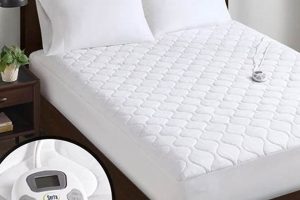
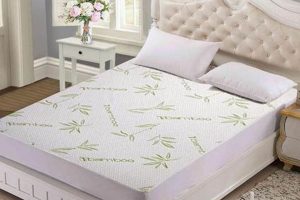
A bedding layer designed to be placed atop a sleep surface experiencing excessive hardness offers a conforming and cushioning effect. These items typically feature materials like memory foam, down alternatives, or latex, providing a buffer between the sleeper and the unyielding support core. As an example, individuals finding their current innerspring system too rigid might consider incorporating such a product to enhance comfort.
The significance of ameliorating an overly stiff sleep platform stems from its impact on pressure point relief and spinal alignment. A too-firm surface can exacerbate joint pain and restrict blood circulation, leading to restless sleep. The use of a conforming upper layer can distribute weight more evenly, potentially reducing these discomforts and fostering deeper, more restorative rest. Historically, various materials, from simple quilts to more advanced viscoelastic foams, have been employed to achieve this goal.
The following sections will delve into the specific materials commonly used in these comfort-enhancing layers, explore factors to consider when selecting one, and discuss the proper care and maintenance required to ensure its longevity and continued performance.
Enhancing Comfort on a Rigid Sleep Surface
The following recommendations aim to provide guidance when selecting a bedding layer intended to soften an excessively firm mattress. Careful consideration of these factors can lead to a more comfortable and supportive sleep experience.
Tip 1: Assess Material Density. Higher density materials, particularly in memory foam or latex options, often provide greater pressure relief and longevity. Lower density alternatives may compress and lose their effectiveness more quickly.
Tip 2: Evaluate Thickness. A thicker profile generally offers a more significant cushioning effect. Consider the existing mattress height and desired level of softness when determining the appropriate thickness. A profile that is too thick may cause difficulty getting in and out of bed.
Tip 3: Prioritize Breathability. Materials that promote airflow, such as open-cell foam or natural fibers, can help regulate temperature and prevent overheating during sleep. Look for features like ventilation holes or moisture-wicking fabrics.
Tip 4: Examine Construction and Stitching. Well-constructed layers with reinforced stitching are more likely to withstand wear and tear over time. Look for signs of quality craftsmanship, such as even seams and durable binding.
Tip 5: Consider Cleaning and Maintenance. Opt for options with removable and washable covers to facilitate easy cleaning. Follow the manufacturer’s instructions for proper care to maximize the lifespan of the product.
Tip 6: Evaluate Support. Some options combine a soft surface with a supportive base to improve spinal alignment. Evaluate the support layers of the product along with the comfort of the top layer.
By carefully considering material density, thickness, breathability, construction quality, cleaning requirements, and potential support, the user can enhance the sleep experience on a mattress deemed too firm. These factors can contribute to improved comfort, reduced pressure points, and a more restful night’s sleep.
The subsequent section will address common issues encountered when using these products and provide troubleshooting advice.
1. Material Composition

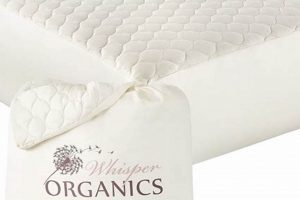
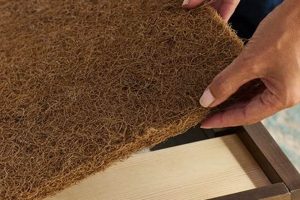
Material composition constitutes a primary determinant of the performance characteristics of a mattress pad intended for use on a firm mattress. The selection of materials directly influences the degree of pressure relief, thermal regulation, and durability experienced by the user. For example, viscoelastic foam, commonly known as memory foam, conforms to the sleeper’s body, distributing weight and alleviating pressure points. Conversely, latex offers a more responsive and resilient surface, providing both cushioning and support. Fiber-based materials, such as cotton or wool, provide a degree of softness and can enhance breathability.
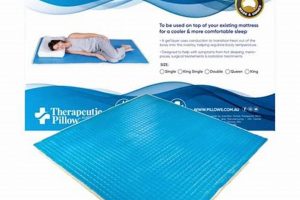
The effectiveness of a given material is dependent on the specific needs and preferences of the individual. An individual experiencing chronic back pain may benefit from the conforming properties of memory foam, while a sleeper who tends to overheat may find a latex or natural fiber pad more suitable due to its enhanced airflow. The combination of materials, such as a layered construction incorporating both memory foam and a supportive core, can also address multiple needs simultaneously. The density and treatment of the constituent material can impact the pads efficacy; a low-density foam, or fiber material can degrade quickly under continued pressure. Conversely, dense memory foam with cooling gel infusion may provide longer support life and thermal regulation.
In conclusion, a thorough understanding of material properties is essential for selecting a mattress pad that effectively mitigates the discomfort associated with a firm mattress. The optimal material composition will depend on factors such as individual sleep preferences, underlying health conditions, and environmental considerations. Informed decision-making regarding material composition translates directly to improved sleep quality and overall well-being. Future consideration should focus on material durability and longevity studies.
2. Thickness Options

Thickness options in mattress pads designed for firm mattresses directly influence the degree of perceived softness and pressure relief. A thicker pad generally provides a more substantial barrier between the sleeper and the unyielding surface below. This increased material depth can better contour to the body, distributing weight more evenly and reducing stress on pressure points such as the hips and shoulders. Conversely, a thinner pad may offer minimal change in surface firmness, primarily serving to add a thin layer of cushioning or protect the mattress from wear and tear. For instance, an individual experiencing significant discomfort from a hard mattress may require a pad with a thickness of three to four inches to achieve adequate pressure relief, while someone seeking only a slight increase in comfort might find a one to two-inch pad sufficient.
The selection of an appropriate thickness is not solely determined by the degree of firmness mitigation desired. Other factors, such as body weight and sleeping position, also play a role. Individuals with higher body weights may require thicker pads to prevent bottoming out, where the pad compresses to its limit, rendering it ineffective. Side sleepers, who experience concentrated pressure on their hips and shoulders, typically benefit from thicker options to properly cradle these areas. Practical application of this understanding is evident in the range of products available, catering to various needs and preferences. Manufacturers often offer pad
s in multiple thicknesses to accommodate different body types and comfort preferences.
In summary, the thickness option of a mattress pad is a critical factor in determining its effectiveness in softening a firm mattress. The optimal thickness is contingent upon the sleeper’s weight, preferred sleeping position, and the degree of firmness mitigation desired. While thicker pads generally offer greater pressure relief, careful consideration must be given to prevent bottoming out and ensure proper support. Choosing the correct thickness contributes significantly to improving sleep quality and overall comfort. A lack of consideration regarding pad thickness is one of the chief complaints regarding mattress pad purchases.
3. Density Levels

Density levels are a crucial factor in determining the performance and longevity of a mattress pad designed to mitigate the effects of a firm mattress. Material density, often measured in pounds per cubic foot (lbs/ft), directly impacts the support, pressure relief, and durability offered by the pad. Higher density materials, such as memory foam or latex, generally provide greater resistance to compression and deformation over time. This translates to sustained support and a reduced likelihood of the pad bottoming out or losing its shape under repeated use. For example, a memory foam pad with a density of 4 lbs/ft will typically offer superior pressure relief and a longer lifespan compared to a similar pad with a density of 2 lbs/ft. The increased density ensures that the material effectively conforms to the body, distributing weight evenly and minimizing pressure points. A practical significance of understanding density levels is evident in the shopping process; a higher density pad often correlates with a higher price point, reflecting the increased material cost and enhanced performance characteristics. It is important to discern density from thickness. A thick, low-density pad will still degrade quicker than a thinner, higher-density option.
The relationship between density levels and user experience is further exemplified by considering the impact on thermal regulation. Higher density materials, while offering superior support, can sometimes trap heat. However, advancements in material science have led to the development of open-cell foam and gel-infused memory foam, which mitigate this issue by promoting airflow and dissipating heat more effectively. In practical applications, individuals prone to overheating during sleep may benefit from selecting a higher density pad with enhanced breathability features. Furthermore, the density level can influence the ease of movement on the mattress. Lower density pads may allow for easier repositioning, while higher density pads may create a sensation of being cradled or enveloped. This is due to the greater degree of conforming support high-density foams provide, which can provide benefits, but also limitations, based on user preferences.
In summary, density levels are a fundamental consideration when selecting a mattress pad for a firm mattress. Higher density materials generally offer superior support, pressure relief, and durability, but may also require careful consideration of thermal regulation properties. Understanding the trade-offs associated with different density levels allows consumers to make informed decisions based on their individual needs and preferences, ultimately leading to improved sleep quality. A challenge remains in accurately assessing density levels without direct access to material specifications or independent testing data, highlighting the importance of relying on reputable brands and thorough product research.
4. Supportiveness Qualities

Supportiveness qualities represent a critical determinant of a mattress pad’s effectiveness in mitigating the impact of a firm mattress. The capacity of a mattress pad to provide adequate support is paramount, as it directly influences spinal alignment and pressure distribution. A pad lacking sufficient support may exacerbate existing discomfort or contribute to the development of musculoskeletal issues. For example, a mattress pad composed solely of low-density memory foam might initially feel plush but fail to prevent the sleeper’s hips from sinking too deeply into the mattress, leading to spinal misalignment and lower back pain. Conversely, a pad incorporating a supportive core of high-density foam or reinforced fibers can maintain proper spinal posture, even on an unyielding sleep surface. This is especially pertinent for individuals with pre-existing back conditions, where proper support is non-negotiable. The practical significance of understanding this lies in recognizing that a soft surface alone does not equate to a supportive one.
The influence of supportiveness qualities extends beyond spinal alignment. Adequate support also contributes to the even distribution of body weight, reducing pressure concentration on specific areas such as the shoulders, hips, and knees. This is particularly relevant for side sleepers, who experience concentrated pressure on these points. A supportive mattress pad can effectively redistribute this pressure, minimizing discomfort and promoting better circulation. Real-world applications of this principle are evident in the design of specialized mattress pads targeting specific needs, such as those incorporating zoned support systems that provide varying levels of support to different areas of the body. These pads are often marketed toward individuals with arthritis or other conditions that cause localized pain. The success of these designs underscores the importance of considering supportiveness as a distinct and vital attribute of a mattress pad, separate from its softness or thickness.
In summary, supportiveness qualities are indispensable for a mattress pad designed to compensate for excessive firmness. The ability of a pad to maintain spinal alignment and evenly distribute weight is crucial for preventing and alleviating discomfort. The challenge lies in accurately assessing the supportiveness of a pad based solely on product descriptions or initial impressions. Relying on reputable brands, seeking recommendations from healthcare professionals, and considering user reviews can help to mitigate this challenge. Ultimately, prioritizing supportiveness qualities ensures that the mattress pad serves not only as a comfort layer but also as a proactive element in promoting spinal health and overall well-being.
5. Breathability Attributes

The breathability attributes of a mattress pad designed for use on a firm mattress are directly linked to sleep comfort and overall hygiene. Firm mattresses, often constructed with dense materials, can impede airflow, leading to heat retention and moisture accumulation. A mattress pad with inadequate breathability exacerbates this issue, creating an environment conducive to bacterial growth and discomfort. The cause-and-effect relationship is evident: restricted airflow leads to increased temperature, promoting perspiration. This perspiration, trapped between the sleeper and the mattress, fosters an environment favorable to the proliferation of microorganisms. Therefore, the ability of a mattress pad to dissipate heat and moisture is paramount for maintaining a hygienic and comfortable sleep surface.
An example of this can be seen with polyurethane-based pads. Polyurethane foams, while durable, are not inherently breathable. To mitigate this, manufacturers may perforate the foam or integrate channels to promote air circulation.
The importance of breathability as a component of a mattress pad intended for firm mattresses extends beyond hygiene. Effective thermal regulation contributes significantly to sleep quality. Core body temperature naturally decreases during sleep. A mattress pad that traps heat disrupts this process, potentially leading to restlessness and fragmented sleep patterns. Conversely, a breathable pad facilitates efficient heat dissipation, promoting a stable sleep temperature. Real-life examples include pads constructed with natural fibers such as wool or cotton, or those incorporating advanced materials like open-cell foam or phase-change materials. These materials enhance airflow and can wick away moisture, creating a cooler and drier sleep environment. The practical significance lies in the ability of a breathable pad to improve sleep quality, particularly for individuals who tend to sleep hot or reside in warmer climates. Selecting a pad based on breathability promotes better thermoregulation during sleep cycles.
In summary, breathability attributes are a critical factor in the effectiveness of a mattress pad designed for a firm mattress. The ability to dissipate heat and moisture contributes to both hygiene and sleep comfort. While firm mattresses inherently limit airflow, a breathable pad can mitigate these limitations by promoting efficient thermal regulation. A key challenge lies in accurately assessing the breathability of a product based on marketing claims alone. Researching the material composition, construction techniques, and user reviews is essential for making an informed decision. Ultimately, prioritizing breathability ensures a healthier and more restful sleep experience.
6. Maintenance Ease
Maintenance ease, in the context of a mattress pad designed for a firm mattress, refers to the simplicity and convenience with which the item can be cleaned and preserved, directly impacting its longevity, hygiene, and sustained performance. This aspect is especially pertinent considering that these pads are designed to enhance comfort, frequently through the use of absorbent materials that may accumulate moisture, allergens, and dust mites.
- Removable and Washable Covers
The presence of a removable and machine-washable cover significantly enhances maintenance ease. These covers, typically constructed from cotton, polyester, or blended fabrics, protect the underlying pad from spills, stains, and accumulated debris. Real-world examples include zippered covers that can be easily detached and laundered according to care instructions. This feature prevents the need to clean the entire pad, reducing the risk of damage and extending its lifespan. The implications are significant for allergy sufferers, as regular washing of the cover helps to minimize allergen buildup.
- Stain Resistance
Materials with inherent stain resistance or treated with stain-repellent finishes contribute to maintenance ease by preventing permanent discoloration and facilitating spot cleaning. Examples include fabrics treated with hydrophobic coatings that repel liquids. In practice, this means that spills can be easily blotted away without leaving a lasting mark. The consequence is a reduction in the frequency and intensity of cleaning required to maintain the pad’s appearance and hygiene.
- Compatibility with Standard Cleaning Agents
A mattress pad that is compatible with standard household cleaning agents simplifies the cleaning process. Materials that are easily damaged by harsh chemicals necessitate specialized cleaning products and techniques, increasing the time and effort required for maintenance. An instance might be a pad made of latex, where harsh solvents will degrade the support foam material. Conversely, pads that can be cleaned with mild detergents and water offer a more convenient and cost-effective cleaning solution. The ramification of standard agent compatibility is reduced risk of material degradation and simplifies the care regime.
- Quick Drying Properties
Materials that dry quickly after washing or spot cleaning contribute to maintenance ease by minimizing downtime and preventing the growth of mold and mildew. Synthetic fibers such as polyester generally dry more quickly than natural fibers such as cotton. An practical case would be a pad dried overnight on a line. The implication is reduced risk of bacterial growth and quicker return to service after cleaning.
These facets of maintenance ease are inextricably linked to the overall value and user satisfaction associated with a mattress pad for a firm mattress. A pad that is easy to clean and maintain not only promotes better hygiene but also extends its lifespan, providing long-term comfort and support. By prioritizing maintenance ease, consumers can ensure that their investment in a comfort-enhancing bedding layer continues to deliver optimal performance for years to come. In contrast, a pad that requires extensive or specialized cleaning may quickly become a burden, negating its intended benefits.
7. Size Compatibility

Size compatibility represents a foundational prerequisite for a mattress pad intended for use on a firm mattress. The dimensional alignment between the pad and the underlying mattress directly influences the pad’s functional effectiveness and overall user satisfaction. A mismatch in size can negate the intended benefits, resulting in discomfort, reduced support, and accelerated wear and tear. The cause-and-effect relationship is straightforward: an ill-fitting pad fails to provide consistent cushioning and support across the entire sleep surface. The importance of size compatibility as a component of a mattress pad for a firm mattress is paramount, as it ensures proper coverage, prevents shifting or bunching, and maximizes the pad’s ability to mitigate the firmness of the underlying mattress.
Real-life examples underscore the practical significance of this understanding. A queen-size pad placed on a king-size mattress will leave portions of the sleep surface exposed, creating uneven support and disrupting sleep quality. Conversely, a king-size pad placed on a queen-size mattress will overhang the edges, creating a tripping hazard and potentially damaging the pad or the bed frame. In practical applications, adhering to standard mattress dimensions (Twin, Twin XL, Full, Queen, King, California King) when selecting a mattress pad is crucial. Manufacturers typically adhere to these standard sizes; however, variations can occur, particularly with older or custom-made mattresses. Measuring the mattress dimensions prior to purchase is advisable to ensure a proper fit. Failing to do so can result in a compromised sleep experience and a potentially unusable product. Further, corner straps, elastic edging, or fitted sheet-style attachments are often integrated into mattress pad designs to further secure the pad and minimize shifting.
In summary, size compatibility is a non-negotiable factor in selecting a mattress pad for a firm mattress. A properly sized pad ensures consistent support, prevents shifting, and maximizes the pad’s ability to mitigate the firmness of the underlying mattress. The challenge lies in accurately determining mattress dim
ensions and selecting a pad that adheres to those specifications. Prioritizing size compatibility is essential for realizing the intended benefits of a mattress pad and achieving a comfortable and restful sleep experience. A lack of accurate sizing results in a negative impact of the performance of the mattress pad.
Frequently Asked Questions
The following questions address common inquiries and misconceptions regarding the selection and use of mattress pads designed to mitigate the effects of excessive firmness.
Question 1: How does a mattress pad differ from a mattress topper?
A mattress pad is generally thinner than a mattress topper, primarily intended to add a layer of cushioning or protect the mattress. A topper is thicker, designed to significantly alter the feel of the mattress and provide substantial pressure relief.
Question 2: Can a mattress pad correct significant sagging in a firm mattress?
A mattress pad is not designed to correct sagging. While it can add a layer of comfort, it will not provide the necessary support to level out a sagging mattress. Addressing significant sagging typically requires replacing the mattress.
Question 3: What materials are best suited for individuals with allergies?
Hypoallergenic materials such as latex, memory foam with antimicrobial treatments, or mattress pads encased in allergen-resistant fabrics are recommended for individuals with allergies. Regular cleaning of the pad is also essential.
Question 4: How does the density of a mattress pad impact its performance on a firm mattress?
Higher density materials generally offer greater pressure relief and durability. Lower density pads may compress and lose their effectiveness more quickly. However, higher density materials can sometimes retain more heat.
Question 5: Can a mattress pad improve sleep quality on a firm mattress for all individuals?
While a mattress pad can enhance comfort and pressure relief, individual results may vary. Factors such as body weight, sleeping position, and pre-existing health conditions can influence the perceived benefits.
Question 6: How frequently should a mattress pad be replaced?
The lifespan of a mattress pad depends on factors such as material quality, usage frequency, and maintenance practices. However, a general guideline is to replace the pad every one to three years to ensure optimal performance and hygiene.
Key takeaways include understanding the distinction between pads and toppers, recognizing the limitations of pads in correcting significant mattress issues, and considering material properties in relation to individual needs and preferences.
The next section will explore strategies for optimizing the performance and longevity of a mattress pad used on a firm mattress.
Mattress Pad for Firm Mattress
This exploration has dissected the multifaceted nature of the mattress pad for firm mattress, outlining its role in mitigating excessive sleep surface rigidity. Critical factors such as material composition, thickness options, density levels, supportiveness qualities, breathability attributes, maintenance ease, and size compatibility have been examined. A thorough understanding of these parameters is essential for informed consumer decisions and optimal sleep quality.
Given the potential impact on spinal alignment and pressure point relief, the selection of a mattress pad for firm mattress warrants careful consideration. As advancements in material science continue, future developments may offer enhanced solutions for optimizing sleep surface comfort and promoting restorative rest. Continued research and adherence to established guidelines remain crucial for maximizing the benefits of this bedding accessory.