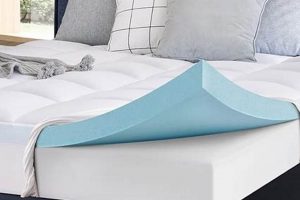
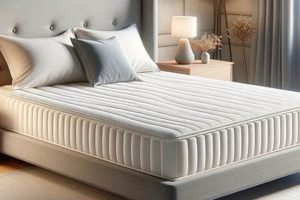
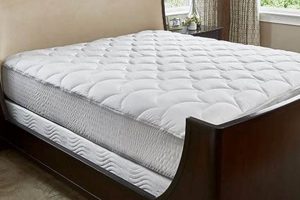
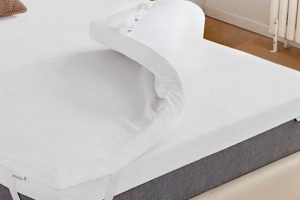
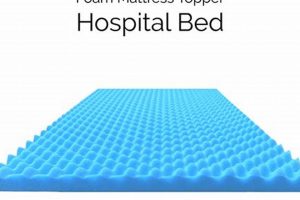
A sleep surface layer designed to add rigidity is a common bedding accessory. Such additions can modify the feel of an existing mattress, offering enhanced support for individuals who find their current sleeping arrangement too soft. For example, individuals with back pain might find relief from a less yielding sleep surface.
The importance of a more supportive sleep surface lies in its potential to improve spinal alignment and reduce pressure points. Historically, firmer sleeping surfaces have been recommended by some healthcare professionals for individuals with specific musculoskeletal conditions. The benefit often cited is a reduction in discomfort and improved sleep quality due to better postural support.
The following sections will delve into the various materials used in creating rigid sleep surface layers, the factors to consider when selecting one, and the specific benefits these products offer to different types of sleepers. Considerations such as material density, thickness, and construction techniques all contribute to the overall level of support provided.
Guidance on Selecting a Supportive Sleep Surface Layer
The subsequent recommendations offer insights into selecting a sleep surface layer designed to provide enhanced support. These tips are intended to assist in making an informed decision based on individual needs and preferences.
Tip 1: Material Density. Prioritize materials with a high density rating. Higher density typically translates to greater resistance to compression, resulting in a more consistently supportive surface over time. High-density memory foam or latex are common options.
Tip 2: Thickness Considerations. Evaluate the thickness based on the existing mattress firmness. A thicker layer will generally provide more substantial alteration to the original surface. However, excessive thickness may create an uncomfortably rigid sleep experience.
Tip 3: ILD Rating Assessment. The Indentation Load Deflection (ILD) rating indicates the force required to compress a material. A higher ILD value suggests a firmer feel. Seek out ILD ratings to compare the relative firmness of different options.
Tip 4: Consider Sleeping Position. Individuals who primarily sleep on their back or stomach generally benefit most from increased support to maintain proper spinal alignment. Side sleepers may require a balance between support and pressure relief to avoid discomfort at the shoulders and hips.
Tip 5: Trial Period and Return Policies. Whenever possible, select a product from a retailer offering a trial period and a reasonable return policy. This allows for testing the surface layer in the home environment and ensuring it meets individual comfort and support requirements.
Tip 6: Read Reviews and Compare. Examine independent product reviews to gain insight into the long-term performance and durability of different models. Consider both positive and negative feedback to develop a comprehensive understanding of potential benefits and drawbacks.
Tip 7: Support Layer Composition. Some models incorporate a solid layer of high-density support foam. It can provide targeted lower back support, contributing to a more anatomically correct sleeping position.
By adhering to these recommendations, the selection of a supportive sleep surface layer can be approached methodically, leading to a more informed and potentially more satisfactory purchase. Increased support can contribute to improved sleep quality and reduced discomfort.
The following section will discuss potential drawbacks of selecting an overly rigid sleep surface.
1. Support
The primary function of a rigid sleep surface layer is to augment or enhance support. This support directly influences spinal alignment and pressure distribution. The cause and effect relationship is clear: insufficient support can lead to misalignment, resulting in back pain or discomfort. Conversely, adequate support promotes a more neutral spinal posture, potentially alleviating existing discomfort and preventing future issues. For example, an individual experiencing morning stiffness due to a sagging mattress might find relief from a more supportive sleep surface that prevents excessive sinking of the hips.
Support is an integral component of a rigid sleep surface layer, dictating its effectiveness. Without sufficient supportive characteristics, the layer fails to perform its intended function. The firmness, density, and structural design are all factors contributing to the overall support provided. Real-world examples include individuals with scoliosis or other spinal conditions who rely on firmer sleeping surfaces to maintain a comfortable and supportive sleeping position. The selection of a suitable firmness level is crucial for these individuals.
Understanding the interplay between support and rigid sleep surface layers has practical significance. It enables informed decision-making when selecting bedding accessories. Proper support can contribute to improved sleep quality, reduced pain, and enhanced overall well-being. However, it is important to balance support with individual comfort preferences, as excessive rigidity can lead to pressure point discomfort. The key insight is that tailored support, achieved through a well-chosen sleep surface layer, can significantly impact sleep health.
2. Durability

The endurance of a rigid sleep surface layer significantly affects its long-term value and performance. A product’s ability to withstand repeated use without significant degradation directly impacts its capacity to provide consistent support and comfort.
- Material Degradation Resistance
The inherent resistance of the materials used in a rigid sleep surface layer to breakdown over time is paramount. High-density foams, such as latex or memory foam, typically exhibit greater resistance to compression and deformation compared to lower-density alternatives. For example, a high-density latex sleep surface layer may maintain its firmness and supportive qualities for several years, whereas a low-density polyurethane foam layer may begin to sag or compress within a shorter timeframe, diminishing its ability to provide adequate support.
- Construction Integrity
The manner in which a rigid sleep surface layer is constructed influences its overall longevity. Reinforced edges, robust stitching, and layered designs can enhance structural integrity and prevent premature wear and tear. Consider a sleep surface layer with reinforced edges, which are designed to prevent the edges from collapsing or deforming over time. A poorly constructed layer might exhibit seam separation or internal material shifting, thereby reducing its lifespan and negatively impacting support consistency.
- Resistance to Compression Set
Compression set refers to the permanent deformation of a material
after prolonged compression. Materials with a low compression set retain their original shape and firmness better over time, ensuring consistent support. An example of this would be two sleep surface layers that both support 200 pounds. Over a period of 5 years, one may sag significantly more than the other due to a high compression set, directly impacting its durability and its ability to provide the intended support. - Resistance to Environmental Factors
Exposure to moisture, temperature fluctuations, and ultraviolet light can accelerate the degradation of certain materials used in rigid sleep surface layers. Selecting materials that are resistant to these factors can prolong the lifespan. A sleep surface layer exposed to direct sunlight for extended periods may experience material breakdown and discoloration, while a layer used in a humid environment may be susceptible to mold or mildew growth, both impacting its durability and hygiene.
The long-term efficacy of a rigid sleep surface layer hinges on its inherent durability. Material quality, construction techniques, and resistance to environmental factors collectively determine the product’s lifespan and its capacity to consistently deliver the intended support and comfort. Investing in a more durable option upfront may prove more cost-effective over the long term, as it reduces the need for frequent replacements and ensures sustained performance.
3. Alignment
Proper spinal alignment is a critical factor in achieving restful sleep and preventing musculoskeletal issues. The role of a rigid sleep surface layer in facilitating this alignment is significant, particularly for individuals whose existing mattress lacks sufficient support.
- Spinal Curvature Maintenance
A rigid sleep surface layer contributes to maintaining the natural curvature of the spine during sleep. By preventing excessive sinking or sagging, it ensures that the spine remains in a neutral position, reducing stress on the vertebrae and surrounding tissues. Consider the example of an individual with lordosis, or swayback, who may require a firmer sleeping surface to prevent exacerbation of their condition by minimizing spinal extension.
- Pressure Point Reduction
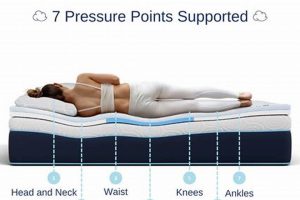
While firmness is essential for alignment, a well-designed rigid sleep surface layer must also consider pressure point relief. Excessive pressure on bony prominences, such as the hips and shoulders, can disrupt sleep and lead to discomfort. A layer that balances support with pressure redistribution can alleviate these issues. A real-world example includes individuals who sleep on their sides and require sufficient support to prevent their spine from curving excessively, while also needing pressure relief at the shoulder and hip joints to prevent discomfort.
- Postural Support for Different Sleep Positions
Optimal spinal alignment varies depending on the sleep position. Back sleepers generally require support in the lumbar region to maintain the natural arch of the lower back. Side sleepers need support to keep the spine straight and prevent it from sagging downwards. Stomach sleepers typically require the firmest support to minimize spinal extension. A rigid sleep surface layer must cater to these diverse needs to effectively promote alignment. For instance, a back sleeper may benefit from a rigid sleep surface layer with targeted lumbar support, while a side sleeper might need a layer that contours to their body while still providing sufficient support to maintain spinal alignment.
- Impact on Muscular Relaxation
Proper spinal alignment facilitates muscular relaxation. When the spine is properly supported, the muscles surrounding the spine can relax, reducing tension and stiffness. Conversely, poor alignment can lead to muscle strain and discomfort. An example of this is the difference between waking up with a stiff back after sleeping on a sagging mattress versus waking up feeling refreshed and pain-free after sleeping on a more supportive and properly aligned sleep surface.
The selection of a rigid sleep surface layer intended to promote spinal alignment demands careful consideration of individual sleep preferences, spinal conditions, and the inherent properties of the layer itself. An appropriate choice contributes to restful sleep, reduced discomfort, and improved musculoskeletal health.
4. Density
Density, in the context of a sleep surface layer intended to enhance firmness, is a critical attribute that directly correlates with its supportiveness, durability, and overall performance. The mass per unit volume of the material used significantly influences the layer’s ability to resist compression and maintain its structural integrity over time. High-density materials generally provide greater resistance to deformation and offer more consistent support compared to their lower-density counterparts.
- Support Provision and Load Distribution
Higher density translates to an increased capacity to distribute weight evenly across the surface area, reducing pressure points and enhancing spinal alignment. A high-density memory foam sleep surface layer, for example, can contour to the body while maintaining a firm underlying support, preventing excessive sinking and promoting a more neutral spinal posture. Lower density materials, conversely, may compress more readily, leading to uneven weight distribution and potential discomfort. An individual weighing 200 pounds might experience significantly less pressure on their hips and shoulders with a high-density option.
- Durability and Resistance to Degradation
Density is intrinsically linked to the longevity of a rigid sleep surface layer. Higher density materials are generally more resistant to compression set, the permanent deformation of a material after prolonged use. A high-density latex layer, for instance, can retain its shape and firmness for many years, while a low-density polyurethane foam layer may exhibit noticeable sagging and loss of support within a shorter period. This resistance to degradation directly impacts the layer’s ability to consistently provide the intended level of support over its lifespan.
- Impact on Firmness Perception
While firmness is a subjective measure, density plays a crucial role in determining the perceived firmness of a sleep surface layer. A higher density material will typically feel firmer due to its greater resistance to compression. However, it is important to note that other factors, such as material composition and construction techniques, also contribute to the overall firmness. Two sleep surface layers may have similar firmness ratings, but the higher density option will generally provide more consistent support and durability.
- Thermal Properties and Airflow
Density can influence the thermal properties and airflow within a sleep surface layer. Higher density materials tend to retain more heat, potentially leading to discomfort for some individuals. However, manufacturers often incorporate design features, such as open-cell structures or ventilation channels, to improve airflow and dissipate heat. A high-density memory foam layer with an open-cell design may offer better temperature regulation compared to a traditional closed-cell memory foam layer.
In summary, density is a fundamental charac
teristic of a rigid sleep surface layer that significantly impacts its performance, durability, and overall suitability. Careful consideration of density is essential when selecting a sleep surface layer to ensure that it provides the appropriate level of support and comfort for individual needs and preferences. The long-term value of the product is linked to the quality of the material it is composed of.
5. Thickness
The thickness of a sleep surface layer designed to increase firmness significantly impacts the degree of support and comfort modification experienced by the user. Greater thickness generally correlates with a more pronounced change in the overall feel of the sleep surface. This attribute necessitates careful consideration to ensure the selected layer complements the existing mattress and individual sleep preferences.
- Magnitude of Firmness Alteration
Thickness directly influences the extent to which a sleep surface layer alters the firmness of the underlying mattress. A thicker layer provides a greater buffer between the sleeper and the existing mattress, resulting in a more substantial shift in firmness. For instance, a 2-inch rigid sleep surface layer will typically provide a less drastic change in feel compared to a 4-inch layer of the same material and density. The implication is that individuals seeking a subtle increase in firmness should opt for a thinner layer, while those desiring a more significant transformation should consider a thicker option.
- Influence on Support Distribution
Thickness plays a role in how effectively the sleep surface layer distributes weight and reduces pressure points. A thicker layer can more readily contour to the body, promoting even weight distribution and minimizing pressure on bony prominences. Conversely, a thinner layer may offer less contouring and potentially result in increased pressure point discomfort. Consider a side sleeper who requires pressure relief at the shoulders and hips. A thicker, conforming layer can more effectively accommodate these pressure points compared to a thinner, less yielding option.
- Impact on Sleeping Height and Bedding Fit
The thickness of a sleep surface layer affects the overall height of the bed, which can influence ease of access and compatibility with existing bedding. A thicker layer will raise the sleeping surface, potentially making it more difficult for some individuals to get in and out of bed. Additionally, the increased height may necessitate the purchase of deeper-pocketed sheets. An individual with mobility limitations should carefully consider the added height when selecting a sleep surface layer. Similarly, the thickness must be accounted for when fitting sheets to ensure proper coverage and prevent slippage.
- Material Compression and Long-Term Performance
Thickness interacts with material density to influence the long-term performance and resistance to compression set. A thicker layer, particularly if composed of a less dense material, may be more prone to compression over time, leading to a gradual loss of support and firmness. Conversely, a thinner layer of a high-density material may maintain its supportive qualities for a longer duration. Therefore, it is crucial to consider both thickness and density when evaluating the durability and long-term value of a sleep surface layer. A thicker layer may initially provide greater comfort, but a thinner, high-density layer may prove more resilient over time.
The thickness of a rigid sleep surface layer is a key determinant of its performance and suitability. It should be carefully selected in conjunction with material density, individual sleep preferences, and existing mattress characteristics to achieve the desired level of support, comfort, and long-term durability. The thickness also must be considered for other factors unrelated to comfort such as bedding, access to the bed, and the bed itself.
6. Pressure Relief

The integration of pressure relief into a rigid sleep surface layer represents a critical design consideration. While the primary objective is to enhance firmness and support, neglecting pressure relief can lead to discomfort and disrupted sleep. The following explores how this balance is achieved in different types of materials.
- Material Selection and Density Gradient
The materials employed in a rigid sleep surface layer significantly impact its pressure-relieving properties. High-density memory foam, for example, conforms to the body’s contours, distributing weight and reducing pressure concentration at bony prominences like hips and shoulders. Employing a density gradient, where the surface layer is less dense than the underlying support core, is a common strategy to achieve both firmness and pressure relief. For instance, a sleep surface layer might incorporate a top layer of 3-pound density memory foam over a base layer of 5-pound density foam. This design allows the surface to cushion pressure points while the base provides firm support.
- Zoned Support Systems
Zoned support systems involve varying the firmness of different sections of the sleep surface layer to accommodate different body regions. Firmer support is typically provided in the lumbar region to maintain spinal alignment, while softer support is offered in the shoulder and hip areas to alleviate pressure. A sleep surface layer with a zoned system might feature firmer foam in the center third of the layer and softer foam in the upper and lower thirds. Such a design aims to provide optimal support and pressure relief for individuals in various sleep positions.
- Surface Modification Techniques
Surface modification techniques, such as convoluted or egg-crate foam, can enhance pressure relief by increasing the surface area and allowing for greater airflow. These techniques create channels that reduce direct contact with the body, minimizing pressure concentration and promoting ventilation. A sleep surface layer with a convoluted surface can conform more easily to the body’s curves, reducing pressure points and improving airflow compared to a flat surface. This is particularly beneficial for individuals who tend to sleep hot or experience pressure-related discomfort.
- Thickness and Layering Strategies
The thickness of the pressure-relieving layer is another critical factor. A thicker layer provides more cushioning and allows for greater pressure redistribution. Layering different materials can also enhance pressure relief. For instance, a sleep surface layer might combine a thin layer of memory foam with a thicker layer of latex, providing both contouring and resilient support. This combination can offer a balance of pressure relief and firmness that caters to a wider range of sleep preferences.
Balancing firmness and pressure relief in a rigid sleep surface layer is an ongoing design challenge. The optimal solution varies depending on individual sleep position, body weight, and any pre-existing musculoskeletal conditions. Careful consideration of materials, construction techniques, and support systems is essential to ensure that the layer provides both the desired level of support and adequate pressure relief for comfortable and restorative sleep.
Frequently Asked Questions
The following addresses common inquiries regarding sleep surface layers
designed to increase firmness. The information presented aims to provide clarity and guide informed purchasing decisions.
Question 1: What defines a rigid sleep surface layer?
A rigid sleep surface layer is a bedding accessory placed atop an existing mattress to increase its firmness. These layers are typically constructed from high-density materials like latex or memory foam and are designed to provide enhanced support and improve spinal alignment.
Question 2: How does a rigid sleep surface layer benefit back pain sufferers?
By providing additional support, a rigid sleep surface layer can help maintain proper spinal alignment, reducing stress on the back muscles and vertebrae. This can alleviate back pain and improve sleep quality for individuals with certain musculoskeletal conditions. However, consult a healthcare professional for personalized recommendations.
Question 3: Are there any drawbacks to using a rigid sleep surface layer?
An overly rigid sleep surface layer can create pressure points, leading to discomfort and disrupted sleep. Individuals should carefully consider their sleeping position and body weight when selecting a firmness level to avoid these issues.
Question 4: What materials are commonly used in rigid sleep surface layers?
Common materials include high-density memory foam, latex, and convoluted foam. Each material offers different levels of firmness, support, and pressure relief. The choice of material should be based on individual preferences and needs.
Question 5: How thick should a rigid sleep surface layer be?
The optimal thickness depends on the existing mattress firmness and the desired level of support. A thicker layer will generally provide a more significant change in firmness, while a thinner layer offers a more subtle adjustment. Consider existing bed height and bedding fit when making this decision.
Question 6: How is the Indentation Load Deflection (ILD) rating relevant?
The ILD rating indicates the force required to compress a material. A higher ILD value suggests a firmer feel. Consult ILD ratings when comparing the relative firmness of different sleep surface layers.
Careful consideration of individual needs and preferences is essential when selecting a rigid sleep surface layer. Understanding the properties of different materials and the impact of thickness and ILD ratings is crucial for making an informed decision.
The following section will explore alternative approaches to enhancing mattress firmness.
Conclusion
The preceding discussion examined various facets of a mattress topper firm, a bedding accessory designed to augment support and alter the feel of an existing sleep surface. Key points addressed included material density, thickness considerations, the importance of spinal alignment, and the need to balance firmness with adequate pressure relief. Durability and long-term performance were also emphasized as crucial factors in selecting a suitable product.
Ultimately, the selection and effective utilization of a mattress topper firm hinges on a comprehensive understanding of individual needs, sleep preferences, and the inherent properties of available options. The proper application can contribute to improved sleep quality and reduced discomfort, but careful deliberation remains essential to avoid counterproductive outcomes. Further research and consultation with relevant experts may prove beneficial in navigating the complexities of this market sector and achieving optimal sleep health.