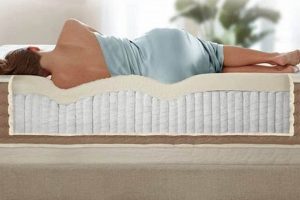
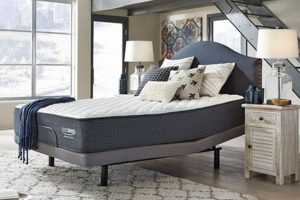
An additional layer designed to enhance the comfort of a convertible couch’s sleeping surface provides support and cushioning. These products are typically constructed from materials like memory foam, latex, or down alternatives and are placed atop the existing mattress. For instance, a two-inch memory foam addition can significantly improve the sleeping experience on a thin or uncomfortable fold-out bed.
The primary advantage of such a product is the improved sleep quality it offers. Convertible sofas often feature thinner, less supportive mattresses than standard beds, leading to discomfort and potential back pain. The use of an added layer can alleviate these issues by distributing weight more evenly and providing pressure relief. Historically, individuals have sought solutions to enhance the comfort of temporary sleeping arrangements, leading to the development of various types of supplemental bedding.
The following sections will delve into the different types of these products available, factors to consider when selecting one, and their impact on the longevity of the underlying convertible sofa’s mattress.
Guidance on Selecting a Sleeper Sofa Enhancement Layer
The selection of an appropriate enhancement layer for a convertible couch requires careful consideration of several factors to ensure optimal comfort and support. The following recommendations offer a structured approach to this process.
Tip 1: Material Selection: Opt for materials such as memory foam or latex, known for their pressure-relieving properties and ability to conform to the body’s contours. A density of at least 3 pounds per cubic foot for memory foam is recommended for durability.
Tip 2: Thickness Evaluation: Assess the thickness of the existing mattress. A thicker existing mattress may only require a thinner enhancement layer (1-2 inches), while a thinner mattress may benefit from a thicker one (3-4 inches) for adequate support.
Tip 3: Size Compatibility: Precisely measure the dimensions of the convertible couch’s sleeping surface to ensure a proper fit. An ill-fitting enhancement layer can create uneven surfaces and compromise comfort.
Tip 4: Density Considerations: Higher density materials offer greater support and durability, but can also be firmer. Consider the preferred level of firmness and choose accordingly.
Tip 5: Budget Allocation: Quality enhancements for sleeper sofas can vary significantly in price. Establish a budget beforehand to narrow the selection and avoid overspending. Prioritize materials and construction quality over simply the lowest price point.
Tip 6: Cover Material: Consider a topper with a washable cover. This helps maintain hygiene and prolongs the life of the topper itself.
Tip 7: Heat Regulation: Memory foam can retain heat. If overheating is a concern, explore options with cooling gel infusions or open-cell structures to promote airflow.
By carefully evaluating these factors, one can select an enhancement layer that significantly improves the comfort and support of a convertible couch, leading to a more restful sleep experience.
The subsequent sections will explore the potential long-term benefits of using enhancement layers and address common concerns about their use.
1. Comfort Enhancement
Comfort enhancement represents a primary objective in the utilization of a mattress topper on a convertible sofa. The inherent design of convertible sofas often compromises mattress thickness and support, leading to discomfort for the user. Employing a supplemental layer directly addresses this deficiency by providing additional cushioning and conforming to the sleeper’s body, thereby mitigating pressure points and improving sleep quality. The effect of an inadequate mattress is manifested as back pain, restless sleep, and general discomfort, conditions that a well-chosen mattress topper can alleviate. For example, a guest using a pull-out sofa with a thin, spring-based mattress may experience significant improvement in comfort with the addition of a memory foam topper, transforming a potentially unpleasant sleeping situation into a restful one.
The practical significance of understanding this connection lies in informed consumer choices. Selecting a mattress topper based on material, thickness, and density relative to the existing convertible sofa mattress’s characteristics is crucial for achieving optimal comfort. A topper that is too thin may provide insufficient support, while one that is too thick may create an unyielding surface. Consider, for instance, the difference between a latex topper, known for its responsiveness and support, and a down alternative topper, valued for its plush feel. The choice depends on the individual’s preference and the initial shortcomings of the sofa’s mattress.
In summary, the link between comfort enhancement and the application of a mattress topper on a convertible sofa is direct and consequential. Addressing the inherent comfort limitations of convertible sofa mattresses requires a deliberate approach to topper selection, considering material properties and individual needs. While various solutions exist, the underlying principle remains consistent: the strategic use of a mattress topper substantially improves the comfort and overall sleeping experience on a convertible sofa, thereby increasing its usability and value. Challenges include identifying the correct topper density and material, underscoring the need for thorough research before purchase.
2. Size Compatibility

The concept of size compatibility is paramount when considering a mattress topper for a convertible sofa. Discrepancies in dimensions can negate the benefits of the topper, leading to discomfort and a compromised sleeping experience. Precision in measurement and adherence to specified dimensions are crucial for optimal functionality.
- Dimensional Accuracy
Dimensional accuracy refers to the precise matching of the topper’s length and width to the convertible sofa’s sleeping surface. A topper that is too large will overhang, creating an uneven surface and potential tripping hazard. Conversely, a topper that is too small will leave portions of the mattress exposed, negating the intended comfort enhancement. For example, a queen-size topper placed on a full-size sofa bed will result in significant overhang, rendering the topper ineffective.
- Thickness and Foldability
The thickness of the topper must be considered in conjunction with the convertible sofa’s folding mechanism. An excessively thick topper may impede the sofa’s ability to fold correctly, potentially damaging the frame or rendering the sofa unusable as a seating option. Evaluating the sofa’s clearance and folding tolerances is essential before selecting a topper with significant thickness.
- Corner Fit and Elastic Straps
The design of the topper’s corners and the presence of elastic straps or other securing mechanisms play a vital role in maintaining its position on the convertible sofa. Poorly designed corners or inadequate straps can result in the topper shifting during use, leading to discomfort and requiring frequent readjustment. Inspecting the topper’s corner construction and strap quality is advisable prior to purchase.
- Weight Distribution and Edge Support
The topper’s dimensions also impact weight distribution and edge support. If the topper does not adequately cover the edges of the sleeping surface, the occupant may experience a sensation of rolling off, particularly when sleeping near the perimeter. Ensuring that the topper extends to the edges of the convertible sofa mattress is crucial for providing uniform support and preventing edge collapse.
In conclusion, achieving size compatibility is not merely a matter of matching labels (e.g., “queen” topper for a “queen” sofa bed). It necessitates careful measurement, consideration of thickness constraints, evaluation of corner and strap design, and attention to weight distribution. Addressing these dimensional aspects ensures that the mattress topper effectively enhances the comfort of the convertible sofa without compromising its functionality or longevity.
3. Material Density

Material density, a critical characteristic of a mattress topper for a convertible sofa, directly influences its support, durability, and overall comfort. Density, typically measured in pounds per cubic foot (lbs/ft), dictates the amount of material packed into a given volume. Higher density materials generally offer greater resistance to compression, resulting in enhanced support and a longer lifespan. For example, a memory foam topper with a density of 5 lbs/ft will provide superior support and resist body impressions more effectively than one with a density of 3 lbs/ft.
The selection of an appropriate density for a convertible sofa’s mattress topper depends on several factors, including the weight of the user, the firmness preference, and the existing mattress quality. Individuals with higher body weights often benefit from higher density toppers to prevent excessive sinking and maintain proper spinal alignment. Similarly, individuals who prefer a firmer sleeping surface should opt for higher density materials. If the existing convertible sofa mattress is thin or worn, a higher density topper can compensate for the lack of underlying support. Conversely, a lower density topper may be suitable for lighter individuals or those seeking a softer feel, particularly if the existing mattress provides adequate support. The practical application of this understanding lies in the ability to select a topper that effectively addresses the specific shortcomings of the convertible sofa’s sleeping surface, leading to improved sleep quality and reduced discomfort.
In conclusion, material density is a fundamental attribute of a mattress topper for a convertible sofa, influencing its support, durability, and comfort. Understanding the relationship between density and these performance characteristics enables informed decision-making and selection of a topper that effectively meets individual needs and addresses the specific limitations of the existing convertible sofa mattress. Challenges include accurately assessing individual needs and identifying the density of materials in specific products. Further research and transparent product labeling are essential for ensuring consumers can make informed choices and achieve optimal comfort.
4. Support Provision

Support provision, in the context of a mattress topper for a convertible sofa, refers to the ability of the topper to adequately maintain spinal alignment and distribute body weight, mitigating pressure points and enhancing sleep quality. Its relevance is paramount, given the often-compromised support offered by the typically thin mattresses found in convertible sofas.
- Spinal Alignment Maintenance
Maintaining proper spinal alignment is critical for preventing back pain and promoting restful sleep. A mattress topper designed for support effectively fills gaps between the sleeper’s body and the mattress, ensuring the spine remains in a neutral position. For example, a memory foam topper with a medium-firm density can contour to the body’s curves, providing support in the lumbar region and preventing excessive sinking of the hips. The implication is a reduction in musculoskeletal stress and improved sleep posture.
- Pressure Point Reduction
Pressure points, typically occurring at the hips, shoulders, and knees, can disrupt sleep by causing discomfort and requiring frequent position changes. A support-oriented mattress topper distributes body weight more evenly, reducing pressure concentration in these areas. For instance, a latex topper’s inherent elasticity allows it to compress under pressure and provide cushioning, alleviating stress on sensitive joints. The resulting benefit is improved circulation and a decrease in tossing and turning throughout the night.
- Edge Support Stability
The edges of a convertible sofa mattress are often less supportive than the center, leading to a feeling of instability and potential roll-off when sleeping near the perimeter. A mattress topper with reinforced edge support can mitigate this issue by providing consistent firmness across the entire sleeping surface. High-density foam or strategically placed support coils can enhance edge stability, allowing the sleeper to utilize the full width of the mattress without discomfort. The enhanced edge support improves sleep quality and the available sleep surface area, particularly valuable in compact sleeping arrangements.
- Weight Distribution Optimization
Uneven weight distribution can lead to localized pressure buildup and discomfort. A supportive mattress topper facilitates optimal weight distribution by conforming to the body’s contours and preventing excessive sinking in specific areas. For example, a zoned topper, featuring varying densities in different areas, can provide targeted support to the lumbar region while offering softer cushioning to the shoulders. The balanced weight distribution results in reduced pressure on joints and improved overall comfort, promoting deeper and more restorative sleep.
Collectively, these facets of support provision underscore the significance of selecting a mattress topper that effectively addresses the inherent limitations of a convertible sofa’s sleeping surface. The careful consideration of spinal alignment, pressure point reduction, edge support, and weight distribution ensures that the topper enhances comfort and promotes restful sleep. A supportive topper can improve sleep quality and overall satisfaction with the convertible sofa as a sleeping solution, even for extended periods.
5. Thermal Regulation

Thermal regulation represents a critical aspect of mattress topper selection for convertible sofas, directly impacting sleep quality and overall comfort. The materials comprising a mattress topper significantly influence its ability to dissipate heat and maintain a comfortable sleeping temperature. Certain materials, such as traditional memory foam, are known for their heat retention properties, potentially leading to discomfort and disrupted sleep, especially in warmer environments. Conversely, toppers constructed from latex, open-cell foam, or those infused with cooling gels, exhibit enhanced breathability and heat dissipation capabilities. For instance, a sleeper experiencing night sweats on a standard convertible sofa mattress may find significant relief with a latex topper promoting airflow and wicking away moisture. The understanding of material properties and their thermal implications is, therefore, paramount in selecting an appropriate topper.
The importance of thermal regulation is further underscored by the typically enclosed nature of convertible sofa sleeping spaces. Unlike a standard bed, a convertible sofa often features close proximity to the sofa frame and surrounding upholstery, which can restrict airflow. In such confined environments, the choice of a breathable mattress topper becomes even more crucial for preventing overheating and promoting a comfortable sleep environment. Furthermore, the type of bedding used in conjunction with the mattress topper can also affect thermal regulation. Heavy blankets or synthetic sheets may impede airflow and counteract the cooling properties of the topper. Therefore, selecting breathable bedding materials alongside a thermally regulated mattress topper is essential for achieving optimal comfort on a convertible sofa. For example, using linen or cotton sheets can augment the cooling effect of an open-cell foam topper, preventing heat buildup and promoting a restful night’s sleep.
In summary, thermal regulation is inextricably linked to the comfort and usability of a mattress topper for a convertible sofa. Material selection, breathability, and the integration of cooling technologies are key considerations in mitigating heat retention and promoting a comfortable sleeping temperature. Addressing thermal concerns effectively enhances the overall sleeping experience, particularly in the often-confined environment of a convertible sofa. A remaining challenge lies in the accurate assessment of individual thermal sensitivities and the availability of reliable product information regarding thermal performance. Further research and standardized testing methodologies are needed to ensure consumers can make informed decisions about mattress toppers for convertible sofas based on their specific thermal regulation needs.
6. Durability Extension

The concept of durability extension, when applied to a convertible sofa’s mattress, is closely intertwined with the utilization of a mattress topper. The topper acts as a protective barrier, mitigating wear and tear and thereby prolonging the lifespan of the underlying mattress. This protective function is especially relevant given the often-inferior quality and limited lifespan of mattresses found in convertible sofas compared to conventional beds.
- Protection from Direct Contact
The most immediate benefit of a mattress topper is the physical barrier it provides against direct contact with users. This barrier reduces the absorption of moisture, body oils, and dead skin cells into the mattress core, substances that contribute to degradation and microbial growth. For instance, without a topper, perspiration accumulated during sleep can permeate the mattress, fostering mildew and weakening fibers. A topper, especially one with a waterproof or water-resistant cover, significantly reduces this risk. This protective measure has a direct and measurable impact on the mattress’s longevity.
- Mitigation of Surface Wear
The repeated folding and unfolding of a convertible sofa mattress subject it to unique stresses and friction, accelerating wear and tear. A topper distributes weight and pressure more evenly across the mattress surface, reducing localized stress points and minimizing abrasion. As an example, the hinge points of a folding mattress are particularly vulnerable; a topper alleviates stress in these areas, preventing premature sagging and deformation. The result is a mattress that retains its structural integrity and support for a longer period.
- Defense Against Stains and Soiling
Mattresses, particularly those in multi-use furniture like convertible sofas, are susceptible to stains and soiling from spills and accidents. A mattress topper acts as a sacrificial layer, absorbing stains and preventing them from penetrating the mattress fabric. This is particularly important given the difficulty and expense associated with professionally cleaning a convertible sofa mattress. A simple, washable topper can be easily removed and cleaned, preserving the underlying mattress in pristine condition. The prevention of staining has a demonstrably positive effect on the perceived value and lifespan of the entire convertible sofa unit.
- Reduced Compression and Sagging
Over time, mattresses tend to compress and sag, particularly in areas that bear the most weight. A supportive mattress topper provides an additional layer of resistance to compression, slowing down the rate of mattress degradation. This is especially critical for convertible sofa mattresses, which are often thinner and less resilient than conventional mattresses. A high-density foam or latex topper can effectively redistribute weight, preventing localized sagging and maintaining the mattress’s overall supportiveness. This reduction in compression translates directly into an extended period of usable comfort and support from the convertible sofa mattress.
The facets detailed above illustrate the multifaceted role of a mattress topper in extending the durability of a convertible sofa’s mattress. By providing protection against direct contact, mitigating surface wear, defending against stains and soiling, and reducing compression, the topper serves as a valuable investment in preserving the functionality and longevity of the sleeping surface. While the initial cost of a topper may seem significant, the long-term savings associated with extending the mattress’s lifespan often outweigh the upfront expense, making it a practical and cost-effective solution.
Frequently Asked Questions
This section addresses common inquiries regarding the selection, use, and maintenance of mattress toppers specifically designed for convertible sofas. The following questions and answers provide guidance based on established principles and practical considerations.
Question 1: What is the optimal thickness for a mattress topper intended for a sleeper sofa?
The appropriate thickness is contingent on the existing mattress’s condition and the sleeper’s preferences. Generally, a range of 2 to 4 inches is recommended. Thicker options offer increased cushioning and support, while thinner options may be suitable for mattresses with inherent support qualities. However, the sofa’s folding mechanism must be considered to ensure proper closure.
Question 2: Which materials are best suited for mattress toppers used on sleeper sofas?
Memory foam, latex, and down alternatives are commonly employed. Memory foam conforms to the body, providing pressure relief. Latex offers durability and support. Down alternatives provide a plush feel while remaining hypoallergenic. The selection depends on individual preferences regarding firmness and support.
Question 3: How can one ensure the mattress topper remains securely positioned on the sleeper sofa?
Toppers with elastic straps or fitted skirts are recommended. These features secure the topper to the mattress, preventing slippage during use. Regular adjustment may still be necessary, but the straps or skirts significantly enhance stability.
Question 4: How does a mattress topper affect the folding mechanism of a sleeper sofa?
The topper’s thickness and density can impact the folding process. Excessive thickness can impede closure, potentially damaging the sofa’s frame. Selecting a topper that is appropriately sized and constructed from flexible materials is crucial for maintaining functionality.
Question 5: What maintenance procedures are recommended for mattress toppers on sleeper sofas?
Regular vacuuming helps remove dust and debris. Spot cleaning with mild detergents is advised for stains. Many toppers feature removable, washable covers, facilitating easy cleaning. Adherence to the manufacturer’s instructions is paramount for preserving the topper’s integrity.
Question 6: Does the use of a mattress topper negate the need for a high-quality sleeper sofa mattress?
A topper can enhance comfort, but it cannot fully compensate for a fundamentally inadequate mattress. A supportive mattress base is essential for proper spinal alignment. The topper serves to refine the sleeping experience, but it is not a replacement for a quality foundation.
In summary, selecting and maintaining a mattress topper for a convertible sofa requires careful consideration of thickness, material, security, folding mechanisms, and maintenance procedures. A well-chosen topper can significantly improve comfort and prolong the lifespan of the sofa’s mattress.
The following section will provide purchasing guidance and cost considerations for these products.
Concluding Remarks on Convertible Sofa Mattress Enhancements
This exploration of the “mattress topper for sleeper sofa” application has highlighted crucial considerations for optimizing comfort and extending the lifespan of these convertible sleeping surfaces. Material density, size compatibility, support provision, and thermal regulation emerge as critical factors in the selection process. Careful attention to these elements ensures the acquisition of a product that effectively addresses the inherent limitations of convertible sofa mattresses.
Ultimately, the informed deployment of a suitable mattress enhancement layer represents a pragmatic approach to improving sleep quality and maximizing the value of convertible furniture. Continued research and transparent product labeling are essential for empowering consumers to make well-informed choices. Prioritizing these considerations will lead to increased satisfaction and prolonged utility of sleeper sofa arrangements.