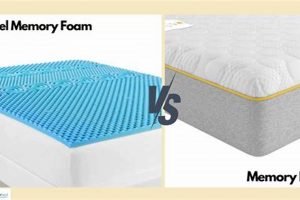
A key consideration for maintaining a comfortable and hygienic sleep environment revolves around the choice between enhancing an existing sleep surface and shielding it from potential damage. One option focuses on adding a layer designed to modify the feel of the bed, potentially increasing softness or firmness. The other prioritizes defense against spills, stains, and allergens, prolonging the lifespan of the underlying mattress. For example, an individual seeking to alleviate pressure points might consider the former, while someone concerned about accidental liquid damage would likely opt for the latter.
Selecting either an enhancement layer or a protective barrier offers distinct advantages. One addresses concerns related to sleep quality and physical comfort, influencing factors such as spinal alignment and pressure relief. The other delivers peace of mind by safeguarding a significant investment from premature wear and tear. The evolution of these bedding accessories reflects a growing awareness of the importance of sleep hygiene and the desire to customize the sleep experience. Both solutions contribute to a healthier and more restful sleep environment, each addressing different priorities.
This discussion will delve into the specific characteristics, benefits, and drawbacks of each option, providing a detailed comparison to assist in making an informed decision regarding the optimal choice for individual sleep needs and budgetary considerations. The intent is to furnish a clear understanding of the features that distinguish between a comfort-enhancing layer and a preventative safeguard, facilitating a confident selection process.
Essential Considerations
The following points provide key considerations when evaluating the need for either a mattress topper or a mattress protector, or both, to optimize sleep quality and mattress longevity.
Tip 1: Assess Comfort Needs. Evaluate current mattress comfort. If the primary goal is to modify the firmness or softness of the sleep surface, a mattress topper is the more appropriate choice. Examples include memory foam toppers for increased contouring and down alternative toppers for enhanced plushness.
Tip 2: Prioritize Protection. If safeguarding the mattress from spills, stains, allergens, and dust mites is the main concern, a mattress protector is essential. Consider waterproof protectors for households with children or pets.
Tip 3: Consider Mattress Age. For older mattresses exhibiting signs of wear, a topper can provide a cost-effective means of extending its lifespan by adding a new comfort layer. However, it does not address underlying support issues.
Tip 4: Evaluate Budget. Mattress protectors generally represent a lower initial investment compared to toppers. Assess available budget and prioritize accordingly, potentially investing in both for comprehensive benefits.
Tip 5: Check for Manufacturer Warranties. Certain mattress warranties may be voided by the use of non-approved protectors. Verify warranty requirements before making a purchase.
Tip 6: Think About Specific Allergies. For individuals with allergies, hypoallergenic mattress protectors designed to block allergens and dust mites are crucial. Look for certifications from reputable organizations.
Tip 7: Evaluate Sleeping Style. Side sleepers may benefit from thicker, pressure-relieving toppers, while back sleepers may prefer firmer support. Choose topper thickness and density based on preferred sleeping position.
These considerations highlight the distinct roles of mattress toppers and protectors. A thoughtful evaluation of individual needs and priorities is crucial in determining the optimal solution.
The subsequent sections will expand on these aspects, offering in-depth comparisons and practical guidance.
1. Comfort enhancement

The primary objective for many seeking new bedding accessories is comfort enhancement, a factor significantly influenced by the selection between a mattress topper and a mattress protector. While both contribute to the overall sleep experience, they address distinct aspects of comfort.
- Material Composition and Tactile Experience
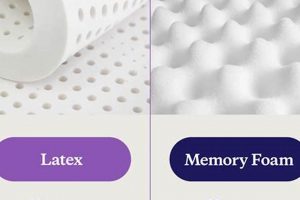
The selection of materials directly impacts the tactile experience. Mattress toppers are commonly available in memory foam, latex, down alternative, and wool, each offering a unique feel ranging from conforming support to plush cushioning. Conversely, protectors, typically crafted from thinner materials like cotton, polyester blends, or polyurethane laminates, prioritize breathability and minimal interference with the existing mattress feel. A key consideration involves balancing the desire for altered comfort with the potential for added heat retention.
- Firmness Adjustment and Pressure Relief
Mattress toppers excel at modifying the firmness level of an existing mattress. Individuals seeking a softer sleeping surface may opt for plush memory foam or down alternative toppers, while those requiring firmer support might choose latex or firmer memory foam options. This adjustment can alleviate pressure points, particularly for side sleepers, and promote spinal alignment. Mattress protectors, while not designed to alter firmness, can indirectly influence comfort by providing a smoother, more even surface, especially if the underlying mattress is worn or uneven.
- Thermal Regulation and Breathability
The breathability of bedding materials plays a crucial role in maintaining a comfortable sleep temperature. Certain mattress topper materials, such as memory foam, can retain heat, potentially causing discomfort for warm sleepers. Protectors made from breathable fabrics like cotton or bamboo can help mitigate this issue by promoting airflow and wicking away moisture. Consideration of individual temperature preferences is therefore essential when selecting between toppers and protectors, particularly in warmer climates.
- Motion Isolation and Disturbance Reduction
Memory foam toppers are known for their ability to isolate motion, reducing the transfer of movement between sleeping partners. This can significantly improve sleep quality for individuals easily disturbed by movement. Mattress protectors, due to their thin profile, generally have minimal impact on motion isolation. However, some protectors incorporate quilted padding that can offer a slight degree of motion dampening.
The contribution of both mattress toppers and protectors to comfort enhancement is undeniable, albeit in different capacities. While toppers provide a tangible change to the sleeping surface’s feel, protectors contribute to a more hygienic and consistent sleeping environment, indirectly influencing perceived comfort. Evaluating individual needs and preferences regarding firmness, temperature regulation, and motion isolation is paramount in determining the appropriate choice.
2. Hygienic safeguarding

Hygienic safeguarding, a core function in bedding maintenance, significantly differentiates the roles of a mattress topper and a mattress protector. The primary purpose of a protector is to act as a barrier against fluids, allergens, dust mites, and other potential contaminants. This preventative measure directly impacts the mattresss cleanliness and longevity. For example, a waterproof mattress protector can prevent accidental spills from penetrating the mattress, inhibiting mold growth and odor retention. In contrast, while some mattress toppers may offer a degree of stain resistance, their primary function is not protection, and they often require a separate protector to maintain hygiene. The distinction is crucial, especially for individuals with allergies or sensitivities to dust mites, where a dedicated protector becomes an essential component of bedding.
The implications of neglecting hygienic safeguarding extend beyond mere cleanliness. The accumulation of allergens and moisture within a mattress can create an environment conducive to bacterial growth and dust mite proliferation, potentially exacerbating respiratory issues and skin irritations. A mattress protector, specifically designed for this purpose, mitigates these risks by creating a barrier that is easily removable and washable. Regular washing of the protector, typically on a monthly basis, removes accumulated allergens and contaminants, promoting a healthier sleep environment. While a topper might add a layer of comfort, it does not inherently address the issue of hygienic safeguarding, often requiring additional layers of protection to achieve comparable results. Examples include encasement-style protectors that fully enclose the mattress, providing comprehensive protection against allergens and bed bugs.
In summary, while both mattress toppers and protectors contribute to the overall sleep experience, their roles in hygienic safeguarding are fundamentally different. A protector is specifically designed to prevent contamination and maintain a clean sleep surface, while a topper primarily focuses on comfort enhancement. The choice between the two, or the decision to use both, should be guided by individual needs and priorities, with a clear understanding of the importance of hygienic safeguarding for long-term mattress health and personal well-being. The practical significance of this understanding lies in the ability to make informed choices that promote a healthier, more comfortable, and longer-lasting sleep environment.
3. Lifespan extension

The durability and longevity of a mattress represent a significant investment. Both mattress toppers and protectors play distinct roles in mitigating wear and tear, extending the usable life of the underlying mattress. Understanding these roles is crucial for making informed purchasing decisions.
- Protection from Physical Wear and Tear
Mattress protectors primarily function as a barrier against physical damage. By preventing spills, stains, and friction, protectors reduce the rate at which the mattress fibers break down. For example, a protector can prevent the accumulation of body oils and sweat, which can degrade foam and other mattress materials over time. The implication is a slower rate of deterioration and a prolonged period of optimal support.
- Mitigation of Sagging and Indentation
Mattress toppers can contribute to lifespan extension by distributing weight more evenly across the mattress surface. This reduces concentrated pressure on specific areas, which can lead to sagging and indentation. A topper acts as a buffer, absorbing some of the impact and preventing the formation of permanent depressions. For instance, a memory foam topper can redistribute weight, preventing the development of body impressions on older mattresses.
- Reduced Exposure to Allergens and Pests
Mattress protectors create a barrier against allergens, dust mites, and bed bugs. By preventing these elements from penetrating the mattress, protectors help maintain a cleaner and more hygienic sleep environment. This, in turn, reduces the need for frequent cleaning and potential damage associated with pest infestations. An example would be an encasement-style protector that completely seals the mattress, preventing bed bugs from entering and establishing a colony.
- Maintenance of Mattress Cleanliness
Mattress protectors are easily removable and washable, allowing for regular cleaning without exposing the mattress to harsh cleaning agents or moisture. This routine maintenance prevents the buildup of stains and odors, which can contribute to mattress degradation and a reduced lifespan. For instance, a washable protector can prevent the absorption of pet dander and odors, maintaining a fresher and more sanitary sleep surface.
In summary, while mattress protectors directly shield against physical damage and contaminants, mattress toppers indirectly contribute to lifespan extension by distributing weight and reducing pressure points. The optimal approach often involves utilizing both a topper and a protector to maximize mattress longevity and maintain a comfortable and hygienic sleep environment.
4. Cost implications

The financial aspect represents a significant factor in the decision-making process when selecting between a mattress topper and a protector. Initial acquisition costs differ substantially. Mattress protectors, generally fabricated from simpler materials and designed for a single purpose, typically present a lower initial investment. Conversely, toppers, designed to alter the sleep surface and crafted from specialized materials like memory foam or latex, often command a higher price. The long-term expenditure, however, warrants careful consideration. A protector, by extending the lifespan of the underlying mattress, may prevent the need for premature replacement, offsetting its initial cost. A damaged or soiled mattress lacking protection may necessitate complete replacement, incurring a significantly larger expense. For example, a high-quality mattress might cost several thousand dollars, while a protector costs only a fraction of that amount. The absence of protection could lead to the loss of the entire mattress investment.
Beyond the direct costs of purchase and potential replacement, indirect financial factors also influence the overall cost implications. The quality of sleep directly impacts productivity and overall well-being. Investing in a mattress topper that improves sleep quality could lead to increased work performance and reduced healthcare expenses associated with sleep deprivation. Similarly, a protector that prevents allergen accumulation could reduce allergy-related medical costs. The energy consumption associated with cleaning and maintaining bedding also contributes to the overall cost. Protectors, being easily washable, reduce the need for professional mattress cleaning services, minimizing both direct and indirect expenses. These seemingly minor costs can accumulate over time, making the initial investment in a quality protector or topper a financially prudent decision.
In summary, a comprehensive assessment of cost implications extends beyond the initial purchase price of a mattress topper or protector. It encompasses the potential for mattress replacement, the impact on health and productivity, and the ongoing maintenance expenses. While protectors often present a lower initial cost, their ability to safeguard the underlying mattress from damage and contamination can lead to significant long-term savings. Conversely, a topper, while potentially more expensive upfront, can improve sleep quality and overall well-being, indirectly offsetting its initial cost. The optimal choice depends on individual circumstances, budgetary constraints, and the prioritization of long-term value versus immediate affordability.
5. Warranty considerations
Warranty considerations are paramount when evaluating the use of mattress toppers and protectors. Mattress warranties often stipulate specific conditions that must be met to maintain coverage, and the improper use of bedding accessories can inadvertently void these warranties. Understanding these stipulations is crucial to protect the investment in the mattress itself.
- Authorized Accessories and Warranty Compliance
Many mattress manufacturers specify approved types of mattress protectors that must be used to maintain warranty validity. Non-approved protectors might be constructed of materials that impede airflow, leading to excessive heat buildup and potential damage to the mattress core. Similarly, certain mattress toppers could exert undue stress on the mattress, compromising its structural integrity and negating warranty coverage. Manufacturers often maintain lists of approved accessories or outline specific material requirements that must be met. For example, a warranty might require the use of a waterproof protector that is also breathable to prevent moisture accumulation. Failure to adhere to these requirements could result in claim denial.
- Stain Protection and Warranty Coverage
Mattress warranties frequently exclude coverage for stains or damage caused by spills. While a mattress protector is intended to prevent such incidents, the warranty might specify the type and quality of protection required. A low-quality or improperly installed protector may fail to prevent stains, resulting in the warranty being voided for related damage. Some warranties may require that the protector be certified as waterproof or stain-resistant by a reputable third-party organization. It is incumbent upon the consumer to verify the protector’s specifications and ensure it meets the warranty requirements.
- Impact of Toppers on Mattress Support and Structure
The addition of a mattress topper can alter the support characteristics of the mattress, potentially placing undue stress on certain components. For instance, a thick, excessively soft topper could cause the sleeper to sink too deeply into the mattress, compressing the underlying support layers and leading to premature sagging. If the warranty stipulates that the mattress must maintain a certain level of support to remain valid, the use of such a topper could void the warranty. Consumers should carefully consider the thickness and density of any topper in relation to the mattresss original design and intended support level.
- Documentation and Proof of Protection
In the event of a warranty claim, the consumer may be required to provide proof that a suitable mattress protector was used throughout the warranty period. This might involve presenting receipts for the protector purchase, as well as documentation demonstrating that it met the warranty’s specifications. Failure to provide such proof could result in the claim being rejected. Maintaining accurate records of all bedding accessory purchases and carefully reviewing the warranty terms and conditions is essential for protecting the mattress investment.
The interplay between mattress toppers, protectors, and warranty validity underscores the importance of informed decision-making. A thorough understanding of the warranty stipulations, coupled with careful selection of compatible accessories, can ensure that the mattress remains protected both physically and financially throughout its intended lifespan. Neglecting these considerations could result in the loss of warranty coverage and the premature failure of the mattress.
Frequently Asked Questions
The following section addresses common inquiries regarding the selection and utilization of mattress toppers and protectors, providing clarity on their respective functions and suitability.
Question 1: Is a mattress protector necessary if a mattress topper is already in use?
While a mattress topper can add a layer of comfort, it does not provide comprehensive protection against spills, stains, allergens, and dust mites. A mattress protector, therefore, remains essential to safeguard the underlying mattress and maintain a hygienic sleep environment. The topper itself can also benefit from a protector, shielding it from wear and tear and extending its lifespan.
Question 2: Can a mattress topper serve as a substitute for a worn-out mattress?
A mattress topper can improve the comfort of a worn mattress by adding a new layer of cushioning or support. However, it cannot address underlying structural issues, such as broken springs or significant sagging. While a topper might provide temporary relief, it is not a long-term solution for a mattress that has lost its supportive properties. Replacement of the mattress is ultimately necessary in such cases.
Question 3: Are all mattress protectors waterproof, and is waterproofing essential?
Not all mattress protectors are waterproof. Some offer only basic protection against dust mites and allergens, while others provide water resistance. Waterproofing is essential for individuals concerned about spills, incontinence, or excessive sweating during sleep. A waterproof protector prevents liquids from penetrating the mattress, inhibiting mold growth and odor retention.
Question 4: How does the thickness of a mattress topper impact its performance?
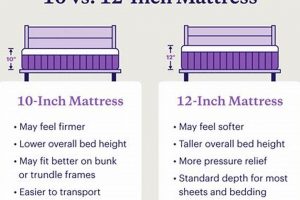
The thickness of a mattress topper influences its comfort and support characteristics. Thicker toppers generally provide more cushioning and pressure relief, while thinner toppers offer a more subtle change to the sleep surface. The ideal thickness depends on individual preferences and the condition of the underlying mattress. A worn mattress may benefit from a thicker topper, while a newer mattress may only require a thinner layer for added comfort.
Question 5: What materials are best suited for mattress protectors in terms of breathability?
Breathability is crucial for preventing heat buildup and maintaining a comfortable sleep temperature. Mattress protectors made from natural fibers like cotton or bamboo tend to be more breathable than those made from synthetic materials like polyester. Protectors with specialized ventilation features or moisture-wicking properties can further enhance breathability.
Question 6: Can mattress toppers and protectors impact mattress warranty validity?
The use of non-approved mattress toppers or protectors can potentially void a mattress warranty. Manufacturers often specify acceptable materials and construction methods for bedding accessories. It is essential to review the warranty terms and conditions carefully and select toppers and protectors that comply with the manufacturer’s requirements.
These FAQs provide essential guidance on the appropriate selection and use of mattress toppers and protectors, addressing common concerns and clarifying potential misconceptions.
The subsequent section will offer a concise summary of the key distinctions and benefits associated with each option.
Conclusion
This exploration has delineated the fundamental differences between a mattress topper and a protector, underscoring their distinct roles in optimizing sleep quality and extending mattress lifespan. The former primarily addresses comfort enhancement through alterations to the sleep surface, while the latter focuses on hygienic safeguarding and protection against physical damage. Cost implications and warranty considerations further influence the selection process, necessitating a thorough evaluation of individual needs and priorities.
The decision to invest in a mattress topper, a protector, or both, represents a commitment to long-term sleep health and financial prudence. A comprehensive understanding of their respective benefits and limitations empowers consumers to make informed choices aligned with their specific circumstances, ultimately contributing to a more restful and sustainable sleep environment. The continued innovation in bedding technology suggests future advancements will further refine these distinctions, offering even greater customization and protection for the discerning consumer.