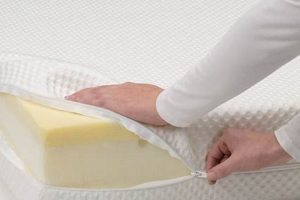
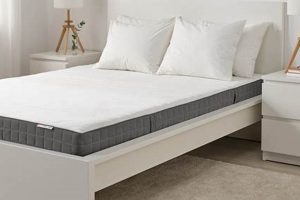
The interaction between sleep surfaces and musculoskeletal health is a significant consideration for individuals experiencing discomfort. Specific material properties of sleep surfaces can either alleviate or exacerbate existing conditions. The selection of a supportive sleep environment is often cited as a potential intervention for managing nocturnal discomfort and promoting restorative sleep.
Proper spinal alignment and pressure distribution during sleep are key factors in minimizing discomfort. Historically, various materials have been used in mattress construction, each offering distinct characteristics regarding support, conformity, and durability. Understanding these characteristics is crucial for individuals seeking to optimize their sleep environment for musculoskeletal well-being.
The subsequent sections will delve into the biomechanical principles underlying sleep surface selection, explore the evidence regarding different mattress types and their impact on discomfort, and provide guidance on selecting an appropriate sleep surface based on individual needs and pre-existing conditions.
Considerations for Sleep Surface Selection
Selecting a sleep surface requires careful consideration of individual needs and pre-existing conditions. The following guidance aims to provide a framework for making informed decisions regarding mattress selection.
Tip 1: Evaluate Firmness Level: Mattress firmness should be determined based on body weight, sleeping position, and personal preference. Individuals with higher body weight may benefit from a firmer mattress to ensure adequate support and prevent excessive sinking. Side sleepers typically require a softer surface to accommodate the curvature of the spine, while back sleepers often benefit from medium-firm support.
Tip 2: Prioritize Spinal Alignment: The sleep surface should promote proper spinal alignment. Incorrect spinal alignment can contribute to muscle strain and discomfort. Test the mattress by lying in the preferred sleeping position to ensure the spine remains relatively neutral.
Tip 3: Assess Pressure Relief: The mattress should effectively distribute pressure points to reduce localized discomfort. Pressure points can restrict circulation and lead to restless sleep. Look for mattresses with pressure-relieving materials, such as memory foam or latex.
Tip 4: Consider Material Composition: Different mattress materials offer varying levels of support, conformity, and breathability. Memory foam conforms to the body’s contours, while innerspring mattresses provide a more traditional level of support. Latex offers a balance of support and pressure relief. Research the properties of different materials before making a selection.
Tip 5: Research Warranty and Return Policies: Before purchasing, carefully review the mattress’s warranty and return policies. Many manufacturers offer a trial period, allowing individuals to test the mattress and return it if it is not suitable. A comprehensive warranty protects against manufacturing defects.
Tip 6: Consult Healthcare Professionals: Individuals with pre-existing musculoskeletal conditions should consult with a physician or physical therapist for personalized recommendations. Healthcare professionals can assess individual needs and provide guidance on selecting an appropriate sleep surface.
Tip 7: Address Underlying Issues: New sleep surface may provide relief of discomfort, but underlying medical conditions such as arthritis, scoliosis, or chronic back pain may need to be addressed by physicians.
Selecting an appropriate sleep surface is a multifaceted process. By considering these factors, individuals can make informed decisions that optimize their sleep environment and promote musculoskeletal health. Prioritizing proper support, spinal alignment, and pressure relief is crucial for minimizing discomfort and promoting restorative sleep.
The following sections will explore further strategies for managing discomfort and improving sleep quality.
1. Spinal Alignment

Spinal alignment is a critical factor in the relationship between sleep surfaces and back discomfort. Deviations from neutral spinal alignment during sleep can place undue stress on vertebral discs, ligaments, and muscles. Prolonged periods of misalignment may exacerbate existing back conditions or contribute to the development of new ones. A mattress that fails to maintain the natural curves of the spine can lead to muscle strain as the body attempts to compensate for inadequate support. For example, a mattress that sags excessively in the midsection can cause the spine to flex unnaturally, leading to morning stiffness and lower back discomfort.
The ability of a sleep surface to promote proper spinal alignment directly influences the distribution of pressure across the body. Uneven pressure distribution can concentrate stress on specific areas, such as the hips, shoulders, and lower back. By conforming to the body’s contours and providing adequate support, the right mattress helps to evenly distribute weight, minimizing pressure points and reducing the likelihood of discomfort. Individuals with pre-existing spinal conditions, such as scoliosis or degenerative disc disease, may be particularly susceptible to the effects of poor spinal alignment during sleep. The right type of mattress has a big role to proper alignment
In summary, maintaining optimal spinal alignment during sleep is essential for minimizing back discomfort. Sleep surfaces that fail to provide adequate support or promote proper alignment can contribute to muscle strain, uneven pressure distribution, and exacerbation of pre-existing conditions. Prioritizing spinal alignment in mattress selection is a crucial step in creating a sleep environment that supports musculoskeletal health and promotes restful sleep. Seeking advice from a physical therapist may provide an additional guidance for people who experiences back pain.
2. Pressure Relief

Pressure relief is a primary consideration in mitigating back discomfort through appropriate sleep surface selection. The ability of a mattress to evenly distribute weight and minimize pressure points is crucial for reducing strain on the musculoskeletal system during sleep. An inadequate sleep surface can concentrate pressure on specific areas, leading to localized discomfort and restricted circulation.
- Conformity and Immersion
Memory foam’s viscoelastic properties allow it to conform closely to the body’s contours, creating a cradling effect. This immersion distributes weight over a larger surface area, reducing pressure concentration on prominent bony areas such as the hips and shoulders. In contrast, firmer surfaces may create distinct pressure points, leading to discomfort and potential circulatory issues.
- Viscoelasticity and Res
ponse TimeThe slow response time of memory foam allows it to gradually adapt to changes in body position during sleep. This reduces the instantaneous pressure spikes that can occur with more resilient materials. The delayed recovery also minimizes motion transfer, which can be beneficial for individuals sharing a bed.
- Density and Support
While conformity is essential for pressure relief, adequate support is also necessary to maintain spinal alignment. Higher density memory foam typically offers better support and prevents excessive sinking, which can compromise spinal posture. The combination of pressure relief and support is critical for individuals with back discomfort.
- Temperature Sensitivity
Traditional memory foam can be temperature-sensitive, becoming softer in warmer conditions and firmer in cooler conditions. This can affect its pressure-relieving properties and overall comfort level. Newer formulations of memory foam incorporate cooling technologies to mitigate temperature fluctuations.
The interconnectedness of conformity, viscoelasticity, density, and temperature sensitivity underscores the complexity of pressure relief in sleep surface selection. Individuals should consider these factors in the context of their specific needs and pre-existing conditions to optimize their sleep environment and mitigate back discomfort.
3. Firmness Level

Firmness level, a key attribute of any mattress, significantly influences its effect on back discomfort. The relationship between firmness and musculoskeletal well-being is not linear; rather, it depends on individual factors such as body weight, sleeping position, and specific back conditions. A mattress that is too firm may fail to conform to the body’s contours, resulting in pressure points and restricted circulation, while one that is too soft may lack adequate support, leading to spinal misalignment and muscle strain. The appropriate firmness level promotes proper spinal alignment and minimizes pressure concentration, thus potentially alleviating back discomfort.
For instance, an individual with a higher body mass may require a firmer mattress to prevent excessive sinking and maintain spinal alignment. Conversely, a lighter individual might find a firmer mattress uncomfortable due to its lack of conformity to the body’s shape. Side sleepers often benefit from a softer or medium-firm mattress to accommodate the curvature of the spine and reduce pressure on the hips and shoulders. Back sleepers generally require a medium-firm mattress to provide adequate support for the lumbar region and prevent excessive spinal curvature. Consider an individual suffering from lower back discomfort. A too-soft mattress might allow the pelvis to sink too far, causing hyperextension of the lower back and increasing pain. A too-firm mattress, on the other hand, might not allow the spine to maintain its natural curvature, leading to muscle strain.
The practical significance of understanding the connection between firmness level and back discomfort lies in the potential for mitigating discomfort through informed mattress selection. While there is no universally ideal firmness level, individuals can identify the optimal firmness by considering their personal characteristics and sleep preferences. Trial periods offered by many mattress retailers allow individuals to assess the suitability of a mattress before committing to a purchase. Consulting with a healthcare professional, such as a physical therapist or chiropractor, can also provide valuable guidance in selecting a mattress with the appropriate firmness level to promote spinal health and minimize back discomfort. Choosing the correct firmness level can provide a better sleep and better overall health.
4. Material Density

Material density in memory foam mattresses directly influences the level of support and pressure relief provided, factors critical in managing back discomfort. Higher density memory foam possesses a greater capacity to distribute weight evenly, preventing localized pressure points that can exacerbate pain. A low-density foam may compress excessively under body weight, failing to maintain proper spinal alignment and potentially contributing to muscle strain. For instance, a mattress with a density below 3 pounds per cubic foot may exhibit limited support for individuals with higher body mass, leading to spinal compression and subsequent discomfort. Conversely, a density exceeding 5 pounds per cubic foot typically offers superior support and durability, effectively minimizing pressure points and promoting optimal spinal alignment. Understanding material density as a key component allows consumers to assess a mattress’s ability to mitigate the causes of back pain.
The selection of an appropriate material density has practical implications for long-term mattress performance and user satisfaction. Mattresses with higher density foam tend to exhibit greater resistance to sagging and compression over time, maintaining their supportive properties for a longer duration. This is particularly relevant for individuals who experience chronic back discomfort, as a consistently supportive sleep surface is essential for managing symptoms. However, higher density foams can also retain more heat, potentially leading to discomfort for individuals who sleep hot. Manufacturers often incorporate cooling technologies, such as gel infusions or open-cell structures, to mitigate this issue. Furthermore, the perceived firmness of a memory foam mattress is often correlated with its density, with higher density foams typically feeling firmer than lower density foams.
In summary, material density is a crucial determinant of a memory foam mattress’s ability to alleviate back discomfort. Selecting a mattress with an appropriate density requires careful consideration of individual body weight, sleeping position, and heat sensitivity. While higher density foams generally offer superior support and durability, they may also retain more heat. Consumers should weigh these factors and explore mattresses with cooling technologies to optimize their sleep environment and effectively manage back pain. Addressing back discomfort is not limited to choosing a new mattress; people should consider seeing a doctor for medical advise.
5. Body Weight

Body weight is a fundamental factor influencing the interaction between sleep surfaces and back discomfort. The suitability of a memory foam mattress is significantly contingent on its ability to adequately support and conform to the body, a function directly affected by the sleeper’s weight. Inadequate support can lead to spinal misalignment and pressure point exacerbation, while excessive conformity may result in a lack of support. Therefore, careful consideration of body weight is essential when selecting a memory foam mattress to mitigate potential back discomfort.
- Support and Spinal Alignment
Higher body weight necessitates a mattress with greater support to maintain proper spinal alignment. A memory foam mattress that is too soft will allow the heavier areas of the body, such as the hips and shoulders, to sink excessively, leading to spinal misalignment and increased pressure on the
lower back. Conversely, a mattress that is too firm may not conform sufficiently, creating pressure points on the spine. A mattress with targeted support zones, such as reinforced coils in the center, can help to maintain alignment for individuals with higher body weight. - Pressure Distribution
Effective pressure distribution is crucial for reducing back discomfort, particularly for individuals with higher body weight. Memory foam’s contouring properties can help to distribute weight evenly, minimizing pressure points. However, the density and thickness of the foam must be sufficient to prevent bottoming out, where the body compresses the foam to its maximum capacity, negating its pressure-relieving benefits. Mattresses with multiple layers of varying densities can provide both contouring and support, optimizing pressure distribution.
- Mattress Durability
Body weight influences the long-term durability of a memory foam mattress. Higher weight places greater stress on the mattress materials, potentially leading to premature sagging and loss of support. Mattresses constructed with high-density foams and reinforced support cores are more likely to maintain their shape and supportive properties over time. Regular rotation of the mattress can also help to distribute wear and tear more evenly, extending its lifespan.
- Heat Retention
Memory foam is known for its heat-retentive properties, which can be exacerbated by higher body weight. The increased surface area contact between the body and the mattress can restrict airflow and trap heat, leading to discomfort and disrupted sleep. Mattresses with cooling technologies, such as gel-infused foam or breathable covers, can help to dissipate heat and improve temperature regulation.
The interrelationship of support, pressure distribution, durability, and heat retention highlights the complexity of selecting a memory foam mattress based on body weight. Individuals should carefully consider these factors and prioritize mattresses that offer a balance of support, contouring, and temperature regulation to optimize their sleep environment and minimize back discomfort. Consulting with a sleep specialist can provide further guidance in selecting the most appropriate mattress based on individual needs and preferences.
6. Sleeping Position

Sleeping position significantly influences the interaction between a memory foam mattress and back discomfort. The alignment of the spine, the distribution of pressure, and the degree of muscular support vary considerably depending on whether an individual sleeps on their back, side, or stomach. Each position presents unique challenges and demands specific characteristics from a sleep surface to minimize or exacerbate existing back conditions. An individual who habitually sleeps on their stomach, for example, often experiences hyperextension of the lower back due to the unnatural curvature imposed by the position. This hyperextension can place undue stress on the spinal discs and surrounding muscles, potentially leading to discomfort. A memory foam mattress, while conforming to the body’s shape, might not provide sufficient support to counteract this effect, especially if it lacks adequate firmness.
Side sleeping, conversely, can be beneficial if the spine remains aligned. However, without proper support, the upper shoulder and hip may compress the mattress excessively, causing the spine to curve laterally. A memory foam mattress with a zoned support system, offering varying levels of firmness in different areas, can mitigate this issue by providing targeted support to maintain spinal alignment. Back sleeping, often regarded as the most favorable position for spinal health, also necessitates specific mattress characteristics. A memory foam mattress that is too soft may allow the pelvis to sink, leading to lower back strain. A firmer mattress, or one with lumbar support, can help maintain the natural curvature of the spine and distribute pressure evenly. The crucial element lies in understanding how each sleeping position interacts with the mattress’s properties to either promote or hinder optimal spinal alignment and pressure distribution.
In conclusion, the impact of a memory foam mattress on back discomfort is inextricably linked to sleeping position. While a memory foam mattress can offer pressure relief and contouring, its effectiveness in alleviating back pain depends on its ability to support proper spinal alignment in the individual’s preferred sleeping position. Understanding the biomechanics of each position and selecting a mattress with appropriate firmness, support, and contouring capabilities is essential for optimizing spinal health and minimizing discomfort. Individuals experiencing chronic back pain should consult with a healthcare professional for personalized recommendations regarding sleeping position and mattress selection.
7. Support Quality

Support quality in a memory foam mattress represents a critical determinant of its efficacy in mitigating or exacerbating back discomfort. Adequate support maintains spinal alignment, prevents excessive sinking, and distributes pressure evenly, all crucial factors in promoting restful sleep and reducing musculoskeletal strain. The following points explore key facets of support quality within the context of memory foam mattresses and back pain.
- Core Density and Composition
The density and composition of the mattress core directly influence its ability to provide consistent support. A high-density core, often composed of firmer foam or innerspring coils, resists compression and prevents sagging, particularly under heavier body weights. Inadequate core support can lead to spinal misalignment and increased pressure on the lower back. For example, a memory foam mattress with a low-density core may initially feel comfortable but degrade quickly, losing its supportive properties and contributing to back pain over time.
- Zoned Support Systems
Zoned support systems incorporate varying levels of firmness across different areas of the mattress to accommodate the body’s natural contours and provide targeted support. These systems often feature firmer support in the lumbar region to prevent excessive sinking and maintain spinal alignment for back sleepers. Softer zones may be incorporated in the shoulder and hip areas to reduce pressure points for side sleepers. The effectiveness of zoned support systems depends on their design and how well they align with the individual’s body shape and sleeping position.
- Edge Support Reinforcement
Edge support reinforcement enhances the stability and usable surface area of the mattress. Strong edge support prevents the edges from collapsing under weight, making it easier to get in and out of bed and providing a more consistent sleeping surface across the entire mattress. Weak edge support can lead to a feeling of instability and contribute to back strain, especially for individuals who sleep near the edge of the bed.
- Layer Construction and Integration
The arrangement and integration of different foam layers within the mattress contribute to overall support quality. A well-constructed mattress will feature a balanced combination of conforming comfort layers and supportive base layers. Improper layering can result in a mattress that feels either too soft or too fir
m, failing to provide adequate support for spinal alignment. The transition between layers should be seamless to prevent pressure points and ensure a comfortable sleeping experience.
The interplay of core density, zoned support, edge reinforcement, and layer construction determines the overall support quality of a memory foam mattress. Individuals experiencing back pain should prioritize mattresses that offer a balanced combination of these features to ensure proper spinal alignment, pressure distribution, and long-term durability. Selecting a mattress with appropriate support characteristics can significantly contribute to reducing back discomfort and promoting restful sleep.
Frequently Asked Questions
This section addresses common inquiries regarding the relationship between memory foam mattresses and back pain, providing evidence-based information to aid informed decision-making.
Question 1: Can a memory foam mattress alleviate existing back pain?
A memory foam mattress may provide relief from existing back discomfort for some individuals. The conforming properties of the foam can distribute pressure more evenly, potentially reducing stress on painful areas. However, the suitability of a memory foam mattress depends on the specific cause of the back pain, individual preferences, and mattress firmness.
Question 2: Are memory foam mattresses recommended for all types of back pain?
Memory foam mattresses are not universally recommended for all types of back discomfort. Individuals with specific spinal conditions or those requiring firmer support may find other mattress types more suitable. Consulting with a healthcare professional can provide personalized recommendations.
Question 3: What firmness level is optimal for back pain relief when selecting a memory foam mattress?
The optimal firmness level varies based on individual factors. A medium-firm memory foam mattress is generally recommended for back pain, as it provides a balance of support and conformity. However, body weight, sleeping position, and specific pain conditions should be considered when determining the most appropriate firmness level.
Question 4: How does memory foam mattress density influence its effect on back pain?
Higher density memory foam typically offers greater support and durability, which can be beneficial for individuals with back discomfort. Higher density foam is less prone to compression and sagging over time, maintaining proper spinal alignment and pressure distribution. However, higher density foams may also retain more heat.
Question 5: Are there any potential drawbacks to using a memory foam mattress for back pain?
Potential drawbacks include heat retention, which can lead to discomfort for some individuals, and a lack of sufficient support for those requiring a firmer sleep surface. The conforming nature of memory foam may also make it difficult for some individuals to change positions during sleep.
Question 6: How long does it typically take to adjust to a new memory foam mattress for back pain relief?
Adjustment periods vary. Some individuals may experience immediate relief, while others may require several weeks to adapt to the feel of a new memory foam mattress. If discomfort persists or worsens, consulting with a healthcare professional or considering a different mattress type is advisable.
Key takeaways include the importance of individual assessment, professional consultation, and consideration of mattress density, firmness, and potential drawbacks when selecting a memory foam mattress for back pain.
The subsequent sections will explore alternative mattress types and their respective benefits for individuals experiencing back discomfort.
Memory Foam Mattress and Back Pain
The preceding analysis has explored the multifaceted relationship between memory foam mattresses and back discomfort. Key determinants include spinal alignment, pressure relief, firmness level, material density, body weight, and sleeping position. While memory foam mattresses can offer potential benefits, such as pressure redistribution and contouring, their effectiveness is contingent upon individual factors and specific mattress characteristics. Individuals must carefully evaluate their specific needs and, if necessary, consult healthcare professionals to make informed decisions.
The selection of a sleep surface is not merely a matter of comfort but a crucial aspect of musculoskeletal health. The information presented aims to empower individuals to proactively address back pain through thoughtful consideration of mattress selection. Continued research and technological advancements may further refine our understanding of the interaction between sleep surfaces and spinal health, potentially leading to more targeted and effective interventions.

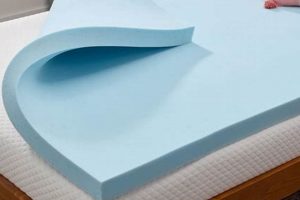
![Best Non Memory Foam Mattress [Guide & Reviews] | Organic & Natural Mattress Buyer’s Guide: Non-Toxic Sleep Solutions](https://mattressworldpa.com/wp-content/uploads/2025/07/th-4120-300x200.jpg "Best Non Memory Foam Mattress [Guide & Reviews] Organic & Natural Mattress Buyer’s Guide: Non-Toxic Sleep Solutions")