Discomfort experienced in the back after sleeping on a viscoelastic polyurethane foam mattress is a common complaint. This discomfort can range from mild aches to sharp, persistent pain, often attributed to the mattress’s impact on spinal alignment and pressure distribution.
Proper spinal support during sleep is crucial for minimizing back strain and promoting recovery. A mattress that does not adequately conform to the body’s natural curves or provides insufficient support may lead to muscle imbalances and exacerbate existing back problems. Historically, mattress designs have evolved to address these issues, with varying degrees of success, leading to diverse material compositions and construction techniques.
The subsequent discussion will explore the potential causes of back discomfort associated with this type of bedding, differentiating factors contributing to the experience, and evidence-based strategies for mitigation. This will include analysis of mattress density, firmness, and user-specific considerations, such as sleeping position and pre-existing conditions.
Mitigating Back Discomfort Associated with Viscoelastic Foam Mattresses
Addressing back discomfort potentially stemming from the use of viscoelastic foam mattresses requires a comprehensive and analytical approach. The following strategies aim to minimize pain and promote proper spinal alignment during sleep.
Tip 1: Evaluate Mattress Firmness: Mattress firmness plays a critical role in spinal support. Individuals should select a firmness level that aligns with their body weight and sleeping position. Side sleepers generally benefit from a softer surface to allow for shoulder and hip sinkage, while back and stomach sleepers may require a firmer surface to prevent excessive spinal curvature.
Tip 2: Assess Mattress Density: Higher density foam tends to offer greater support and durability. Lower density foam may compress more readily, potentially leading to a lack of support and increased back strain. Review mattress specifications to determine foam density before purchase.
Tip 3: Consider Sleeping Position: The chosen sleeping position influences spinal alignment. Maintaining a neutral spinal position is paramount. For side sleepers, placing a pillow between the knees can help align the spine. Back sleepers may benefit from a thin pillow under the knees to reduce lower back strain.
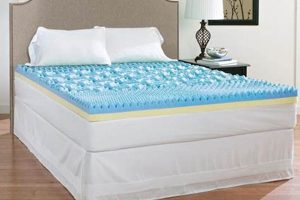
Tip 4: Implement a Mattress Topper: A mattress topper can modify the surface feel and support characteristics of the existing mattress. Consider a latex or high-density foam topper to add support or a softer foam topper to enhance comfort, depending on individual needs.
Tip 5: Engage in Stretching Exercises: Incorporate regular stretching exercises into daily routines to improve flexibility and reduce muscle tension in the back. Specific stretches targeting the lower back, hamstrings, and hip flexors can be particularly beneficial.
Tip 6: Evaluate Underlying Medical Conditions: Pre-existing back problems, such as scoliosis or arthritis, can influence mattress suitability. Consult with a healthcare professional to determine appropriate mattress characteristics based on individual medical history and needs.
Tip 7: Consider a Trial Period: Whenever possible, opt for a mattress with a trial period. This allows for an extended period of evaluation to determine whether the mattress effectively alleviates back discomfort and promotes restorative sleep.
Adhering to these guidelines may significantly contribute to reducing back discomfort associated with viscoelastic foam mattresses. It is essential to adopt a personalized approach based on individual needs and preferences.
The subsequent section will address specific types of viscoelastic foam and their potential impact on back pain.
1. Mattress Density and Back Discomfort

Mattress density, a critical attribute of viscoelastic foam, directly impacts support, durability, and the potential for back discomfort. It refers to the mass of foam per unit volume, typically measured in pounds per cubic foot (PCF). Understanding density is crucial when assessing the suitability of a mattress and its potential contribution to back soreness.
- Support and Spinal Alignment
Higher density foam provides greater resistance to compression, offering enhanced support for the spine. Insufficient support can lead to spinal misalignment, placing undue stress on back muscles and joints, thereby causing or exacerbating back discomfort. A low-density mattress may allow excessive sinking, particularly in heavier individuals, resulting in a hammock-like effect detrimental to spinal health.
- Pressure Distribution
Density affects the foam’s ability to distribute weight evenly across the sleeping surface. Higher density foam tends to distribute pressure more effectively, minimizing pressure points that can contribute to discomfort. Conversely, lower density foam may concentrate pressure in certain areas, leading to localized pain and restricted blood flow. This is particularly relevant for individuals with pre-existing back conditions or those who spend extended periods in one sleeping position.
- Durability and Longevity
Mattress density influences its lifespan. High-density foam is generally more resilient and resistant to degradation, maintaining its supportive properties for a longer duration. Low-density foam tends to compress and lose its shape more rapidly, resulting in reduced support and increased susceptibility to back discomfort over time. A mattress that initially provided adequate support may become a source of pain as its density decreases due to regular use.
- Heat Retention
While not a direct cause of back pain, density can indirectly contribute to discomfort by influencing heat retention. Higher density foam tends to retain more heat compared to lower density foam. Excessive heat can disrupt sleep and contribute to muscle stiffness, potentially exacerbating existing back issues. Selecting a mattress with features designed to enhance airflow, such as open-cell foam or gel infusions, can mitigate this effect.
In summary, mattress density plays a pivotal role in determining the level of support, pressure distribution, and durability provided by a viscoelastic foam mattress. Selecting a mattress with appropriate density characteristics is essential for maintaining spinal alignment and minimizing the risk of back discomfort. Factors such as body weight, sleeping position, and pre-existing conditions should be considered when evaluating mattress density.
2. Spinal Alignment

Maintaining proper spinal alignment during sleep is paramount in mitigating back disco
mfort associated with viscoelastic foam mattresses. Deviations from neutral alignment can place undue stress on spinal structures, leading to pain and potential long-term issues. The capacity of a mattress to support the natural curvature of the spine directly influences sleep quality and musculoskeletal health.
- Neutral Spinal Posture
Neutral spinal posture refers to the natural curves of the spine being maintained without excessive flexion, extension, or lateral bending. A mattress should conform to these curves, supporting the body’s weight evenly. When a mattress fails to provide adequate support, the spine can be forced into unnatural positions. For example, a mattress that is too soft may allow the hips to sink excessively, causing spinal flexion, while one that is too firm may not allow for proper contouring, leading to pressure points and misalignment.
- Muscle Strain and Fatigue
Deviations from neutral spinal alignment necessitate compensatory muscle activity to stabilize the spine. Over time, this sustained muscle activation leads to fatigue, stiffness, and pain. A viscoelastic foam mattress that doesn’t adequately support the body can contribute to chronic muscle strain, particularly in the lower back. Individuals may experience increased pain upon waking, which may persist throughout the day. The impact is comparable to maintaining poor posture while sitting or standing for extended periods.
- Disc Compression and Nerve Impingement
Inadequate spinal alignment can increase compressive forces on intervertebral discs, potentially leading to disc degeneration or herniation. Misalignment can also narrow the spaces through which nerves exit the spinal column, resulting in nerve impingement and associated pain, numbness, or tingling. For instance, a mattress that allows excessive spinal rotation may compress the facet joints, contributing to pain. Viscoelastic foam mattresses, if improperly chosen, can either exacerbate or alleviate these conditions.
- Sleeping Position Influence
The effectiveness of a viscoelastic foam mattress in maintaining spinal alignment is highly dependent on the individual’s sleeping position. Side sleepers require a mattress that allows for shoulder and hip sinkage to maintain spinal alignment, while back sleepers need support for the natural lumbar curve. Stomach sleeping is generally discouraged due to the difficulty in maintaining spinal alignment in this position. The mattress’s ability to adapt to different sleeping positions is essential for promoting proper spinal support.
The aforementioned aspects underscore the critical role of spinal alignment in managing back discomfort associated with viscoelastic foam mattresses. Selecting a mattress that supports the natural curvature of the spine, accommodates individual sleeping positions, and minimizes muscle strain is crucial for promoting restorative sleep and mitigating pain. Consideration should also be given to pre-existing spinal conditions and body weight when choosing a mattress to optimize spinal alignment.
3. Pressure Distribution

Pressure distribution, the manner in which the body’s weight is dispersed across the mattress surface, is a significant determinant of comfort and spinal health. In the context of viscoelastic foam mattresses, uneven pressure distribution can contribute to back discomfort. Areas of concentrated pressure can impede circulation, irritate nerves, and cause muscle strain.
- Interface Pressure and Ischemia
Interface pressure refers to the force exerted between the body and the mattress surface. Elevated interface pressure, particularly over bony prominences such as the hips and shoulders, can restrict blood flow to underlying tissues, leading to ischemia (reduced blood supply). Prolonged ischemia can cause pain and potentially contribute to the development of pressure ulcers. A viscoelastic foam mattress that does not effectively distribute weight may create or exacerbate these pressure points, leading to back pain and discomfort.
- Muscle Strain and Trigger Points
Uneven pressure distribution necessitates compensatory muscle activity to maintain spinal alignment and body stability. This sustained muscle activation can lead to muscle strain and the formation of trigger pointshyperirritable spots in skeletal muscle that are associated with localized pain and referred pain patterns. A mattress that inadequately distributes pressure may force certain muscle groups to work harder than others, predisposing individuals to muscle imbalances and back pain. This is particularly pertinent for individuals with pre-existing musculoskeletal conditions.
- Nerve Compression and Neuropathic Pain
Concentrated pressure on specific areas can compress superficial nerves, potentially causing neuropathic pain characterized by burning, tingling, or numbness. Spinal nerves exiting the vertebral column are particularly vulnerable to compression from poor pressure distribution. A viscoelastic foam mattress that lacks sufficient contouring or support may place undue pressure on these nerves, resulting in radicular pain that radiates along the nerve pathway. This can manifest as sciatica or other forms of back-related pain.
- Conformity and Individual Variation
The ability of a viscoelastic foam mattress to conform to the body’s unique contours is crucial for effective pressure distribution. However, individual body shapes, weights, and sleeping positions vary significantly. A mattress that works well for one individual may not provide adequate pressure relief for another. Factors such as shoulder width, hip circumference, and spinal curvature can influence the distribution of pressure. Therefore, selecting a mattress that accommodates individual variations is essential for minimizing pressure points and preventing back discomfort.
The facets above highlight the intricate relationship between pressure distribution, viscoelastic foam mattresses, and back pain. A mattress’s ability to effectively distribute weight, minimize interface pressure, and conform to individual body shapes is critical for promoting restful sleep and preventing musculoskeletal discomfort. Failure to address these factors may result in localized pain, muscle strain, nerve compression, and ultimately, a compromised sleep experience.
4. Sleep Position

The alignment of the spine during sleep, significantly influenced by sleep position, plays a crucial role in the occurrence of back discomfort when using a viscoelastic foam mattress. Different sleep positions impose varying biomechanical demands on the spine and surrounding musculature, impacting pressure distribution and spinal curvature. When a mattress fails to accommodate a specific sleep position, adverse consequences can occur. For instance, a side sleeper on a mattress that is too firm may experience pressure point pain in the shoulder and hip, leading to compensatory muscle strain in the back. Conversely, a back sleeper on a mattress lacking sufficient lumbar support may experience spinal flexion, exacerbating lower back pain. The relationship between sleep position and mattress support is thus a key determinant of sleep-related back problems.
Certain sleep positions inherently present challenges to maintaining optimal spinal alignment. The prone posit
ion (sleeping on the stomach), for example, often forces the head and neck to rotate to one side, creating torsional stress on the cervical spine and potentially leading to upper back and neck pain. This effect can be magnified when coupled with a viscoelastic foam mattress that does not provide adequate support, causing the spine to sink into an unnatural curvature. Strategies for mitigating such issues include encouraging alternative sleep positions (side or back) and using pillows to support the head, neck, and knees, thereby minimizing spinal stress. Proper pillow placement is as critical as the mattress in influencing spinal alignment based on sleep position.
Understanding the interplay between sleep position, viscoelastic foam mattress characteristics, and spinal health is essential for preventing and managing sleep-related back pain. The selection of a mattress that accommodates the individual’s preferred sleep position, combined with the use of appropriate pillows to maintain spinal alignment, contributes significantly to a comfortable and pain-free sleep experience. A comprehensive approach considering both the mattress and sleep habits is paramount in addressing complaints of back discomfort.
5. Body Weight

Body weight exerts a significant influence on the interaction between an individual and a viscoelastic foam mattress, playing a crucial role in the potential development of back discomfort. The mass of the body determines the degree of compression and deformation of the foam, directly impacting spinal alignment and pressure distribution. Failure to consider body weight when selecting a mattress can result in inadequate support, leading to muscle strain and back pain.
- Support Requirements
Individuals with higher body weights require mattresses that provide greater support to prevent excessive sinking and maintain spinal alignment. A mattress that is too soft for a heavier individual will allow the hips to sink too deeply, causing spinal flexion and lower back pain. Conversely, lighter individuals may find a very firm mattress uncomfortable as it does not allow for proper contouring and pressure relief. The appropriate level of support is directly proportional to body weight; therefore, higher weight requires higher support.
- Pressure Distribution
Body weight influences the distribution of pressure across the mattress surface. Higher body weights concentrate pressure on bony prominences such as the hips, shoulders, and knees. This increased pressure can impede circulation, causing discomfort and potentially leading to pressure ulcers. A viscoelastic foam mattress with inadequate weight distribution characteristics can exacerbate these pressure points. The goal is to have proper distribution of pressure.
- Mattress Durability
The lifespan of a viscoelastic foam mattress is affected by the amount of weight it supports over time. Mattresses used by individuals with higher body weights are subject to greater compression forces, leading to accelerated wear and tear. The foam may lose its supportive properties more quickly, resulting in reduced comfort and an increased risk of back pain. For example, a mattress designed to last ten years under normal use may only last five years when consistently supporting a significantly higher weight.
- Density Considerations
Mattress density, typically measured in pounds per cubic foot (PCF), is a crucial factor for individuals with higher body weights. Higher density foam provides greater resistance to compression and is more durable, offering better support and maintaining its shape over time. Low-density foam may compress excessively under higher weight, leading to a lack of support and increased discomfort. A higher density is generally more durable and suitable when proper support is needed.
Consideration of body weight is paramount when selecting a viscoelastic foam mattress to mitigate the risk of back discomfort. Understanding the relationship between weight, support requirements, pressure distribution, mattress durability, and foam density is essential for making an informed decision. Failure to account for these factors may result in a mattress that is unsuitable, leading to compromised sleep quality and potential musculoskeletal issues.
6. Mattress Age
The age of a viscoelastic foam mattress significantly influences its ability to provide adequate support and pressure relief, directly impacting the potential for back discomfort. As a mattress ages, its structural integrity degrades, affecting its capacity to maintain spinal alignment and distribute weight evenly, which are critical factors in preventing back soreness.
- Loss of Support
Over time, the viscoelastic foam within a mattress loses its resilience and supportive properties. The foam’s cells break down, leading to compression and reduced ability to conform to the body’s contours. This loss of support can result in spinal misalignment, as the mattress no longer adequately supports the natural curves of the spine. Consequently, individuals may experience increased back strain and pain, particularly in the lumbar region, due to the lack of proper support.
- Increased Sagging
Mattress sagging, a common consequence of aging, creates an uneven sleeping surface that compromises spinal alignment. Sagging typically occurs in the areas of greatest pressure, such as the hips and shoulders, leading to a “hammock” effect that forces the spine into an unnatural curvature. This misalignment can place undue stress on spinal discs, muscles, and ligaments, resulting in back discomfort. Sagging contributes directly to this pain because the spine is not properly supported.
- Compromised Pressure Distribution
The ability of a viscoelastic foam mattress to distribute weight evenly across its surface diminishes with age. As the foam degrades, its capacity to conform to the body’s contours and relieve pressure points decreases. Concentrated pressure on bony prominences, such as the hips and shoulders, can impede circulation and cause localized pain. This uneven distribution of pressure exacerbates back pain, particularly in individuals with pre-existing conditions.
- Dust Mite Accumulation
Older mattresses tend to accumulate dust mites, allergens, and other debris. While not a direct cause of back pain, these factors can contribute to allergic reactions, respiratory problems, and disrupted sleep. Poor sleep quality can indirectly influence back discomfort by increasing muscle tension and reducing the body’s ability to recover during the night. Maintaining a clean sleeping environment is crucial for overall health and comfort, with mattress age being a key factor in allergen load.
The factors associated with mattress age underscore the importance of replacing viscoelastic foam mattresses periodically to ensure adequate support, pressure relief, and spinal alignment. Recognizing the signs of mattress degradation, such as sagging, loss of support, and increased allergen accumulation, is essential for maintaining optimal sleep quality and minimizing the risk of back soreness.
Frequently Asked Questions
The following addresses common inquiries regarding viscoelastic foam mattresses and their potential relationship to back pain, offering evidence-based information.
Question 1: Why do some individuals experience back discomfort when sleeping on a viscoelastic foam mattress?
Back discomfort associated with these mattresses can arise from several factors, including inadequate spinal support, uneven pressure distribution, and inappropriate mattress firmness for an individual’s body weight and sleeping position. Over time, mattress degradation and sagging can exacerbate these issues.
Question 2: What mattress firmness level is generally recommended to minimize back discomfort?
The optimal firmness level varies depending on individual factors. Side sleepers typically benefit from medium-firm mattresses that allow for shoulder and hip sinkage, while back sleepers often require firmer support to maintain spinal alignment. Body weight also plays a role, with heavier individuals generally needing firmer mattresses.
Question 3: How does mattress density relate to back discomfort?
Mattress density, measured in pounds per cubic foot (PCF), influences support and durability. Higher density foam tends to provide greater resistance to compression, offering enhanced support and minimizing sinkage. Lower density foam may compress excessively, leading to spinal misalignment and increased discomfort.
Question 4: Can a mattress topper help alleviate back discomfort experienced on a viscoelastic foam mattress?
A mattress topper can modify the surface feel and support characteristics of an existing mattress. A latex or high-density foam topper may add support, while a softer topper can enhance comfort. Selection should be based on individual needs and the specific characteristics of the underlying mattress.
Question 5: How does sleep position influence back pain when using a viscoelastic foam mattress?
Different sleep positions place varying demands on the spine. Side sleepers require adequate shoulder and hip sinkage, while back sleepers need support for the lumbar curve. Stomach sleeping is generally discouraged due to the difficulty in maintaining spinal alignment. Mattresses should accommodate the individual’s preferred sleep position.
Question 6: At what point should a viscoelastic foam mattress be replaced to avoid back discomfort?
The lifespan of a viscoelastic foam mattress varies depending on factors such as density, usage, and body weight. Signs of degradation, such as sagging, loss of support, and increased discomfort, indicate the need for replacement, typically ranging from 7 to 10 years.
Viscoelastic foam mattresses can provide both comfort and support, but it is important to select the right type of mattress based on individual needs, body weight, and sleeping position.
The subsequent section will discuss evidence-based approaches for managing back discomfort not fully resolved by proper mattress selection.
Addressing Viscoelastic Foam Mattress-Related Back Discomfort
The exploration of the connection between viscoelastic foam mattresses and back soreness reveals a multifaceted issue dependent on factors such as mattress density, spinal alignment, pressure distribution, sleep position, body weight, and mattress age. Addressing the problem necessitates a careful evaluation of these variables and consideration of individual needs. The suitability of a mattress for any individual should be determined based on specific requirements in order to minimize or eliminate discomfort.
While proper mattress selection can mitigate the experience of back soreness associated with viscoelastic foam mattresses, persistent or severe pain warrants consultation with a healthcare professional. Continued research and innovation in mattress technology may offer improved solutions for spinal support and pressure relief, potentially reducing the prevalence and severity of back pain related to bedding surfaces.
![Best Memory Foam vs Hybrid Mattress [Guide 2024] | Organic & Natural Mattress Buyer’s Guide: Non-Toxic Sleep Solutions](https://mattressworldpa.com/wp-content/uploads/2025/07/th-4088-300x200.jpg "Best Memory Foam vs Hybrid Mattress [Guide 2024] Organic & Natural Mattress Buyer’s Guide: Non-Toxic Sleep Solutions")
![Best Soft Memory Foam Mattress [Guide & Review] | Organic & Natural Mattress Buyer’s Guide: Non-Toxic Sleep Solutions](https://mattressworldpa.com/wp-content/uploads/2025/07/th-4086-300x200.jpg "Best Soft Memory Foam Mattress [Guide & Review] Organic & Natural Mattress Buyer’s Guide: Non-Toxic Sleep Solutions")
![Best Twin Memory Foam Mattress [Comfort & Value] | Organic & Natural Mattress Buyer’s Guide: Non-Toxic Sleep Solutions](https://mattressworldpa.com/wp-content/uploads/2025/07/th-4085-300x200.jpg "Best Twin Memory Foam Mattress [Comfort & Value] Organic & Natural Mattress Buyer’s Guide: Non-Toxic Sleep Solutions")