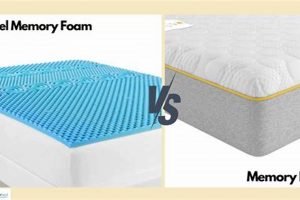
The comparison between viscoelastic and innerspring sleep surfaces represents a significant consideration for consumers seeking optimal sleep support. One utilizes a dense, temperature-sensitive material conforming to the sleeper’s body, while the other relies on a network of coils to provide a supportive foundation.
The importance of understanding the attributes of each construction lies in their distinct impact on pressure relief, motion isolation, and thermal regulation during sleep. These factors contribute to sleep quality and overall well-being. Historically, coil-based designs were the industry standard. However, advancements in material science have led to the increasing popularity of foam alternatives due to their unique characteristics.
The following sections will delve into the specific features, advantages, and disadvantages of each type of mattress. Detailed discussion of support, durability, temperature regulation, and cost considerations will provide a framework for informed decision-making.
Guidance on Selecting a Sleep Surface
The decision between viscoelastic and innerspring mattresses involves careful consideration of individual preferences and needs. Evaluate personal priorities regarding support, temperature regulation, and budget.
Tip 1: Prioritize Pressure Relief. Assess individual sensitivity to pressure points, particularly in the shoulders, hips, and back. Viscoelastic constructions typically offer superior pressure relief due to their conforming properties. Innerspring models may require a substantial comfort layer to mitigate pressure.
Tip 2: Evaluate Motion Isolation. If sharing the bed, consider motion transfer. Viscoelastic materials excel at isolating motion, minimizing disturbance from a partner’s movements. Innerspring systems, particularly those with interconnected coils, tend to transfer more motion.
Tip 3: Consider Thermal Regulation Needs. Individuals prone to overheating during sleep should carefully assess the heat retention properties of the materials. Traditional viscoelastic formulations can retain heat. However, advancements such as gel infusions and open-cell structures aim to improve breathability. Innerspring designs generally promote better airflow.
Tip 4: Assess Edge Support. Evaluate the strength of the mattress edges, particularly if regularly sitting on the side of the bed. Reinforced edges prevent sagging and provide a stable surface. Hybrid models combining coils and foam may offer better edge support than all-foam constructions.
Tip 5: Investigate Durability. Consider the long-term performance and expected lifespan of each type. Higher-density viscoelastic materials tend to exhibit greater durability than lower-density foams. The gauge and construction of the coils in an innerspring system influence its durability.
Tip 6: Account for Budget Constraints. Establish a budget range and research the available options within that range. Viscoelastic mattresses can vary significantly in price based on material density and features. Innerspring models offer a wide range of price points, from basic to premium.
Tip 7: Explore Hybrid Options. Investigate hybrid models combining the benefits of both viscoelastic and innerspring systems. These mattresses often feature a coil support core with a viscoelastic comfort layer, offering a balance of support and pressure relief.
The optimal selection depends on balancing individual preferences with the inherent characteristics of each mattress type. Careful research and consideration of these guidelines contribute to a more informed and satisfactory purchase.
The subsequent sections will delve into specific product recommendations and provide a detailed comparison of leading brands, assisting in a refined decision-making process.
1. Support (Conformance)

The element of support, specifically regarding conformance, is a central differentiating factor between viscoelastic and innerspring sleep surfaces. It dictates how the mattress responds to and conforms to the sleeper’s body, influencing spinal alignment and pressure distribution.
- Viscoelastic Adaptation
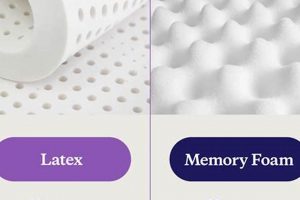
Viscoelastic materials, often referred to as “memory foam,” exhibit a unique capacity to contour closely to the body’s shape. This adaptation results in a cradling effect, distributing weight over a larger surface area and reducing pressure concentration at specific points like the shoulders and hips. The degree of conformance depends on the foam’s density and Indentation Load Deflection (ILD) rating.
- Innerspring Response
Innerspring mattresses, in contrast, primarily rely on the compression of coils to provide support. While the comfort layer above the coils offers some degree of conformance, the underlying structure provides a more uniform level of resistance. The type of coil (e.g., Bonnell, pocketed) and the coil gauge influence the mattress’s overall support profile and its ability to conform to body contours.
- Spinal Alignment Considerations
Proper spinal alignment is crucial for minimizing back pain and promoting restful sleep. Viscoelastic’s conforming properties can assist in maintaining natural spinal curvature, especially for side sleepers. However, excessive sinkage can lead to misalignment. Innerspring mattresses, when paired with an appropriate comfort layer, can also provide adequate spinal support, particularly for stomach and back sleepers who may benefit from a firmer surface.
- Pressure Redistribution
The ability to redistribute pressure is essential for preventing pressure sores and improving circulation during sleep. Viscoelastic’s conforming nature allows it to redistribute pressure away from sensitive areas, making it a favorable option for individuals with mobility limitations or those who spend extended periods in bed. Innerspring designs may require thicker comfort layers or specialized pressure-relieving materials to achieve comparable results.
The selection between a viscoelastic or innerspring mattress should involve a careful assessment of individual needs and preferences related to support and conformance. Viscoelastic excels at conforming to the body and redistributing pressure, while innerspring offers a more traditional, responsive support system. Hybrid models often attempt to combine the advantages of both designs.
2. Motion Isolation

Motion isolation, the capacity of a mattress to minimize the transfer of movement across its surface, constitutes a key point of differentiation when comparing viscoelastic and innerspring designs. This characteristic directly affects the quality of sleep, especially for couples or individuals sharing a bed with a restless partner. The disparate constructions of the two mattress types yield significant differences in their ability to dampen and contain movement.
Viscoelastic mattresses, due to their dense, energy-absorbing properties, typically exhibit superior motion isolation. The interconnected cell structure of the foam material effectively absorbs and dissipates movement, preventing it from propagating across the mattress surface. For example, if one partner shifts or gets out of bed, the other is less likely to be disturbed by the movement. In contrast, traditional innerspring mattresses, particularly those with interconnected coils, tend to transfer motion more readily. When one coil is compressed, the surrounding coils are also affected, leading to a ripple effect that can disrupt the sleep of a partner. Pocketed coil systems, where each coil is individually wrapped, offer improved motion isolation compared to interconnected systems, but they generally do not achieve the same level of isolation as viscoelastic.
The practical significance of understanding motion isolation stems from its direct impact on sleep quality and relationship harmony. A mattress with poor motion isolation can lead to frequent awakenings and disrupted sleep cycles, potentially contributing to daytime fatigue and irritability. While factors such as firmness preferences and support needs also influence mattress selection, the degree of motion isolation remains a crucial consideration for individuals sharing a sleep surface. Therefore, evaluating this characteristic becomes an integral part of the decision-making process when choosing between viscoelastic and innerspring alternatives.
3. Temperature Regulation

Temperature regulation is a critical consideration in sleep surface selection, directly influencing comfort and overall sleep quality. The inherent material properties of viscoelastic and innerspring designs result in distinct thermal performance characteristics, warranting careful evaluation based on individual needs and environmental factors.
- Viscoelastic Density and Heat Retention
Traditional viscoelastic materials, characterized by their dense structure, exhibit a tendency to retain heat. This property can lead to elevated sleeping temperatures, potentially causing discomfort and disrupting sleep, especially in warmer climates or for individuals prone to overheating. Higher-density foams, while offering superior support and pressure relief, generally exhibit greater heat retention due to reduced airflow.
- Innerspring Airflow and Ventilation
Innerspring mattresses, due to their open coil structure, typically provide superior airflow and ventilation compared to viscoelastic options. The spaces between the coils allow for greater heat dissipation, promoting a cooler sleeping environment. This enhanced breathability can be particularly beneficial for individuals who tend to sleep hot or reside in warmer climates. The type of coil construction influences the extent of airflow; pocketed coils, while offering better motion isolation, may slightly reduce airflow compared to interconnected coils.
- Material Innovations in Viscoelastic
Recognizing the heat retention limitations of traditional viscoelastic, manufacturers have introduced various material innovations aimed at improving thermal performance. These include open-cell viscoelastic formulations designed to enhance airflow, gel infusions to absorb and dissipate heat, and phase-change materials to regulate temperature. These technologies seek to mitigate the heat retention associated with viscoelastic while retaining its pressure-relieving benefits.
- Impact of Mattress Cover and Bedding
The mattress cover and bedding materials significantly influence the overall temperature regulation of the sleep system. Breathable covers made from materials like cotton or bamboo can enhance airflow and reduce heat retention. Similarly, lightweight and moisture-wicking bedding can contribute to a cooler and more comfortable sleeping environment. The choice of mattress protector also plays a role, as impermeable protectors can restrict airflow and trap heat.
The selection between viscoelastic and innerspring mattresses with regards to temperature regulation necessitates a holistic approach, considering the inherent material properties, technological advancements, and the broader sleep environment. While innerspring designs generally offer superior airflow, innovations in viscoelastic technology strive to mitigate heat retention. Individual preferences, climate conditions, and bedding choices ultimately determine the optimal sleep surface for thermal comfort.
4. Pressure Relief

Pressure relief constitutes a primary consideration in sleep surface selection, directly influencing comfort, spinal alignment, and overall sleep quality. The fundamental differences in material composition and construction between viscoelastic and innerspring mattresses dictate their respective abilities to alleviate pressure points and promote restful sleep.
- Viscoelastic Conformance and Pressure Redistribution
Viscoelastic materials, characterized by their ability to conform closely to the body’s contours, excel at redistributing pressure. This property stems from the foam’s capacity to evenly distribute weight over a larger surface area, reducing localized pressure concentration at sensitive points such as the shoulders, hips, and spine. Individuals experiencing joint pain, fibromyalgia, or other conditions causing heightened sensitivity to pressure often benefit from the conforming support offered by viscoelastic mattresses.
- Innerspring Support and Pressure Point Mitigation
Innerspring mattresses, while primarily relying on coil support, can offer adequate pressure relief when paired with a substantial comfort layer. The effectiveness of pressure point mitigation depends on the thickness and composition of the comfort layer, as well as the type of coil system employed. Pocketed coil systems, with individually wrapped coils, offer improved contouring and pressure relief compared to traditional interconnected coil designs. The comfort layer typically incorporates materials such as latex, convoluted foam, or fiberfill to provide cushioning and reduce pressure.
- Spinal Alignment and Pressure Relief Correlation
Proper spinal alignment is intrinsically linked to pressure relief. A mattress that promotes neutral spinal alignment minimizes strain on joints and muscles, reducing pressure points. Viscoelastic mattresses, due to their conforming properties, can assist in maintaining natural spinal curvature, particularly for side sleepers. However, excessive sinkage can compromise spinal alignment. Innerspring mattresses, when appropriately firm, can provide stable support for back and stomach sleepers, contributing to pressure relief by preventing excessive spinal flexion or extension.
- Material Density and Long-Term Pressure Relief Performance
The density of the materials used in both viscoelastic and innerspring mattresses significantly influences long-term pressure relief performance. Higher-density viscoelastic foams tend to exhibit greater durability and retain their pressure-relieving properties for a longer period compared to lower-density foams. Similarly, the gauge and quality of the coils in an innerspring mattress affect its ability to maintain support and pressure relief over time. Regular rotation and flipping (if applicable) can extend the lifespan and maintain the pressure-relieving capabilities of both mattress types.
The optimal selection hinges on evaluating personal sensitivity to pressure points, preferred sleeping position, and the long-term performance characteristics of the chosen materials. Both viscoelastic and innerspring mattresses can provide effective pressure relief when carefully selected based on individual needs and preferences. Hybrid models frequently attempt to combine the pressure-relieving benefits of viscoelastic with the support and durability of innerspring systems.
5. Durability (Lifespan)

The longevity of a sleep surface represents a critical factor in assessing its overall value proposition. The inherent material properties and construction methods of viscoelastic and innerspring mattresses significantly influence their respective lifespans, warranting careful consideration during the selection process.
- Material Degradation in Viscoelastic
Viscoelastic materials are susceptible to gradual degradation over time, primarily due to oxidation and compression fatigue. Oxidation causes the foam to yellow and lose some of its original resilience. Compression fatigue results from repeated loading cycles, leading to a gradual reduction in support and conformance. Higher-density viscoelastic foams generally exhibit greater resistance to degradation compared to lower-density formulations. The quality of the manufacturing process and the presence of additives, such as antioxidants, can also influence the lifespan of viscoelastic mattresses.
- Coil Fatigue and Support Degradation in Innerspring
Innerspring mattresses are subject to coil fatigue, which manifests as a gradual reduction in the coil’s ability to provide support. This fatigue can result from repeated compression and expansion cycles, leading to a loss of springiness and an increased likelihood of sagging. The gauge and type of steel used in the coils, as well as the overall construction of the innerspring unit, affect its resistance to fatigue. Pocketed coil systems, where each coil is individually wrapped, may offer greater durability compared to interconnected coil systems, as they distribute weight more evenly and reduce stress on individual coils.
- The Impact of Usage Patterns and Maintenance
Usage patterns and maintenance practices significantly influence the lifespan of both viscoelastic and innerspring mattresses. Regularly rotating or flipping the mattress (if applicable) can help to distribute wear more evenly and prevent localized sagging. Using a mattress protector can shield the surface from spills, stains, and dust mites, which can contribute to premature degradation. Individuals with higher body weights or those who spend extended periods in bed may experience accelerated wear and tear. Proper foundation support is also crucial for maintaining the structural integrity of the mattress.
- Warranty Considerations and Expected Lifespan
Mattress warranties provide some indication of the manufacturer’s confidence in the product’s durability. However, warranties typically cover only manufacturing defects and significant sagging, not gradual wear and tear. The expected lifespan of a viscoelastic or innerspring mattress varies depending on its quality, construction, and usage. As a general guideline, higher-quality mattresses can be expected to last for 7-10 years, while lower-quality models may only last for 5 years or less. Hybrid models, combining elements of both viscoelastic and innerspring construction, exhibit varying lifespans depending on the specific materials and construction techniques employed.
The longevity of a chosen sleep surface directly impacts its cost-effectiveness and overall value. While initial price points may differ, considering the expected lifespan and potential replacement costs is crucial. Both viscoelastic and innerspring options present varying degrees of durability, necessitating thorough research and assessment of individual needs and usage patterns to ensure a satisfactory long-term investment.
6. Cost (initial/long-term)

The economic dimension of selecting a sleep surface extends beyond the immediate purchase price. Evaluating both the initial investment and the anticipated long-term costs is paramount in making a fiscally responsible decision. A comprehensive analysis considers the interplay between upfront expenditure, expected lifespan, and potential supplementary expenses associated with either viscoelastic or innerspring mattress choices.
- Initial Purchase Price Variance
The upfront cost differential between viscoelastic and innerspring mattresses can be substantial, influenced by material quality, construction complexity, and brand reputation. Generally, high-density viscoelastic mattresses tend to command a higher initial price due to the cost of raw materials and specialized manufacturing processes. Innerspring mattresses offer a wider range of price points, from budget-friendly options with basic coil systems to premium models with advanced coil designs and enhanced comfort layers. Sale events and promotional discounts can further influence the immediate purchase price, necessitating comparative shopping.
- Lifespan and Replacement Frequency
The projected lifespan of a mattress directly impacts its long-term cost-effectiveness. As previously discussed, viscoelastic and innerspring mattresses exhibit varying degrees of durability, influencing the frequency of replacement. A lower initial cost may be offset by a shorter lifespan, resulting in higher cumulative expenses over time. Conversely, a higher initial investment in a durable mattress may prove more economical in the long run. Assessing the expected lifespan based on material quality, construction, and usage patterns is crucial in estimating long-term costs.
- Supplementary Expenses and Maintenance
Beyond the initial purchase price, supplementary expenses such as mattress protectors, specialized foundations, and professional cleaning services can contribute to the overall cost of ownership. A high-quality mattress protector is essential for safeguarding against spills, stains, and allergens, potentially prolonging the mattress’s lifespan and minimizing the need for professional cleaning. Certain mattress types may require specific foundation types to ensure proper support and prevent premature wear. These ancillary expenses should be factored into the long-term cost analysis.
- Health-Related Cost Implications
The impact of mattress choice on sleep quality and musculoskeletal health can indirectly influence healthcare expenditures. A mattress that fails to provide adequate support or pressure relief may contribute to back pain, joint stiffness, or other health issues, potentially leading to increased medical consultations, medication costs, or physical therapy expenses. Conversely, a well-suited mattress that promotes restful sleep and proper spinal alignment may contribute to improved overall health and reduced reliance on healthcare interventions. While difficult to quantify precisely, these potential health-related cost implications warrant consideration.
A thorough evaluation of both initial and long-term costs is essential in making an informed mattress selection. The optimal choice balances upfront expenditure with expected lifespan, supplementary expenses, and potential health-related implications. Prioritizing long-term value over immediate cost savings can result in a more fiscally sound and health-conscious decision.
7. Edge Support

Edge support, the structural integrity of a mattress perimeter, presents a significant point of divergence between viscoelastic and innerspring designs. It influences the usable sleep surface, ease of ingress and egress, and overall mattress stability. The construction methods employed in each type of mattress directly affect the quality and longevity of edge support, impacting user satisfaction and perceived value. For example, a viscoelastic mattress with weak edges may exhibit significant compression and a sloping effect when sitting near the perimeter, reducing the accessible sleep area. In contrast, a well-designed innerspring mattress often incorporates reinforced edges to mitigate this issue.
The significance of edge support extends beyond mere aesthetics. Individuals who frequently sit on the edge of the bed, whether for dressing, reading, or other activities, require a stable and supportive surface to prevent discomfort and potential safety hazards. Furthermore, couples sharing a bed benefit from robust edge support, as it maximizes the usable sleep area and minimizes the sensation of rolling off the mattress. In the case of viscoelastic mattresses, manufacturers often employ dense foam encasements or reinforced edge coils to enhance perimeter support. Innerspring models typically utilize thicker gauge coils or perimeter wire systems to achieve similar results. The effectiveness of these solutions varies depending on the quality of materials and construction techniques.
Ultimately, the selection of a sleep surface must account for individual needs and preferences regarding edge support. A mattress with inadequate edge support may lead to dissatisfaction, premature wear, and reduced overall utility. By understanding the inherent differences in edge support characteristics between viscoelastic and innerspring designs, consumers can make more informed decisions that align with their lifestyle and ergonomic requirements. The long-term durability and functional integrity of the mattress are directly linked to the quality of its edge support system. Therefore, careful evaluation of this attribute is crucial for ensuring a satisfactory and lasting investment.
Frequently Asked Questions
The following questions address common concerns and misconceptions surrounding the selection between viscoelastic and innerspring mattresses.
Question 1: What are the primary differences between viscoelastic and innerspring mattress construction?
Viscoelastic mattresses are constructed from dense, temperature-sensitive foam that conforms to the body’s shape. Innerspring mattresses utilize a network of coils to provide support, typically with a comfort layer on top.
Question 2: Which type of mattress is better for individuals with back pain?
Viscoelastic mattresses often provide superior pressure relief and spinal alignment for some individuals with back pain. However, a firm innerspring mattress may be more suitable for others, particularly those who sleep on their stomach.
Question 3: How does motion isolation differ between viscoelastic and innerspring mattresses?
Viscoelastic mattresses generally offer better motion isolation than innerspring mattresses, minimizing disturbance from a partner’s movements.
Question 4: Which type of mattress is more suitable for hot sleepers?
Innerspring mattresses typically provide better airflow and ventilation, making them a more suitable option for individuals prone to overheating during sleep. Innovative viscoelastic options are continually appearing on the market.
Question 5: What is the expected lifespan of viscoelastic and innerspring mattresses?
The lifespan varies depending on quality and usage, but higher-quality mattresses of either type can be expected to last for 7-10 years. Lower-quality models may only last for 5 years or less.
Question 6: How does the cost compare between viscoelastic and innerspring mattresses?
Viscoelastic mattresses often have a higher initial cost due to material and manufacturing expenses. Innerspring mattresses offer a broader range of price points, from budget-friendly to premium.
The selection between viscoelastic and innerspring mattresses should be guided by individual needs, preferences, and budget considerations. Both types can provide comfortable and supportive sleep surfaces when carefully chosen.
The subsequent section will provide guidance on identifying specific product recommendations based on individual sleep profiles.
Conclusion
The preceding analysis of “memory foam mattress vs spring” has elucidated the distinct characteristics of each sleep surface type. Key considerations include pressure relief, motion isolation, temperature regulation, durability, and cost. Viscoelastic demonstrates superior conformance and motion isolation, while innerspring offers enhanced airflow and a wider range of firmness options.
Ultimately, the choice between these two options necessitates a thorough evaluation of individual needs and priorities. A misinformed decision can negatively impact sleep quality and long-term well-being. Further research and, when possible, in-person evaluation are strongly encouraged to ensure a satisfactory and enduring purchase.