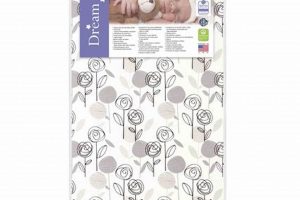
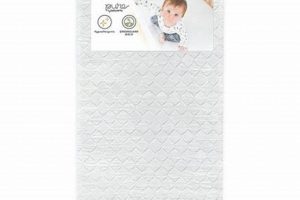
This specialized sleep surface is designed for smaller cribs, offering a safe and comfortable resting place for infants in environments where space is limited. These mattresses provide the necessary support and cushioning essential for a baby’s healthy development during crucial sleep hours. They are typically rectangular and adhere to specific dimensional standards to ensure a snug and secure fit within the confines of the designated crib model.
The selection of a suitable sleeping surface for an infant carries significant weight, impacting sleep quality and safety. This consideration is especially important where spatial constraints necessitate a smaller crib. These items offer a practical solution without compromising the fundamental requirements of infant sleep safety and comfort. Historically, the need for adaptable nursery solutions has driven the evolution of these compact designs, addressing the challenges of urban living and smaller residential spaces.
The following sections will delve into the specific features, safety standards, material considerations, and selection criteria to aid in choosing the appropriate sleep surface for a mini crib. This exploration will cover the variations available, essential safety certifications, and the impact of material composition on the overall health and well-being of the infant.
Essential Considerations for Selecting a Sleeping Surface
Selecting the appropriate sleeping surface for a reduced-size crib requires careful consideration of several key factors to ensure infant safety and comfort. Attention to these details will contribute to a secure and healthy sleep environment.
Tip 1: Firmness is Paramount: The selected surface must be sufficiently firm to prevent indentation and reduce the risk of suffocation. A firm surface ensures that the infant’s face will not sink into the material, maintaining a clear airway.
Tip 2: Dimensional Accuracy is Crucial: Verify that the product dimensions precisely match the interior measurements of the mini crib. Gaps between the mattress and crib frame pose a potential entrapment hazard.
Tip 3: Prioritize Certifications: Seek certifications from reputable organizations such as Greenguard Gold or CertiPUR-US. These certifications indicate that the product has been tested for harmful chemicals and VOC emissions.
Tip 4: Material Composition Matters: Opt for materials that are hypoallergenic and resistant to dust mites. Consider natural or organic options to minimize exposure to synthetic chemicals. Breathable materials can help regulate the infant’s body temperature.
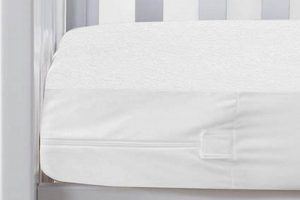
Tip 5: Waterproof Protection is Recommended: A waterproof or water-resistant cover is essential to protect the core from spills and accidents. This feature also simplifies cleaning and maintenance.
Tip 6: Weight Considerations: Be mindful of the product’s weight, especially when changing sheets or cleaning the crib. A lighter weight can simplify these tasks, but the selected option must still provide adequate support.
Tip 7: Evaluate Edge Support: Strong edge support can prevent the infant from rolling into the sides of the crib, further enhancing safety.
These considerations underscore the significance of meticulous evaluation when selecting a sleeping surface for a compact crib. Adherence to these guidelines will contribute to a safer and more comfortable sleep environment for the infant.
The subsequent sections will explore specific product recommendations and delve deeper into the long-term impact of sleeping surface choices on infant health and development.
1. Firmness and the Mini Crib Mattress
Firmness is a critical attribute of any infant sleeping surface, but its importance is amplified in the context of a mini crib mattress. The smaller dimensions necessitate an even greater focus on ensuring appropriate support and minimizing potential hazards.
- Suffocation Risk Mitigation
A firm surface reduces the risk of suffocation by preventing the infant from sinking into the mattress. The compact size of a mini crib means the infant has less room to maneuver; therefore, a firm surface is essential to maintain a clear airway. A too-soft sleeping surface can conform to the infant’s face, impeding breathing.
- SIDS Prevention
While the exact causes of Sudden Infant Death Syndrome (SIDS) are not fully understood, sleeping on a firm surface is consistently recommended as a preventative measure. A firm mini crib mattress contributes to this recommendation by providing a stable and unyielding base that reduces the likelihood of re-breathing exhaled air, which can elevate carbon dioxide levels and potentially contribute to SIDS.
- Spinal Development Support
A firm sleeping surface provides appropriate support for the developing spine. An overly soft mattress can lead to improper spinal alignment during sleep, potentially impacting long-term musculoskeletal health. The compact dimensions of a mini crib require that this support be consistent across the entire surface area of the product.
- Uniform Surface Consistency
The firmness must be consistent across the entire sleeping surface, regardless of where the infant is positioned. Uneven firmness can create pressure points and potential hazards. The relatively small area of a mini crib mattress makes this even more important, as the infant is more likely to occupy the entire available space.
In conclusion, firmness is not merely a comfort preference when selecting a sleeping surface; it is a fundamental safety requirement. In the context of a mini crib mattress, the restricted dimensions amplify the significance of this attribute. Adherence to firmness standards is paramount for promoting infant safety and well-being.
2. Dimensions

Dimensional accuracy is paramount when selecting a sleeping surface for a mini crib. Deviations from specified measurements can compromise safety and negate the intended benefits of this compact sleeping solution.
- Standardization and Compatibility
Mini cribs adhere to specific dimensional standards to ensure compatibility with appropriately sized mattresses. Deviations from these standards can result in gaps between the mattress and crib frame, posing a significant entrapment hazard for infants. Manufacturers typically provide precise internal dimensions, necessitating careful matching with mattress specifications.
- Safety Certification Requirements
Safety certifications, such as those from the Juvenile Products Manufacturers Association (JPMA), often stipulate dimensional tolerances for mini crib mattresses. Meeting these requirements is essential for ensuring the product adheres to recognized safety benchmarks and minimizes the risk of injury. Products failing to meet dimensional criteria may not receive certification, indicating a potential safety concern.
- Impact on Sleep Quality
Inaccurate dimensions can affect the comfort and stability of the sleeping surface. A mattress that is too small may shift or slide within the crib, disrupting the infant’s sleep. Conversely, a mattress that is too large may compress against the crib frame, creating an uneven or angled sleeping surface. Both scenarios can negatively impact sleep quality and potentially contribute to discomfort.
- Long-Term Durability
Consistent and accurate dimensions contribute to the overall durability of both the crib and the mattress. A properly fitting mattress distributes weight evenly and reduces stress on the crib frame. Conversely, an ill-fitting option may cause premature wear and tear, potentially shortening the lifespan of both components.
The interplay between dimensional precision and safety is undeniable in the realm of compact infant sleeping solutions. Adhering to established standards and prioritizing accurate measurements is essential for creating a secure and comfortable sleep environment for infants utilizing mini cribs.
3. Certifications

Certifications serve as essential indicators of safety and quality for infant products, and their significance is heightened in the selection of a mini crib mattress. These certifications represent independent verification that the product meets specific standards, offering a degree of assurance to caregivers.
- Greenguard Gold Certification
This certification signifies that a mini crib mattress has been tested and shown to have low chemical emissions, including volatile organic compounds (VOCs). Given infants’ heightened vulnerability to environmental toxins, a Greenguard Gold certification is a valuable indicator of a healthier sleep environment. The certification process involves rigorous testing and ongoing monitoring to ensure continued compliance.
- CertiPUR-US Certification
This program certifies the foam used in a mini crib mattress has been independently tested to meet specific criteria for content, emissions, and durability. CertiPUR-US certified foams are made without ozone depleters, PBDEs, TDCPP or TCEP (“Tris”) flame retardants, mercury, lead, and other heavy metals. Furthermore, they are low in VOC emissions, contributing to improved indoor air quality. Selecting a CertiPUR-US certified mini crib mattress provides assurance regarding the foam’s composition and potential impact on infant health.
- JPMA Certification
The Juvenile Products Manufacturers Association (JPMA) certification indicates that a mini crib mattress has been tested by an independent laboratory and meets applicable ASTM (American Society for Testing and Materials) standards. These standards cover a range of safety requirements, including flammability, structural integrity, and chemical content. A JPMA certification mark on a mini crib mattress provides confidence that the product has undergone rigorous testing to ensure it meets established safety benchmarks.
- OEKO-TEX Standard 100 Certification
This certification system tests textile products for harmful substances, ensuring that materials used in a mini crib mattress, such as the cover fabric, are safe for infants. The OEKO-TEX Standard 100 certification evaluates products for a wide range of chemicals and substances that may pose health risks. Selecting a mini crib mattress with this certification can minimize exposure to potentially harmful chemicals in the textiles used.
In summary, certifications provide a framework for evaluating the safety and quality of a mini crib mattress. By seeking products with recognized certifications, caregivers can make informed decisions that prioritize the health and well-being of their infants. Each certification addresses different aspects of product safety, from chemical emissions to material composition, offering a comprehensive approach to risk mitigation.
4. Materials

The selection of materials significantly influences the safety, comfort, and durability of a mini crib mattress. The constituent components directly impact factors such as breathability, allergenicity, and the potential for off-gassing harmful chemicals. For example, a mattress utilizing polyurethane foam without proper certification may release volatile organic compounds (VOCs), posing a potential respiratory irritant to the infant. Conversely, a mattress constructed with organic cotton and a hypoallergenic core can minimize exposure to allergens and promote a healthier sleep environment. The choice of materials is therefore a critical determinant of the mattress’s suitability for infant use.
Considerations extend beyond the core construction. The cover material also plays a vital role. A waterproof cover made from PVC, while effective at preventing moisture penetration, may contain phthalates, which are endocrine disruptors. A preferable alternative is a waterproof cover made from polyethylene, which is considered a safer plastic option. Furthermore, the stitching and binding agents used in the mattress construction should be scrutinized. Flame retardants, often applied to mattress materials, are another area of concern. Traditional flame retardants can be toxic; however, alternatives like silica or inherently flame-resistant materials offer a safer approach. Real-world examples of infants experiencing allergic reactions or respiratory issues due to poorly chosen mattress materials underscore the practical significance of understanding material composition.
Ultimately, informed selection of mini crib mattress materials requires a thorough understanding of potential risks and benefits. By prioritizing materials with certifications such as Greenguard Gold and OEKO-TEX Standard 100, caregivers can mitigate potential health hazards. The challenge lies in balancing cost considerations with the long-term health and well-being of the infant. A careful evaluation of material composition represents a fundamental step in ensuring the selected mini crib mattress provides a safe and comfortable sleep surface.
5. Waterproof
The characteristic of being waterproof is a critical attribute in the context of a mini crib mattress, driven by the inherent vulnerabilities of infants and the potential for hygiene compromise. Infants lack bladder control, and diaper leaks or regurgitation are common occurrences. Consequently, the mattress is frequently exposed to fluids. If the mattress core absorbs these liquids, it can lead to bacterial growth, mold formation, and unpleasant odors. A waterproof barrier prevents fluid penetration, thereby preserving the hygiene and longevity of the sleeping surface. For example, without a waterproof layer, a seemingly minor diaper leak can seep into the mattress core, creating a breeding ground for bacteria and necessitating mattress replacement.
The integration of a waterproof layer into a mini crib mattress directly translates to practical benefits for caregivers. Cleaning becomes simplified; spills can be wiped away with a damp cloth, minimizing the risk of staining or lingering odors. The waterproof barrier also protects the internal components of the mattress, extending its lifespan. Material selection for the waterproof layer is also a critical point. Polyvinyl chloride (PVC) has been used traditionally but raises concerns due to phthalate content. More contemporary options, such as polyethylene films or laminated fabrics, offer effective waterproofing without the potential health risks associated with PVC. A mini crib mattress with a well-designed waterproof surface is essential for mitigating the frequent spills and accidents associated with infant care.
In conclusion, the waterproof feature of a mini crib mattress is not merely a convenience; it is a fundamental necessity for maintaining hygiene, prolonging mattress life, and safeguarding infant health. While the choice of waterproof material requires careful consideration to avoid potentially harmful chemicals, the presence of an effective barrier against fluid penetration is indispensable. The understanding of this essential attribute facilitates informed purchasing decisions and contributes to a safer and more hygienic sleep environment for infants.
6. Lightweight
The term “lightweight,” when applied to a sleeping surface intended for a smaller crib, denotes a product characteristic that directly influences both functionality and safety. A reduced weight can facilitate easier handling during routine tasks such as changing linens or cleaning the crib’s interior. The consequence of this ease of handling is reduced physical strain on caregivers, minimizing the potential for injury during these frequent activities. For instance, a heavier mattress requires greater effort to lift and maneuver, which is especially pertinent for individuals with physical limitations or those recovering from childbirth.
The selection of a lighter-weight sleeping surface also impacts the portability of the entire crib system. While mini cribs are inherently more compact than standard models, a lighter mattress further enhances their suitability for relocation within a home or for travel purposes. This is particularly relevant for families who frequently move the crib between rooms or require a sleeping solution that can be easily transported. For example, a family might move the mini crib between a nursery and a living area depending on the time of day, or transport it to a grandparent’s house for overnight stays. A lighter option simplifies these movements. However, material choices to achieve reduced weight must not compromise the firmness and support essential for infant safety; lightweight should not equate to flimsy or lacking in structural integrity.
In conclusion, the significance of a “lightweight” sleeping surface in the context of a smaller crib lies in its facilitation of handling and portability. While weight reduction offers tangible benefits for caregivers, it remains crucial that the selected product adheres to stringent safety standards regarding firmness, support, and material composition. Balancing these considerations ensures a safe and convenient sleeping environment for the infant.
7. Edge Support
Edge support, in the context of a sleep surface designed for smaller cribs, pertains to the structural integrity of the mattress perimeter. The firmness and stability of the edges are critical, especially considering the limited dimensions of a mini crib. Inadequate edge support can lead to a variety of safety concerns. Infants, during their early developmental stages, often move around within their cribs, and a lack of firm edges can result in them rolling or shifting towards the sides. Should the edge of the mattress collapse or compress excessively under the infant’s weight, it could create a pocket or indentation, posing a potential suffocation hazard. The absence of robust edge support also reduces the usable sleep surface area, effectively diminishing the benefits of the compact crib design. For example, an infant consistently rolling towards the edge of a mattress with poor edge support may experience disrupted sleep and increased risk of contact with the crib’s frame, potentially leading to discomfort or injury.
The construction of adequate edge support typically involves reinforcing the mattress perimeter with firmer foam or strategically placed coils. The specific method varies among manufacturers, but the underlying principle remains consistent: to create a stable and resistant edge that minimizes compression and prevents the infant from rolling into potentially hazardous positions. The presence of strong edge support is a tangible feature that parents and caregivers can assess during the selection process. By pressing down firmly on the mattress edges, one can gauge the level of resistance and identify any areas of excessive give or instability. Furthermore, independent testing and certification programs often include edge support evaluations as part of their safety assessments. These certifications offer an additional layer of assurance regarding the structural integrity of the mattress edges.
In conclusion, edge support is a non-negotiable characteristic of a high-quality sleeping surface intended for smaller cribs. Its significance extends beyond mere comfort, directly impacting infant safety and sleep quality. The challenges associated with poor edge support are multifaceted, ranging from suffocation hazards to reduced usable sleep space. Recognizing the importance of this feature and actively assessing its presence during the selection process are crucial steps in ensuring a safe and secure sleep environment. Prioritizing mini crib mattresses with robust edge support represents a proactive measure to mitigate potential risks and promote healthy infant development.
Frequently Asked Questions About Mini Crib Mattresses
This section addresses common inquiries regarding mini crib mattresses, providing information to aid in making informed purchasing decisions. The focus is on safety, suitability, and optimal use of these products.
Question 1: What are the standard dimensions of a mini crib mattress?
While dimensions can vary slightly by manufacturer, a typical mini crib mattress measures approximately 24 inches wide by 38 inches long. It is imperative to verify the internal dimensions of the specific mini crib being used and ensure the selected mattress conforms precisely to those measurements to prevent gaps and potential safety hazards.
Question 2: Is a specific level of firmness recommended for a mini crib mattress?
A firm sleeping surface is essential for infant safety. Soft mattresses pose a suffocation risk. It is critical that the mini crib mattress provides consistent firmness across its entire surface. The degree of firmness should prevent significant indentation when the infant is placed upon it.
Question 3: What materials should be avoided when selecting a mini crib mattress?
Materials of concern include those containing phthalates, volatile organic compounds (VOCs), and chemical flame retardants. Opting for certified organic cotton, polyethylene waterproof covers, and foams certified by CertiPUR-US can mitigate exposure to potentially harmful substances.
Question 4: How frequently should a mini crib mattress be cleaned?
Routine cleaning is advised, especially after any spills or accidents. Spot cleaning with a mild detergent and water is generally sufficient. The manufacturer’s instructions should be consulted for specific cleaning recommendations. Air drying the mattress thoroughly after cleaning is critical to prevent mold growth.
Question 5: Are mini crib mattresses suitable for long-term use?
Mini cribs, and by extension their mattresses, are typically designed for infants up to a certain weight or height limit, generally around 18-24 months. Once the infant reaches the specified limit or demonstrates the ability to climb out of the crib, a transition to a larger sleeping arrangement is necessary.
Question 6: What certifications are important to look for when purchasing a mini crib mattress?
Key certifications include Greenguard Gold, indicating low chemical emissions; CertiPUR-US, certifying foam composition; and JPMA, confirming adherence to established safety standards. These certifications offer assurance regarding the safety and quality of the product.
In summary, the careful selection of a mini crib mattress involves considering dimensions, firmness, material composition, cleaning protocols, and adherence to safety standards. Prioritizing these factors contributes to a secure and healthful sleep environment for the infant.
The subsequent sections will explore specific product recommendations and maintenance guidelines in greater detail.
Concluding Considerations
This examination of the mini crib mattress has underscored the critical role this component plays in infant safety and well-being. Key aspects, including firmness, dimensional accuracy, material composition, waterproof capabilities, weight, and edge support, must be carefully evaluated to ensure a secure sleep environment. Adherence to established safety standards and certifications is paramount when selecting a product. Ultimately, responsible purchasing decisions prioritize the health and developmental needs of the infant.
The information presented herein serves as a guide for navigating the complexities of selecting an appropriate sleeping surface for a mini crib. Consistent vigilance regarding safety recalls and adherence to recommended usage guidelines are essential throughout the product’s lifespan. The long-term implications of these choices extend to the overall health and development of the child, demanding thoughtful consideration and a commitment to informed decision-making.

![Best Organic Crib Mattress Protector [Safe Sleep] | Organic & Natural Mattress Buyer’s Guide: Non-Toxic Sleep Solutions](https://mattressworldpa.com/wp-content/uploads/2025/07/th-1363-300x200.jpg "Best Organic Crib Mattress Protector [Safe Sleep] Organic & Natural Mattress Buyer’s Guide: Non-Toxic Sleep Solutions")