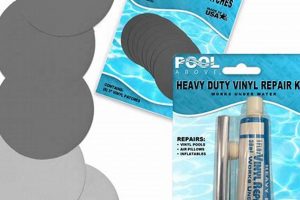
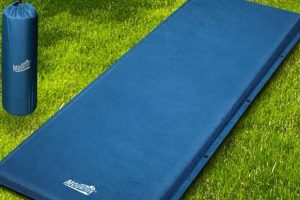
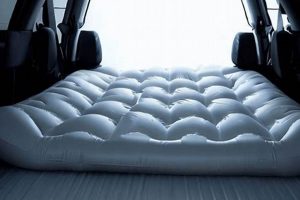
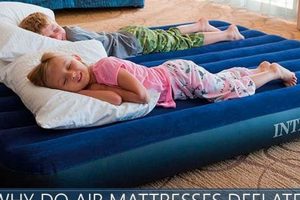
A collection of materials designed to repair punctures or leaks in inflatable sleeping surfaces. Typically, these sets include adhesive patches, a small tube of glue or sealant, and sometimes tools for surface preparation, such as sandpaper or an applicator. The purpose is to restore the airtight integrity of the mattress, extending its lifespan and usability. As an example, a user might employ such a set to fix a small hole caused by sharp objects during camping.
Employing a repair solution offers several advantages, most notably cost savings by avoiding the need to replace the entire inflatable item. It also promotes sustainability by reducing waste and extending the life of existing products. Historically, rudimentary methods using household adhesives were common, but modern solutions provide more reliable and durable repairs, leading to greater user satisfaction and a more environmentally conscious approach to product maintenance.
The following sections will detail the typical components of these sets, outline the proper application techniques for achieving a successful repair, and provide guidance on selecting the optimal product for specific needs and inflatable materials.
Repair Strategies for Inflatable Sleeping Surfaces
The following guidelines provide insights into achieving effective and lasting repairs to punctured inflatable sleeping surfaces, thereby maximizing product lifespan and minimizing replacement costs.
Tip 1: Thoroughly clean and dry the area surrounding the puncture before applying any adhesive. This ensures optimal bonding and prevents the patch from detaching prematurely. Isopropyl alcohol is suitable for cleaning most surfaces.
Tip 2: Precisely locate the source of the leak. Inflate the mattress and listen carefully, or apply soapy water to the surface and observe for bubbles. Marking the exact spot will ensure accurate patch placement.
Tip 3: Select a patch size that extends at least one inch beyond the puncture in all directions. This provides ample surface area for adhesion and distributes stress evenly across the repair.
Tip 4: Roughen the surface of the inflatable material with fine-grit sandpaper before applying the adhesive. This creates a better mechanical bond between the patch and the mattress surface.
Tip 5: Apply the adhesive evenly and sparingly. Excess adhesive can weaken the bond and cause a messy appearance. Allow the adhesive to become tacky before applying the patch.
Tip 6: Apply firm, even pressure to the patch for several minutes after application. This ensures proper adhesion and eliminates air pockets that could compromise the repair.
Tip 7: Allow the adhesive to cure completely before re-inflating the mattress. Refer to the adhesive manufacturer’s instructions for specific curing times.
Adhering to these practices will improve the success rate of repairs to inflatable sleeping surfaces, reducing the need for replacements and extending the usable life of the product.
The subsequent section will address considerations for material compatibility and specific repair scenarios.
1. Adhesive Strength

Adhesive strength is a critical determinant of a repair solution’s efficacy. Within the context of an inflatable sleeping surface repair solution, insufficient adhesive strength leads to patch detachment, rendering the repair ineffective. This necessitates reapplication or, ultimately, mattress replacement. The cause-and-effect relationship is direct: weaker adhesive bonds fail under the stress of inflation and usage, leading to air leakage and compromised functionality. For example, a patch applied with low-strength adhesive to a mattress used frequently for camping may fail due to the combined stresses of inflation, weight, and environmental factors like temperature fluctuations.
The importance of robust adhesive strength extends beyond immediate repair success. A durable adhesive bond ensures the longevity of the repair, preventing recurring leaks and maintaining the integrity of the inflatable surface over extended periods. Specific adhesives formulated for flexible materials, such as vinyl or rubber, exhibit higher shear and tensile strength, offering superior performance compared to general-purpose adhesives. For instance, polyurethane-based adhesives are frequently selected for their resistance to water and temperature changes, attributes particularly relevant for outdoor use.
In summary, adhesive strength is a fundamental property dictating the performance and lifespan of the repair. Challenges in achieving optimal adhesive strength often involve surface preparation, material compatibility, and environmental conditions during application and curing. Proper understanding and application of adhesives designed for flexible materials are vital for successful and lasting repairs, ensuring that air mattresses remain functional and prolonging their useful life.
2. Patch Material
The constitution of the patch material included within an inflatable sleeping surface repair solution is a critical determinant of its overall efficacy. The material’s physical properties, such as flexibility, tensile strength, and resistance to environmental degradation, directly impact the longevity and reliability of the repair. For example, if the patch material lacks sufficient flexibility, it may crack or detach under the repeated stress of inflation and deflation cycles, thereby negating the repair effort. Similarly, inadequate tensile strength renders the patch susceptible to tearing or perforation, especially in areas subjected to high stress concentrations. The patch should resist degradation when exposed to UV radiation, moisture, and temperature variations; failing to do so compromises the patch’s structural integrity over time.
The patch material must also be compatible with the inflatable’s material composition. Incompatibility can lead to adhesive failure or even material degradation of the inflatable itself. For instance, using a PVC patch on a thermoplastic polyurethane (TPU) air mattress may result in poor adhesion and eventual separation. Furthermore, the patch’s texture and surface finish can influence the ease of application and the aesthetic quality of the repair. A patch with a smooth, non-porous surface may provide a better bonding surface for adhesives, ensuring a more secure and durable connection. The thickness of the patch also affects its conformability to the contours of the inflatable, with thinner materials generally providing a better fit for complex shapes.
In conclusion, the selection of appropriate patch material is paramount for achieving a successful and lasting repair of inflatable sleeping surfaces. It is essential to consider the material’s physical properties, compatibility with the inflatable, and suitability for the intended use environment. A patch exhibiting adequate flexibility, tens
ile strength, environmental resistance, and adhesive compatibility ensures the repair maintains its integrity under various conditions, extending the usable life of the product and minimizing waste.
3. Surface Preparation
Surface preparation constitutes a critical phase in the effective application of any inflatable sleeping surface repair solution. It directly influences the adhesion between the patch and the inflatable material, and therefore, the longevity of the repair. Insufficient or improper surface preparation will inevitably lead to patch failure and air leakage.
- Cleaning and Degreasing
The removal of dirt, oils, and other contaminants from the inflatable surface is paramount. These substances impede the formation of a strong adhesive bond, potentially causing premature patch detachment. Isopropyl alcohol is often employed as a cleaning agent due to its ability to dissolve greasy residues without damaging the inflatable material. For example, an air mattress used outdoors might accumulate sunscreen, insect repellent, or natural oils from the skin; failure to remove these substances will severely compromise adhesion.
- Abrasive Treatment
Light abrasion of the surface, typically achieved using fine-grit sandpaper, increases the surface area available for adhesive bonding and creates a mechanical interlock between the patch and the inflatable material. This roughening process enhances the adhesive’s ability to grip the surface. An example of the benefit is seen in heavily used air mattress where the surface is already smooth from wear; abrasion will restore the surface to one where adhesion is possible.
- Drying and Ventilation
Ensuring the surface is completely dry prior to adhesive application is essential. Moisture can interfere with the curing process of the adhesive and weaken the bond. Additionally, adequate ventilation during the adhesive application and curing phases prevents the accumulation of solvent vapors, which can impede proper drying and potentially damage the inflatable material. The presence of residual moisture can create steam and bubbles during curing, creating a poor mechanical bond.
- Inspection for Underlying Damage
Prior to applying a patch, the inflatable surface should be meticulously inspected for any underlying structural damage, such as tears, punctures, or material degradation. Addressing these issues is crucial for achieving a lasting repair. Attempting to apply a patch over a pre-existing large tear is unlikely to be effective, and may only serve to temporarily mask the problem.
In summary, thorough surface preparation is an indispensable step in the utilization of any inflatable sleeping surface repair solution. By diligently addressing cleaning, abrasion, drying, and damage assessment, the probability of achieving a durable and effective repair is substantially increased, thereby extending the lifespan of the inflatable and minimizing the need for replacement.
4. Durability

Durability, in the context of an inflatable sleeping surface repair solution, directly correlates with the longevity and reliability of the repair. A durable patch resists degradation from factors such as abrasion, temperature fluctuations, and repeated inflation/deflation cycles. The patchs ability to maintain its integrity under these conditions determines how long the repair will last. For example, a patch made from inferior material may quickly lose adhesion or tear, resulting in air leakage and necessitating a second repair. Therefore, selecting a patch solution with robust durability characteristics is essential for extending the lifespan of the repaired inflatable surface.
The durability of a repair is also influenced by the quality of the adhesive and the preparation of the surface prior to patch application. A high-strength, flexible adhesive ensures a secure bond between the patch and the inflatable material, preventing premature detachment. Similarly, proper surface preparation, involving cleaning and abrasion, maximizes adhesion and enhances the overall durability of the repair. For instance, if the surface is not adequately cleaned, contaminants may interfere with the adhesive’s ability to bond, leading to a weaker and less durable repair. The relationship is causal: compromised surface preparation leads to diminished adhesion and ultimately reduced repair durability.
In summary, durability is a critical attribute of any effective inflatable sleeping surface repair solution. It encompasses the resistance of the patch material and adhesive to degradation, the quality of surface preparation, and the ability to withstand stresses associated with normal use. By prioritizing durability in the selection and application of a repair solution, users can significantly extend the functional lifespan of their inflatable surfaces, reduce the need for frequent replacements, and achieve a more cost-effective and environmentally sustainable outcome.
5. Application Technique

The efficacy of any inflatable sleeping surface repair solution is intrinsically linked to the employed application technique. Even the highest quality materials will yield unsatisfactory results if applied improperly. Consequently, a detailed understanding of proper procedure is essential for maximizing repair success and extending the lifespan of the inflatable.
- Precise Puncture Location
Accurate identification of the puncture site is paramount. Inflating the mattress and using soapy water to locate escaping air offers a reliable method. Improper location leads to patch misplacement, rendering the repair ineffective. For instance, applying a patch adjacent to, rather than directly over, a small puncture will fail to seal the leak, necessitating repeated attempts.
- Optimal Patch Size and Shape
The patch must sufficiently overlap the puncture to ensure a complete seal. A patch that is too small will likely fail, particularly under pressure. Additionally, rounded patch shapes are preferred over square or rectangular shapes as they minimize stress concentrations at the corners. A patch with sharp corners, if applied to an area of high stress, is more likely to peel or detach.
- Controlled Adhesive Application
The amount and distribution of adhesive are critical. Applying too much adhesive can result in a weak bond due to improper curing or adhesive bleeding, while too little adhesive will result in inadequate adhesion. The adhesive should be applied in a thin, even layer covering the entire patch and extending slightly beyond the edges. Ignoring this can lead to incomplete sealing, particularly along the patch perimeter.
- Proper Pressure and Curing
Applying firm, even pressure to the patch during the initial curing phase is essential for ensuring proper adhesion. This eliminates air pockets and promotes a strong bond between the patch and the inflatable material. Following the adhesive manufacturer’s recommended curing time is equally important. Premature inflation can disrupt the bond and compromise the repair’s integrity.
Ultimately, t
he success of inflatable sleeping surface repair hinges not only on the quality of the repair solution but also on the meticulous execution of the application technique. Adherence to these guidelines maximizes the probability of a durable and effective repair, prolonging the functional life of the inflatable.
6. Compatibility
The effectiveness of any inflatable sleeping surface repair solution is fundamentally contingent upon material compatibility between the patch, adhesive, and the inflatable itself. Material incompatibility leads directly to repair failure. If the selected patch material or adhesive interacts adversely with the inflatable’s composition, the adhesive bond may weaken, the patch may delaminate, or the inflatable material may degrade. For example, the application of a solvent-based adhesive on a PVC inflatable can cause dissolution of the PVC, precluding a successful repair.
Compatibility considerations extend beyond the primary materials. Fillers, plasticizers, and coatings present on the inflatable’s surface can also influence adhesive bond strength. A patch solution designed for smooth, uncoated PVC may not adhere effectively to a flocked or textured surface. Similarly, certain adhesives react poorly with specific plasticizers, leading to bond embrittlement or complete failure over time. Manufacturers often specify material compatibility guidelines for their patch kits, outlining which inflatable materials are suitable for repair. Ignoring these guidelines carries a high risk of repair failure, rendering the effort and materials wasted. Another example includes the use of a repair solution intended for vinyl on a rubber air mattress; the differing chemical compositions prevent proper adhesion.
In summary, material compatibility represents a critical success factor in inflatable surface repair. Selecting a repair solution that is demonstrably compatible with the inflatable’s material composition minimizes the risk of repair failure and maximizes the longevity of the repaired item. Ignoring this aspect can result in wasted resources, further damage to the inflatable, and ultimately, the need for replacement.
7. Curing Time

The duration allocated for the adhesive to fully solidify, known as curing time, directly impacts the efficacy of repairs made using an inflatable sleeping surface repair solution. Insufficient curing compromises the adhesive bond, leading to premature failure and air leakage.
- Adhesive Strength Development
Curing time is the period during which the adhesive develops its maximum bond strength. Premature use of the repaired item prevents the adhesive molecules from fully cross-linking, resulting in a weaker, less durable bond. For example, an adhesive that requires 24 hours to cure but is subjected to stress after only 2 hours will exhibit significantly reduced bonding capabilities, increasing the risk of patch detachment.
- Environmental Factors Influence
Ambient temperature and humidity influence the curing rate of adhesives. Higher temperatures typically accelerate curing, while lower temperatures retard it. High humidity can interfere with certain adhesives, prolonging the curing process or weakening the bond. Thus, manufacturers’ recommended curing times must be adjusted based on environmental conditions. For instance, a patch applied in a cold, damp environment will require a longer curing period than one applied in a warm, dry environment.
- Stress Reduction During Curing
Minimizing stress on the repaired area during the curing period is crucial for optimal bond formation. Inflation or excessive handling can disrupt the curing process, leading to incomplete bonding and increased susceptibility to failure. Allowing the patch to cure under minimal tension, such as on a flat surface, ensures uniform bond development. If the repaired surface is inflated before the adhesive is fully cured, the patch may shift, creating pathways for air leakage.
- Visual Indicators of Curing Completion
Some adhesives exhibit visual changes upon complete curing, such as a change in color or texture. These indicators can serve as a guide for determining when the repair is ready for use. However, relying solely on visual cues can be misleading. Adhering to the manufacturer’s recommended curing time, regardless of visual appearance, ensures maximum bond strength. If the adhesive appears dry to the touch but the specified curing time has not elapsed, the bond may still be incomplete.
In conclusion, the specified curing time is a non-negotiable aspect of using an inflatable sleeping surface repair solution. Ignoring the manufacturer’s recommendations, or failing to account for environmental factors, significantly reduces the likelihood of a successful and durable repair. The examples illustrate how each aspect can have impact in patch kit for air mattress, stressing its importance. Properly observed curing ensures the longevity and reliability of the repair, extending the life of the inflatable.
Frequently Asked Questions
The following section addresses common inquiries regarding the use, effectiveness, and limitations of solutions intended to repair inflatable sleeping surfaces.
Question 1: What are the typical contents of a repair solution?
A standard solution generally includes adhesive patches, a tube of adhesive or sealant, and an applicator for surface preparation. Some sets may incorporate additional tools such as sandpaper or a seam roller.
Question 2: How effective are these solutions in repairing large punctures?
The effectiveness depends on the size and location of the damage. Solutions are generally better suited for smaller punctures. Larger tears or seam separations may require professional repair or replacement of the inflatable.
Question 3: Can solutions be used on all types of inflatable sleeping surface materials?
Compatibility varies. Some solutions are designed for specific materials like PVC, while others are formulated for broader application. Verifying material compatibility before application is essential to prevent damage.
Question 4: What is the expected lifespan of a correctly applied patch?
Lifespan is contingent on factors such as the quality of materials, application technique, and frequency of use. A well-applied patch can last for several months to years under normal conditions.
Question 5: Is surface preparation truly necessary for a successful repair?
Surface preparation is crucial. Cleaning and abrasion enhance adhesive bonding, improving the durability and longevity of the repair. Neglecting this step significantly increases the risk of patch failure.
Question 6: Can these solutions be used to repair inflatable boats or other high-pressure inflatables?
Solutions designed for sleeping surfaces are generally not suitable for high-pressure inflatables. Such applications require specialized solutions formulated to withstand higher internal pressures and stresses.
In summary, inflatable sleeping surface repair solutions provide a cost-effective means of extending the lifespan of damaged items. However, their effectiveness depends on proper application, material compatibility, and the nature of the damage.
The subsequent sectio
n provides guidance on selecting the optimal solution for various repair needs.
In Conclusion
The preceding discussion has elucidated the critical factors governing the effective utilization of a patch kit for air mattress. These elements, encompassing adhesive strength, patch material compatibility, surface preparation techniques, and adherence to recommended curing times, collectively determine the longevity and reliability of any repair undertaken. Disregarding these principles invariably results in compromised repairs and premature failure of the inflatable.
Therefore, informed selection and meticulous application remain paramount. Prioritizing quality materials, adhering to manufacturer instructions, and investing the requisite time for proper execution ensure optimal outcomes. The appropriate application of a patch kit for air mattress not only restores functionality but also promotes responsible consumption and waste reduction.