



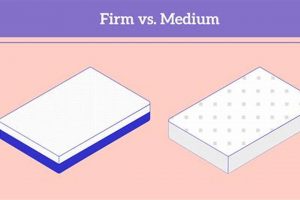
The selection of sleep surfaces often involves choosing between those offering a yielding, soft feel and those providing substantial support. The former typically allows the sleeper to sink into the material, conforming to body contours. The latter, in contrast, maintains a more even plane, resisting significant compression under weight. The differing characteristics cater to varied preferences and physiological needs.
The impact of selecting one type over the other extends to spinal alignment, pressure point relief, and overall sleep quality. Throughout history, bedding materials have evolved from rudimentary straw and animal hides to sophisticated constructions incorporating advanced technologies. Understanding the properties of different sleep surfaces is paramount for achieving optimal rest and promoting long-term musculoskeletal health. The ability to choose the surface that best suits individual requirements can have profound effects on daily well-being.
The subsequent sections will delve into specific considerations for selecting appropriate sleep surfaces, examining factors such as sleep position, body weight, and potential health conditions. Detailed analysis will be presented to inform readers about the objective characteristics of different constructions and materials, empowering them to make knowledgeable decisions regarding their sleep environment.
Guidance on Selecting a Sleep Surface
The selection of a sleep surface requires careful consideration. Aligning the surface characteristics with individual needs and physical attributes is crucial for optimal rest and long-term well-being. The following guidelines offer a framework for making an informed decision.
Tip 1: Assess Sleep Position. Individuals who primarily sleep on their side may benefit from a yielding surface that allows the shoulder and hip to sink in, maintaining spinal alignment. Back sleepers often require firmer support to prevent excessive curvature of the spine. Stomach sleepers typically need a more rigid surface to avoid arching the back unnaturally.
Tip 2: Account for Body Weight. Heavier individuals generally require a firmer surface to prevent excessive sinking and maintain proper support. Lighter individuals may find a yielding surface more comfortable, allowing for pressure point relief without compromising spinal alignment.
Tip 3: Consider Existing Health Conditions. Individuals with back pain, arthritis, or other musculoskeletal issues should consult with a healthcare professional to determine the most suitable sleep surface. Specific conditions may necessitate particular levels of support and pressure distribution.
Tip 4: Evaluate Material Composition. Different materials offer varying levels of support, contouring, and temperature regulation. Memory foam contours to the body but can retain heat. Latex provides resilient support and breathability. Innerspring systems offer traditional support but may transfer motion more readily.
Tip 5: Conduct Thorough Research. Investigate different brands and models, paying close attention to specifications and customer reviews. Consider factors such as warranty, trial periods, and return policies to ensure satisfaction with the purchase.
Tip 6: Prioritize Spinal Alignment. Regardless of personal preference, maintaining proper spinal alignment is paramount. Evaluate the surface’s ability to keep the spine in a neutral position, minimizing pressure points and promoting healthy posture.
Tip 7: Consider Partner Preferences. If sharing a sleep surface, compromise may be necessary. Explore options such as dual-firmness models or surfaces designed to minimize motion transfer, accommodating individual needs without compromising overall comfort.
Selecting an appropriate sleep surface involves a multifaceted assessment of individual requirements and product characteristics. Prioritizing spinal alignment, material properties, and existing health conditions is essential for achieving optimal sleep quality and long-term physical well-being.
The subsequent discussion will explore the practical implications of these guidelines, providing further insight into the factors that influence the selection of a sleep surface.
1. Spinal Alignment

Maintaining proper spinal alignment during sleep is paramount for musculoskeletal health and overall well-being. The sleep surface plays a critical role in either supporting or compromising this alignment. The choice between a yielding or resilient sleep surface directly influences the spine’s ability to maintain its natural curvature throughout the night.
- Support Distribution
A sleep surface must distribute weight evenly to prevent localized pressure points and ensure the spine remains in a neutral position. A surface that is too soft may allow the heavier parts of the body, such as the hips and shoulders, to sink too deeply, leading to spinal misalignment. Conversely, a surface that is too firm may not conform to the body’s contours, resulting in gaps between the body and the surface, also compromising alignment.
- Cervical Alignment
The cervical spine, or neck, is particularly susceptible to misalignment during sleep. The height and firmness of the pillow, in conjunction with the sleep surface, contribute to maintaining proper cervical alignment. An inappropriately firm sleep surface may require a higher pillow to fill the gap between the neck and the surface, potentially causing strain. An overly soft surface, conversely, may negate the need for a pillow, but may not provide adequate support for the neck.
- Lumbar Support
The lumbar region, or lower back, is often a site of pain and discomfort. Adequate lumbar support is essential for preventing and alleviating lower back pain. A sleep surface that provides insufficient lumbar support may exacerbate existing conditions or lead to the development of new pain. The degree of yielding or resilience in the sleep surface directly affects the lumbar region’s ability to maintain its natural curvature.
- Sleep Position Influence
Different sleep positions require varying degrees of support to maintain spinal alignment. Side sleepers generally benefit from a surface that allows the shoulder and hip to sink in, while back sleepers often require more uniform support. Stomach sleeping is generally discouraged due to its tendency to cause hyperextension of the spine. The appropriateness of the sleep surface is therefore intrinsically linked to the individual’s preferred sleep position.
The interplay between spinal alignment and sleep surface firmness is complex and multifaceted. Selecting the most appropriate surface requires careful consideration of individual anatomy, sleep position, and any pre-existing musculoskeletal conditions. The goal is to minimize stress on the spine and promote a comfortable, restorative sleep environment.
2. Pressure Point Relief

Pressure point relief, a critical consideration in sleep surface selection, is directly influenced by the construction and characteristics of the mattress. Elevated pressure on specific areas of the body, such as the hips, shoulders, and knees, can impede circulation and trigger discomfort, disrupting sleep cycles. The capacity of a sleep surface to redistribute weight and minimize concentrated pressure directly relates to its ability to facilitate restful sleep. A yielding sleep surface, often associated with materials like memory foam or plush padding, is designed to conform to the body’s contours, thereby increasing contact area and decreasing pressure at specific points. For example, a side sleeper may experience reduced shoulder and hip pain on a yielding surface that allows these areas to sink in, alleviating pressure. Conversely, a firm surface may concentrate pressure, particularly for individuals with bony prominences.
The effectiveness of pressure point relief depends not only on the mattress’s inherent properties but also on the sleeper’s weight and sleep position. A lightweight individual may find adequate pressure relief on a firmer mattress, while a heavier individual may require a plusher surface to achieve the same level of comfort. Furthermore, individuals with pre-existing conditions, such as arthritis or fibromyalgia, may benefit significantly from a sleep surface specifically designed to minimize pressure points. The design of the mattress, including the layering of different materials, can enhance pressure relief. For instance, a mattress with a top layer of memory foam over a supportive core can provide both contouring and adequate support, optimizing pressure distribution.
In summary, the relationship between sleep surface firmness and pressure point relief is nuanced and depends on a confluence of factors. While a plusher surface generally offers enhanced pressure relief, the ideal choice is contingent upon individual weight, sleep position, and health conditions. A careful evaluation of these factors is essential for selecting a sleep surface that promotes restorative sleep and minimizes discomfort.
3. Material Density

Material density plays a crucial role in determining the overall feel and performance characteristics of a sleep surface. In the context of selecting a sleep surface, density directly impacts the level of support, durability, and contouring capability. A high-density material generally provides enhanced support and resistance to compression, contributing to a firmer feel. Conversely, lower-density materials often offer increased plushness and conformity, resulting in a softer experience. The correlation is not merely about firmness, but also about longevity and the ability of the material to maintain its properties over time. High-density foams, for example, resist sagging and compression better than lower-density counterparts, thus preserving the integrity of the support structure.
The type of material significantly influences the relationship between density and perceived firmness. A high-density latex foam may feel firmer than a low-density memory foam, even if the latter is marketed as a “firm” option. This is due to the inherent resilience of latex compared to the conforming properties of memory foam. Consequently, material density should be considered in conjunction with the specific material type to accurately assess the overall feel of the mattress. Manufacturers often blend different materials with varying densities to achieve a desired balance of support, comfort, and durability. The strategic layering of high-density support cores with lower-density comfort layers is a common technique to optimize the sleep experience.
In summary, material density is a primary determinant of the firmness, support, and longevity of a sleep surface. While higher density generally translates to a firmer and more durable product, the type of material also plays a crucial role in the final perception of firmness and comfort. A careful consideration of both material type and density is essential for selecting a sleep surface that aligns with individual needs and preferences, ensuring optimal sleep quality and long-term satisfaction. Understanding this relationship enables consumers to make informed decisions, navigating the complexities of sleep surface selection with greater confidence.
4. Body Weight Support

The selection of a sleep surface is significantly influenced by body weight, dictating the necessary degree of support to maintain spinal alignment and prevent pressure point accumulation. Inadequate support can result in spinal misalignment, leading to back pain and discomfort. Heavier individuals typically require a firmer surface to prevent excessive sinking, thereby maintaining a neutral spinal position. Conversely, lighter individuals may find a yielding surface more comfortable, allowing for sufficient contouring and pressure distribution without compromising support. The interplay between body weight and surface firmness is crucial for achieving optimal sleep posture and minimizing the risk of musculoskeletal issues.
For example, a person weighing over 200 pounds might experience significant sinking into a plush mattress, potentially leading to spinal curvature and discomfort in the lower back. A firmer mattress, in this case, would provide the necessary resistance to maintain spinal alignment. On the other hand, a person weighing under 130 pounds might not experience sufficient contouring on a firm mattress, resulting in pressure points at the hips and shoulders. This example underscores the importance of matching the mattress firmness to the individual’s body weight. The design of a hybrid mattress, which combines a supportive core with a comfort layer, attempts to address this variation by providing both support and contouring.
In conclusion, body weight is a primary determinant of appropriate mattress firmness. The ability of a sleep surface to adequately support body weight is essential for maintaining spinal alignment, preventing pressure points, and promoting restful sleep. Challenges arise in cases where individuals of significantly different weights share a bed, often necessitating a compromise or the selection of a mattress with zoned support. Understanding the connection between body weight and support is paramount for selecting a mattress that promotes both comfort and long-term spinal health.
5. Sleep Position
Sleep position significantly dictates the appropriateness of sleep surface firmness. Individuals adopting the side sleeping position often require a more yielding sleep surface to accommodate the shoulders and hips. A firmer surface may create pressure points, impeding circulation and leading to discomfort. The cause-and-effect relationship here is direct: a surface that does not conform to the body’s contours in the side sleeping position will likely result in disrupted sleep.
Conversely, individuals who predominantly sleep on their backs often benefit from a firmer sleep surface. This firmer surface provides even support, preventing the pelvis from sinking excessively, which could lead to lower back strain. A pl
ush surface, in this case, might lack the necessary support to maintain proper spinal alignment. For stomach sleepers, a firm surface is typically recommended to minimize spinal hyperextension.
The practical significance of understanding this relationship is considerable. Improper mattress selection based on sleep position can lead to chronic pain and sleep disturbances. Awareness of how sleep position interacts with mattress firmness allows for more informed decisions, ultimately promoting better sleep quality and musculoskeletal health. The connection underscores the importance of considering individual sleep habits when choosing a sleep surface.
Frequently Asked Questions Regarding Plush or Firm Mattress Selection
The following questions address common concerns and misconceptions related to choosing between sleep surfaces of varying firmness.
Question 1: What are the primary differences between a yielding and a resilient sleep surface?
A yielding surface typically conforms to the body’s contours, providing enhanced pressure relief. A resilient surface offers more uniform support, resisting significant compression under weight.
Question 2: How does body weight influence the selection of an appropriate sleep surface?
Heavier individuals generally require a firmer surface to prevent excessive sinking and maintain spinal alignment. Lighter individuals may find a yielding surface more comfortable.
Question 3: What role does sleep position play in determining mattress firmness?
Side sleepers often benefit from a yielding surface that allows the shoulder and hip to sink in. Back sleepers typically require a firmer surface to maintain spinal alignment. Stomach sleepers generally need a rigid surface.
Question 4: Can a specific health condition necessitate a particular type of mattress?
Individuals with back pain, arthritis, or other musculoskeletal issues should consult with a healthcare professional to determine the most suitable sleep surface. Certain conditions may require specific levels of support and pressure distribution.
Question 5: What is the importance of spinal alignment in sleep surface selection?
Maintaining proper spinal alignment is paramount for musculoskeletal health. The sleep surface should support the spine in a neutral position, minimizing pressure points and promoting healthy posture.
Question 6: How can conflicting preferences be addressed when sharing a sleep surface?
Explore options such as dual-firmness models or surfaces designed to minimize motion transfer, accommodating individual needs without compromising overall comfort.
Selecting an appropriate sleep surface requires a careful assessment of individual needs and physical attributes. Prioritizing spinal alignment, material properties, and existing health conditions is essential for achieving optimal sleep quality.
The subsequent section will provide practical guidance on evaluating different mattress types and materials.
Plush or Firm Mattress
The preceding discussion has explored the critical distinctions between yielding and resilient sleep surfaces, emphasizing the importance of individual assessment in making an informed decision. Key factors such as sleep position, body weight, and pre-existing health conditions significantly influence the suitability of a given surface. Furthermore, the material composition and density directly impact the support and longevity of the product. Prioritizing spinal alignment remains paramount, regardless of individual preferences.
The selection of a sleep surface is a significant investment in long-term health and well-being. Therefore, thorough research, careful evaluation of personal needs, and, when possible, consultation with healthcare professionals are strongly encouraged. The information presented aims to empower individuals to make knowledgeable choices, contributing to improved sleep quality and overall physical health. Continued advancements in sleep technology promise further refinements in sleep surface design, potentially leading to more personalized and effective solutions in the future.



![Best Mattress Firm in Prescott Valley, AZ: [Deals!] | Organic & Natural Mattress Buyer’s Guide: Non-Toxic Sleep Solutions](https://mattressworldpa.com/wp-content/uploads/2025/07/th-9414-300x200.jpg "Best Mattress Firm in Prescott Valley, AZ: [Deals!] Organic & Natural Mattress Buyer’s Guide: Non-Toxic Sleep Solutions")