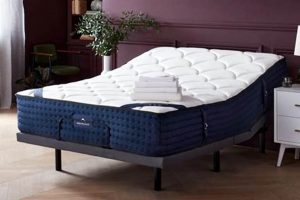
![Best Queen Adjustable Bed Mattress [Guide] Comfort!](data:image/svg+xml;base64,PHN2ZyB4bWxucz0iaHR0cDovL3d3dy53My5vcmcvMjAwMC9zdmciIHdpZHRoPSI0NzQiIGhlaWdodD0iMTAwIiB2aWV3Qm94PSIwIDAgNDc0IDEwMCI+PHJlY3Qgd2lkdGg9IjEwMCUiIGhlaWdodD0iMTAwJSIgc3R5bGU9ImZpbGw6I2NmZDRkYjtmaWxsLW9wYWNpdHk6IDAuMTsiLz48L3N2Zz4= "Best Queen Adjustable Bed Mattress [Guide] Comfort! Organic & Natural Mattress Buyer’s Guide: Non-Toxic Sleep Solutions")
A sleeping surface, sized to fit a queen adjustable bed frame, constitutes a critical component of modern sleep systems. This specialized product provides support and comfort while conforming to the articulated positions of an adjustable base. These typically measure 60 inches wide and 80 inches long, offering ample space for individuals or couples.
The importance of selecting a compatible sleeping surface for an adjustable bed lies in optimizing both comfort and the operational lifespan of the system. Benefits range from enhanced pressure relief and improved spinal alignment to facilitating easier reading or television viewing in bed. Historically, such features were considered luxury items, but increased awareness of sleep health has driven broader adoption of these systems.
The subsequent sections will delve into the key characteristics to consider when selecting the appropriate model, explore the diverse range of materials and construction techniques employed, and offer guidance on ensuring longevity and optimal performance through proper care and maintenance. Understanding these elements is essential for maximizing the advantages of this investment.
Guidance for Optimal Selection and Use
The following guidelines aim to assist in selecting and maintaining a sleeping surface designed for use with a queen adjustable bed frame, ensuring long-term comfort and functionality.
Tip 1: Prioritize Compatibility: Ensure the selected model is explicitly designed for adjustable bed frames. Incompatible models may lack the required flexibility and could be damaged by the articulation of the base.
Tip 2: Evaluate Material Composition: Consider the advantages and disadvantages of various materials, such as memory foam, latex, or hybrid constructions. Each material offers a distinct feel and level of support. Memory foam, for example, conforms closely to the body, while latex offers greater responsiveness.
Tip 3: Assess Support and Pressure Relief: Evaluate the ability of the selected model to provide adequate spinal support and pressure relief, particularly in common pressure points such as the shoulders and hips. Improper support can exacerbate existing pain or discomfort.
Tip 4: Check for Motion Isolation: If the bed is shared, prioritize motion isolation features to minimize disturbance caused by movement during the night. Models with individually wrapped coils or dense foam layers typically exhibit superior motion isolation.
Tip 5: Consider Edge Support: Evaluate the level of edge support offered by the model. Adequate edge support prevents sagging and facilitates easier ingress and egress from the bed.
Tip 6: Review Warranty and Return Policies: Thoroughly review the manufacturer’s warranty and return policies before making a purchase. A comprehensive warranty provides protection against defects and premature wear.
Tip 7: Follow Manufacturer’s Guidelines: Adhere to the manufacturer’s specific instructions for cleaning, rotating, and otherwise maintaining the sleeping surface. Proper care extends the lifespan and preserves the integrity of the product.
Implementing these tips will enhance the overall sleep experience and maximize the return on investment. Selecting the correct queen adjustable bed surface and adhering to proper maintenance practices are crucial for long-term satisfaction.
The subsequent section will provide specific recommendations based on common needs and preferences, furthering the understanding of this important product category.
1. Compatibility

Compatibility, in the context of a queen adjustable bed sleeping surface, is not merely a fit in dimensions but a harmonious interplay of materials, design, and function. It directly influences the bed’s articulation, support, and longevity, establishing it as a critical consideration.
- Flexibility of Materials
Material composition dictates the sleeping surface’s ability to conform to the adjustable base’s various positions without damage or degradation. Traditional innerspring models, for instance, often lack the necessary flexibility and are prone to coil damage when repeatedly bent. Conversely, memory foam, latex, and specifically engineered hybrid models are designed to withstand the stresses of articulation.
- Thickness and Weight Considerations
An overly thick or heavy surface can strain the adjustable base’s motor and potentially impede its functionality. The system’s lifting capacity must be adequate to accommodate the surface’s weight, especially considering the weight of the occupants. Exceeding the weight limit can lead to premature motor failure or damage to the frame itself.
- Retention Systems and Slippage Prevention
Horizontal movement between the sleeping surface and the adjustable base can occur during articulation, causing discomfort and potential damage. Compatibility includes features like non-slip fabrics or retention systems that secure the surface to the base, preventing slippage and maintaining consistent positioning.
- Warranty and Compliance Statements
Manufacturers often specify compatible surface types in the adjustable base’s warranty. Using an incompatible product can void the warranty, leaving the consumer liable for repairs or replacements should the base malfunction as a result. Adhering to the manufacturer’s recommendations ensures both the base and the sleeping surface operate as intended and remain covered under warranty.
These facets of compatibility underscore its pivotal role in ensuring optimal performance and durability of a queen adjustable bed system. Neglecting these considerations can lead to compromised comfort, premature wear, and voided warranties, highlighting the importance of careful evaluation and adherence to manufacturer guidelines.
2. Flexibility
Flexibility constitutes a critical attribute of a sleeping surface intended for use with a queen adjustable bed frame. Its relevance stems from the inherent need for the sleeping surface to conform to the articulating positions of the base without compromising structural integrity or comfort.
- Material Conformability
Material composition dictates the capacity of the sleeping surface to contour to the adjustable base. Materials such as memory foam, latex, and certain hybrid constructions exhibit higher conformability compared to traditional innerspring systems. Insufficient conformability can lead to uncomfortable pressure points and reduced support in certain articulated positions. Example: A stiff innerspring may create a “hammocking” effect when the head and foot are raised, concentrating pressure on the mid-section.
- Point Elasticity
Point elasticity refers to the ability of a material to compress on
ly in the area of direct pressure, without affecting surrounding areas. This characteristic is vital for maintaining consistent support across the surface when the bed is adjusted. Materials with high point elasticity, like latex, respond precisely to the contours of the adjustable base, ensuring uniform pressure distribution. Example: A sleeping surface lacking point elasticity might exhibit excessive sinkage in areas where the base is raised, compromising spinal alignment. - Durability Under Stress
Repeated articulation of the adjustable base subjects the sleeping surface to continuous bending and flexing. Flexibility must be coupled with durability to prevent premature degradation or damage to the materials. Inferior materials may develop cracks, tears, or permanent indentations over time, compromising both comfort and support. Example: Low-density memory foam might compress permanently under the stress of frequent adjustments, leading to uneven support.
- Construction Design
The internal construction of the sleeping surface plays a significant role in its overall flexibility. Designs incorporating segmented layers or flexible support cores enhance the ability of the model to conform to the adjustable base. Traditional, tightly-packed coil systems often lack the necessary flexibility. Example: A sleeping surface with individually wrapped coils or a segmented foam core will generally exhibit greater flexibility than one with a continuous, rigid coil system.
The interplay between material properties, construction design, and durability under stress determines the overall flexibility of a queen adjustable bed sleeping surface. Choosing a model with appropriate flexibility ensures both optimal comfort and extended lifespan of the entire adjustable bed system. An appropriate selection promotes comfortable sleep, regardless of the bed’s position.
3. Material Density

Material density, within the context of a queen adjustable bed sleeping surface, directly impacts several critical performance parameters. It influences the sleeping surface’s support characteristics, durability, and thermal properties. Higher density materials, generally speaking, offer greater resistance to compression, resulting in firmer support and enhanced longevity. Conversely, lower density materials tend to exhibit softer feels and may be more susceptible to premature wear. For example, a high-density memory foam model will typically provide superior pressure relief and maintain its shape longer than a lower-density counterpart.
The choice of material density must align with the user’s preferences and needs. Individuals requiring substantial spinal support may benefit from the enhanced firmness of a higher-density model. Conversely, those seeking a plush, conforming feel may opt for lower-density options. However, it’s important to recognize that excessively low density can compromise long-term durability and may not adequately withstand the stresses imposed by an adjustable bed frame. Practical examples include the use of high-density polyurethane foam in the support core of a hybrid model to provide lasting stability and the incorporation of variable-density memory foam layers to achieve targeted pressure relief in different zones of the body.
In summary, material density is a pivotal factor in determining the overall performance and suitability of a queen adjustable bed sleeping surface. Careful consideration of this parameter, alongside other relevant factors such as material type and construction design, is essential for selecting a model that provides optimal support, comfort, and durability. Neglecting material density can lead to premature sagging, reduced support, and ultimately, a diminished sleep experience. Further research into specific material densities and their corresponding performance characteristics is recommended for informed decision-making.
4. Support Zones

Support zones, in the context of a queen adjustable bed sleeping surface, represent strategically engineered areas within the sleeping surface designed to provide targeted support to different regions of the body. The principle underlying these zones is the recognition that various body parts exert differing levels of pressure on the sleeping surface. Consequently, uniform support across the entire area can lead to inadequate support in some regions and excessive support in others. The practical effect of well-designed support zones is enhanced spinal alignment, reduced pressure points, and improved overall comfort. As an example, a sleeping surface might incorporate firmer support in the lumbar region to prevent sagging and maintain proper spinal curvature, while offering softer support in the shoulder region to accommodate side sleeping and minimize pressure on the joints.
The implementation of support zones can be achieved through various construction techniques. Variable-density foams, strategically placed coils, or specialized gel layers are common methods. The effectiveness of support zones is directly correlated to their precise placement and the degree of differentiation in support levels. Incorrectly positioned zones or inadequate variation in firmness can negate the intended benefits and potentially exacerbate discomfort. Real-world applications include sleeping surfaces designed with three, five, or even seven distinct support zones, each tailored to address the specific needs of the head, shoulders, lumbar region, hips, legs, and feet. The significance of understanding support zones lies in the ability to select a queen adjustable bed sleeping surface that aligns with individual body contours and sleeping positions, maximizing the potential for restful and restorative sleep.
In summary, support zones are an integral component of a high-quality queen adjustable bed sleeping surface. Their presence and proper design are crucial for optimizing spinal alignment, pressure relief, and overall comfort. While the concept is relatively straightforward, the execution requires precision and a thorough understanding of biomechanics. The challenge lies in identifying a sleeping surface with support zones that accurately correspond to individual needs and preferences. Overcoming this challenge necessitates careful evaluation of product specifications and, ideally, testing the sleeping surface in various adjustable positions to ensure optimal performance. Failure to account for support zones may result in a compromised sleep experience, negating the benefits of the adjustable bed frame.
5. Motion Isolation
Motion isolation, within the context of a queen adjustable bed mattress, refers to the sleeping surface’s ability to minimize the transfer of movement from one area of the bed to another. This characteristic is particularly pertinent for couples sharing a bed, as it mitigates disturbances caused by one partner’s movements during sleep. The cause of motion transfer is the inherent interconnectedness of materials within a sleeping surface; when one section is compressed, adjacent sections are affected to varying degrees. The absence of adequate motion isolation can result in disrupted sleep cycles, reduced sleep quality, and increased fatigue. For example, if one partner frequently tosses and turns, the other par
tner may experience these movements as jolts or vibrations, hindering their ability to achieve deep, restful sleep. The importance of motion isolation as a component of a queen adjustable bed mattress is magnified by the adjustability feature. Raising or lowering sections of the bed can amplify motion transfer if the mattress lacks sufficient isolation properties.
Real-life examples underscore the practical significance of this understanding. Consider a scenario where one partner works night shifts and returns to bed while the other is still asleep. A mattress with poor motion isolation will transmit the returning partner’s movements, potentially awakening the sleeping partner. Conversely, a mattress with excellent motion isolation will absorb these movements, allowing both partners to maintain uninterrupted sleep. The selection of materials and construction techniques directly impacts motion isolation performance. Memory foam and latex, due to their viscoelastic properties, tend to excel at absorbing motion. Individually wrapped coils, as opposed to interconnected coil systems, also contribute to enhanced motion isolation by allowing each coil to respond independently to pressure.
In conclusion, motion isolation is a critical factor to consider when selecting a queen adjustable bed mattress, especially for co-sleepers. The ability to minimize motion transfer contributes significantly to improved sleep quality and overall well-being. Challenges in assessing motion isolation stem from the subjective nature of the experience and the lack of standardized testing methods. However, by understanding the principles of motion transfer and considering material properties and construction techniques, informed decisions can be made to optimize sleep quality in a shared bed. The choice directly influences the effectiveness of the adjustable bed system in promoting restful sleep for both occupants.
Frequently Asked Questions
The following questions address common inquiries regarding queen adjustable bed sleeping surfaces. These responses aim to provide clarity and aid in informed decision-making.
Question 1: What mattress types are compatible with a queen adjustable bed frame?
Memory foam, latex, and hybrid models that incorporate individually wrapped coils are generally compatible. Traditional innerspring models may lack the necessary flexibility and are often not recommended.
Question 2: How does material density affect performance on an adjustable base?
Material density influences support and durability. Higher-density materials typically offer firmer support and greater resistance to compression, while lower-density materials provide a softer feel but may be less durable.
Question 3: Are support zones necessary for optimal comfort on a queen adjustable bed mattress?
Support zones can enhance comfort and spinal alignment by providing targeted support to different regions of the body. However, their effectiveness depends on proper placement and the degree of differentiation in support levels.
Question 4: What factors contribute to motion isolation in this type of sleeping surface?
Material composition, such as the use of memory foam or latex, and construction techniques, such as individually wrapped coils, contribute to motion isolation by minimizing the transfer of movement across the surface.
Question 5: How does the weight of the sleeping surface impact the adjustable bed frame’s performance?
An excessively heavy sleeping surface can strain the adjustable base’s motor and potentially impede its functionality. It is crucial to ensure the base’s lifting capacity is adequate to accommodate the sleeping surface’s weight.
Question 6: Can an incompatible mattress void the adjustable bed frame’s warranty?
Yes, using a sleeping surface not explicitly designed for adjustable bed frames can void the warranty, leaving the consumer liable for repairs should the base malfunction.
Selecting an appropriate queen adjustable bed sleeping surface requires careful consideration of material, construction, and compatibility factors. Adhering to manufacturer recommendations ensures optimal performance and long-term durability.
The subsequent section will delve into specific product recommendations based on common needs and preferences, further enhancing the understanding of this important product category.
Conclusion
The preceding exploration has detailed critical factors influencing the selection and utilization of a queen adjustable bed mattress. Key considerations include material compatibility, flexibility, density, support zones, and motion isolation. Understanding these characteristics enables informed decision-making when procuring a sleeping surface designed for an adjustable bed frame. Failure to account for these variables can lead to compromised comfort, premature wear, and diminished functionality of the overall system.
Ultimately, the appropriate selection of a queen adjustable bed mattress is an investment in long-term sleep health and well-being. Careful consideration of individual needs and preferences, coupled with a thorough understanding of the product specifications, is paramount. Continued advancements in materials science and engineering promise to further refine and enhance the performance of these systems, underscoring the ongoing significance of informed consumer choices in this evolving market.