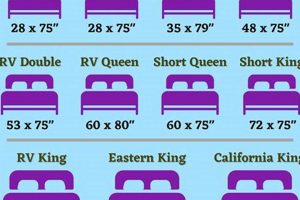
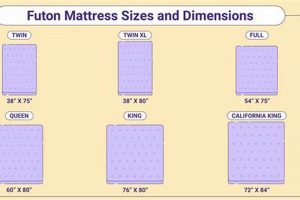
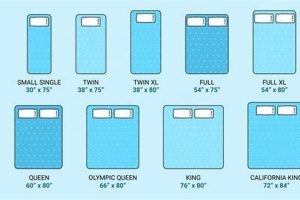
Mattress measurements, specifically those categorized as “queen” and “full,” represent standard sizes widely used in the bedding industry. A “full” size, also known as a double, generally measures approximately 54 inches wide and 75 inches long. A “queen” size is larger, typically measuring around 60 inches wide and 80 inches long. These dimensions define the sleeping surface area and directly impact the suitability of a mattress for individual sleepers or couples, and the overall space it occupies within a bedroom.
Understanding the precise measurements of standard mattress options is essential for various reasons. Accurate dimensions influence purchasing decisions, ensuring the chosen mattress fits the bed frame and bedroom layout. Knowledge of size differences allows consumers to select a bed that comfortably accommodates their sleeping habits and number of occupants. Historically, these standard sizes evolved to accommodate changing lifestyle preferences and bedroom sizes, impacting furniture design and manufacturing processes.
The following sections will delve deeper into the specific uses and considerations related to both the “full” and “queen” mattress categories, examining factors like suitability for different sleeper types, bedroom size recommendations, and potential cost implications. Further discussion will explore accessories and bedding options that complement each size, providing a comprehensive understanding of these popular mattress choices.
Considerations for Queen and Full Size Mattress Dimensions
Selecting the appropriate mattress size involves careful evaluation of space constraints, sleeper needs, and budget. The following tips provide guidance on navigating decisions related to mattress measurements.
Tip 1: Evaluate Room Dimensions. Before considering specific sizes, accurately measure the available space. A full-size mattress may be more suitable for smaller rooms, preventing overcrowding. A queen-size mattress requires more square footage and is better suited to larger bedrooms.
Tip 2: Assess Sleeper Occupancy. A full-size mattress comfortably accommodates a single adult sleeper. Couples generally benefit from the increased sleeping surface offered by a queen-size mattress. Couples with larger body types might consider even larger sizes.
Tip 3: Account for Sleep Style. Individuals who move frequently during sleep require more space. A queen-size mattress allows for greater freedom of movement compared to a full-size option.
Tip 4: Consider Future Needs. Anticipate potential changes in living situations or sleeper occupancy. Selecting a larger mattress, such as a queen, provides flexibility for future needs.
Tip 5: Budget Accordingly. Mattress prices vary by size and material. Full-size mattresses typically have a lower price point than queen-size options. Evaluate the cost difference against the benefits of increased sleeping space.
Tip 6: Factor in Bedding Availability. While bedding is available for both sizes, queen-size bedding often offers a wider selection of styles and materials. Ensure that desired bedding options are readily available for the chosen size.
Tip 7: Account for Frame Compatibility. Ensure that the selected mattress size is compatible with the existing or intended bed frame. Mismatched sizes can lead to instability or damage.
Careful consideration of these points allows for informed decisions regarding mattress dimensions, ensuring optimal comfort and practicality.
These considerations regarding “queen and full size mattress dimensions” will inform the concluding sections, guiding decisions based on individual requirements and preferences.
1. Width Differences

The variation in width between queen and full-size mattresses constitutes a fundamental distinction affecting both sleeper comfort and room arrangement. This dimensional disparity directly influences suitability for single sleepers, couples, and available bedroom space. Careful consideration of width is therefore crucial in mattress selection.
- Single Sleeper Space
The increased width of a queen-size mattress (approximately 60 inches) offers a single sleeper ample space to move and stretch out during the night. This can be particularly beneficial for individuals who tend to change positions frequently or prefer a feeling of spaciousness. In contrast, the narrower full-size mattress (approximately 54 inches) may feel more restrictive to these sleepers, potentially impacting sleep quality.
- Accommodation of Couples
The additional width afforded by a queen-size mattress proves significantly advantageous when accommodating two sleepers. Each individual has more personal space, minimizing disturbances caused by partner movement. A full-size mattress, while capable of fitting two adults, provides considerably less personal space, potentially leading to discomfort and disrupted sleep due to proximity and movement.
- Room Size Compatibility
The width difference directly impacts how well a mattress fits within a bedroom. A full-size mattress, being narrower, is often a more practical choice for smaller rooms, allowing for easier furniture placement and movement. A queen-size mattress requires more floor space, making it less suitable for compact bedrooms. Overcrowding a room can detract from its aesthetic appeal and overall functionality.
- Impact on Accessory Selection
The width dimension influences the choice of bedding accessories, such as sheets and comforters. Queen-size mattresses require larger, more generously sized linens compared to full-size options. This difference in accessory size should be considered when budgeting for bedding to ensure proper fit and coverage.
In summary, the width difference between queen and full-size mattresses is not merely a matter of inches but a crucial determinant of comfort, space utilization, and overall sleep quality. Selecting the appropriate width ensures both restful sleep and a well-proportioned bedroom environment.
2. Length Variations

Length variations constitute a significant element distinguishing queen and full-size mattresses, exerting a direct influence on suitability for diverse individuals. The difference in length, though seemingly minor, affects ergonomic support, especially for taller individuals, and impacts the overall comfort experienced during sleep. Neglecting the length dimension during mattress selection can result in inadequate legroom, compromised spinal alignment, and subsequently, diminished sleep quality.
The standard full-size mattress measures approximately 75 inches in length, which may prove insufficient for individuals exceeding 5’10” in height. Consequently, taller sleepers might experience discomfort as their feet dangle over the mattress edge, causing pressure points and disrupting sleep. Conversely, a queen-size mattress, typically 80 inches long, provides an additional five inches of legroom, offering enhanced support and comfort for taller users. This additional length ensures that the entire body remains supported, promoting proper spinal alignment and minimizing pressure on joints. A practical example includes couples where one partner is significantly taller than the other; a queen-size mattress accommodates the taller partner’s needs without compromising the comfort of the shorter individual.
In conclusion, the length variation between queen and full-size mattresses has practical implications for sleeper comfort and spinal health. Choosing a mattress with adequate length is crucial, particularly for taller individuals, to ensure proper ergonomic support and restful sleep. Failing to account for length can lead to chronic discomfort and negatively impact long-term sleep quality. Selecting the appropriate length is therefore a critical component of informed mattress selection and overall well-being.
3. Room Compatibility

Room compatibility, in the context of mattress selection, refers to the proportional relationship between a mattress’s physical dimensions and the size of the bedroom it occupies. This relationship is critical for maintaining functional space, facilitating ease of movement, and creating a balanced aesthetic environment. Selecting a mattress that is disproportionately large for a room can lead to overcrowding, impeding daily activities and negatively impacting the room’s visual appeal.
- Minimum Room Size Requirements
Full-size mattresses, measuring approximately 54 inches wide and 75 inches long, are generally suitable for smaller bedrooms. A room size of at least 10 feet by 10 feet is often recommended to accommodate a full-size mattress while allowing for adequate walking space and furniture placement. Queen-size mattresses, at approximately 60 inches wide and 80 inches long, require larger rooms. A minimum room size of 10 feet by 12 feet is typically recommended to comfortably house a queen-size mattress and associated furniture. Failure to adhere to these minimum size recommendations can result in a cramped and dysfunctional room layout.
- Furniture Placement Considerations
Room compatibility extends beyond merely fitting the mattress into the space; it involves careful consideration of furniture placement. The dimensions of the mattress influence the placement of other essential furniture pieces, such as nightstands, dressers, and chairs. A larger mattress, like a queen, can limit placement options, potentially obstructing doorways or creating awkward traffic patterns. Conversely, a full-size mattress offers greater flexibility in furniture arrangement within a smaller room, allowing for a more balanced and functional layout. Prior planning of furniture placement is essential before selecting a mattress size.
- Visual Balance and Aesthetics
The relationship between mattress dimensions and room size contributes significantly to the overall visual balance and aesthetics of the space. A mattress that is too large for a room can overwhelm the space, creating a sense of claustrophobia. A smaller mattress, like a full, can appear dwarfed in a larger room, resulting in a lack of visual cohesion. Achieving visual balance involves selecting a mattress size that complements the room’s proportions and enhances its aesthetic appeal. Color schemes, wall decor, and lighting should also be considered alongside mattress dimensions to create a harmonious environment.
- Impact on Traffic Flow
Mattress dimensions directly influence the flow of movement within a bedroom. An overly large mattress can restrict pathways, creating obstacles and impeding ease of movement. Adequate space should be maintained around the bed to allow for comfortable passage and access to furniture. Careful consideration of mattress dimensions and furniture placement ensures that the room remains functional and navigable. A well-planned layout promotes a sense of spaciousness and enhances the overall usability of the room.
In summary, room compatibility is a multifaceted consideration that extends beyond simply fitting a mattress into a room. It encompasses minimum size requirements, furniture placement, visual balance, and traffic flow. Selecting a mattress size that is appropriately proportioned to the room dimensions contributes to a more functional, aesthetically pleasing, and comfortable living space. Neglecting room compatibility can result in a cramped, dysfunctional, and visually unappealing environment, underscoring the importance of careful planning and consideration.
4. Sleeper Accommodation

Sleeper accommodation, in the context of mattress selection, directly relates to how effectively a mattress fulfills the sleep needs of its user or users. The dimensions of queen and full-size mattresses dictate their suitability for varying sleeper profiles, considering factors such as individual size, sleeping habits, and the presence of a partner.
- Single Sleeper Comfort
For a single sleeper, a full-size mattress provides sufficient space for comfortable rest, especially for individuals of average height and build. The dimensions allow for movement and position changes without significant constraint. However, taller individuals or those who prefer a wider sleeping surface might find a queen-size mattress more conducive to undisturbed sleep. The additional width offers greater freedom of movement and prevents the sensation of being confined to the edges of the mattress.
- Accommodation of Couples
The ability of a mattress to comfortably accommodate two sleepers is a critical consideration. While a full-size mattress can technically fit two adults, the reduced space often leads to compromised sleep quality for both individuals. The limited surface area restricts movement, increases the likelihood of partner disturbance, and can result in overheating due to increased proximity. A queen-size mattress provides significantly more space per sleeper, reducing these issues and promoting more restful sleep for couples.
- Sleep Style and Positional Preferences
Sleeping style, whether one is a back, side, or stomach sleeper, influences the optimal mattress size. Side sleepers, in particular, often benefit from additional space to accommodate their arm and leg positions. The extra width of a queen-size mattress allows side sleepers to adopt their preferred postures without encroaching on a partner’s space or feeling restricted. Active sleepers, who change positions frequently throughout the night, also benefit from the larger surface area provided by a queen-size mattress.
- Body Size and Weight Distribution
Body size and weight distribution are relevant factors in determining appropriate mattress dimensions. Individuals with larger body frames or higher body weight may find a full-size mattress inadequate in terms of support and comfort. A queen-size mattress, with its larger surface area and potentially enhanced support systems, can better distribute weight and alleviate pressure points, promoting more comfortable sleep for individuals with larger body types. Additionally, couples with significant differences in body weight may find a queen-size mattress a more suitable option to minimize motion transfer and maintain consistent support across the sleeping surface.
The varying dimensions of queen and full-size mattresses directly impact the quality of sleeper accommodation. Careful consideration of individual needs, sleeping habits, and partner presence is essential to select the mattress size that optimizes comfort, support, and overall sleep quality.
5. Frame Requirements

Bed frames serve as the foundational support for mattresses, and their dimensions must precisely match the specified size of the mattress they are intended to hold. Mismatched frame and mattress sizes compromise support, reduce mattress lifespan, and can create safety hazards. The following points outline key considerations regarding frame requirements for queen and full-size mattresses.
- Precise Dimensional Matching
Queen and full-size mattresses possess distinct length and width dimensions. A queen-size mattress, typically 60 inches wide and 80 inches long, requires a frame built to these exact specifications. Similarly, a full-size mattress, approximately 54 inches wide and 75 inches long, needs a correspondingly sized frame. Deviation from these precise dimensional requirements results in either inadequate support, where the mattress overhangs the frame, or instability, where the mattress shifts within an oversized frame. For example, attempting to use a full-size frame for a queen mattress will leave significant portions of the mattress unsupported, leading to sagging and uneven wear.
- Support Structure Considerations
The frame’s internal support structure is crucial for distributing weight evenly across the mattress surface. Frames designed for queen and full-size mattresses differ in the number and spacing of slats or the configuration of metal supports. An insufficient support structure can cause the mattress to sag prematurely, voiding warranties and reducing sleep quality. For instance, a frame with widely spaced slats may not adequately support a heavy memory foam mattress, leading to localized sinking and discomfort. Conversely, a frame designed for a lighter innerspring mattress might provide excessive rigidity, reducing the conformability of a memory foam mattress.
- Headboard and Footboard Compatibility
Headboards and footboards, often integrated into bed frame designs, must align with the intended mattress size. A headboard or footboard designed for a queen-size bed will not properly fit a full-size frame, and vice versa. This discrepancy can affect the bed’s aesthetic appeal and structural integrity. Ensuring that headboard and footboard attachments are compatible with the frame and mattress size is crucial for a cohesive and functional bedroom setup. For example, attempting to attach a queen-size headboard to a full-size frame may require modifications or result in an unstable connection.
- Platform Bed Variations
Platform beds, characterized by their integrated support systems that eliminate the need for a box spring, also adhere to specific dimensional requirements. Queen and full-size platform beds are constructed with surface areas precisely matching the respective mattress sizes. Using a mattress that exceeds the platform’s dimensions compromises edge support and can lead to mattress damage. Conversely, a mattress that is too small for the platform may shift during use, creating discomfort and instability. Verifying the platform’s stated mattress size is essential before purchase.
The interdependency between frame requirements and queen and full-size mattress dimensions is undeniable. Selecting a frame that precisely matches the mattress size, provides adequate support, and accommodates desired headboard/footboard configurations is paramount for ensuring mattress longevity, sleep quality, and overall safety. Neglecting these frame considerations can lead to premature mattress wear, compromised comfort, and potential structural issues.
6. Cost Implications

The dimensions of queen and full-size mattresses exert a direct influence on their respective costs. A queen mattress, owing to its larger surface area, inherently requires more raw materials during manufacturing compared to a full mattress. This increased material usage translates into higher production costs, which are subsequently reflected in the retail price. For example, a memory foam mattress in a queen size will invariably command a higher price than the same model in a full size, due to the greater volume of foam required.
Furthermore, transportation and storage costs contribute to the price differential. The greater bulk of a queen mattress necessitates more space during shipping and warehousing, adding to logistical expenses. These added costs are generally passed on to the consumer. The cost implications extend beyond the initial purchase price. Bedding and accessories, such as sheets, comforters, and bed frames, are also dimensionally specific, meaning queen-size accessories typically cost more than their full-size counterparts. Therefore, the total expenditure associated with a queen mattress, including the mattress itself and its required accessories, will generally exceed that of a full mattress setup.
In summary, the correlation between mattress dimensions and cost is multifaceted. The increased material usage, coupled with elevated transportation and storage expenses, contributes to the higher price point of queen mattresses compared to full mattresses. Consumers must carefully consider these cost implications alongside their space requirements and sleeping needs to make an informed purchasing decision. A thorough evaluation of both initial expenses and long-term accessory costs is crucial for optimizing value and minimizing financial burden.
Frequently Asked Questions
This section addresses common inquiries regarding the dimensions of queen and full-size mattresses. The information aims to provide clarity and assist in making informed purchasing decisions.
Question 1: What are the precise dimensions of a standard queen mattress?
A standard queen mattress measures approximately 60 inches in width and 80 inches in length. These dimensions can vary slightly by manufacturer, but generally fall within a range of plus or minus one inch.
Question 2: How do the dimensions of a full-size mattress compare to those of a queen mattress?
A full-size mattress, also known as a double, typically measures 54 inches wide and 75 inches long. This makes it 6 inches narrower and 5 inches shorter than a standard queen mattress.
Question 3: Is a queen mattress always the best choice for couples?
While a queen mattress offers more space than a full, its suitability for couples depends on individual preferences and bedroom size. Couples who prefer more personal space during sleep or who have larger body frames may find a king-size mattress a more appropriate option.
Question 4: Are the terms “full” and “double” mattress interchangeable?
Yes, the terms “full” and “double” mattress are generally used synonymously to describe a mattress measuring approximately 54 inches wide and 75 inches long.
Question 5: Do mattress dimensions vary significantly between different manufacturers?
While slight variations in dimensions may exist, most reputable mattress manufacturers adhere to industry-standard measurements for queen and full-size mattresses. Consulting the manufacturer’s specifications before purchasing is advisable.
Question 6: What is the minimum recommended room size for a queen-size mattress?
A minimum room size of 10 feet by 12 feet is generally recommended to comfortably accommodate a queen-size mattress along with essential bedroom furniture. Smaller rooms may feel overcrowded with a queen mattress.
These FAQs provide a concise overview of crucial aspects related to mattress dimensions. This information serves as a foundation for further exploration of specific mattress features and selection criteria.
The next section will provide information on how to choose between “queen and full size mattress dimensions”.
Queen and Full Size Mattress Dimensions
This exploration of “queen and full size mattress dimensions” has meticulously dissected the nuanced differences between these standard mattress sizes. Key considerations, ranging from room compatibility and sleeper accommodation to frame requirements and cost implications, have been thoroughly examined. The dimensional disparities between a full, measuring approximately 54 inches by 75 inches, and a queen, at roughly 60 inches by 80 inches, dictate their respective suitability for diverse living spaces and individual needs.
Ultimately, selecting between mattresses characterized by “queen and full size mattress dimensions” demands a comprehensive assessment of spatial constraints, ergonomic considerations, and budgetary limitations. The decision should transcend mere preference, grounded instead in a rational evaluation of quantifiable factors. By adopting this analytical approach, consumers can optimize their sleep environment, ensuring both comfort and long-term satisfaction. Further diligent research into specific mattress types and construction materials is strongly encouraged to complement the insights provided herein, culminating in a truly informed and judicious selection.