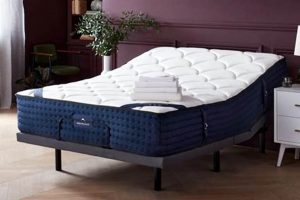
These sleeping surfaces are specifically engineered to fit the often-unconventional dimensions of recreational vehicle bunk spaces. Typically thinner than residential counterparts, these mattresses prioritize space efficiency without sacrificing reasonable comfort. Size examples include short twin, narrow twin, and custom-cut dimensions to accommodate the unique layout of various RV models.
The utilization of appropriately sized mattresses within these confined sleeping areas offers several advantages. They maximize usable area within the RV, contributing to overall comfort and maneuverability. Historically, standard residential mattresses were adapted for use in RVs, often resulting in cumbersome and ill-fitting solutions. Specialized mattresses address these issues directly, improving the RV experience.
The following sections will explore the different types of construction materials employed in these mattresses, factors to consider when selecting a model, and common misconceptions surrounding their quality and durability. Further, we’ll delve into the best practices for maintaining these mattresses to extend their lifespan and ensure continued comfort during travel.
Tips for Selecting RV Bunk Mattresses
Selecting the appropriate sleeping surface for recreational vehicle bunk beds requires careful consideration of several factors. This section outlines key considerations for making informed purchasing decisions.
Tip 1: Measure Bunk Dimensions Accurately: Prior to purchasing any mattress, precisely measure the length, width, and depth of the bunk space. Failing to obtain accurate measurements can result in a mattress that does not fit, leading to discomfort and wasted resources. Double-check all figures before finalizing a purchase.
Tip 2: Consider Mattress Thickness: Bunk spaces often have limited headroom. Opting for a thinner mattress can maximize headroom and prevent occupants from feeling confined. Balance thickness with desired comfort levels; excessively thin mattresses may compromise support.
Tip 3: Evaluate Material Composition: Mattresses are typically constructed from foam, innerspring, or a combination thereof. Foam mattresses offer contouring and pressure relief, while innerspring mattresses provide more robust support. Consider the occupant’s sleep preferences and any specific back or joint concerns when selecting material composition.
Tip 4: Prioritize Breathability: RVs can be susceptible to temperature fluctuations and humidity. Selecting a mattress with breathable materials, such as open-cell foam or breathable fabric covers, can help regulate temperature and prevent moisture buildup, promoting a more comfortable sleep environment.
Tip 5: Research Certifications: Look for mattresses that are CertiPUR-US certified, indicating that the foam has been tested for harmful chemicals, emissions, and durability. This certification ensures the mattress meets established safety standards.
Tip 6: Read Customer Reviews: Before making a purchase, research customer reviews to gain insights into the mattress’s comfort, durability, and overall performance. Pay attention to reviews that specifically mention use in RV bunk spaces.
Tip 7: Consider Weight: Excessive weight can impact fuel efficiency and handling of the RV. Opt for a lighter mattress, especially if multiple bunks are present. Foam mattresses generally weigh less than innerspring mattresses.
By carefully considering these factors, individuals can select appropriate recreational vehicle bunk mattresses that optimize comfort, space efficiency, and longevity.
The following sections address the maintenance of these mattresses and potential solutions for enhanced comfort.
1. Size and Dimensions

The selection of appropriately sized sleeping surfaces is paramount within the confined environment of recreational vehicle bunk beds. Deviations from precise measurements can compromise both comfort and functionality, impacting the overall usability of the space.
- Length and Width Constraints
Bunk beds in RVs are often characterized by non-standard dimensions, necessitating mattresses specifically designed to fit within these spatial limitations. Standard residential mattress sizes are rarely suitable, potentially leading to overhang, restricted movement, or even an inability to utilize the bunk altogether. Custom-sized mattresses are frequently required to optimize the available area.
- Thickness Considerations
Beyond length and width, mattress thickness is a critical factor in bunk bed applications. Excessive thickness can reduce headroom, leading to discomfort and a feeling of confinement, particularly on upper bunks. Conversely, insufficient thickness may compromise support and comfort. Balancing space efficiency with adequate support is crucial.
- Impact on Usable Space
Incorrectly sized mattresses diminish the overall usable space within the RV. Overhang can obstruct pathways or access to storage compartments. Conversely, a mattress that is too small leaves gaps that can become catch-alls for debris and reduce the surface area available for sleeping. Optimizing dimensions ensures efficient utilization of the limited space within the recreational vehicle.
- Customization Requirements
Due to the variability in RV bunk bed designs, customization of mattress size is frequently necessary. Manufacturers often offer options for custom dimensions, allowing owners to achieve a precise fit. Careful measurement and specification are essential to ensure the custom mattress meets the unique requirements of the specific RV model and bunk layout.
Therefore, meticulous attention to size and dimensions is not merely a matter of preference but a necessity for maximizing comfort, functionality, and usable space within recreational vehicle bunk beds. The availability of custom sizing options underscores the importance of tailoring the mattress to the specific constraints of the RV environment.
2. Foam Density

Foam density, measured in pounds per cubic foot (PCF), directly influences the performance characteristics of mattresses used in recreational vehicle bunk beds. Higher density foam generally equates to enhanced durability, improved support, and increased resistance to compression over time. This is particularly important in RVs, where space constraints often necessitate thinner mattresses that rely on material quality to compensate for reduced thickness. For instance, a high-density memory foam mattress in an RV bunk bed will likely retain its shape and provide consistent support longer than a low-density counterpart subjected to the same conditions and usage patterns.
In contrast, lower density foam is less expensive but more susceptible to degradation, potentially
leading to sagging or uneven support distribution. This can result in discomfort and a shortened lifespan, negating any initial cost savings. As an example, consider two RV bunk mattresses of identical thickness. One uses 2.0 PCF foam, while the other uses 4.0 PCF foam. The 4.0 PCF foam mattress will generally provide superior pressure relief, maintain its loft for an extended period, and resist body impressions more effectively. The lower density mattress, while initially feeling similar, will likely exhibit noticeable wear and diminished support within a relatively short timeframe, particularly under the weight of an adult occupant.
Therefore, when selecting a mattress for an RV bunk bed, foam density is a crucial specification to consider. While higher density options may represent a greater upfront investment, the enhanced durability and long-term performance generally justify the increased cost. Overlooking this specification can lead to premature mattress failure and necessitate frequent replacements, ultimately increasing the overall cost of ownership. Careful evaluation of foam density ensures optimal comfort, support, and longevity within the unique demands of the recreational vehicle environment.
3. Weight Consideration

Weight plays a critical role in the selection of a mattress for recreational vehicle bunk beds. Exceeding weight limits can compromise fuel efficiency and vehicle handling, necessitating a careful assessment of mattress weight.
- Impact on Fuel Efficiency
Increased overall weight directly correlates with decreased fuel efficiency in recreational vehicles. Selecting lighter-weight mattresses minimizes the added burden, conserving fuel during travel. For instance, replacing a heavy innerspring mattress with a lighter foam alternative can yield noticeable improvements in gas mileage over extended trips.
- Effects on Vehicle Handling
Excessive weight, particularly when concentrated in the upper portions of the vehicle as with bunk beds, can adversely affect stability and handling. Lighter mattresses contribute to a lower center of gravity, improving stability and reducing the risk of sway or rollover, especially in windy conditions or during emergency maneuvers. This is especially the case for RVs and trailers that might have less suspension.
- Adherence to Weight Ratings
Recreational vehicles have specified weight ratings, including Gross Vehicle Weight Rating (GVWR) and cargo carrying capacity. Exceeding these ratings can lead to mechanical failures, voided warranties, and safety hazards. Choosing lightweight mattresses helps stay within these critical limits, preventing potential problems and maintaining vehicle integrity.
- Material Composition Trade-offs
Mattress materials vary significantly in weight. Innerspring mattresses tend to be heavier than foam mattresses, particularly those made of memory foam or latex. While innerspring mattresses may offer traditional support, the weight trade-off often favors lighter foam options in RV applications. The RV owner must carefully evaluate support with less mass on the mattress.
Therefore, careful weight consideration during the mattress selection process is paramount for optimizing fuel efficiency, vehicle handling, and overall safety. Prioritizing lightweight materials and designs helps maintain vehicle performance and compliance with established weight ratings, contributing to a more secure and enjoyable travel experience.
4. Support Level
The support level of a recreational vehicle bunk mattress directly impacts the occupant’s spinal alignment and overall sleep quality. Inadequate support can lead to discomfort, back pain, and disrupted sleep patterns, especially during travel where motion and uneven surfaces are common. For example, a mattress with insufficient support may cause the sleeper’s spine to curve unnaturally, leading to muscle strain and stiffness. This is particularly relevant for bunk beds located in the rear of the RV, where road vibrations are most pronounced. Therefore, selecting an RV bunk mattress that provides appropriate support is not simply a matter of comfort, but a crucial consideration for maintaining physical well-being while on the road. RV traveling is not an excuse to not take care of your back while sleeping.
The appropriate support level varies depending on individual factors such as body weight, sleeping position, and pre-existing back conditions. Firmer mattresses generally provide more support for heavier individuals and those who sleep on their stomachs or backs, while softer mattresses may be more comfortable for lighter individuals and side sleepers. Consider a scenario where an adult weighing 200 pounds sleeps on a thin, low-density foam mattress in an RV bunk. The mattress may compress excessively, providing minimal support and leading to lower back pain. Conversely, a child sleeping on a very firm mattress might find it uncomfortable and difficult to achieve restful sleep. Consulting with a healthcare professional or mattress specialist can help determine the optimal support level based on individual needs.
In conclusion, the support level is a critical attribute of recreational vehicle bunk mattresses that directly influences comfort, spinal health, and sleep quality. Careful consideration of individual needs and mattress specifications is essential for selecting a model that provides adequate support and promotes restful sleep during travel. Choosing a mattress with the appropriate support is an investment in both physical well-being and overall RVing experience. Without a good mattress, what is the point?
5. Material Breathability

Material breathability is a significant factor in the design and selection of mattresses for recreational vehicle (RV) bunk beds. The confined spaces and potential for temperature fluctuations within RVs necessitate materials that facilitate airflow and moisture dissipation.
- Temperature Regulation
RV environments often experience temperature extremes. Breathable mattress materials help regulate temperature by allowing heat to dissipate, preventing overheating and promoting a more comfortable sleep. For instance, open-cell foam or mattresses with integrated ventilation channels enhance airflow, reducing heat retention. Conversely, non-breathable materials trap heat, leading to discomfort and potentially disrupting sleep.
- Moisture Management
Humidity levels within RVs can fluctuate, particularly during seasonal changes or when multiple occupants are present. Breathable mattress materials wick away moisture, preventing the buildup of sweat and reducing the risk of mold or mildew growth. Examples include fabrics with moisture-wicking properties or mattress designs that incorporate breathable spacer fabrics. In contrast, impermeable materials trap moisture, creating a breeding ground for bacteria and potentially leading to unpleasant odors or health concerns.
- Airflow Enhancement
Proper airflow within a mattress contributes to overall comfort and hygiene. Breathable materials promote air circulation, preventing
the accumulation of dust mites and allergens. For example, mattresses with coil spring cores or convoluted foam layers provide pathways for air to circulate. In contrast, dense, non-breathable materials restrict airflow, creating a stagnant environment that can exacerbate allergies and respiratory issues. - Material Selection Considerations
Various mattress materials offer different levels of breathability. Natural materials like cotton and wool generally exhibit good breathability, while synthetic materials like traditional memory foam may be less breathable. However, advancements in foam technology have led to the development of breathable memory foam options that incorporate open-cell structures or gel infusions. The choice of materials should consider both breathability and other factors such as support, durability, and cost.
In summary, the breathability of mattress materials directly impacts the comfort, hygiene, and longevity of mattresses used in RV bunk beds. Selecting materials that promote airflow and moisture dissipation is essential for creating a more comfortable and healthy sleeping environment within the confines of a recreational vehicle. The integration of these characteristics provides for the best long term health conditions in close quarters.
6. Certifications/Safety

The presence of relevant certifications on recreational vehicle (RV) bunk mattresses serves as a direct indicator of adherence to established safety standards and industry best practices. These certifications, typically issued by independent testing organizations, provide assurance that the mattress has undergone rigorous evaluation for factors such as flammability, chemical emissions, and material durability. The absence of such certifications raises concerns regarding potential risks to occupant health and safety, particularly within the enclosed environment of an RV. For example, a mattress lacking certification may contain volatile organic compounds (VOCs) that off-gas over time, potentially causing respiratory irritation or other adverse health effects. Similarly, a mattress that fails to meet flammability standards poses a significant fire hazard within the confined space of an RV.
Specific certifications, such as CertiPUR-US, demonstrate that the foam components of the mattress have been tested for harmful substances like formaldehyde, heavy metals, and phthalates. This certification provides a reasonable degree of confidence that the mattress is free from chemicals known to pose health risks. Another relevant certification is compliance with Federal Motor Vehicle Safety Standard (FMVSS) 302, which addresses the flammability of interior materials used in motor vehicles, including RVs. Mattresses that meet FMVSS 302 requirements exhibit reduced flammability characteristics, enhancing occupant safety in the event of a fire. For example, an incident involving a small fire originating from a cooking appliance could quickly escalate if the bunk mattresses are not flame-resistant. Certified mattresses offer crucial protection by slowing the spread of the fire and providing occupants with additional time to evacuate.
In conclusion, the presence of verifiable certifications on RV bunk mattresses is not merely a marketing claim but a critical indicator of safety and quality. These certifications represent a tangible commitment to occupant well-being and compliance with established industry standards. Prudent consumers should prioritize mattresses with recognized certifications to mitigate potential health and safety risks associated with unregulated or substandard products. The value of certified materials cannot be overstated in safety conditions when dealing with RV mattresses.
7. Durability
The durability of mattresses intended for recreational vehicle bunk beds is a paramount consideration, directly influencing their longevity and overall value proposition. The inherent conditions of RV travel including frequent use, temperature fluctuations, and potential exposure to moisture place significant demands on mattress construction and material integrity. A mattress lacking robust durability will likely exhibit premature wear and tear, necessitating replacement and incurring additional costs. For example, seams may split, foam may degrade, or support structures may fail, leading to discomfort and compromised sleep quality. Therefore, durability serves as a critical component of any suitable sleeping surface in a recreational vehicle, demanding careful attention during the selection process.
Several factors contribute to the durability of RV bunk mattresses. High-density foam, reinforced seams, and robust fabric covers all play a vital role in resisting wear and tear. Mattresses designed with these features are better equipped to withstand the rigors of travel and frequent use. Furthermore, proper maintenance practices, such as regular cleaning and rotation, can significantly extend the lifespan of the mattress. As an illustration, a mattress constructed with high-density memory foam and featuring a waterproof cover is inherently more resistant to compression and moisture damage than a lower-quality alternative. This translates to a longer-lasting, more hygienic sleeping surface, reducing the need for frequent replacements and contributing to a more comfortable RV experience. The material has to last longer on the road, compared to mattresses for residents.
Ultimately, the practical significance of understanding the link between durability and RV bunk mattresses lies in making informed purchasing decisions. By prioritizing mattresses constructed with durable materials and incorporating robust design features, consumers can minimize the long-term cost of ownership and ensure a consistently comfortable and supportive sleeping experience throughout their travels. While the initial investment may be higher for more durable models, the extended lifespan and reduced replacement frequency often represent a substantial cost saving over time. Durability in an RV mattress is not merely a desirable attribute; it is a fundamental requirement for maximizing value and ensuring long-term satisfaction.
Frequently Asked Questions
The following addresses common inquiries regarding mattresses specifically designed for recreational vehicle bunk beds, focusing on key aspects of selection, maintenance, and usage.
Question 1: What are the standard size dimensions for RV bunk mattresses?
Standard dimensions for recreational vehicle bunk mattresses vary significantly due to the diverse configurations of RV bunk spaces. Common sizes include short twin, narrow twin, and custom-cut dimensions tailored to specific RV models. Accurate measurement of the bunk area is essential prior to purchasing any mattress.
Question 2: How does foam density impact the performance of an RV bunk mattress?
Foam density, measured in pounds per cubic foot (PCF), directly correlates with mattress durability and support. Higher density foam generally provides superior support, resists compression, and extends mattress lifespan. Lower density foam is more susceptible to degradation and may result in reduced support over time.
Question 3: What factors contribute to the breathability of an RV bunk mattress?
Material composition significantly influences mattress breathability. Open-cell foam, natural fibers (e.g., cotton, wool), and mattresses with integrated ventilatio
n channels promote airflow and moisture dissipation. Non-breathable materials, such as traditional memory foam without ventilation enhancements, may trap heat and moisture, leading to discomfort.
Question 4: Why are certifications important when selecting an RV bunk mattress?
Certifications, such as CertiPUR-US and compliance with FMVSS 302, indicate that the mattress has undergone testing for harmful chemicals, emissions, and flammability. These certifications provide assurance that the mattress meets established safety standards and minimizes potential health risks within the confined space of an RV.
Question 5: How does mattress weight affect the overall performance of an RV?
Excessive mattress weight can negatively impact fuel efficiency and vehicle handling. Lighter-weight mattresses, particularly those constructed from foam rather than innerspring components, minimize the added burden and contribute to improved stability and fuel economy. Adhering to the RV’s specified weight ratings is crucial for maintaining vehicle safety and performance.
Question 6: What maintenance practices can extend the lifespan of an RV bunk mattress?
Regular cleaning, rotation, and the use of a mattress protector can significantly extend the lifespan of an recreational vehicle bunk mattress. Vacuuming the mattress regularly removes dust and allergens, while rotating it periodically ensures even wear. A waterproof mattress protector safeguards against spills and moisture damage, preventing the growth of mold and mildew.
Careful selection and diligent maintenance are essential for maximizing the comfort, longevity, and safety of RV bunk mattresses. Prioritizing factors such as size, foam density, breathability, certifications, weight, and maintenance practices ensures a more restful and enjoyable RV experience.
The subsequent section provides a concise summary of the preceding information, reinforcing the importance of informed decision-making when selecting mattresses for RV bunk beds.
Conclusion
The preceding exploration of “rv mattress for bunk beds” has underscored the critical factors influencing their selection, performance, and overall value within the recreational vehicle environment. Precise dimensions, optimal foam density, material breathability, adherence to safety certifications, appropriate weight considerations, and consistent maintenance practices all contribute to a comfortable, durable, and safe sleeping surface. Neglecting any of these aspects can compromise occupant well-being and diminish the long-term utility of the mattress.
Therefore, informed decision-making is paramount. Prioritizing these considerations when selecting “rv mattress for bunk beds” ensures not only a restful sleep experience but also contributes to the overall safety and enjoyment of RV travel. The selection process should not be treated trivially; rather, a thorough investigation is warranted to ensure the chosen product meets the unique demands and constraints of the recreational vehicle environment.