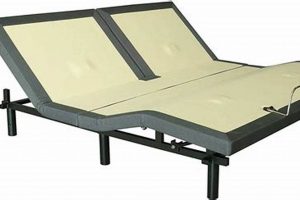
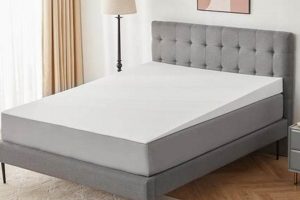
The dimensions of recreational vehicle king mattresses typically vary from standard residential king sizes to accommodate the unique spatial constraints within RVs. This variance often results in a shorter width and/or length compared to a traditional king, ensuring compatibility with RV bedroom layouts. As an example, one might encounter an RV king mattress that measures 72 inches wide by 75 inches long, whereas a standard king is 76 inches wide by 80 inches long.
Selecting the correct sleeping platform measurements for a recreational vehicle directly influences overall comfort and usability of the living space. Appropriately sized mattresses optimize room for movement and storage while maximizing rest quality for occupants. Historically, RV manufacturers offered limited mattress options, often prioritizing space efficiency over comfort; however, the growing demand for enhanced travel experiences has led to an increased availability of diverse and specialized mattress sizes and materials designed specifically for the RV market.
Understanding the specific dimensional considerations is paramount when upgrading or replacing existing sleeping arrangements. Factors such as RV model, floor plan, and personal preferences regarding firmness and material composition should all influence the final selection. Further research into available mattress types and their suitability for travel conditions will contribute to a more satisfying and restful journey.
Optimizing comfort and space within a recreational vehicle requires careful consideration of mattress dimensions. These tips provide guidance on selecting an appropriate sleeping surface.
Tip 1: Precisely Measure Available Space. Accurately determine the dimensions of the RV’s bedroom area prior to purchase. Existing bed frames or platforms should be measured to ensure a proper fit. Account for any obstructions or irregularities in the space.
Tip 2: Prioritize Dimensional Accuracy. Mattress manufacturers may have slight variations in their stated sizes. Verify the actual dimensions of the mattress, paying close attention to width, length, and thickness. A mattress that is slightly too large can create significant installation challenges.
Tip 3: Consider Mattress Material and Weight. RVs have weight limitations. Opt for lighter materials such as memory foam or latex, as opposed to heavier innerspring options. The total weight of the mattress contributes to the overall load on the vehicle.
Tip 4: Assess Mattress Thickness. The thickness of the mattress impacts headroom and ease of movement within the RV bedroom. A thicker mattress might be more comfortable, but it can also make getting in and out of bed more difficult, particularly in confined spaces.
Tip 5: Evaluate Support and Comfort Needs. Individual preferences for firmness and support should be considered. Memory foam mattresses conform to the body, providing pressure relief. Innerspring mattresses offer firmer support. Hybrid models combine both features.
Tip 6: Investigate Mattress Return Policies. Ensure that the mattress vendor offers a reasonable return policy. This allows for testing the mattress within the RV environment and returning it if it does not meet expectations regarding comfort and fit.
Tip 7: Consider Custom Mattress Options. If standard RV king sizes do not adequately fit the available space, explore the possibility of ordering a custom-sized mattress. This ensures a precise fit and maximizes the use of the bedroom area.
Selecting a recreational vehicle king mattress requires careful attention to detail and consideration of spatial constraints and comfort preferences. Prioritizing accurate measurements, material selection, and support needs will contribute to a more comfortable and enjoyable travel experience.
These tips provide a foundation for making an informed decision when purchasing a mattress for a recreational vehicle. Further research into specific mattress types and brands is recommended prior to making a final selection.
1. Width Specifications

Width specifications form a critical aspect of recreational vehicle (RV) king mattress selection due to the inherent spatial limitations within RVs. Unlike standard residential mattresses, RV mattresses often require reduced dimensions to accommodate the vehicle’s interior layout. These tailored widths directly affect usability and overall comfort within the constrained environment.
- Standard vs. RV King Width Discrepancies
Standard king mattresses typically measure 76 inches in width, a dimension often incompatible with the dimensions of RV bedrooms. RV king mattresses frequently feature reduced widths, commonly ranging from 70 to 72 inches. This dimensional variance is crucial for ensuring the mattress fits within the designated space without obstructing walkways or impeding access to storage areas.
- Impact on Sleep Surface Area
Reduced width dimensions, while necessary for spatial accommodation, affect the overall sleeping surface area available to occupants. A narrower mattress can constrict movement during sleep and potentially compromise comfort for individuals accustomed to the expansive space of a standard king-sized bed. Careful consideration of individual sleep preferences and body size is essential when selecting an RV king with a reduced width.
- Compatibility with Bed Frames and Platforms
RV king mattresses with non-standard widths necessitate compatible bed frames or platforms. Adapting existing frames or constructing custom platforms may be required to ensure adequate support and prevent mattress sagging. Accurate measurement of the existing frame and matching it to the mattress width is vital to maintaining mattress integrity and optimizing sleep quality.
- Influence on Bedding Selection
The altered width of RV king mattresses impacts bedding selection. Standard king-size sheets and blankets may not fit snugly on a narrower RV king mattress, resulting in excess fabric and a less aesthetically pleasing appearance. Purchasing bedding specifically designed for RV king dimensions ensures a proper fit and minimizes discomfort caused by excess material bunching.
The width specifications of an RV king mattress are inextricably linked to its suitability for a specific recreational vehicle. The interplay between spatial constraints, sleeping surface requirements, and compatibility with supporting structures underscores the importance of meticulous measurement and informed decision-making when selecting a mattress for this unique application.
2. Length Constraints

Length constraints represent a critical design parameter affecting the practicality and comfort of RV ki
ng mattresses. Restrictions on available space within recreational vehicles necessitate careful consideration of mattress length, often resulting in dimensions shorter than those found in standard residential settings. This adaptation directly influences sleeping area, maneuverability within the RV, and overall user satisfaction.
- Standard vs. RV King Length Dimensions
While a standard king mattress typically measures 80 inches in length, RV king mattresses commonly range from 72 to 75 inches. This reduction addresses the limited floor space in RV bedrooms, allowing for sufficient walkway clearance and preventing obstruction of doorways or storage compartments. Failure to account for these length discrepancies can lead to installation difficulties and compromised living space.
- Impact on Sleeping Posture and Comfort
The reduced length of RV king mattresses may pose challenges for taller individuals, potentially leading to discomfort and disrupted sleep. Occupants whose height exceeds the mattress length may experience pressure points or require a modified sleeping posture, affecting spinal alignment and overall rest quality. Careful assessment of individual height and sleeping habits is crucial for selecting an appropriate mattress length.
- Influence on Bed Frame and Platform Design
RV king mattresses with shortened lengths necessitate appropriately sized bed frames or platforms. Utilizing a standard-length frame can result in an unsightly gap between the mattress and frame, potentially creating a safety hazard or diminishing the overall aesthetic appeal. Custom-built or adapted frames ensure proper mattress support and a seamless integration within the RV’s interior.
- Relation to Overall RV Layout and Functionality
The length of an RV king mattress directly impacts the usability of the surrounding space. A shorter mattress allows for greater flexibility in configuring other RV components, such as nightstands, wardrobes, or seating areas. Conversely, an excessively long mattress can restrict movement and compromise the functionality of the bedroom, potentially diminishing the overall RV experience.
The interplay between length constraints and the intended use of an RV king mattress necessitates a comprehensive understanding of spatial limitations and individual comfort requirements. Precise measurements and a focus on ergonomic design are essential for optimizing sleep quality and maximizing the utility of the recreational vehicle’s living space.
3. Thickness Variation

Thickness variation in recreational vehicle (RV) king mattresses directly impacts several critical factors, including overall comfort, spatial efficiency within the RV, and compatibility with existing bed frames. As RVs are inherently space-constrained, mattress thickness becomes a significant dimensional consideration. A thicker mattress, while potentially enhancing comfort, reduces headroom, increases overall weight, and may obstruct access to overhead storage. Conversely, a thinner mattress, though space-saving, may compromise support and longevity.
The selection of an RV king mattress with appropriate thickness necessitates careful evaluation of available space and individual comfort preferences. For instance, a taller individual in a low-profile RV may find a thicker mattress impractical, whereas a shorter person with ample headroom may prioritize the additional cushioning. RV manufacturers often design bed frames with specific thickness limitations; exceeding these can lead to an unstable or ill-fitting arrangement. Real-world examples include instances where owners replace excessively thick mattresses due to difficulties accessing cabinets or hitting their heads on the ceiling, demonstrating the practical significance of understanding and managing mattress thickness.
In summary, thickness variation represents an integral component of the overall dimensions of an RV king mattress. The trade-offs between comfort, space utilization, and compatibility necessitate a thorough assessment of both the RV’s interior configuration and the user’s specific requirements. Ignoring this dimensional element can lead to dissatisfaction and functional challenges, highlighting the importance of informed selection based on precise measurements and individual needs within the RV environment.
4. Weight Implications
The dimensions of a recreational vehicle king mattress directly influence its weight, creating significant implications for overall vehicle load and fuel efficiency. Increased mattress dimensions, naturally, correspond to an increase in material volume and subsequently, weight. Exceeding the RV’s specified weight capacity compromises handling, braking performance, and structural integrity, potentially leading to safety hazards. The importance of understanding weight implications as a component of mattress sizing is underscored by instances where RV owners inadvertently overload their vehicles by replacing lightweight factory-installed mattresses with heavier aftermarket options, leading to costly repairs and diminished performance.
Specific material choices within the mattress construction amplify these weight-related concerns. Innerspring mattresses, for example, typically weigh substantially more than memory foam or latex alternatives of comparable dimensions. This difference is particularly critical in RVs, where every pound contributes to the cumulative load. A seemingly minor increase in mattress thickness or a shift to a denser material can have a disproportionately large impact on the vehicle’s weight distribution and operational efficiency. Choosing a lightweight mattress, therefore, is not merely a matter of convenience but a vital factor in ensuring safe and economical RV travel.
Accurate assessment of mattress weight, in relation to its size and material composition, is paramount for responsible RV ownership. Overlooking this dimensional element can lead to serious mechanical problems, increased fuel consumption, and potential safety risks. Balancing comfort preferences with the practical considerations of weight restrictions is crucial for maintaining optimal vehicle performance and ensuring a safe and enjoyable travel experience.
5. Corner Shape

Corner shape, an often-overlooked dimension, significantly impacts the effective size and usability of an RV king mattress within the confined spaces of recreational vehicles. The standard rectangular corners of residential mattresses can create accessibility challenges within the typically cramped RV bedroom, where maximizing usable space is paramount. Alterations to the mattress corner design, therefore, become a crucial element in optimizing the functionality of a correctly sized RV king mattress.
- Rounded Corners
Rounded corners mitigate the sharp edges that can obstruct movement and create uncomfortable contact points in tight spaces. This design facilitates easier navigation around the bed, reducing the risk of bumping into the mattress. For example, an RV with a walk-around bed benefits from rounded mattress corners, allowing for smoother passage and minimizing wasted space in the walking area. Thes
e rounded corners effectively increase the perceived roominess without altering the fundamental sleeping area. - Cut Corners (Angled or Clipped)
Cut corners involve removing a triangular section from one or more corners of the mattress, typically to accommodate wheel wells, access panels, or other structural features of the RV. This modification is frequently observed in custom-built RVs or those with unique floor plans. The clipped corner allows the mattress to fit flush against the RV wall, eliminating dead space and optimizing the utilization of the available footprint. In scenarios where a standard rectangular mattress would protrude into a walkway, a mattress with cut corners provides a practical solution.
- Curved or Contoured Edges
Curved or contoured edges represent a more stylized approach to corner shape, often designed to complement the overall aesthetic of the RV interior. These subtle modifications enhance the visual appeal while providing a slightly improved ease of movement around the bed. In high-end RVs, curved edges are often integrated with custom cabinetry or built-in nightstands, creating a seamless and luxurious sleeping environment.
- Impact on Bedding and Sheet Fit
Altering the corner shape of an RV king mattress necessitates the use of custom-fitted sheets or modifications to standard bedding. Standard rectangular sheets will not conform correctly to rounded or cut corners, resulting in loose fabric, potential bunching, and a less aesthetically pleasing appearance. Specialized bedding designed specifically for RV mattresses with modified corner shapes ensures a snug and secure fit, maintaining both comfort and visual appeal.
Corner shape, though seemingly a minor detail, represents a critical dimensional aspect of RV king mattress selection. Optimizing corner shape enhances usability, maximizes space, and contributes to a more comfortable and functional sleeping environment within the limited confines of a recreational vehicle. Accurate assessment of the RV’s interior architecture and a focus on ergonomic design are essential for selecting a mattress with corner shapes that complement the vehicle’s unique requirements and elevate the overall travel experience.
6. Frame Compatibility
Frame compatibility is inextricably linked to the dimensions of an RV king mattress. The dimensions of the mattress dictate the required internal dimensions of the supporting frame. Mismatched dimensions can lead to inadequate support, premature mattress wear, and compromised sleep quality. The cause-and-effect relationship is clear: incorrect frame size directly results in a compromised sleeping surface. Frame compatibility is, therefore, a crucial component of overall mattress size considerations. For instance, a 72″ x 75″ RV king mattress requires a frame designed to those specific dimensions, neither larger nor smaller, to ensure proper weight distribution and prevent sagging or shifting during travel. This understanding is of practical significance, as it prevents costly mistakes and ensures a safe and comfortable sleep environment.
Further analysis reveals that frame material and construction also influence compatibility. A flimsy frame, even if dimensionally correct, may not adequately support the weight of the mattress and occupants. In contrast, a robust frame constructed from durable materials such as steel or reinforced wood provides a stable and long-lasting foundation. Consider the example of RV owners who initially opt for lightweight, inexpensive frames, only to experience frame failure and mattress damage within a short period. This necessitates a costly replacement and underscores the importance of selecting a frame that is both dimensionally accurate and structurally sound. The practical application of this knowledge lies in prioritizing frame quality alongside mattress size, recognizing that both elements contribute to the overall performance and longevity of the sleeping system.
In summary, frame compatibility is not merely a secondary consideration but an integral aspect of RV king mattress size. Challenges arise when RV owners prioritize mattress comfort or price without fully accounting for the dimensional and structural requirements of the supporting frame. By understanding the cause-and-effect relationship, prioritizing durable construction, and ensuring dimensional accuracy, RV owners can overcome these challenges and create a sleeping environment that is both comfortable and sustainable. This understanding aligns with the broader theme of optimizing space and comfort within the inherently limited confines of a recreational vehicle, emphasizing the importance of careful planning and informed decision-making.
Frequently Asked Questions
This section addresses common inquiries regarding the size of RV king mattresses, providing clarity on dimensional considerations and their implications for recreational vehicle owners.
Question 1: What are the standard dimensions of a recreational vehicle king mattress?
The dimensions of recreational vehicle king mattresses often differ from standard residential king sizes. Typical dimensions range from 70-72 inches in width and 72-75 inches in length. These variations accommodate the limited space within recreational vehicles.
Question 2: Why are RV king mattresses smaller than standard king mattresses?
Reduced dimensions are necessary to ensure compatibility with the restricted interior space of recreational vehicles. Standard king mattresses would often obstruct walkways and impede maneuverability within the RV’s bedroom area.
Question 3: How does mattress thickness affect the comfort and usability of an RV king mattress?
Mattress thickness influences headroom, ease of movement, and access to storage areas within the RV. Excessive thickness can reduce headroom and make it difficult to get in and out of bed, while insufficient thickness may compromise support and comfort.
Question 4: Does the weight of an RV king mattress impact the vehicle’s performance?
The weight of the mattress contributes to the overall load on the recreational vehicle. Exceeding the vehicle’s weight capacity negatively affects handling, braking performance, and fuel efficiency. Lighter materials, such as memory foam or latex, are often preferred.
Question 5: Are specialized sheets required for RV king mattresses?
Due to the non-standard dimensions, standard king-size sheets may not fit snugly on an RV king mattress. Investing in sheets specifically designed for RV king sizes ensures a proper fit and minimizes discomfort caused by excess fabric.
Question 6: Where can I purchase RV king mattresses?
RV king mattresses are available from specialized mattress retailers, RV dealerships, and online vendors. It is advisable to verify the exact dimensions and return policies before making a purchase.
Understanding the specific dimensional characteristics of RV king mattresses is essential for optimizing comfort, usability, and vehicle performance. Prioritizing accurate measurements and informed selection will contribute to a more enjoyable and safe RV travel experience.
This FAQ section provides a foundational understanding of RV king mattress dimensions. Further research and consultation with experts are recommended for specific applications and individual preferences.
RV King Mattress Dimensions
The preceding exploration has underscored that the
The continued demand for specialized RV mattresses necessitates ongoing innovation in materials and design. As RV manufacturers and aftermarket suppliers refine their offerings, owners must remain vigilant in evaluating mattress options and prioritizing informed decision-making. The ultimate success of any RV mattress purchase rests on a comprehensive understanding of dimensional considerations and their direct impact on the overall recreational vehicle experience.